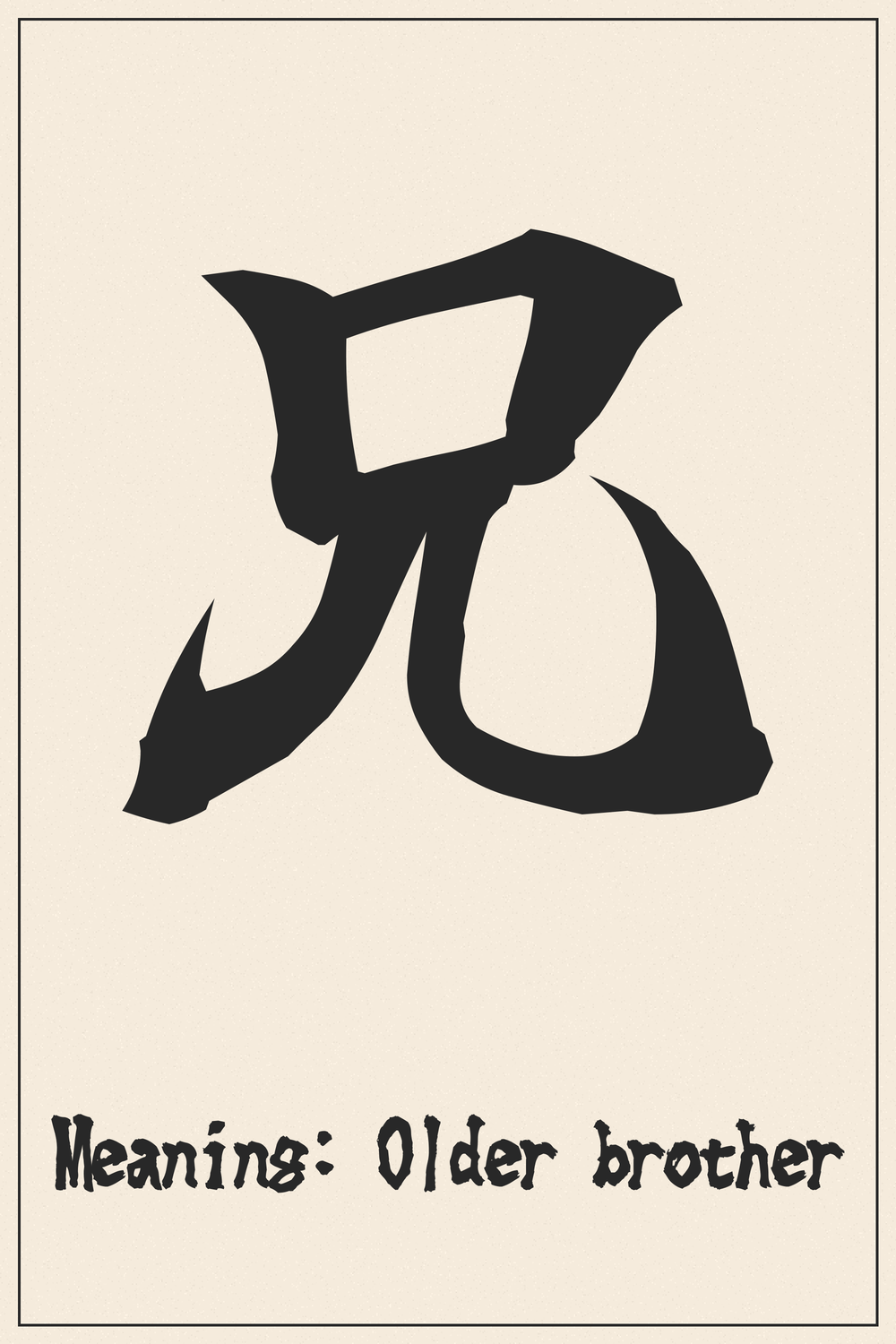
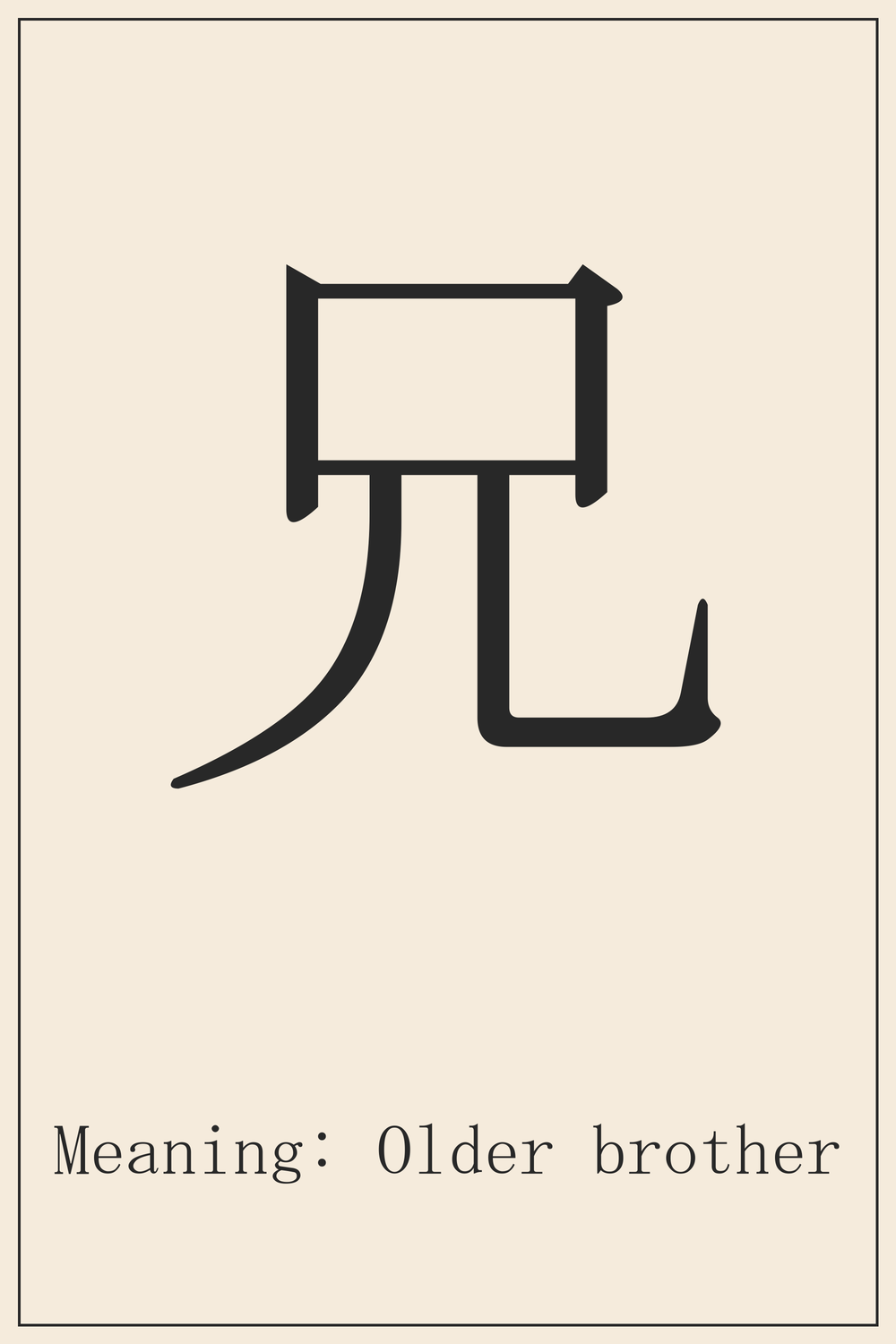
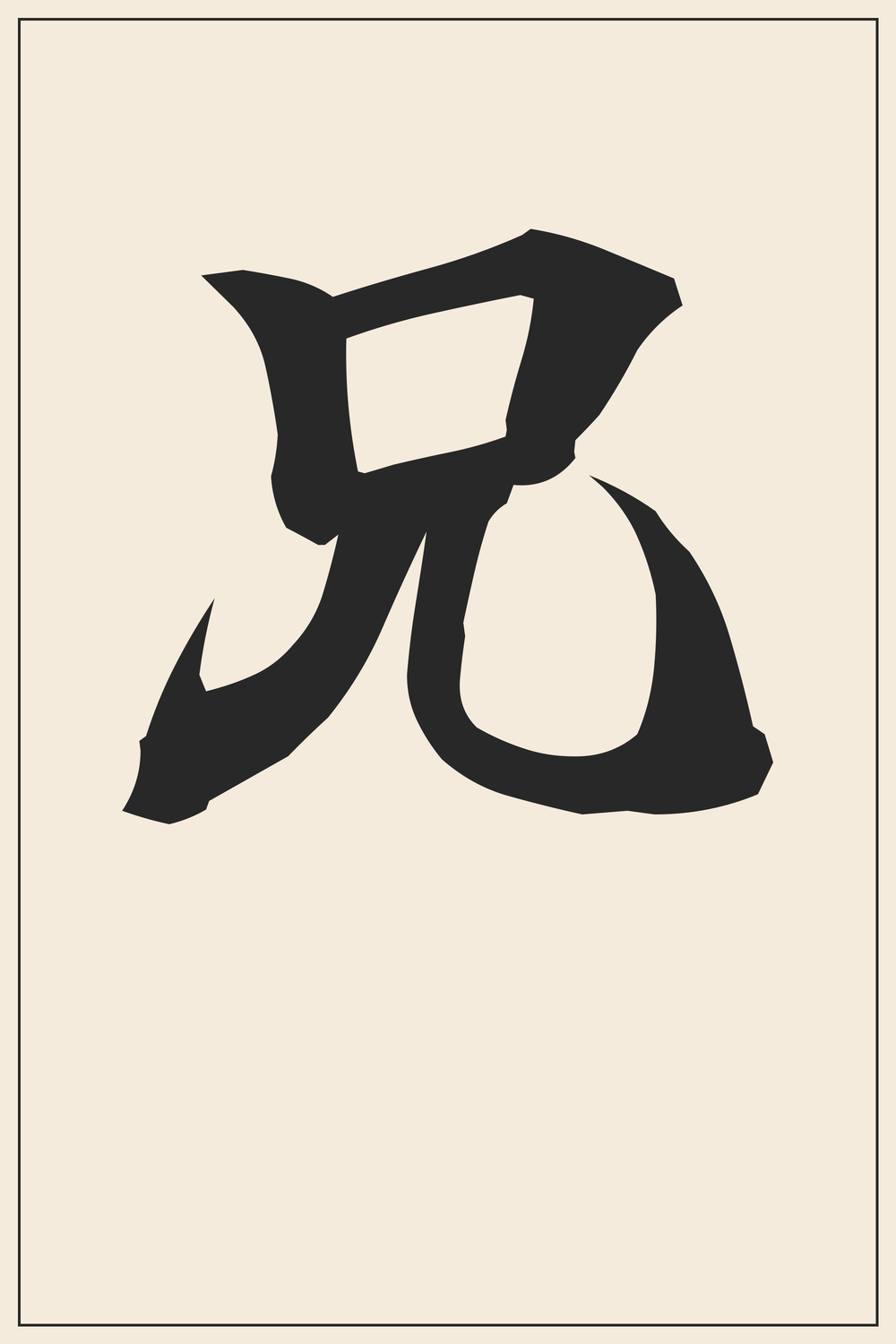
The Kanji 兄 (Ani) embodies the profound respect and bond associated with an older brother. It represents a pillar of family, offering guidance and protection through life’s journey.
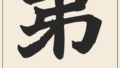
The atmosphere of a Kanji character changes dramatically depending on the font style. A character that looks elegant in a brush style might look bold and modern in a different font.
Recommendation:
Since a tattoo is permanent, we strongly recommend comparing various font styles beyond what is shown here. Use our designs as a trusted reference for the correct structure, but feel free to explore different artistic variations to find the perfect match for your vision.
The Deep Meaning Behind 兄
The Kanji 兄 (ani) is an ancient ideogram, with its origins rooted in depicting a kneeling person with a mouth (口) above them. This imagery historically implied someone speaking, giving instructions, or offering prayers, signifying a position of authority and guidance within a family.
In Japanese culture, the role of an older brother (兄) carries significant weight, emphasizing responsibility, leadership, and care for younger siblings. This relationship is deeply rooted in Confucian ideals of family hierarchy and mutual respect, where the older brother often acts as a mentor and protector.
Kanji Breakdown
The character 兄 is a single entity, whose components subtly convey its meaning.
Meaning: Mouth. This component is often associated with speaking, communicating, or giving commands, representing the voice of authority or instruction.
Meaning: Human legs. This radical, derived from 人 (person), signifies a human being. In the context of 兄, it refers to the person in the role of an older brother.
Conclusion
Choosing 兄 for a tattoo signifies a deep appreciation for the guidance, protection, and leadership provided by an older brother. It is a powerful symbol of familial love and respect, connecting the wearer to a profound personal bond.
For those wishing to honor this special relationship, 兄 serves as a timeless emblem. Its clean lines and clear meaning make it an excellent choice for a tattoo, allowing for personal expression of family ties while remaining aesthetically appealing.
Comments