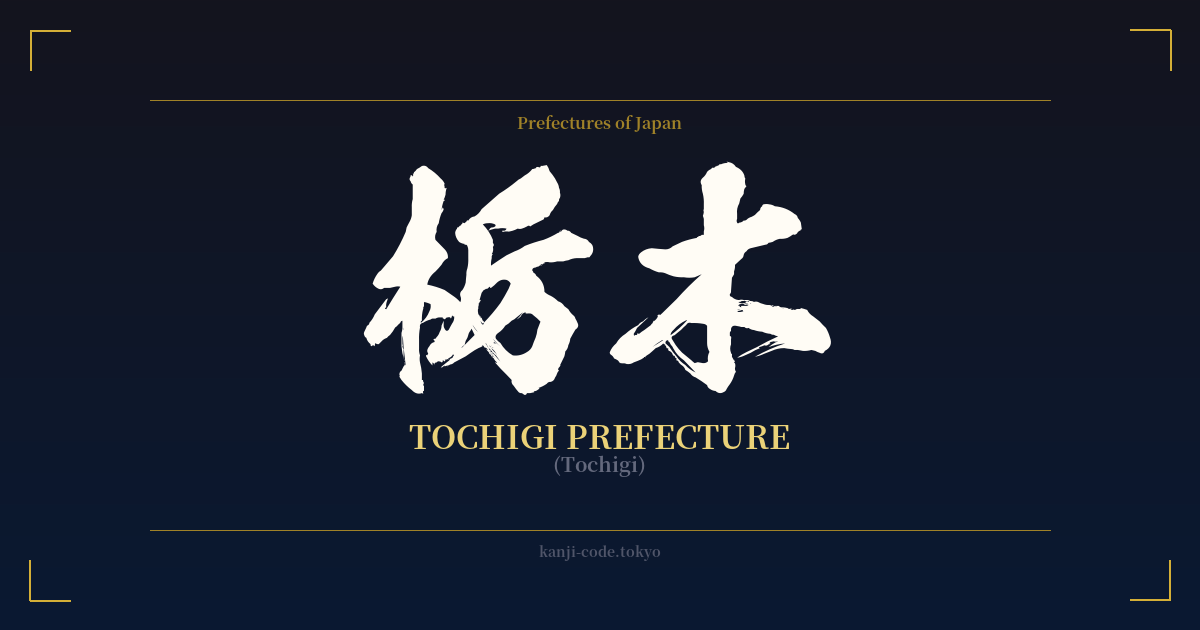
✍️ 栃木 (Tochigi) — Cultural Context
The name 栃木 (Tochigi) literally translates to 'horse chestnut tree.' This name is not an abstract concept but a direct reference to the natural landscape of the region it represents. The first character, 栃 (tochi), is a kokuji—a kanji created in Japan—specifically for the Japanese horse chestnut tree (Aesculus turbinata), known as 'tochi no ki' (トチノキ). The name is believed to have originated from the abundance of these majestic trees that once flourished in the area.
While the name itself is rooted in botany, Tochigi Prefecture is a place of immense historical and cultural weight. Its most famous landmark is Nikkō, a city that houses the spectacular Tōshō-gū shrine. This UNESCO World Heritage site is the final resting place of Tokugawa Ieyasu, the founder and first shōgun of the Tokugawa shogunate, which ruled Japan for over 250 years. The intricate carvings, lavish use of gold leaf, and serene forest setting make it one of Japan's most important cultural treasures. The famous 'three wise monkeys' carving—'see no evil, hear no evil, speak no evil'—originates from this shrine.
Beyond Nikkō, Tochigi is a land of dramatic natural beauty. It is home to Lake Chūzenji, a stunning scenic lake in the mountains above Nikkō, and Kegon Falls, one of Japan's most famous waterfalls. The Nasu area, with its volcanic mountains and hot springs, is another popular destination for enjoying nature. This deep connection to the natural world brings the meaning of the prefecture's name—'horse chestnut tree'—full circle, grounding its identity in the rich environment.
In modern Japan, Tochigi is also known for its agriculture. It is the country's leading producer of strawberries, with the 'Tochiotome' variety being a household name. The prefectural capital, Utsunomiya, has earned the title of the 'gyoza capital' of Japan, famous for its countless restaurants serving delicious pan-fried dumplings. Therefore, the kanji 栃木 represents far more than just a tree; it is a gateway to a region defined by shogunal history, sacred sites, breathtaking landscapes, and distinctive local flavors.
🖌️ Font Styles for 栃木
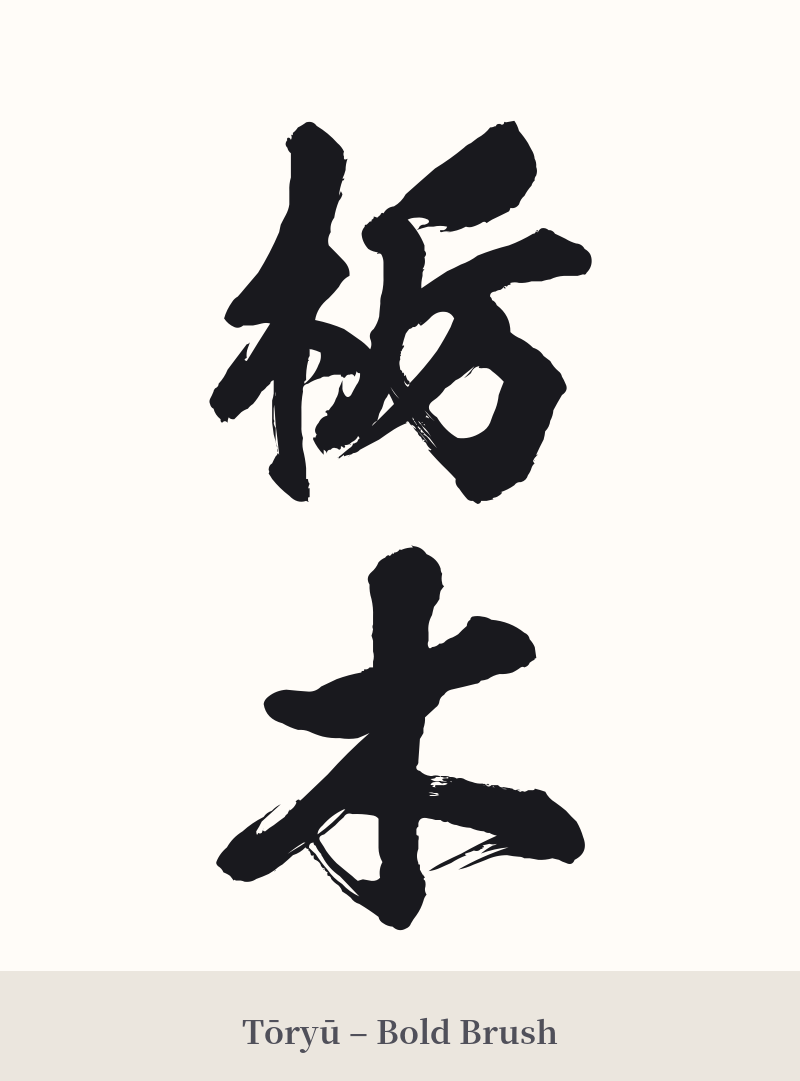
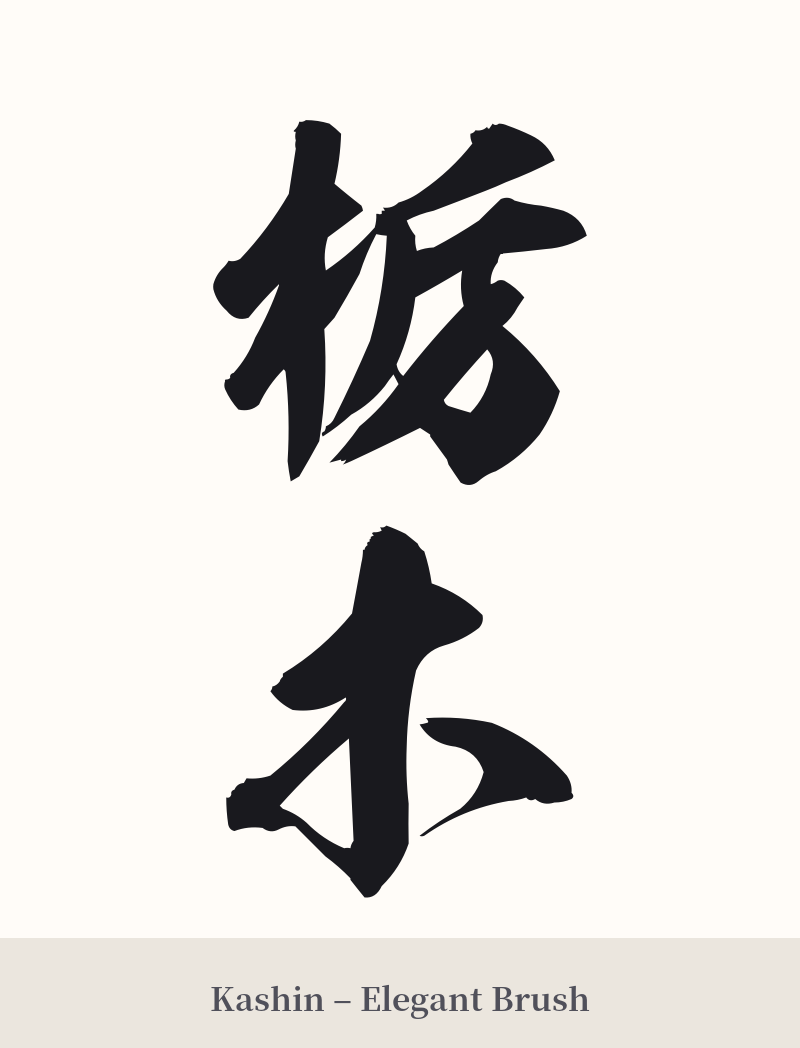
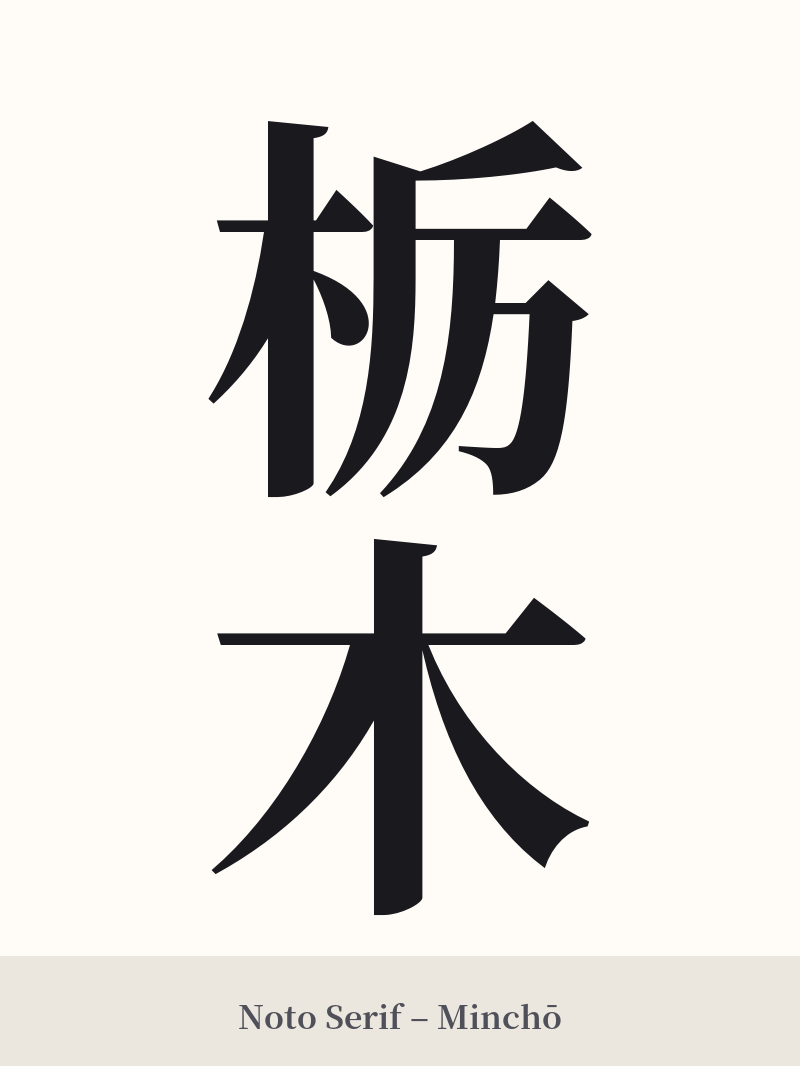
The same kanji can look dramatically different depending on the calligraphy style. Choose a font that matches the mood you want for your tattoo or design.
🎨 Tattoo Suitability
📐 Tattoo Design Guide
Because 栃木 is a proper noun, it works best as a personal and meaningful tattoo rather than a bold, public statement. Consider the following design approaches:
– Placement: Smaller, more intimate placements are often ideal. The inner wrist, ankle, behind the ear, or on the ribs can serve as a personal reminder of a connection to the prefecture. For a larger piece, it could be integrated into a bigger design on the arm or back, perhaps accompanied by imagery from Tochigi.
– Font Style: A traditional calligraphy style like Gyosho (semi-cursive) or Kaisho (block script) can honor the historical significance of the region, especially its connection to Nikkō. For a more modern and clean look, a Mincho or Gothic font can work well, emphasizing the characters as a label.
– Visual Tips: To add context and visual interest, consider pairing the kanji with related motifs. Incorporating a Japanese horse chestnut leaf (the 'tochi' leaf), the three wise monkeys of Nikkō, the silhouette of Kegon Falls, or even a stylized strawberry can transform the tattoo from a simple name into a rich visual story.
Comments