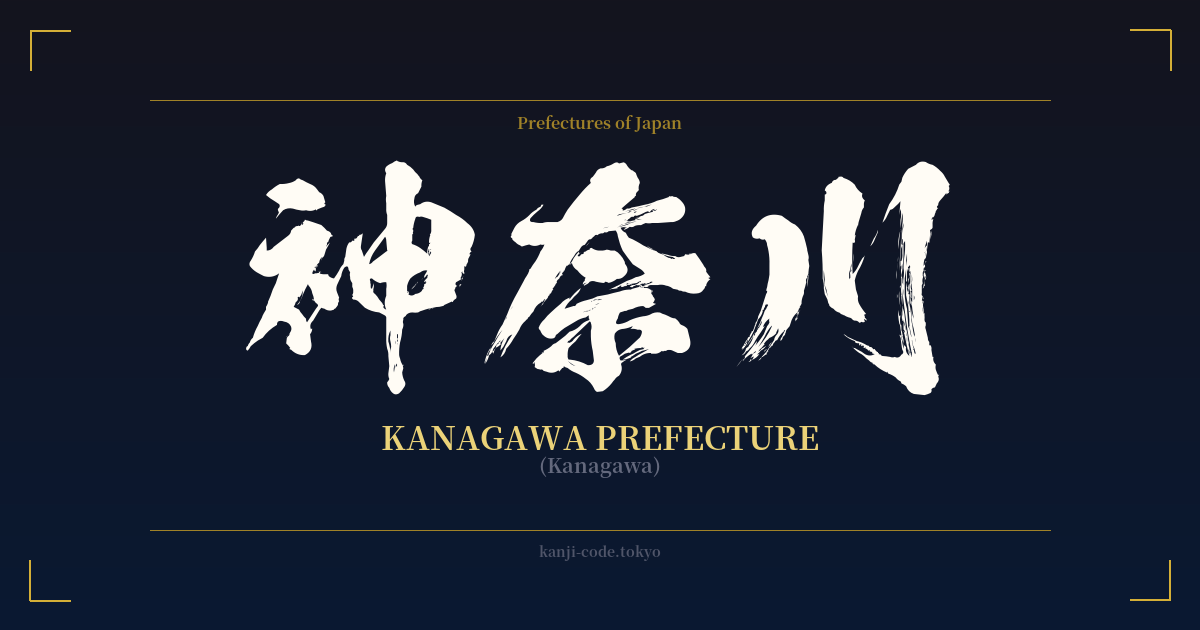
✍️ 神奈川 (Kanagawa) — Cultural Context
神奈川 (Kanagawa) is more than just a name on a map; it's a place where Japan's history was forged and its future was embraced. Located just south of Tokyo, Kanagawa Prefecture is a vibrant blend of ancient tradition and bustling modernity, a story told through its very name and the cities within it.
The name itself is believed to originate from Kanagawa-juku, a post town on the historic Tōkaidō highway that connected Edo (modern Tokyo) with Kyoto during the Edo period. The kanji literally translate to "God-Nara-River," though the middle character '奈' (na) is an example of ateji, where a character is used for its phonetic value rather than its meaning. The name likely referred to a small river in the area, but its exact origin remains a topic of local historical discussion.
Kanagawa's role in Japanese history is immense. The city of Kamakura, within Kanagawa, was the de facto capital of Japan from 1185 to 1333, establishing the first shogunate and the age of the samurai. This legacy of warrior culture, Zen Buddhism, and stoic philosophy is still palpable in Kamakura's many temples and shrines, including the iconic Great Buddha (Daibutsu).
Centuries later, Kanagawa was the stage for Japan's dramatic entry into the modern world. In 1853, Commodore Matthew Perry's "Black Ships" arrived in Uraga Harbor, forcing the end of Japan's 200-year-long isolation policy. This event led directly to the opening of the port of Yokohama, which quickly grew from a tiny fishing village into a major international gateway and Japan's second-largest city. Yokohama's cosmopolitan atmosphere, with its historic Western-style buildings and vibrant Chinatown, is a direct result of this history.
Perhaps the most famous cultural artifact associated with the region is Katsushika Hokusai's woodblock print, "The Great Wave off Kanagawa." This iconic ukiyo-e masterpiece has made the name "Kanagawa" recognized worldwide, forever linking it to the powerful, beautiful, and sometimes turbulent nature of the sea. Today, Kanagawa remains a powerhouse, home to industrial hubs like Kawasaki, serene hot spring resorts in Hakone, and the beautiful coastline of the Shōnan region.
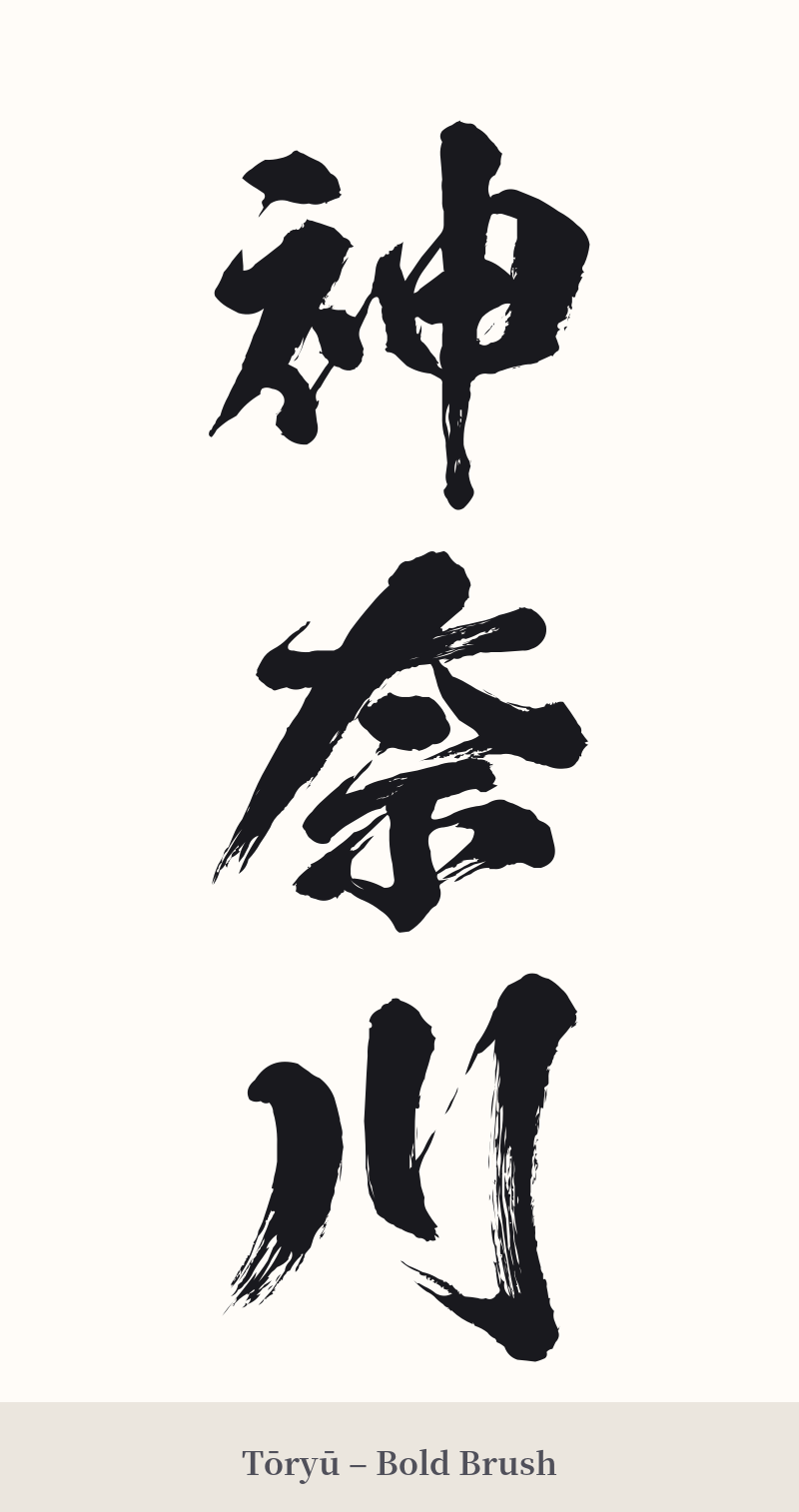
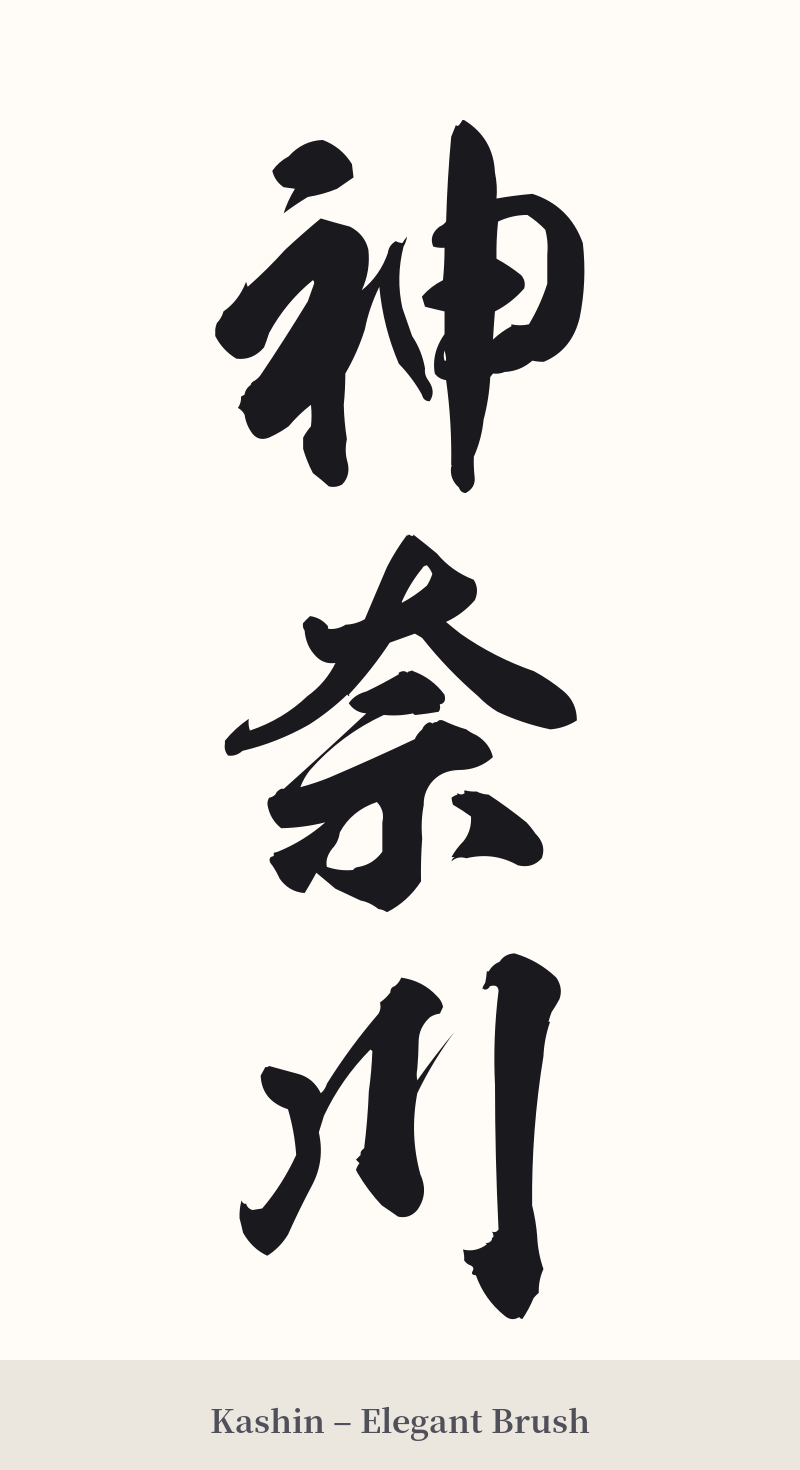
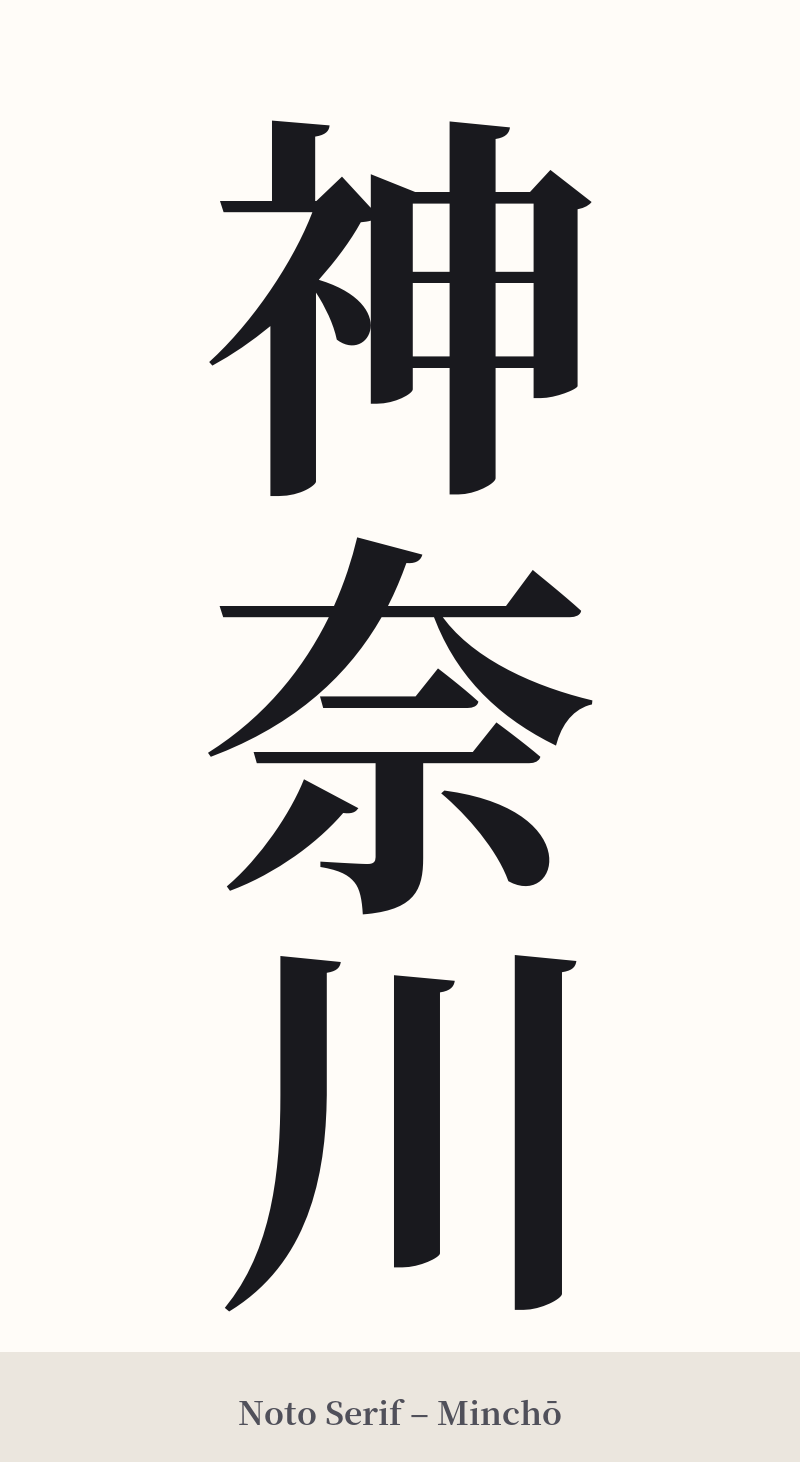
🖌️ Font Styles for 神奈川
The same kanji can look dramatically different depending on the calligraphy style. Choose a font that matches the mood you want for your tattoo or design.
🎨 Tattoo Suitability
📐 Tattoo Design Guide
For a tattoo of 神奈川, the design should reflect the personal meaning it holds for you. Since it's a place name, context is everything.
– Placement: A vertical orientation works beautifully on the forearm, calf, or along the spine, echoing traditional Japanese calligraphy scrolls. A horizontal layout is well-suited for the chest or upper back.
– Font Style: A classic, dynamic calligraphy style (shodō) can connect the design to Japan's rich history, especially the samurai era of Kamakura. For a more modern feel reflecting Yokohama or Kawasaki, a clean, crisp Mincho or Gothic font would be appropriate.
– Visual Elements: Consider incorporating imagery that relates to your connection with Kanagawa. This could be a subtle wave pattern referencing Hokusai's print, a silhouette of the Kamakura Daibutsu, or the skyline of Yokohama's Minato Mirai.
Comments