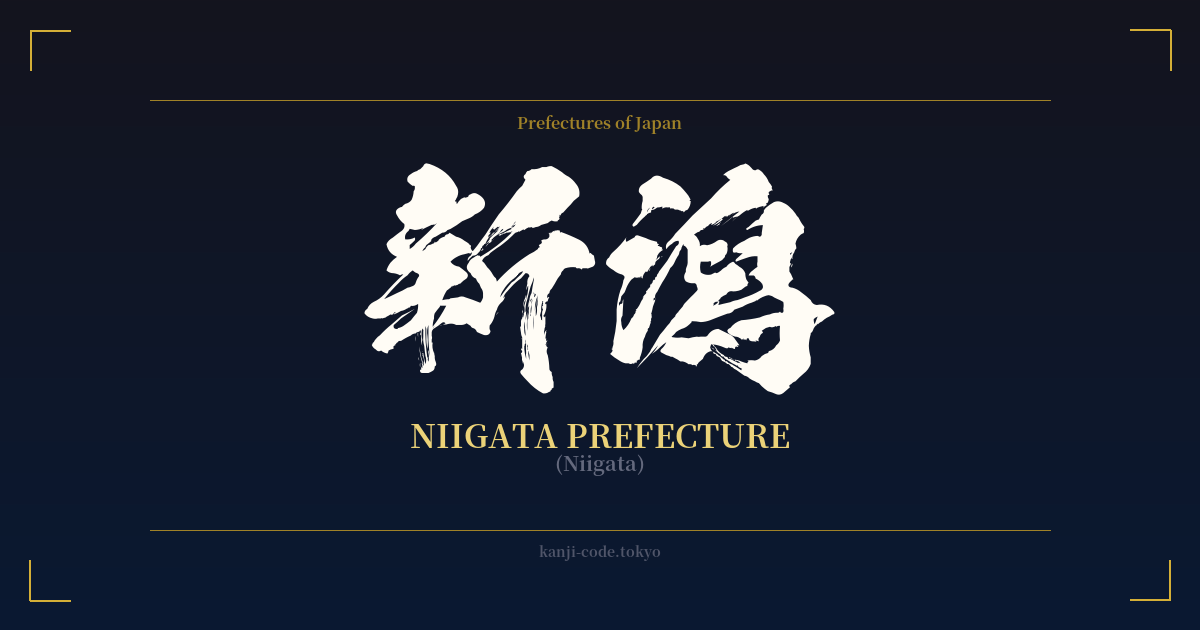
✍️ 新潟 (Niigata) — Cultural Context
The name 新潟 (Niigata) literally translates to "New Lagoon." This isn't just a poetic title; it's a direct reference to the region's geography and history. The Niigata Plain, where the prefecture's main city is located, was historically a vast wetland area characterized by lagoons and marshes formed by the confluence of Japan's two longest rivers, the Shinano and the Agano, as they empty into the Sea of Japan.
Over centuries, extensive land reclamation projects transformed these wetlands into the fertile plains that exist today. The name 新潟, therefore, captures a moment in time—the creation of new land from the water-logged earth. It speaks to a history of human endeavor and a deep relationship with the natural landscape.
Culturally, Niigata is perhaps most famous as Japan's "Snow Country" (雪国, Yukiguni). This title was immortalized in the Nobel Prize-winning novel of the same name by Yasunari Kawabata. The region endures some of the heaviest snowfall on Earth, a phenomenon that has profoundly shaped the local culture, architecture, and character of its people. This immense snowfall, while challenging, is also a blessing. The pure, abundant snowmelt filters down from the mountains, providing the pristine water that is the lifeblood of Niigata's other famous products.
This brings us to what Niigata is best known for today: rice and sake. The prefecture is the home of Koshihikari, arguably Japan's most famous and beloved variety of rice. The combination of fertile soil, a significant temperature difference between day and night, and the aforementioned pure water creates the perfect conditions for rice cultivation. Consequently, where there is great rice and great water, there is exceptional sake. Niigata's sake breweries are renowned throughout Japan and the world for producing crisp, clean (tanrei karakuchi) sake that perfectly reflects its snowy origins.
Beyond the mainland, Niigata Prefecture also includes Sado Island, a place of historical exile for political figures and artists, which later became known for its gold mines. Today, Sado is famous for the Kodo taiko drumming troupe, an internationally acclaimed group that embodies the powerful spirit and discipline of Japanese culture. Thus, the name 新潟 carries with it the story of land and water, the resilience of a people in a harsh climate, and the refined taste of Japan's finest agricultural products.
🖌️ Font Styles for 新潟
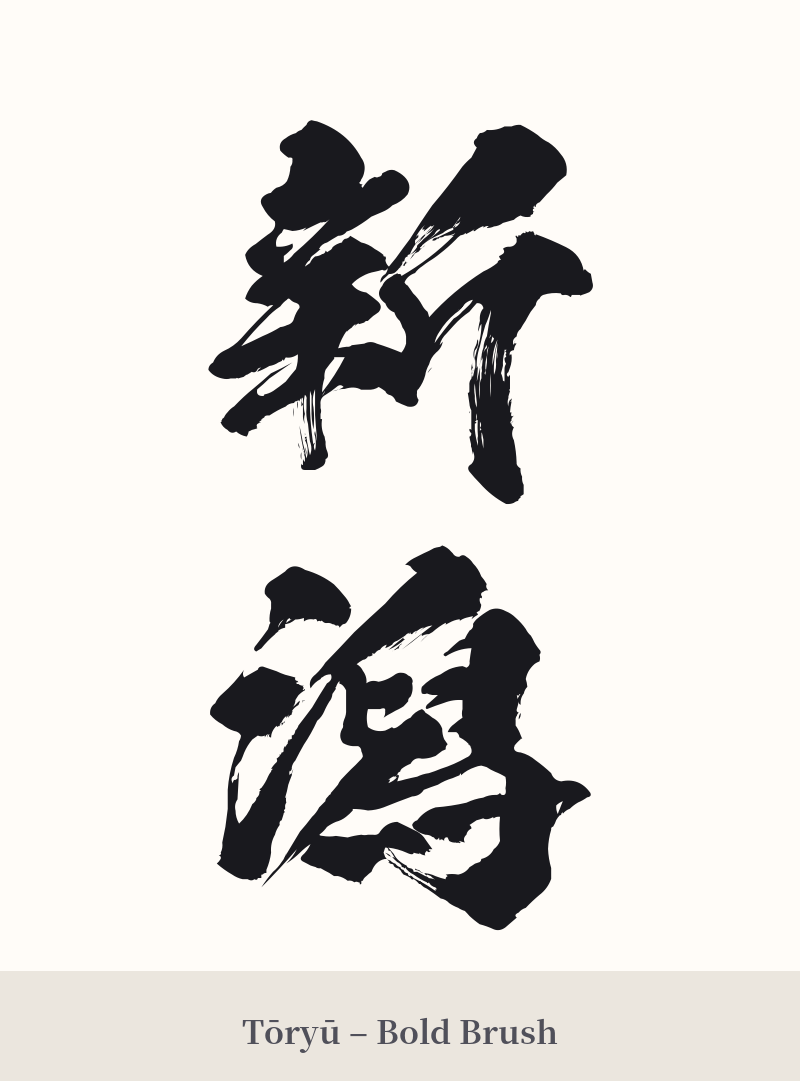
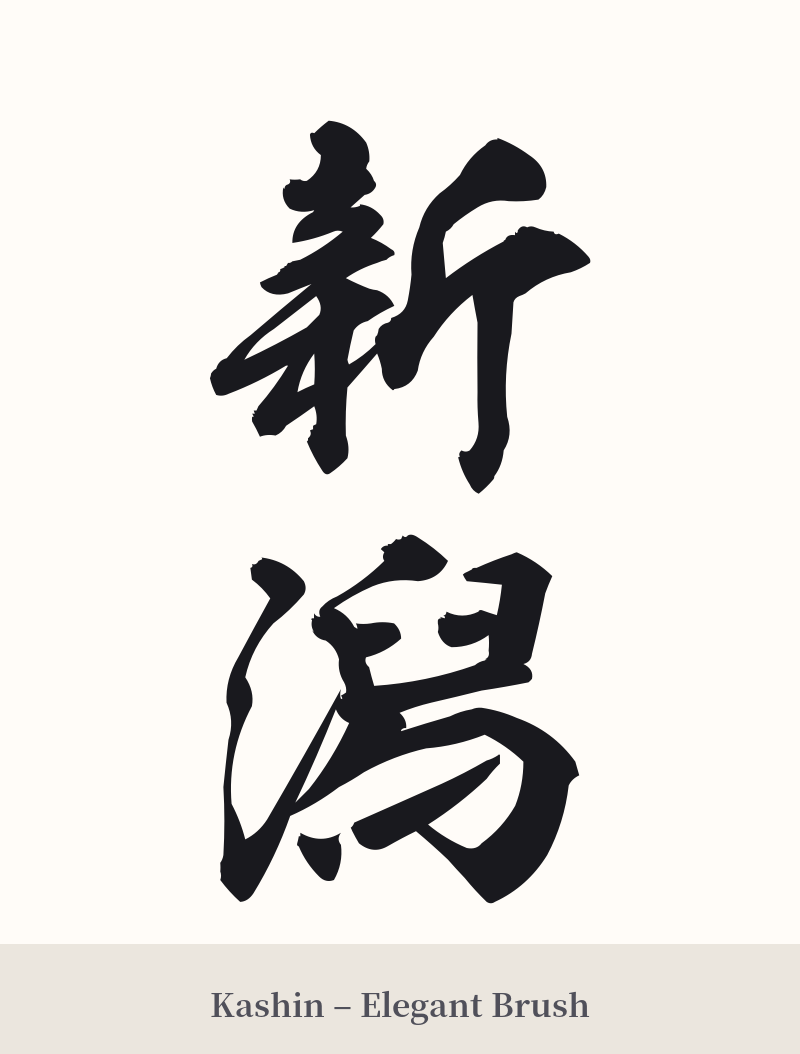
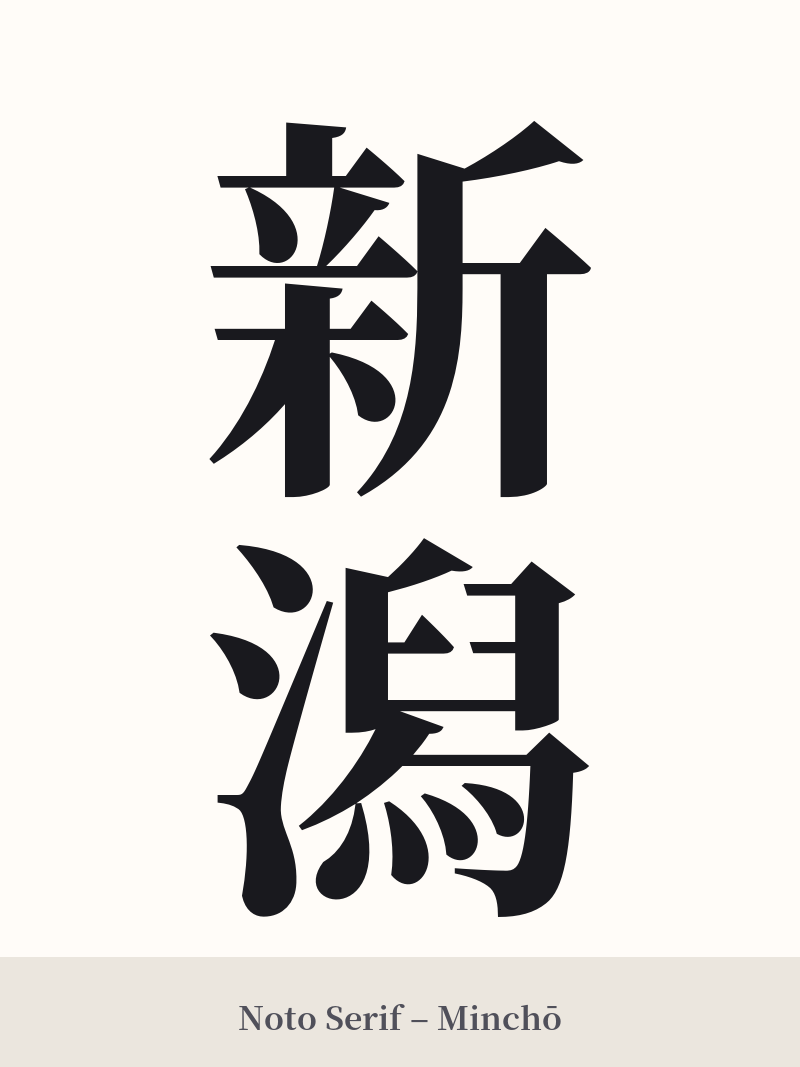
The same kanji can look dramatically different depending on the calligraphy style. Choose a font that matches the mood you want for your tattoo or design.
🎨 Tattoo Suitability
📐 Tattoo Design Guide
The kanji 新潟 offers a balanced yet intricate design. The first character, 新, is relatively open, while the second, 潟, is dense and complex. This contrast can be visually appealing.
– Placement: Due to the complexity of the second character, a larger placement is recommended to ensure the strokes remain clear over time. Consider areas like the forearm, the calf, or across the shoulder blades where the design can be rendered with sufficient detail.
– Style: A traditional calligraphy (shodō) style, such as the semi-cursive Gyosho, can add fluidity and elegance. For a more modern and crisp look, a Mincho (serif) font would highlight the architectural structure of the characters. Avoid overly complex or thin fonts that might make the 潟 character hard to read.
– Visual Elements: To enhance the meaning, consider incorporating elements symbolic of Niigata. A backdrop of subtle snowflakes, stalks of rice, a stylized wave from the Sea of Japan, or even a silhouette of a sake bottle can create a unique and deeply personal piece.
Comments