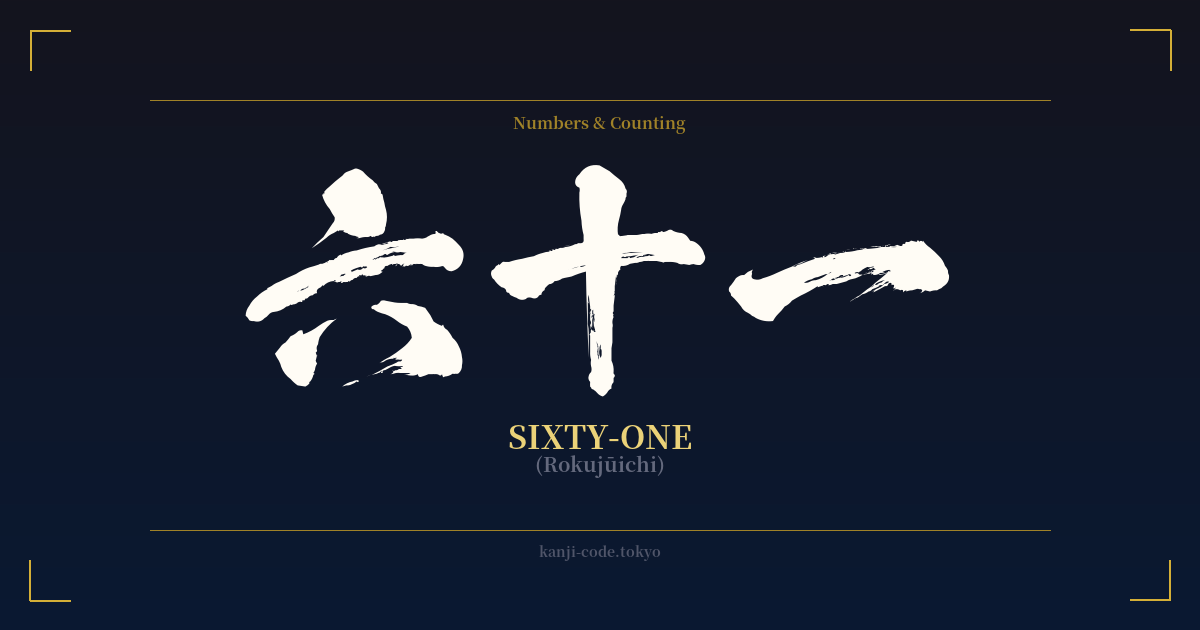
✍️ 六十一 (Rokujūichi) — Cultural Context
The Japanese word for sixty-one, 六十一 (Rokujūichi), is a straightforward combination of characters: 六 (roku, six), 十 (jū, ten), and 一 (ichi, one). In its literal sense, it is simply a number, constructed logically as 'six-tens-one'. This method of forming numbers is a hallmark of the Japanese counting system, making it transparent and easy to understand.
However, the number 61 holds a profound cultural significance that elevates it far beyond mere mathematics. It is intrinsically linked to a major life milestone known as Kanreki (還暦). Kanreki is the celebration of one's 60th birthday, which marks the beginning of their 61st year of life. This isn't just any birthday; it represents the completion of a full cycle and the start of a new one.
The tradition is rooted in the ancient Chinese sexagenary cycle, a 60-year calendar system combining ten heavenly stems (Jikkan) and twelve earthly branches (Jūnishi), the latter of which are the animals of the zodiac. A person completes one full loop of this cosmic calendar when they turn 60. At this point, the calendar resets, and they are metaphorically 'reborn'.
The Kanreki celebration symbolizes this rebirth. The individual being honored traditionally wears a red vest called a chanchanko (ちゃんちゃんこ) and a matching red hat. Red is the color associated with babies and is believed to ward off evil, thus symbolizing a return to infancy and the start of a second childhood. It is a joyous occasion for families to gather, honor their elder's long life, and wish them health and happiness for the new cycle ahead.
Therefore, while 六十一 (Rokujūichi) literally means sixty-one, its cultural resonance points to the beginning of this new chapter. It represents renewal, longevity, and the culmination of a life's journey, all while looking forward to the future. In modern Japan, where 60 is no longer considered old, the celebration has evolved but remains a cherished tradition, marking a transition from active work life to a new phase of freedom and personal pursuits.
🖌️ Font Styles for 六十一
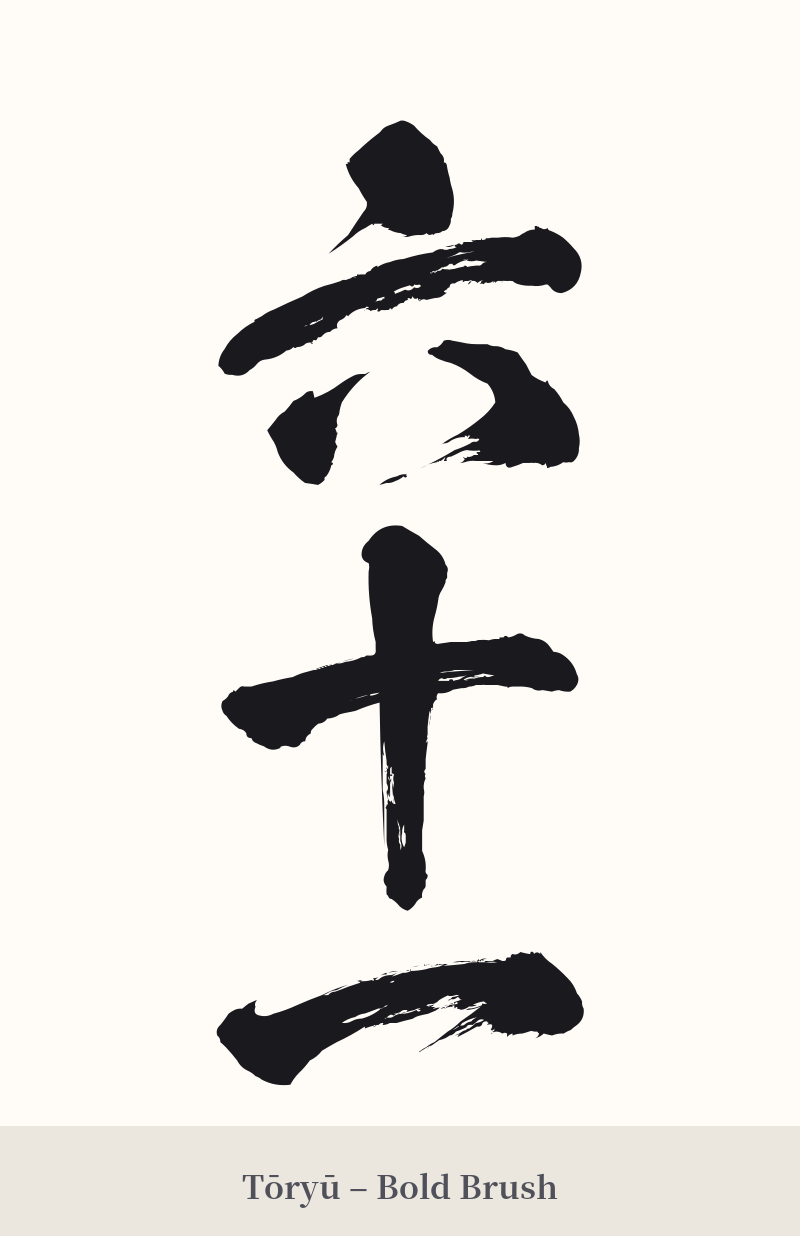
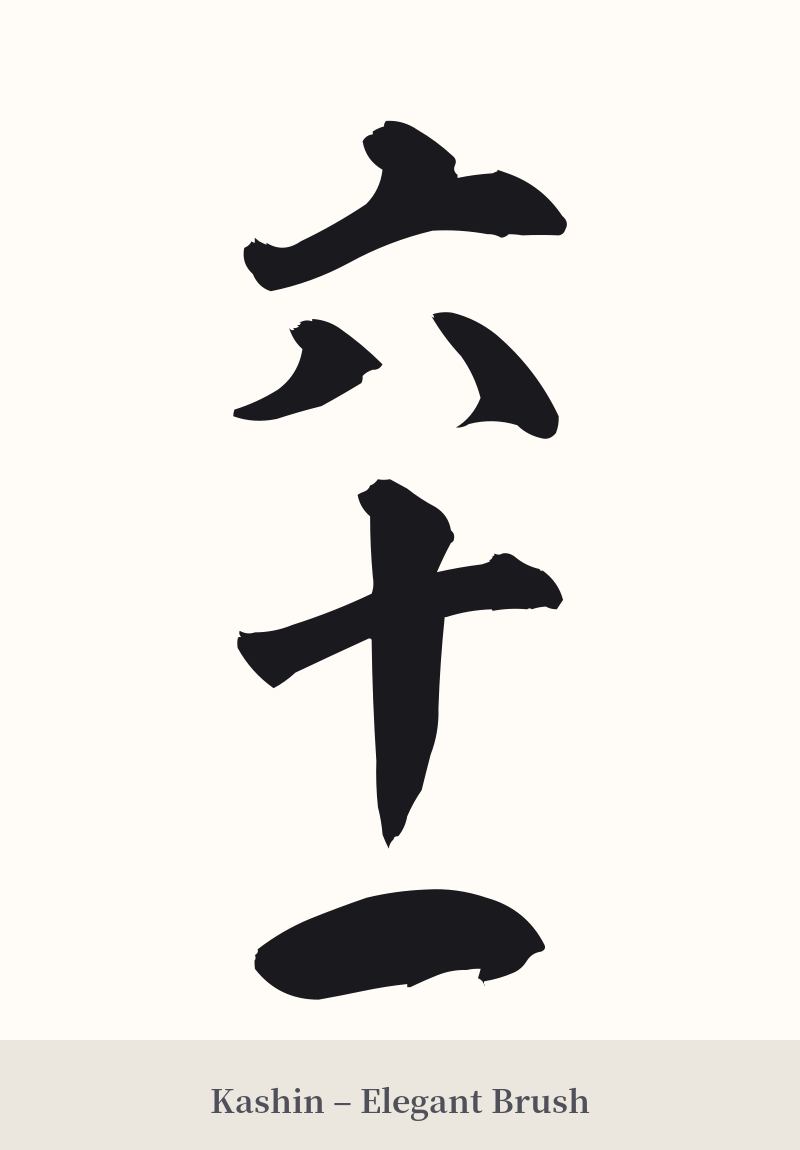
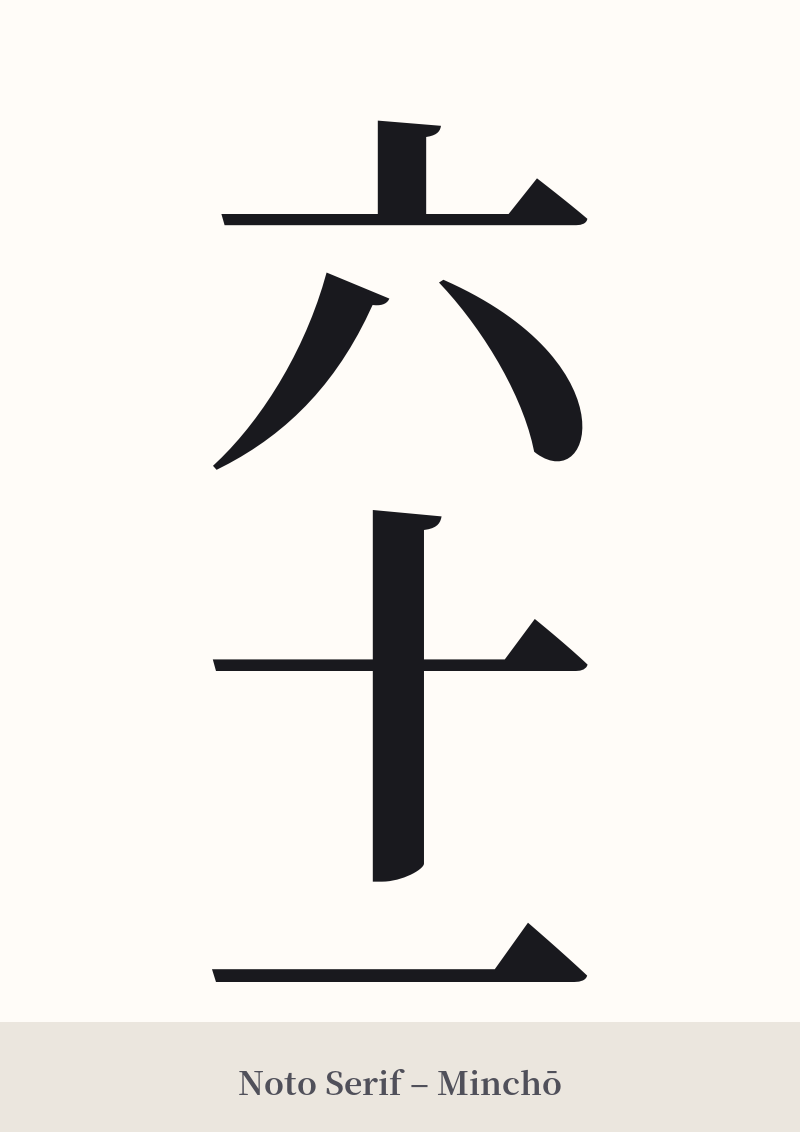
The same kanji can look dramatically different depending on the calligraphy style. Choose a font that matches the mood you want for your tattoo or design.
🎨 Tattoo Suitability
📐 Tattoo Design Guide
A tattoo of 六十一 (Rokujūichi) is best suited for a design that honors its specific, personal meaning rather than aiming for broad aesthetic appeal.
– Placement: Because of its personal nature, smaller, more discreet placements are often ideal. Consider the inner wrist, behind the ear, on the ankle, or over the heart. For a design celebrating a parent or grandparent's Kanreki, it could be incorporated into a larger piece that includes other meaningful symbols.
– Font Style: The simplicity of the characters lends itself to clean and traditional fonts. A crisp Mincho (serif) or Kaisho (block) style will look elegant and legible. For a more personal touch, a handwritten style mimicking a specific person's brushstrokes could be powerful.
– Visual Tips: Vertical alignment is the most traditional and aesthetically pleasing way to write these characters. To subtly hint at the Kanreki celebration, consider incorporating a touch of red into the design—perhaps one stroke, or a small red seal (hanko) stamp near the kanji. This adds a layer of meaning that connects directly to its cultural roots.
Comments