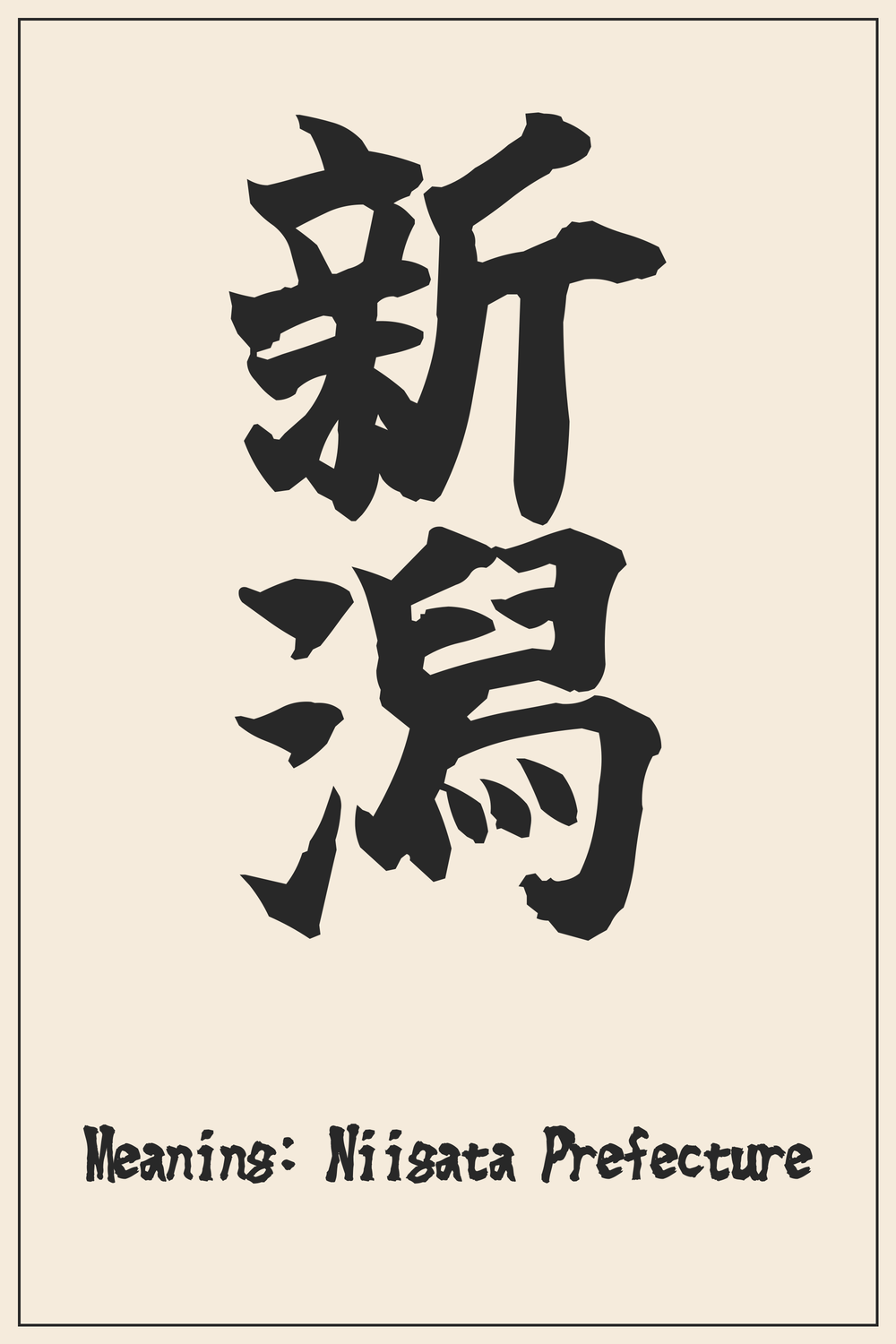
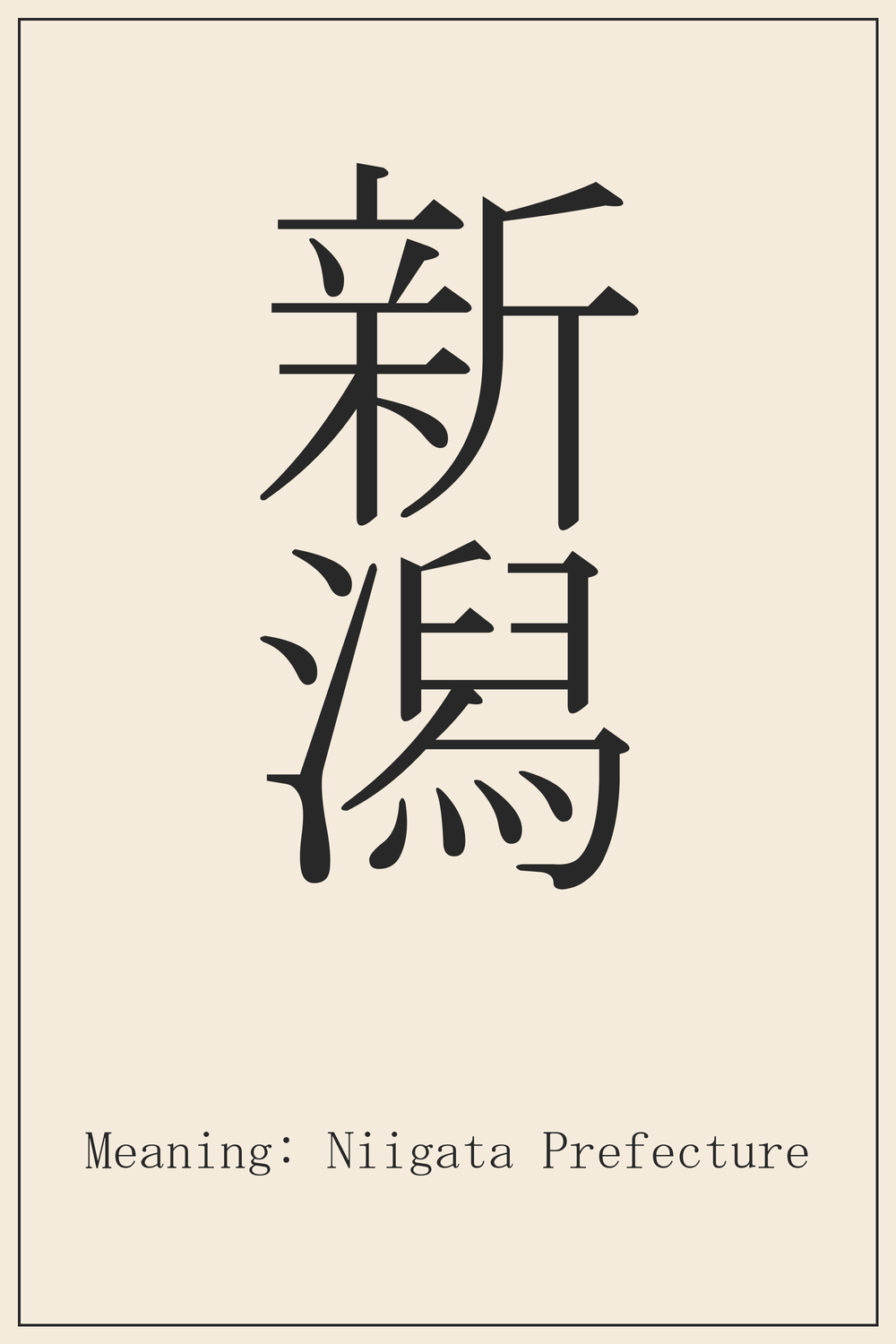
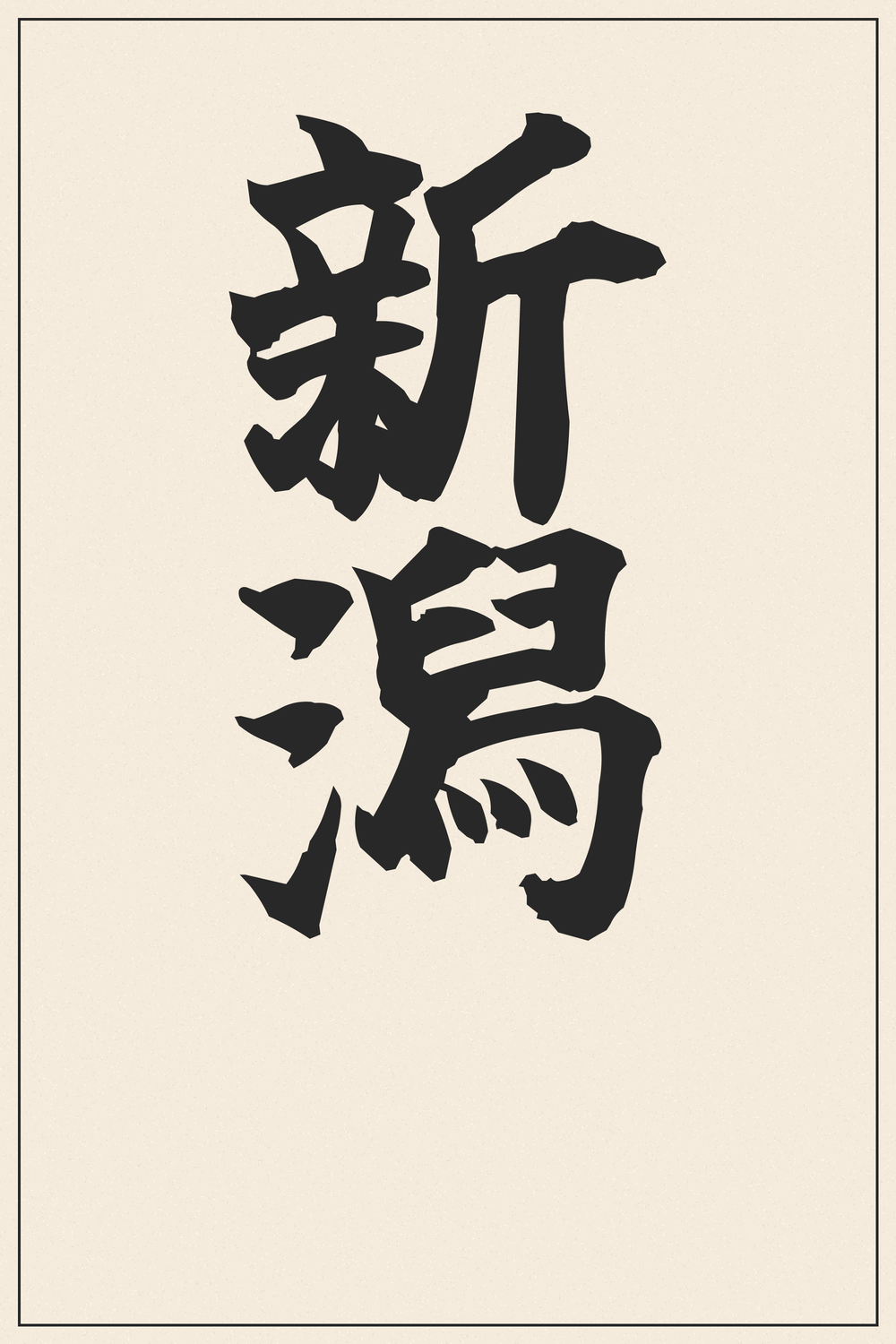
Niigata, a name evoking Japan’s serene coastal beauty, is more than just a place; it’s a symbol of natural abundance and cultural heritage. Its Kanji offers a profound connection to the land and its unique identity.
The atmosphere of a Kanji character changes dramatically depending on the font style. A character that looks elegant in a brush style might look bold and modern in a different font.
Recommendation:
Since a tattoo is permanent, we strongly recommend comparing various font styles beyond what is shown here. Use our designs as a trusted reference for the correct structure, but feel free to explore different artistic variations to find the perfect match for your vision.
The Deep Meaning Behind 新潟
The name “Niigata” literally translates to “new lagoon” or “new wetlands.” This reflects the region’s geographical history, characterized by its extensive network of rivers and lagoons that have shaped its landscape and culture, particularly its rich rice cultivation.
Niigata is renowned as Japan’s premier rice-producing region and is famous for its sake, beautiful snowy landscapes, and pristine coastline. The kanji embodies this identity, representing a place deeply connected to water and agricultural prosperity.
Kanji Breakdown
The compound kanji “新潟” is composed of two distinct characters, each contributing to its overall meaning.
Meaning: New, fresh. This character depicts a standing tree or axe (斤) and a rising sun (日) or, in some interpretations, cloth cut with an axe. It symbolizes novelty and beginnings, perfectly representing the “new” aspect of the lagoon.
Meaning: Lagoon, sandbar, wetlands. This character combines the water radical (氵) with 泻 (which signifies flowing or pouring out, or suggests sand washing away). It vividly portrays the watery landscape and coastal features that define Niigata.
Conclusion
The Kanji for Niigata (新潟) beautifully encapsulates its identity as a region of “new lagoons,” famous for its abundant rice fields, clear waters, and distinct natural environment. It represents a deep connection to nature and a history of agricultural prosperity.
Choosing “Niigata” as a tattoo celebrates a specific, cherished part of Japan, reflecting an appreciation for its natural beauty and cultural significance. It is a unique and meaningful tribute to this vital Japanese prefecture.
Comments