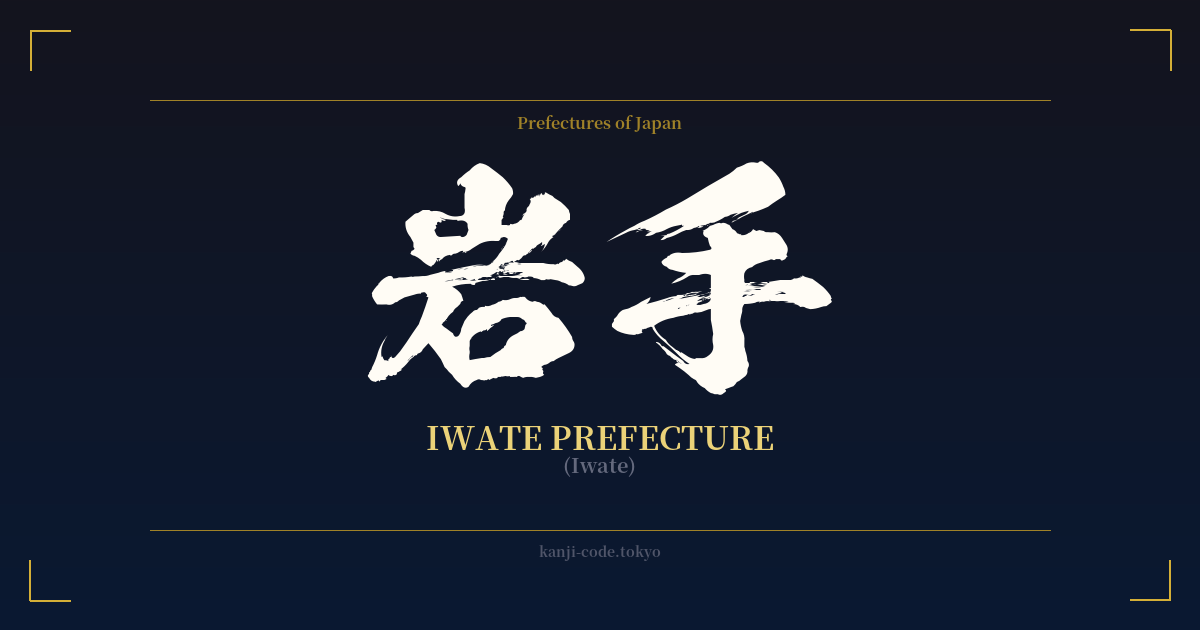
✍️ 岩手 (Iwate) — Cultural Context
The name 岩手 (Iwate) translates literally to "rock hand," a peculiar combination that hints at a deeper story rooted in local folklore. The most famous origin story comes from the city of Morioka, the prefectural capital. Legend tells of a demon named Rasetsu who terrorized the local villagers. Desperate, the people prayed to the deity of the Mitsuishi Shrine for help.
The deity answered their prayers, captured the demon, and bound it to three large rocks (三ツ石, mitsu-ishi) on the shrine grounds. To secure its freedom, the demon made a promise to never trouble the village again, sealing the oath with a handprint pressed into one of the rocks. This handprint, the "rock hand," is said to be the origin of the name Iwate.
Beyond the legend, Iwate Prefecture is a land of immense natural beauty and resilience. It is the second-largest prefecture in Japan, characterized by a rugged, dramatic coastline, vast mountain ranges, and serene rivers. The Sanriku Coast, a major feature of Iwate, is known for its stunning cliffs and bays, but it also bears the scars of the 2011 Tōhoku earthquake and tsunami. The region's story is one of enduring hardship and rebuilding with incredible strength.
Culturally, Iwate is rich with tradition. It is the home of Nambu Tekki, a form of traditional ironware prized for its craftsmanship and durability, particularly in crafting teapots (tetsubin). The prefecture is also famous for its unique culinary experiences, such as Wanko Soba, an all-you-can-eat noodle challenge where small bowls of soba are rapidly served to you until you surrender.
Iwate was also the home of Kenji Miyazawa, one of Japan's most beloved poets and authors of children's literature. His works are deeply inspired by the natural landscapes and starry skies of his homeland, which he affectionately called "Ihatov." This idealized version of Iwate captures the region's blend of rustic charm and profound, almost mystical, beauty. Therefore, the kanji 岩手 represents not just a location, but a place of myth, natural power, artistic inspiration, and unwavering spirit.
🖌️ Font Styles for 岩手
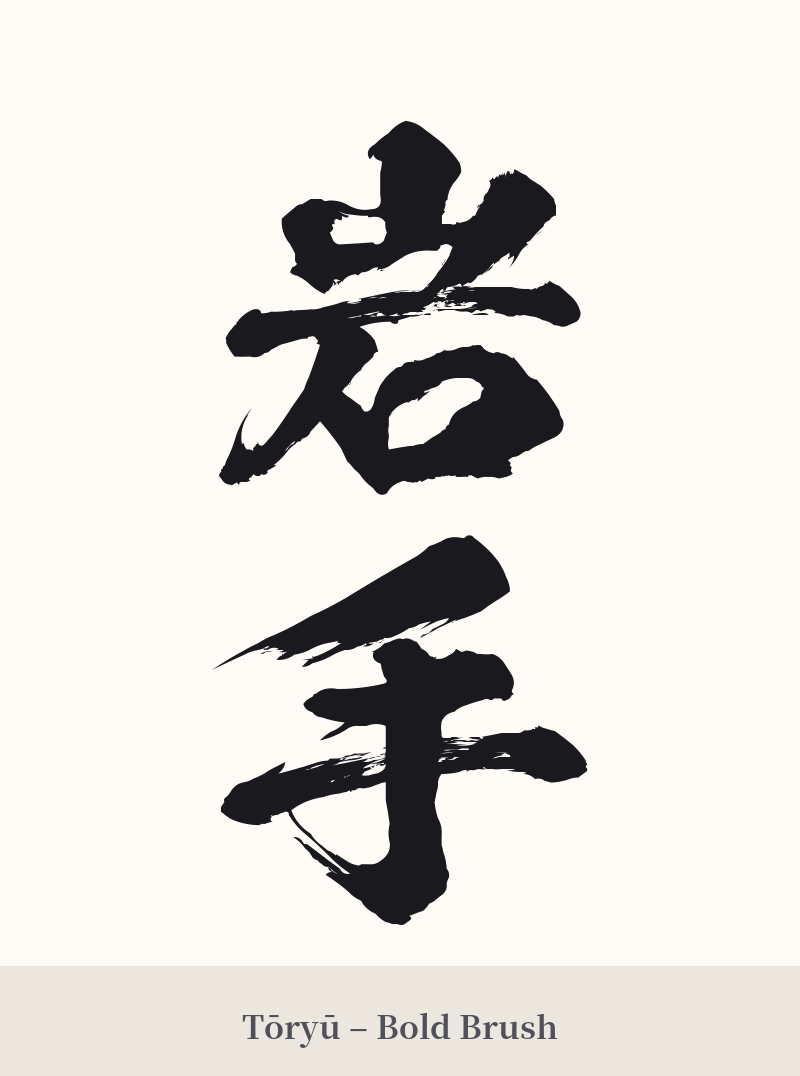
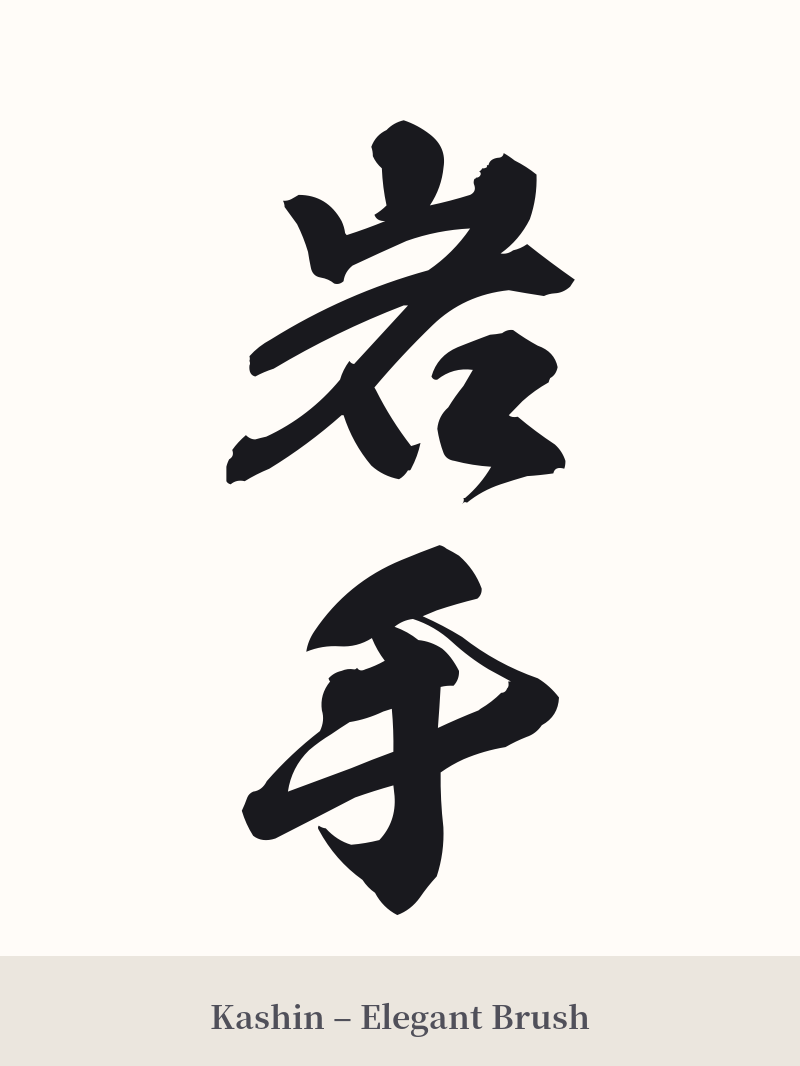
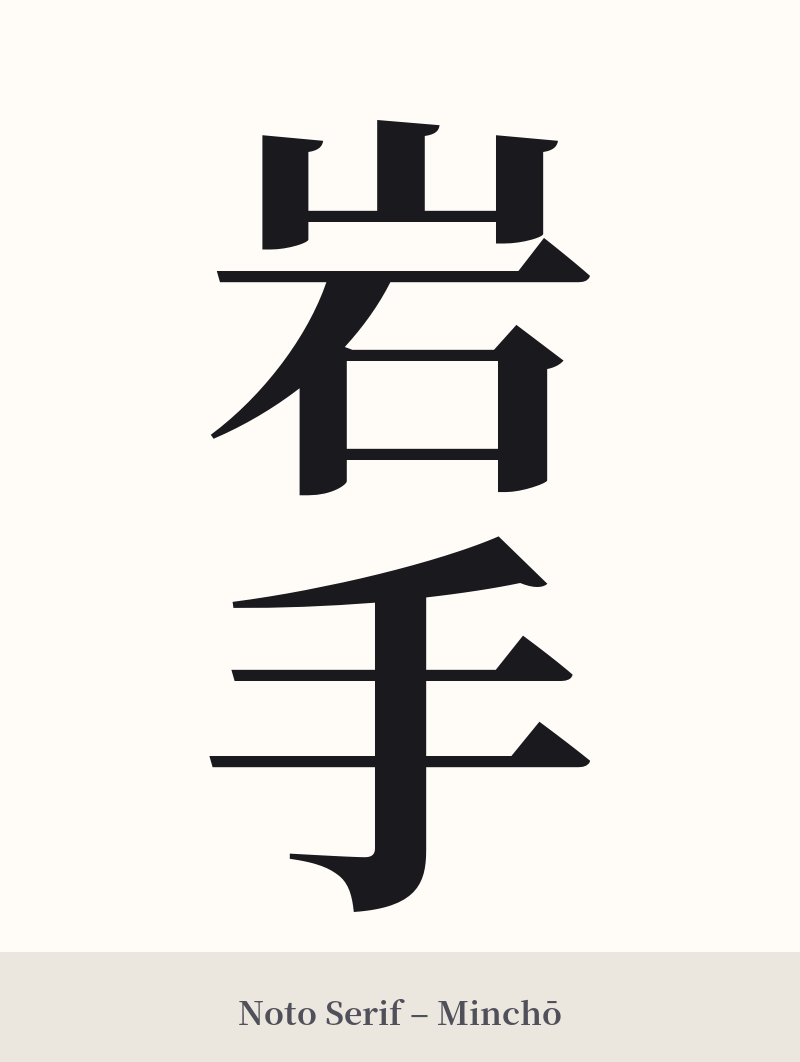
The same kanji can look dramatically different depending on the calligraphy style. Choose a font that matches the mood you want for your tattoo or design.
🎨 Tattoo Suitability
📐 Tattoo Design Guide
For a tattoo of 岩手, the design should honor its specific meaning as a place name. This is a tattoo of personal connection, not abstract philosophy.
– Placement: Consider a place that feels personal and connected to your story with Iwate, such as the shoulder blade, inner arm, or along the ribs. A vertical orientation works very well for these two characters.
– Font Style: A strong, stable script like Kaisho (block style) complements the 'rock' (岩) character. For a more fluid, natural feel that evokes the landscape, a semi-cursive Gyosho style could be beautiful.
– Visual Elements: Instead of just the kanji, consider incorporating imagery associated with the prefecture. This could include waves from the Sanriku coast, pine trees, a subtle depiction of the three rocks of Mitsuishi Shrine, or even an abstract design inspired by Nambu ironware patterns.
Comments