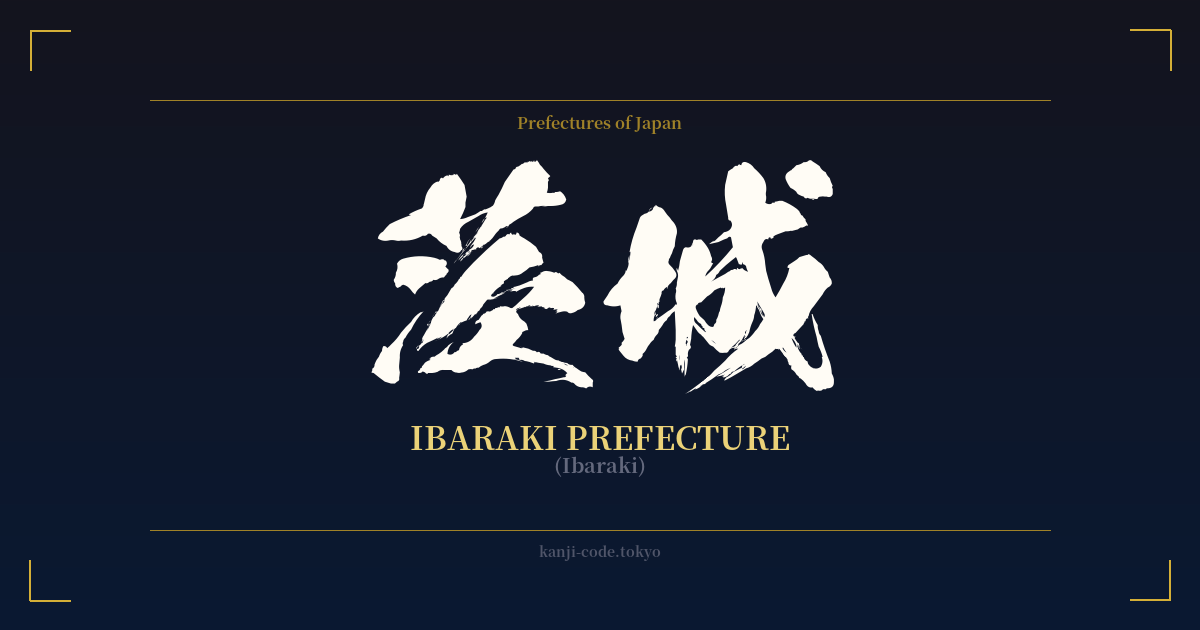
✍️ 茨城 (Ibaraki) — Cultural Context
The name 茨城 (Ibaraki) translates literally to "thorny castle" or "briar castle." This evocative name isn't just poetic; it's rooted in the deep history and folklore of the region, located in the Kantō plain northeast of Tokyo.
The origin is said to come from the ancient provincial record, the Hitachi no Kuni Fudoki, compiled in the 8th century. According to legend, a defiant local figure named Kurohiko built a fortress using thorny ibara bushes to repel the forces of the imperial court. This act of rugged defiance, using nature itself as a fortification, gave the area its name. The kanji 茨 (ibara) for 'briar' and 城 (ki/jō) for 'castle' capture this foundational story perfectly.
Historically, the area was known as Hitachi Province and was a significant domain during the Edo period, ruled by a branch of the powerful Tokugawa clan from their seat in Mito. This legacy is still visible today in Mito's Kairaku-en, one of Japan's Three Great Gardens, renowned for its thousands of plum trees.
Modern Ibaraki presents a fascinating duality. On one hand, it remains a vital agricultural heartland, famous throughout Japan for producing natto (fermented soybeans), melons, and lotus root. Its long Pacific coastline supports a thriving fishing industry. This connection to the land and sea gives the prefecture a grounded, rustic character.
On the other hand, Ibaraki is a hub of cutting-edge science and technology. Tsukuba Science City, established in the 1960s, hosts dozens of national research institutes and universities, including JAXA (the Japan Aerospace Exploration Agency). This makes Ibaraki a place where ancient traditions and futuristic ambitions coexist. The prefecture is also home to the Ushiku Daibutsu, one of the tallest statues in the world, and the iconic Hitachi Seaside Park, famous for its rolling hills of seasonal flowers. Thus, the name 茨城, born from a story of rustic defense, now represents a complex and modern Japanese prefecture.
🖌️ Font Styles for 茨城
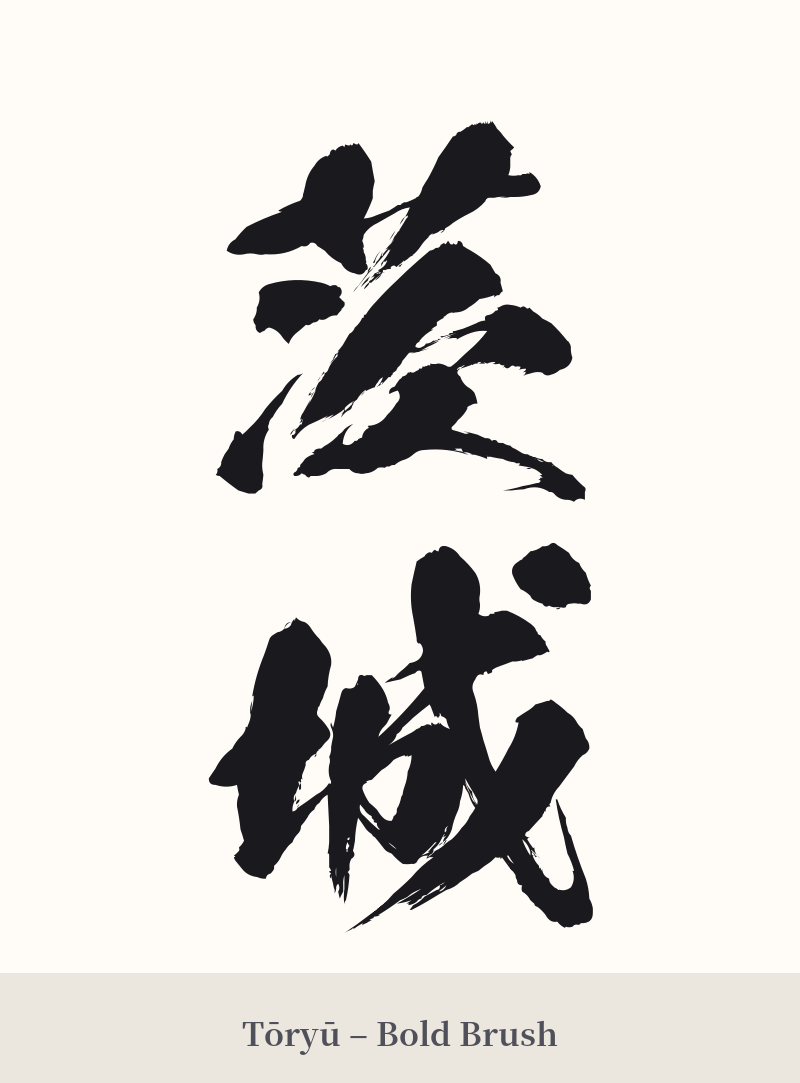
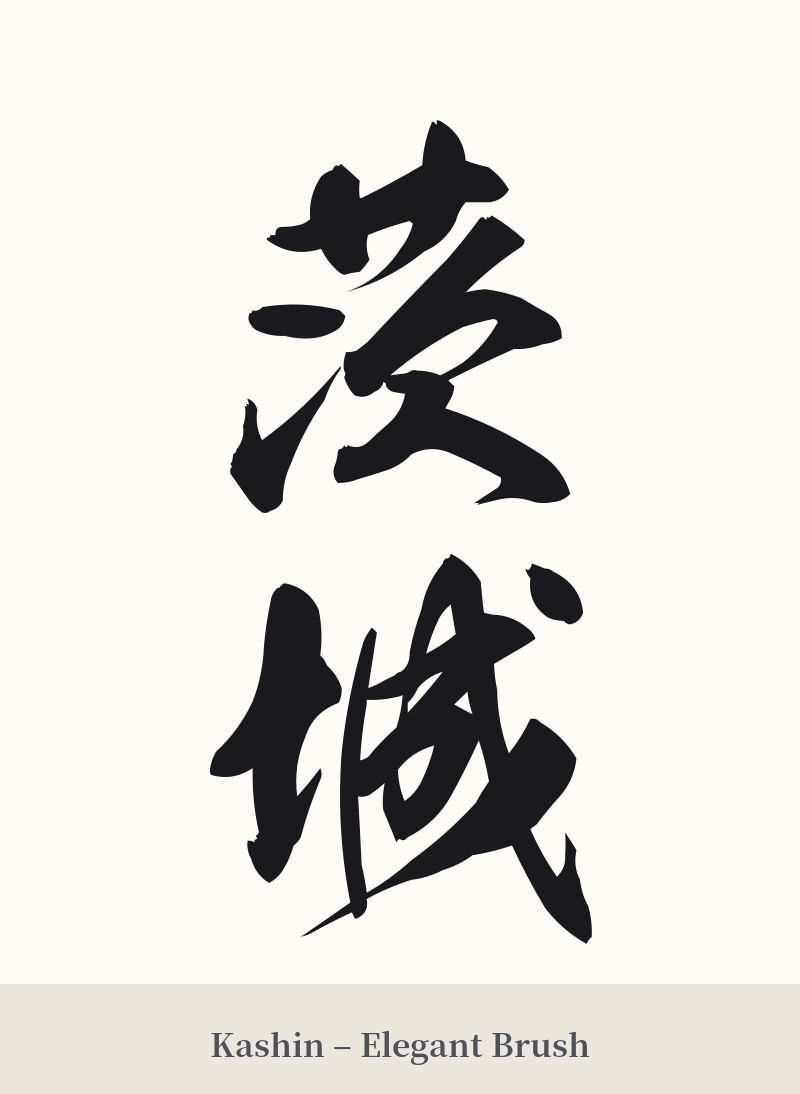
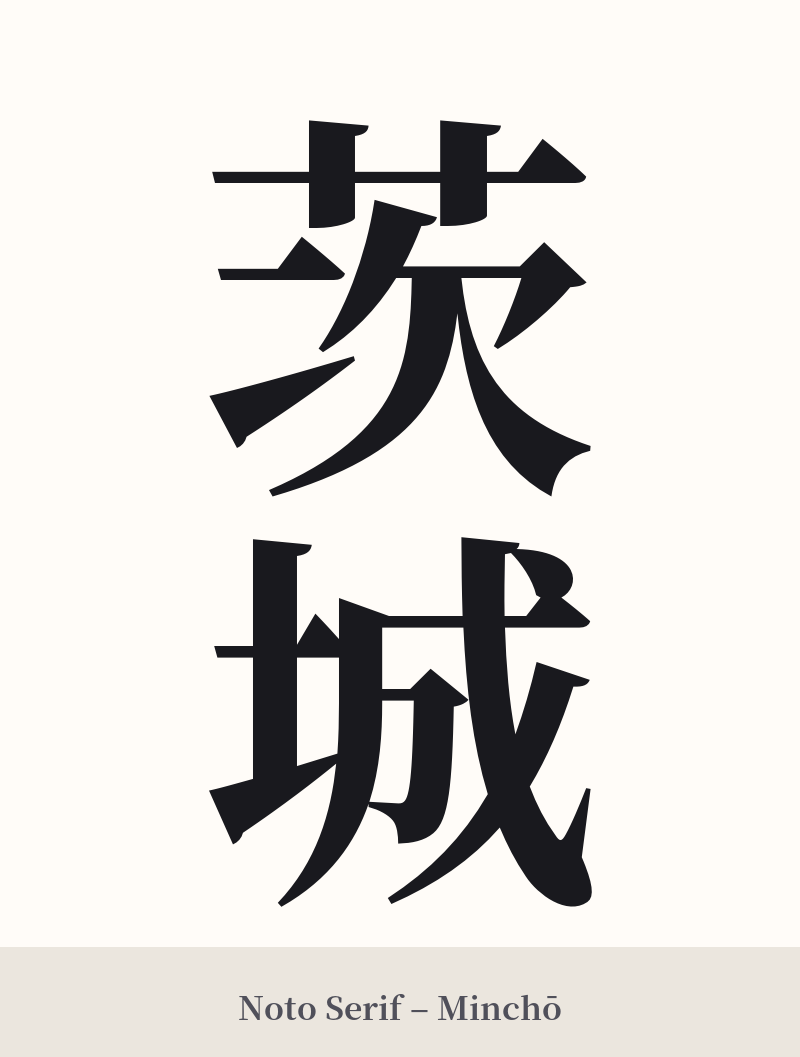
The same kanji can look dramatically different depending on the calligraphy style. Choose a font that matches the mood you want for your tattoo or design.
🎨 Tattoo Suitability
📐 Tattoo Design Guide
For a tattoo of 茨城, the design should honor its identity as a proper noun. Clarity and balance are key.
– Placement: A vertical alignment on the forearm, calf, or along the spine works well. For a horizontal design, the chest or upper back provides a stable canvas.
– Font Style: Consider a Kaisho (block) script to emphasize the 'castle' (城) character's strong, architectural lines. Alternatively, a slightly more fluid Gyosho (semi-cursive) style can capture the organic, thorny nature of the 'briar' (茨) character.
– Visual Embellishments: While the kanji can stand alone, subtle additions could enhance the meaning. Consider a background of fine, thorny vines wrapping around the characters, or place the kanji within a stylized outline of a Japanese castle wall. Incorporating a motif of a plum blossom, the symbol of Mito's Kairaku-en garden, would add a layer of specific cultural reference.
Comments