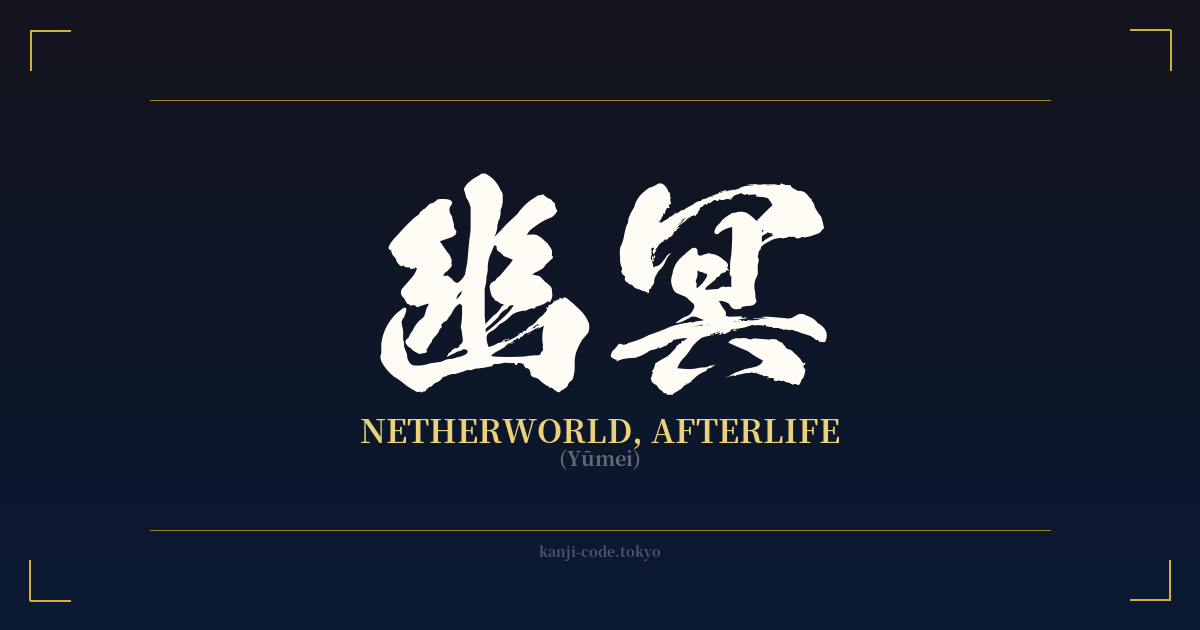
✍️ 幽冥 (Yūmei) — Cultural Context
幽冥 (Yūmei) is a profound and poetic term that refers to the netherworld, the afterlife, or a realm of darkness and obscurity. It is not a word used in everyday conversation but is found in literature, religious texts, and philosophical discussions about what lies beyond life. The term evokes a sense of a quiet, shadowy place, distinct from the fiery, punitive hells of other traditions.
In the Japanese spiritual landscape, 幽冥 occupies a space that overlaps with both Shinto and Buddhist beliefs. It is conceptually similar to 黄泉の国 (Yomi-no-kuni), the gloomy underworld of Shinto mythology where the dead reside. However, Yūmei is more abstract, representing the state of being after death rather than a specific geographical location with gods and goddesses. It is the dark, unseen world that coexists with our own.
From a Buddhist perspective, Yūmei can be understood as a part of the cycle of rebirth (samsara), a transitional realm. It's less about eternal damnation, like 地獄 (Jigoku), and more about the dark, unknown journey of the soul. The characters themselves—幽 (secluded, faint, dark) and 冥 (dark, underworld)—combine to create a powerful image of profound and deep obscurity. It’s the darkness of the abyss, the quiet of the grave, the space where the physical world's rules no longer apply.
This concept has been a powerful muse for Japanese artists and writers for centuries. It appears in classical poetry and noh theater to describe scenes of ghostly encounters or to contemplate the nature of mortality. The word carries an elegant, almost melancholic beauty. It suggests that the afterlife is not a place of terror but one of infinite, silent mystery—a tranquil, if somber, finality.
In modern pop culture, especially in anime, manga, and video games, Yūmei is often used to name supernatural abilities, dark dimensions, or realms inhabited by spirits. This usage has introduced the term to a global audience, often associating it with a cool, gothic aesthetic. However, its original weight remains: a serious and contemplative word about the ultimate unknown.
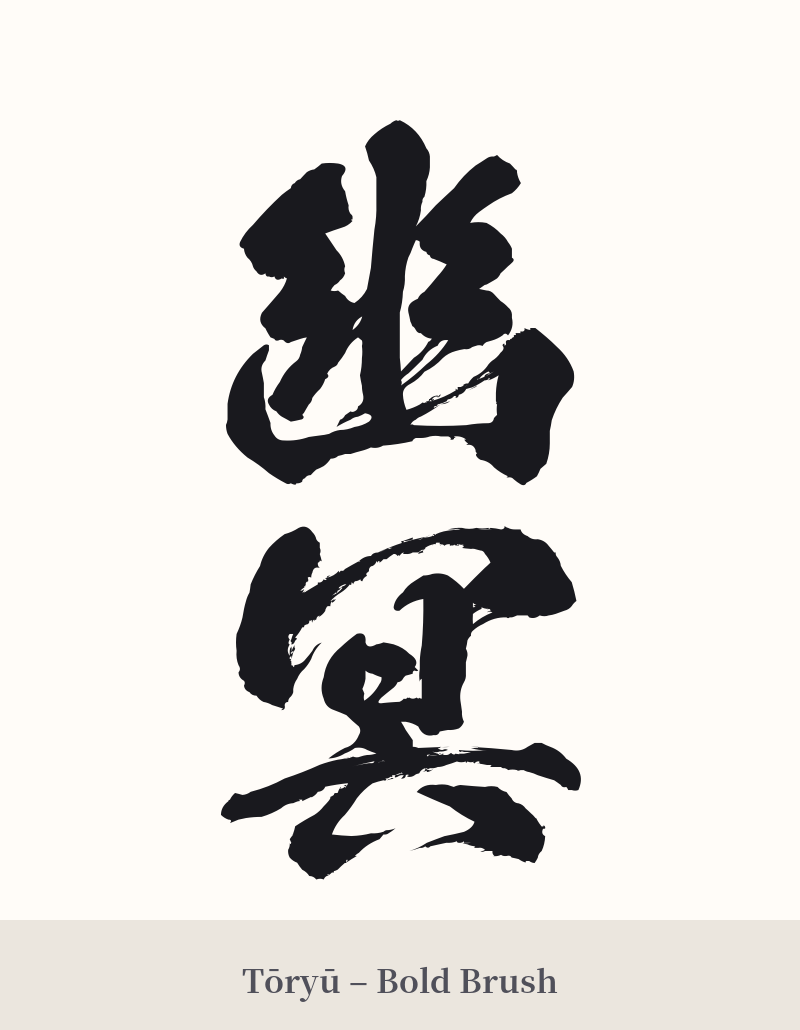
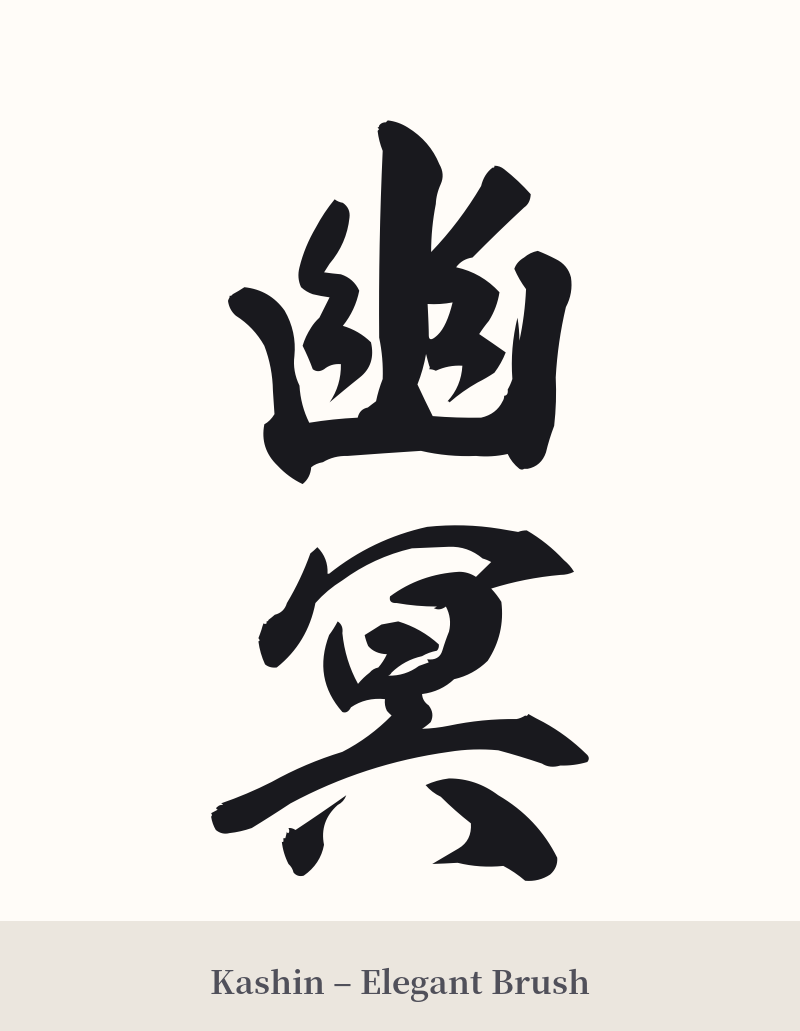
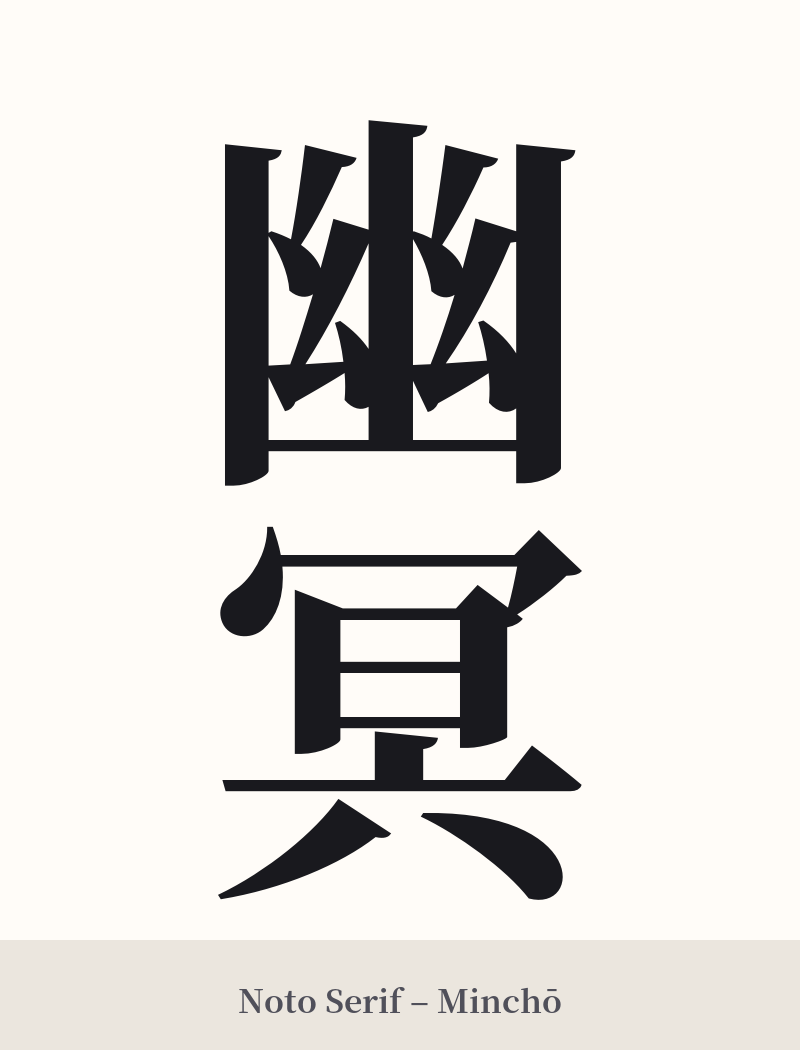
🖌️ Font Styles for 幽冥
The same kanji can look dramatically different depending on the calligraphy style. Choose a font that matches the mood you want for your tattoo or design.
🎨 Tattoo Suitability
📐 Tattoo Design Guide
The somber and ethereal nature of 幽冥 lends itself to specific design choices. A vertical orientation is highly recommended, as it creates a sense of descent or passage, fitting for a word about the afterlife. Good placements for a vertical design include the spine, the forearm, or along the calf.
For font style, you have two strong options:
– Cursive (草書, sōsho) or semi-cursive (行書, gyōsho) script: These styles enhance the ghostly, flowing quality of the word. The fluid, connected strokes can look like wisps of smoke or departing spirits, perfectly matching the 'faint' and 'secluded' meaning of 幽.
– Seal script (篆書, tensho): An ancient, stylized script would give the tattoo an arcane, mystical feel, as if it were an inscription on a tomb or a magical artifact.
To complement the kanji, consider incorporating imagery associated with the Japanese afterlife, such as spider lilies (彼岸花, higanbana), which are said to bloom along the path to the underworld. Other thematic elements could include faint smoke, a crescent moon, or a torii gate marking the boundary between the living world and the Yūmei.

Comments