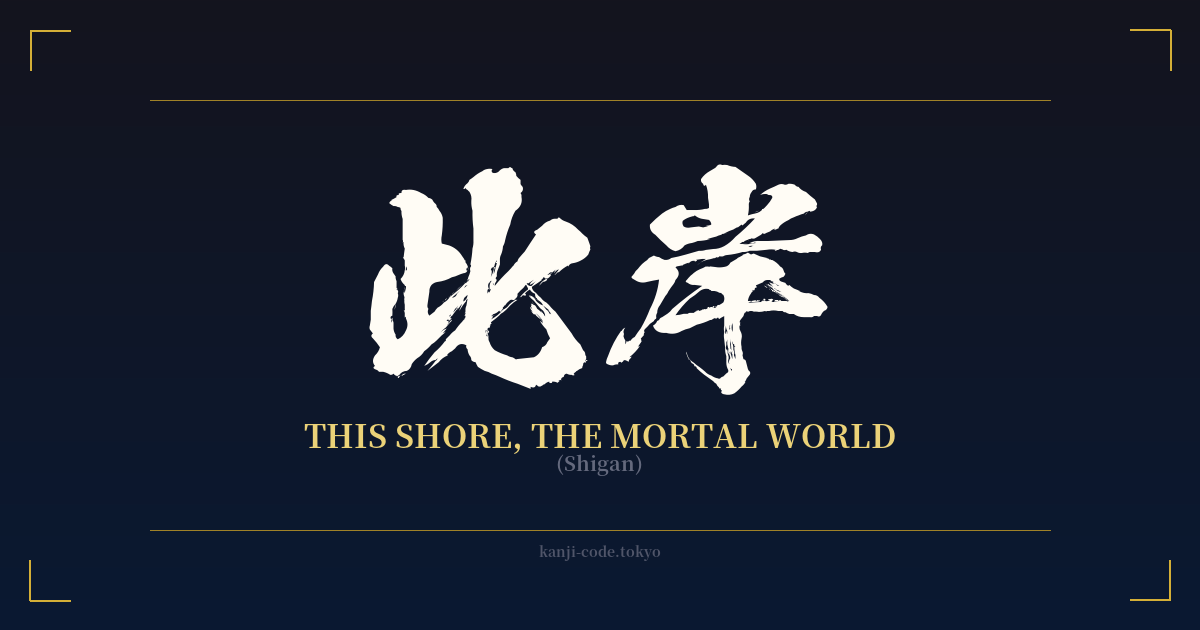
✍️ 此岸 (Shigan) — Cultural Context
In Japanese Buddhism, the word 此岸 (Shigan) offers a profound meditation on the nature of existence. Translated literally, it means 'this shore,' but its true weight lies in the powerful metaphor it represents. Shigan is our world—the realm of the living, a place defined by impermanence, desire, passion, and suffering. It is the reality we inhabit every day.
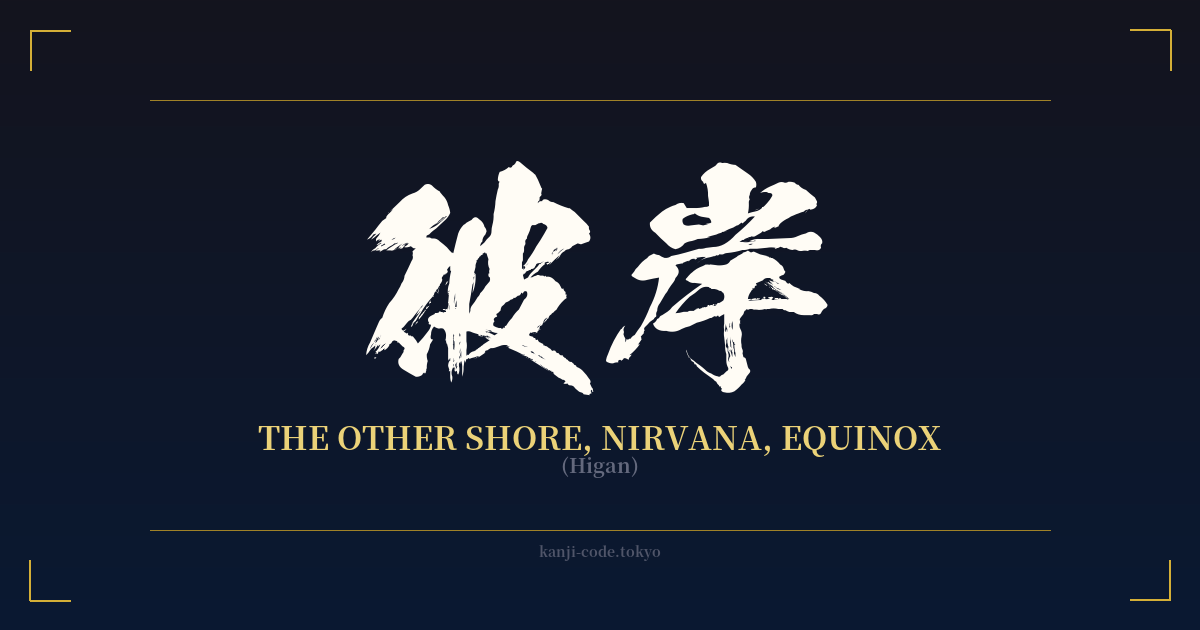
This concept doesn't exist in a vacuum. It is one half of a fundamental duality, standing in direct contrast to 彼岸 (Higan), 'the other shore.' Higan represents the realm of enlightenment, nirvana, or the Pure Land—a state of being free from the cycle of birth, death, and rebirth (samsara). Between these two shores flows the mythical 三途の川 (Sanzu no Kawa), the River of Three Crossings, which souls must traverse after death.
Therefore, to be in Shigan is to be on a journey. It is to exist within the struggle, with the hope of one day reaching the other side. This duality is central to Japanese spiritual thought and is physically observed during the Higan festivals, held during the spring and autumn equinoxes. During these times, it is believed that the veil between our world and the spirit world is at its thinnest, making it an auspicious time to visit ancestral graves and pray for the dead, bridging the gap between Shigan and Higan.
While Higan represents the ultimate spiritual goal, choosing Shigan as a concept to embrace is a powerful statement in itself. It is not an expression of nihilism or a glorification of suffering. Instead, it can be seen as a profound acceptance of the human condition. It is a commitment to finding meaning and beauty within the transient, imperfect world. It embodies the Zen idea of living fully in the present moment, acknowledging the struggles without being consumed by them. In a way, embracing Shigan is the first, most crucial step on the path toward Higan.
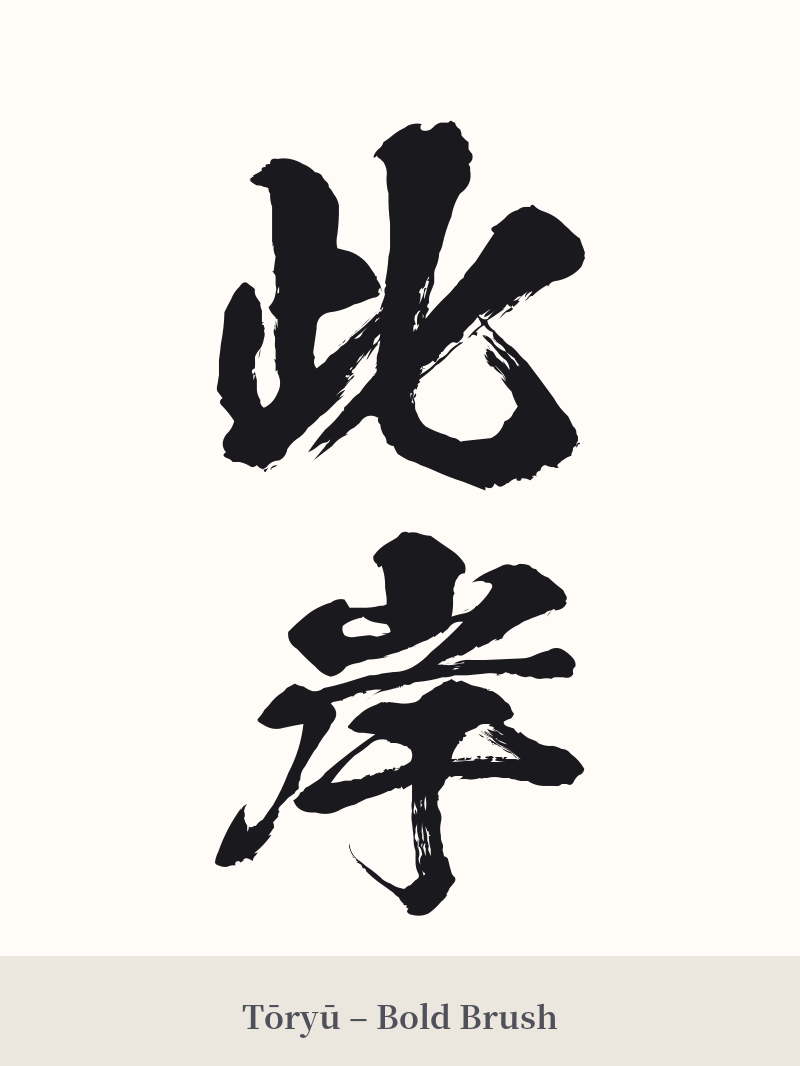
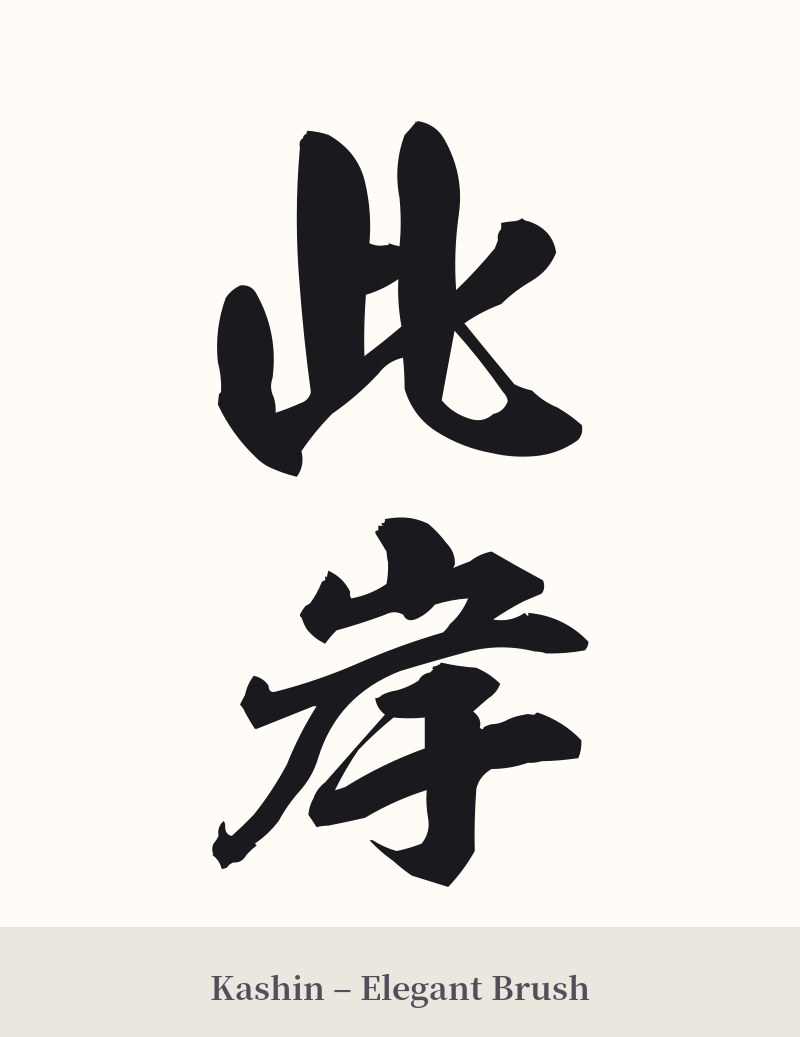
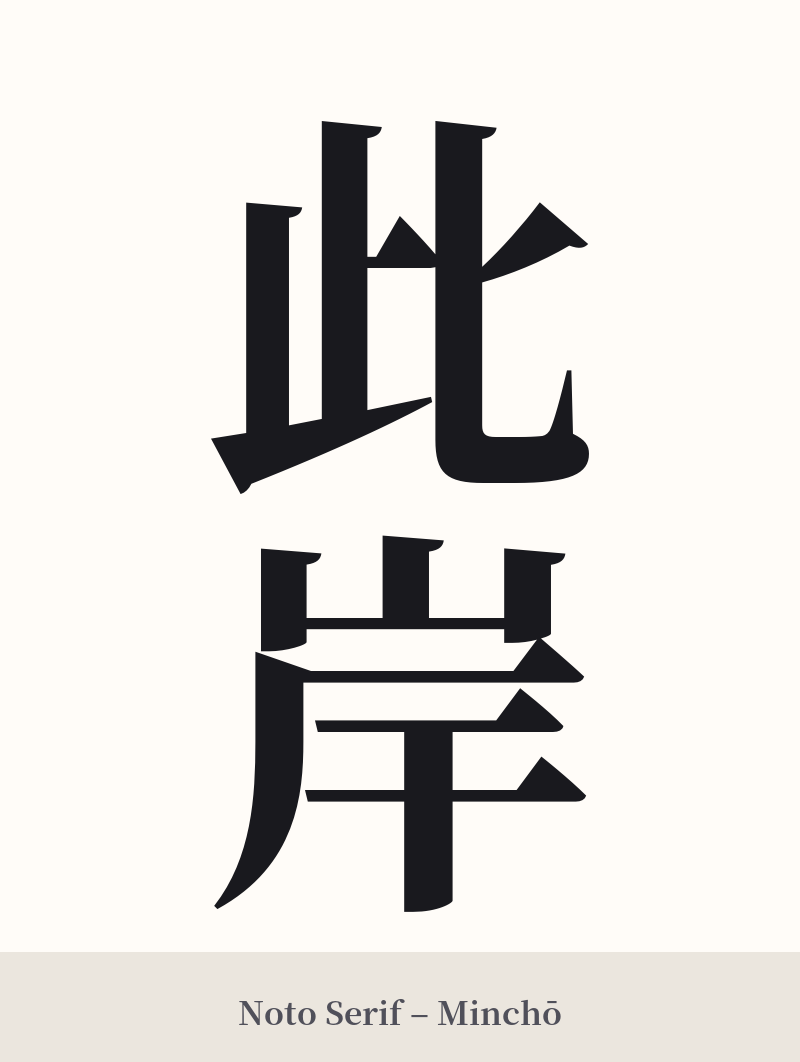
🖌️ Font Styles for 此岸
The same kanji can look dramatically different depending on the calligraphy style. Choose a font that matches the mood you want for your tattoo or design.
🎨 Tattoo Suitability
📐 Tattoo Design Guide
For a tattoo of 此岸 (Shigan), the design should reflect its philosophical depth and quiet solemnity. Vertical alignment is highly recommended, as it mirrors traditional Japanese calligraphy and creates an elegant flow on an arm, leg, or along the spine.
– Placement: A vertical design on the inner forearm, calf, or back is ideal. For a horizontal layout, the clavicle, upper back, or chest provides a balanced canvas. – Font Style: A clean, classic script is most appropriate. Kaisho (block script) lends a sense of stability and groundedness, reflecting the 'here and now' aspect of Shigan. For a more fluid, personal feel, Gyosho (semi-cursive script) is an excellent choice. Avoid overly aggressive or decorative fonts that would clash with the term's contemplative nature. – Complementary Imagery: Consider pairing 此岸 with visuals that enhance its meaning. A simple Enso circle, a lotus flower blooming from mud (symbolizing enlightenment in the midst of suffering), or subtle wave patterns representing the river that separates the two shores can create a powerful narrative. A tattoo of 此岸 could even be placed on one limb, with its counterpart 彼岸 (Higan) on the other, creating a dynamic representation of the spiritual journey.
Comments