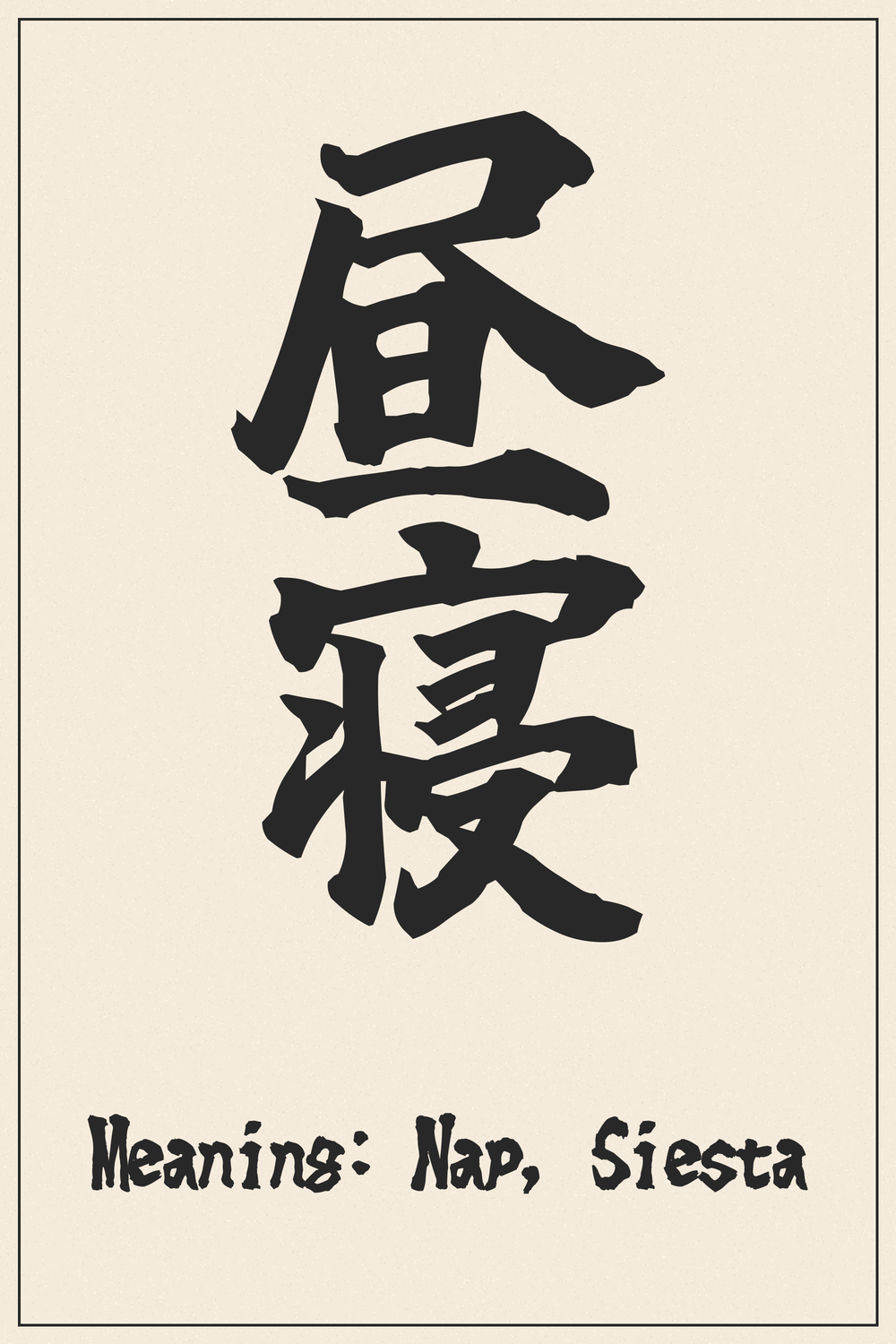
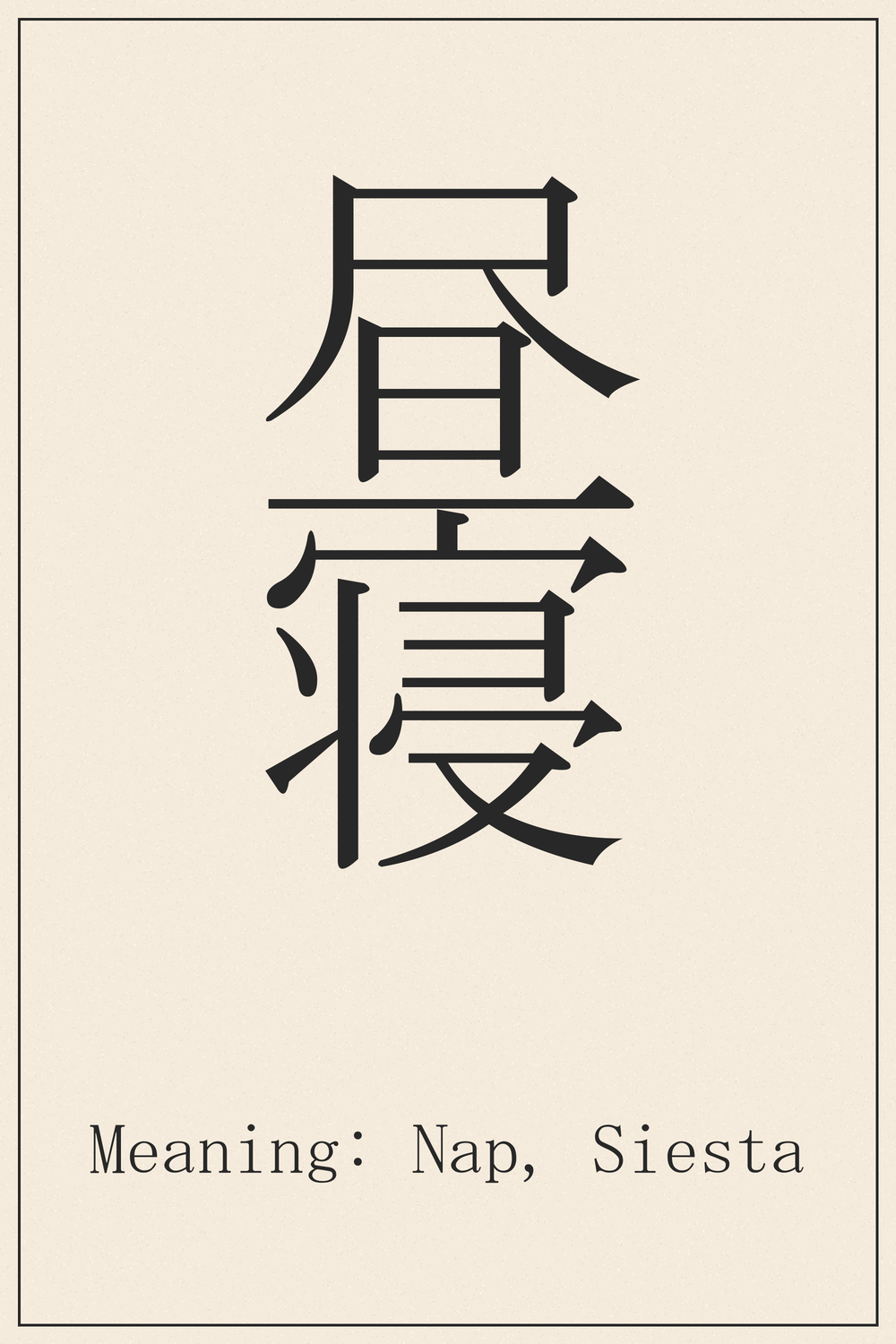
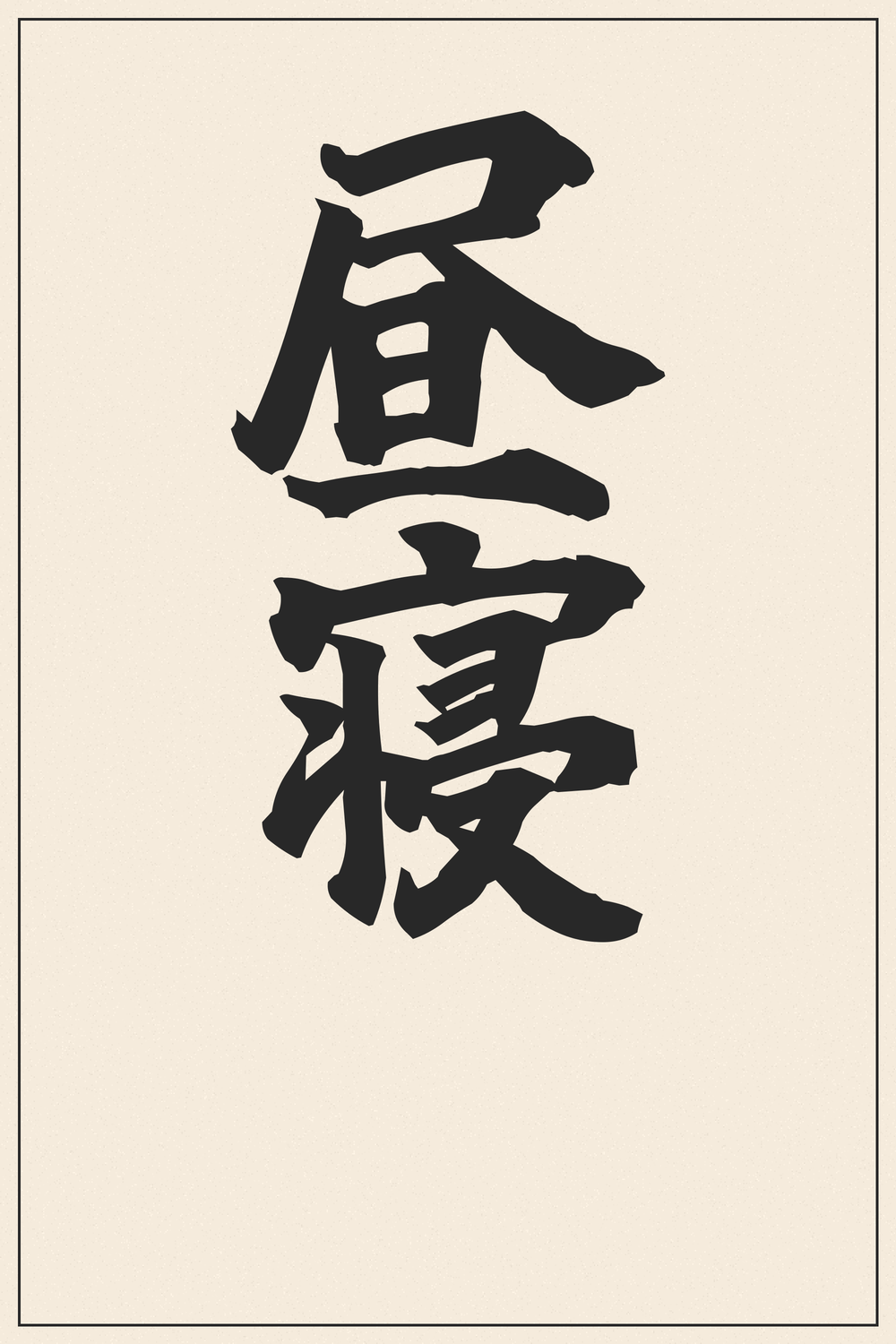
The Kanji compound “昼寝” (Hirune) encapsulates the simple yet profound act of taking a midday nap. It signifies a moment of peaceful repose, a brief escape from the day’s demands.
The atmosphere of a Kanji character changes dramatically depending on the font style. A character that looks elegant in a brush style might look bold and modern in a different font.
Recommendation:
Since a tattoo is permanent, we strongly recommend comparing various font styles beyond what is shown here. Use our designs as a trusted reference for the correct structure, but feel free to explore different artistic variations to find the perfect match for your vision.
The Deep Meaning Behind 昼寝
The compound “昼寝” (Hirune) beautifully conveys the act of a midday nap. It reflects a universal human need for rest and rejuvenation, a brief interlude that restores both body and mind.
Culturally, while not as formalized as the siesta in some traditions, the practice of a short daytime rest is acknowledged in Japan for its benefits to well-being and productivity. It’s a simple act of self-care and finding peace amidst a busy schedule.
Kanji Breakdown
The term “昼寝” is a combination of two characters, each contributing to its overall meaning of a daytime nap.
Meaning: Day, daytime.
Originally, this character depicted the sun (part of 旦) above an inverted character, symbolizing a period of the day. It conveys the concept of the middle or active part of the day.
Meaning: To sleep, to lie down.
This character combines the radical 宀 (roof, shelter), 爿 (a bed or split wood), and 艮 (stopping, turning back). Together, these components visually suggest the action of stopping to rest or sleep under a roof, on a bed.
Conclusion
“昼寝” is a simple yet eloquent Kanji compound that embodies the refreshing pause of a nap. It represents a personal retreat, a moment to recharge and find tranquility within the daily routine, connecting to the mind’s need for respite.
While not a common choice for grand tattoo statements, for individuals who cherish and advocate for the restorative power of a nap, “昼寝” could serve as a unique and subtle personal reminder of life’s simple comforts and the importance of mental and physical renewal.
Comments