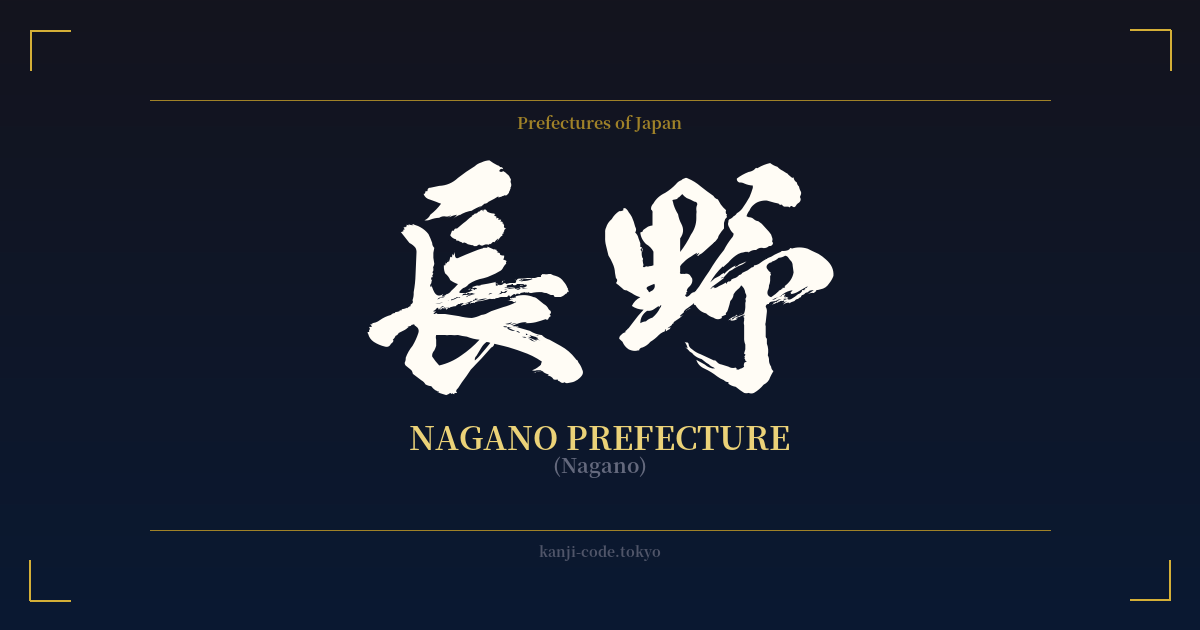
✍️ 長野 (Nagano) — Cultural Context
The name 長野 (Nagano) literally translates to "long field," a simple yet evocative description that hints at the geography of this stunning prefecture. Nestled in the heart of Japan's main island of Honshu, Nagano is often called the "Roof of Japan" due to its dramatic, soaring mountain ranges, which include the Northern, Central, and Southern Japanese Alps. This topography has shaped not only its landscape but its history, culture, and identity.
Historically, the mountainous terrain isolated the region, fostering a unique and resilient culture. It was the stage for legendary samurai conflicts, most famously the Battles of Kawanakajima in the 16th century between the powerful warlords Takeda Shingen and Uesugi Kenshin. This martial history is a deep part of Nagano's heritage, echoing the spirit of perseverance and strength required to thrive in its challenging environment.
Nagano is also a place of profound spiritual significance. It is home to Zenkō-ji, one of Japan's most important and popular Buddhist temples. Founded in the 7th century, the temple houses what is believed to be the first Buddhist statue ever brought to Japan, making it a major pilgrimage destination for centuries, regardless of Buddhist sect.
On the world stage, Nagano burst into global consciousness as the host of the 1998 Winter Olympics. The event showcased its magnificent snowy landscapes and world-class facilities in towns like Hakuba, cementing its reputation as a premier destination for winter sports. This international exposure created a unique blend of rustic Japanese charm and modern, global appeal.
Today, Nagano represents a powerful connection to nature. It's famous for its pristine forests, clear rivers, and agricultural bounty, including soba noodles, apples, and wasabi. It's also where you'll find the famous Jigokudani Monkey Park, where Japanese macaques, or "snow monkeys," bathe in natural hot springs, a symbol of the harmonious, and sometimes quirky, relationship between nature and life in Nagano.
🖌️ Font Styles for 長野
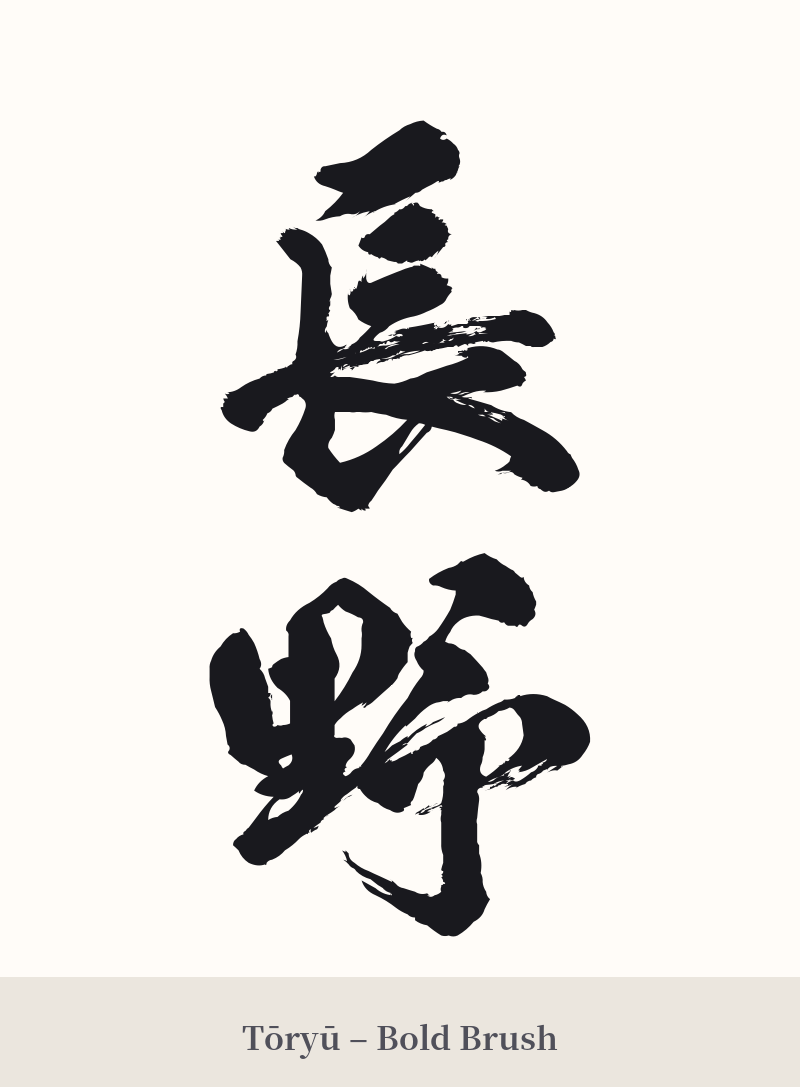
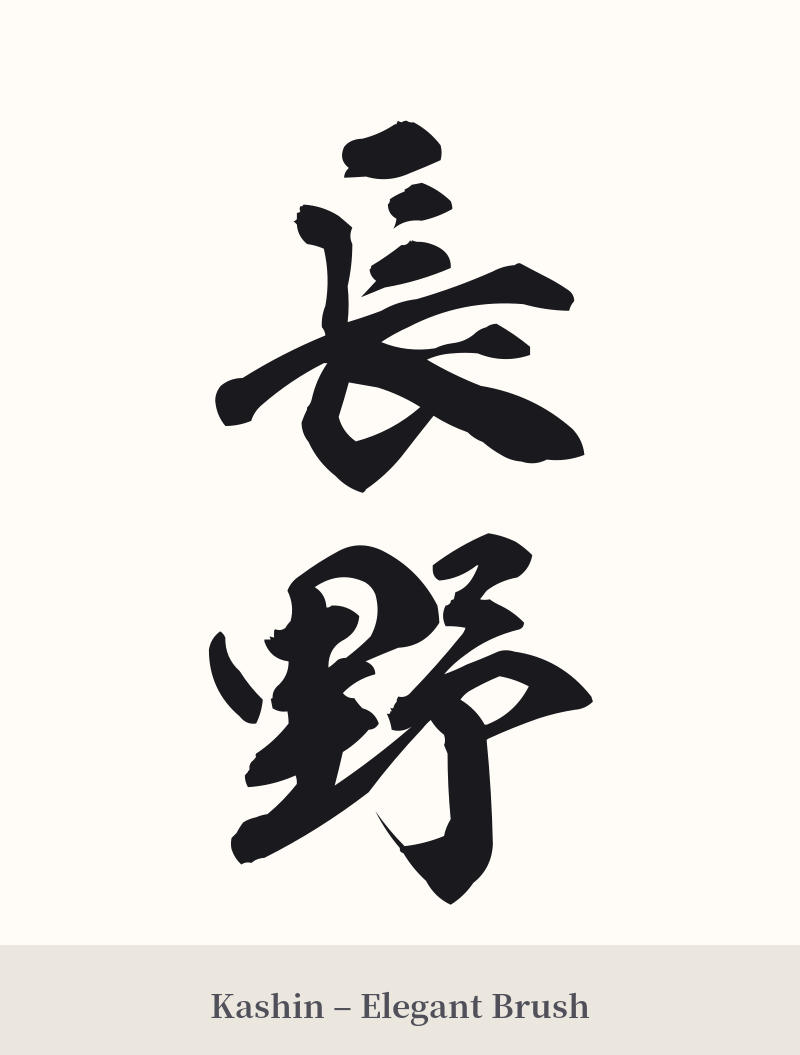
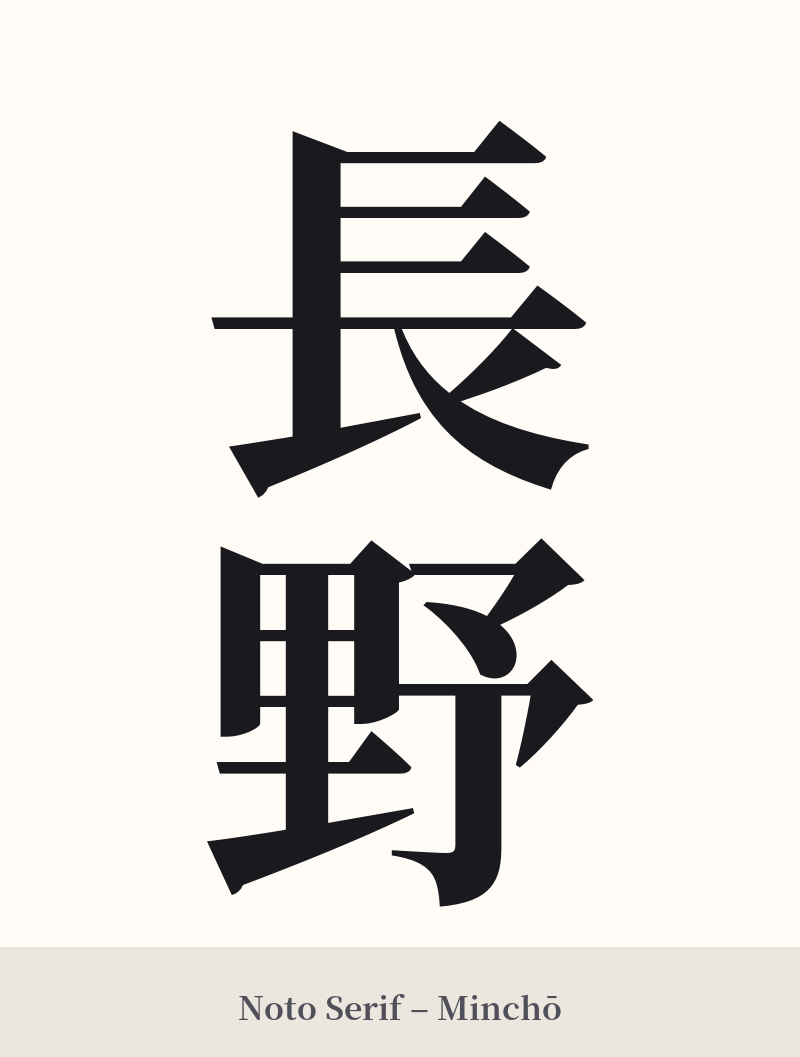
The same kanji can look dramatically different depending on the calligraphy style. Choose a font that matches the mood you want for your tattoo or design.
🎨 Tattoo Suitability
📐 Tattoo Design Guide
The two characters of 長野 offer a nice visual balance between the simple, linear 長 (naga) and the more complex, grounded 野 (no). This makes it a versatile choice for a tattoo.
– Placement: A vertical orientation works beautifully, especially on an arm, calf, or along the spine. This orientation subtly emphasizes the 'long' aspect of the first character and can feel reminiscent of the tall mountains of the region. For a horizontal piece, the forearm, collarbone, or upper back provides a solid canvas.
– Style: Consider a dynamic shodō (calligraphy) style with strong brushstrokes to capture the raw, natural energy of the mountains and fields. Alternatively, a clean and crisp Mincho or Kaisho font can lend a more classic, refined feel, reflecting the region's deep history and cultural importance.
– Visual Elements: While the kanji stands strongly on its own, you could subtly incorporate a small snowflake to honor the 1998 Olympics, a silhouette of a mountain range behind the characters, or even a stylized apple blossom, the prefectural flower.
Comments