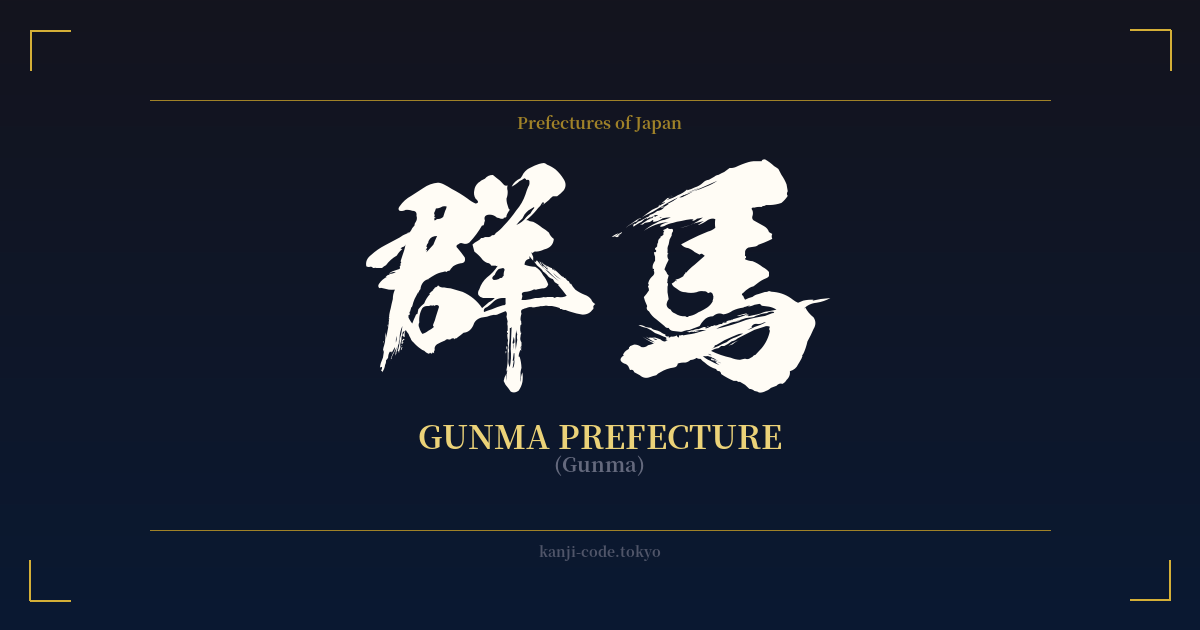
✍️ 群馬 (Gunma) — Cultural Context
The kanji 群馬 (Gunma) literally translates to 'herd of horses,' a name that beautifully captures the region's deep historical identity. This landlocked prefecture in the Kantō region of Japan has been renowned for its high-quality horses and horse breeding for centuries.
The name itself has an interesting etymology. It is believed to have evolved from 'Kuruma,' an ancient district name in the area. While the original characters may have been different, the current kanji, 群 (gun – herd, group) and 馬 (ma – horse), were likely chosen as 'ateji'—characters selected for their phonetic value that also happened to perfectly describe the region's primary industry.
Historically, Gunma, then known as Kōzuke Province, was a vital source of warhorses for samurai clans and the Imperial Court. The rugged, mountainous terrain was ideal for raising strong and resilient steeds, making the area strategically important. This equestrian heritage is not just a relic of the past; it's a point of pride woven into the fabric of the prefecture's identity.
The most famous modern symbol of this is 'Gunma-chan,' the prefecture's adorable pony mascot, who serves as a cheerful ambassador and a constant reminder of the name's origin. The name evokes images of open pastures, rolling hills, and the powerful spirit of horses running free.
Beyond its equestrian roots, Gunma is a land of dramatic natural beauty, defined by the 'Three Mountains of Jōmō': Mount Akagi, Mount Haruna, and Mount Myōgi. It is also one of Japan's most famous destinations for onsen (hot springs), with towns like Kusatsu and Ikaho drawing visitors from all over the world. Furthermore, the city of Takasaki in Gunma is the leading producer of Daruma dolls, the iconic papier-mâché figures representing perseverance and good luck. Therefore, the name 群馬 carries not only the direct meaning of 'herd of horses' but also the associated weight of samurai history, natural grandeur, and enduring cultural traditions.
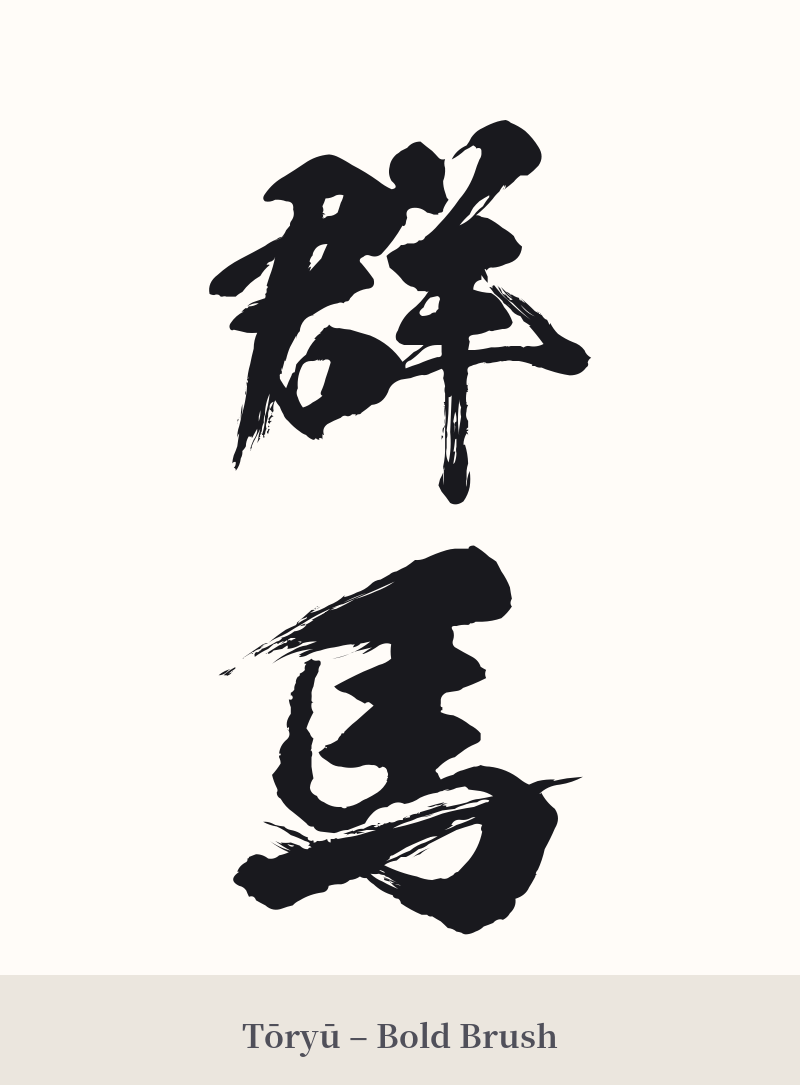
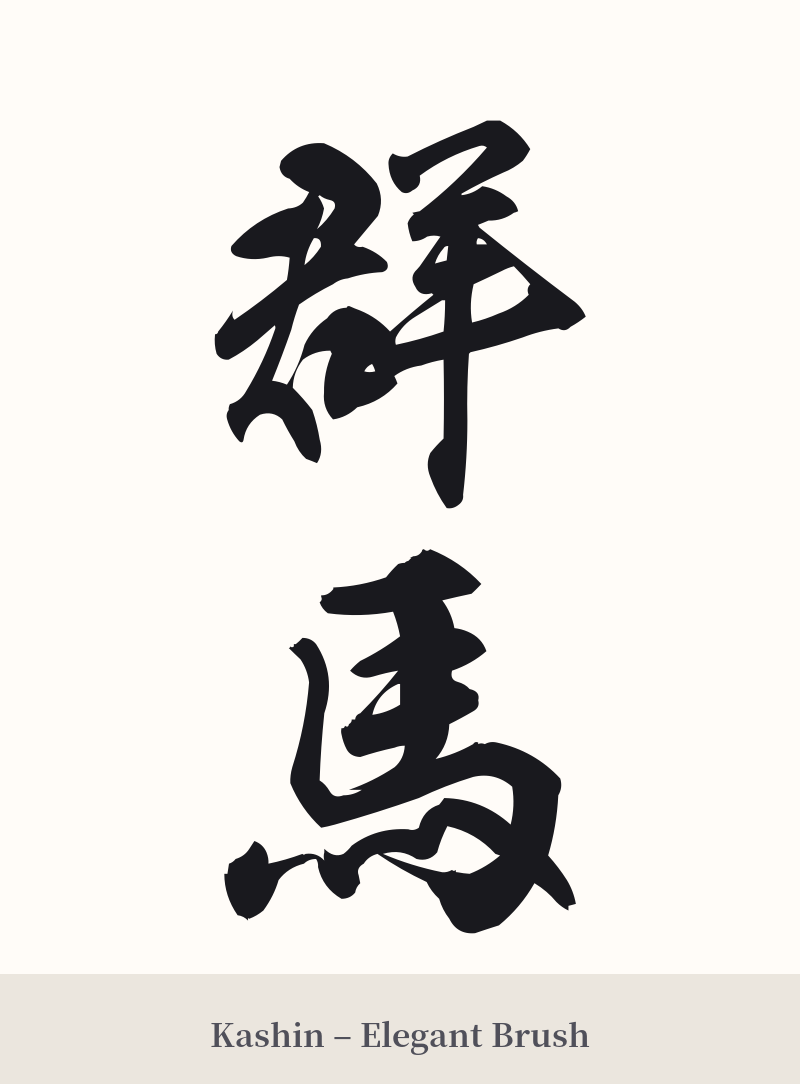
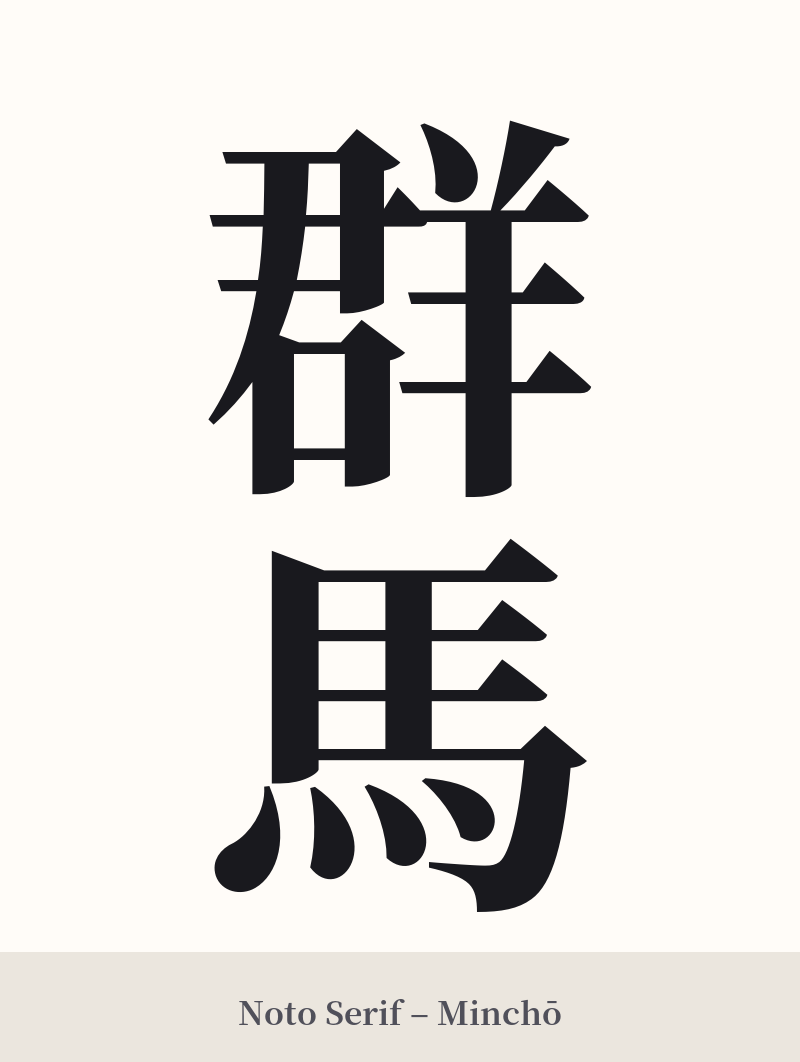
🖌️ Font Styles for 群馬
The same kanji can look dramatically different depending on the calligraphy style. Choose a font that matches the mood you want for your tattoo or design.
🎨 Tattoo Suitability
📐 Tattoo Design Guide
For a tattoo of 群馬, the visual balance and historical weight of the characters should be emphasized.
– Placement: A vertical orientation on the forearm, calf, or along the spine works exceptionally well. For a horizontal design, the upper back or chest provides a solid canvas.
– Font Style: Traditional calligraphy scripts are highly recommended. A strong, clear Kaisho (block) script highlights the structure of each kanji. For a more fluid and dynamic look, a Gyosho (semi-cursive) style can evoke the movement of a herd of horses.
– Visual Tips: Consider incorporating related imagery to add context and artistic flair. A subtle background of a mountain silhouette (representing Mt. Akagi or Haruna), a flowing water pattern to signify the famous onsen, or even a stylized Daruma doll can create a more complete and personal piece. Pairing it with a single, powerful image of a horse can also directly reference the literal meaning.
Comments