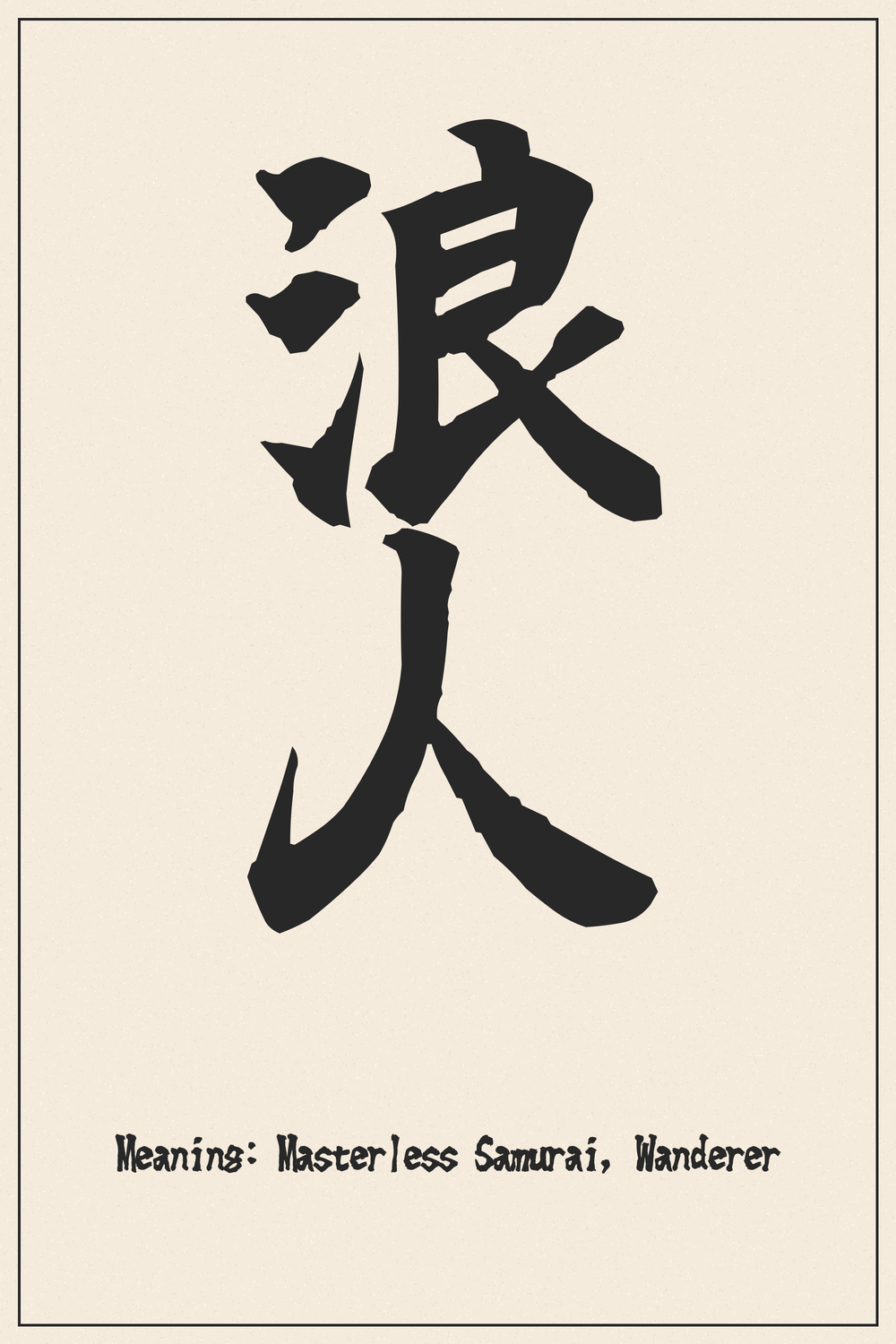
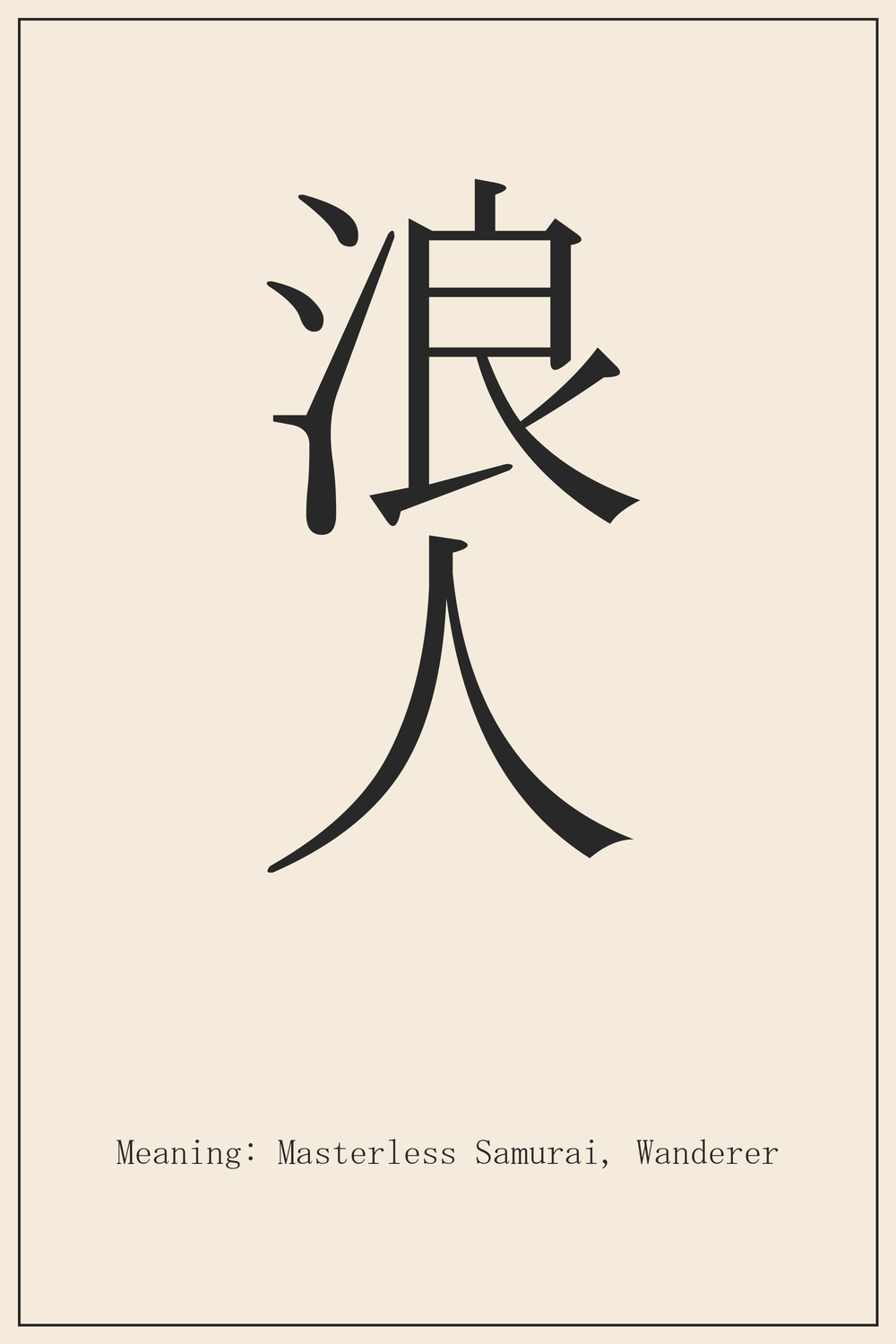
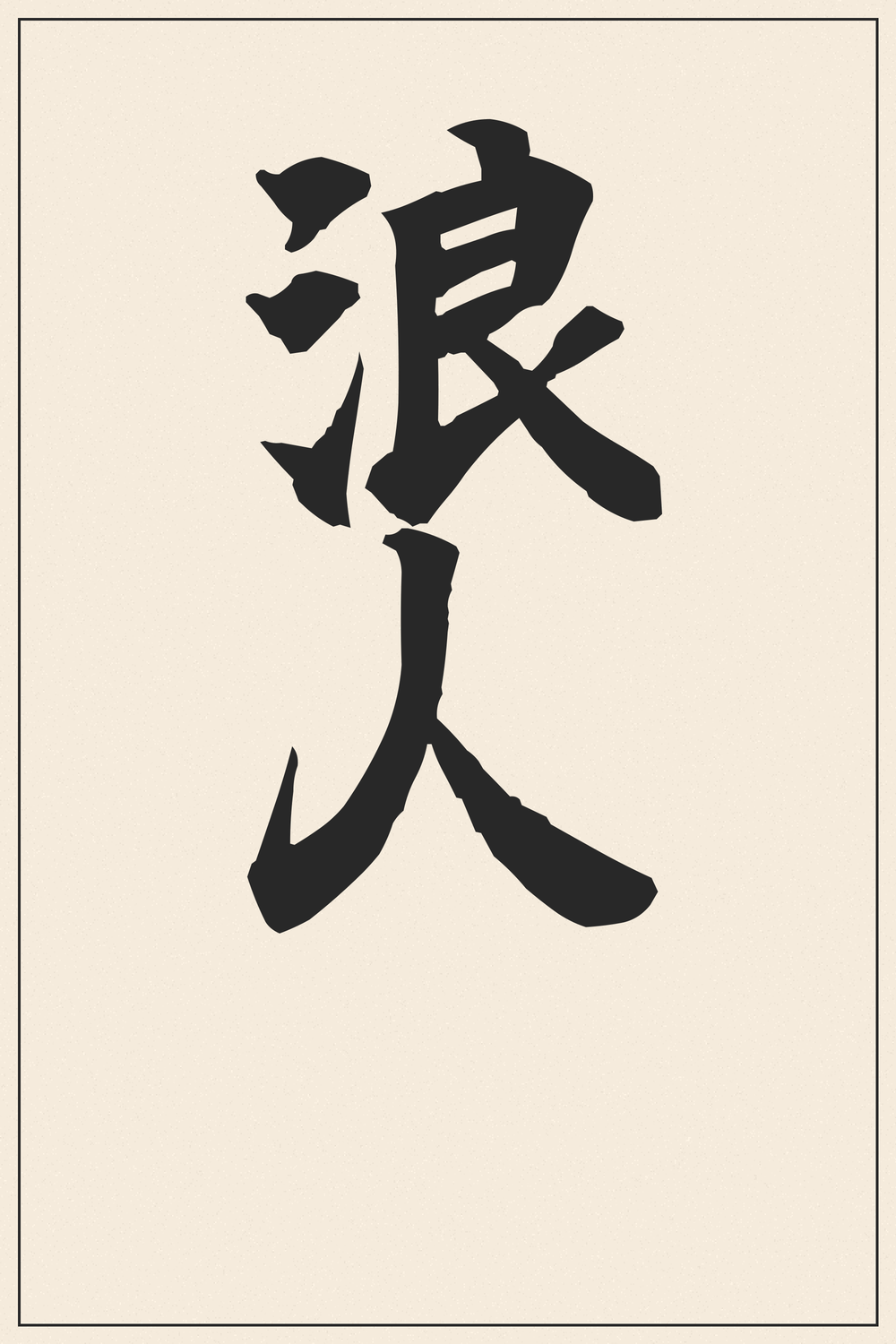
The Kanji “浪人” (Rōnin) encapsulates a profound historical and philosophical concept in Japanese culture. It represents a spirit of independence, resilience, and the journey of a masterless warrior.
The atmosphere of a Kanji character changes dramatically depending on the font style. A character that looks elegant in a brush style might look bold and modern in a different font.
Recommendation:
Since a tattoo is permanent, we strongly recommend comparing various font styles beyond what is shown here. Use our designs as a trusted reference for the correct structure, but feel free to explore different artistic variations to find the perfect match for your vision.
The Deep Meaning Behind 浪人
The term “Rōnin” originates from the Edo period, describing samurai who had lost their master or failed to protect them, thus becoming “wave-men” (浪人), drifting without a fixed position or lord. This status often brought hardship and a life of self-reliance.
Beyond its literal historical meaning, Rōnin symbolizes independence, perseverance, and a journey of self-discovery outside traditional societal structures. It resonates with those who forge their own path, embodying a spirit of freedom coupled with the discipline of a warrior.
Kanji Breakdown
To fully appreciate “浪人,” one must understand its constituent characters.
Meaning: Wave, wandering, restless. This character visually depicts water (氵) and evokes the imagery of a “wave” – symbolizing a life of drifting, unpredictable movement, and a lack of fixed abode.
Meaning: Person, human. This fundamental character denotes an individual, completing the compound to mean a “person who drifts like a wave.”
Conclusion
“浪人” is more than just a historical title; it is a powerful symbol of self-sufficiency, enduring hardship, and the courage to navigate life’s challenges independently. It speaks to the inner strength required to walk one’s own path.
For those drawn to the spirit of the unburdened, resilient individual, a “浪人” tattoo serves as a profound emblem. It is a tribute to personal freedom and the unwavering spirit of a wanderer who shapes their own destiny.
Comments