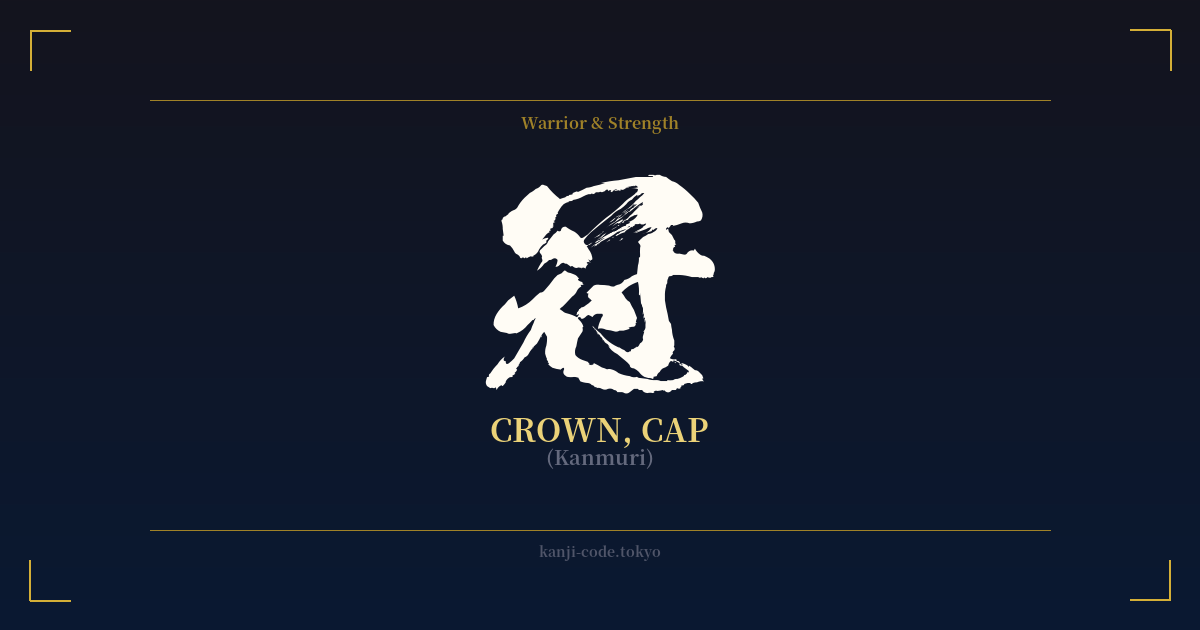
✍️ 冠 (Kanmuri) — Cultural Context
The kanji 冠 (kanmuri) offers a fascinating window into Japanese concepts of hierarchy, ceremony, and achievement. Its origins lie in a pictograph depicting a person with a formal, elaborate headdress, immediately linking it to ideas of status, authority, and special occasions. This isn't just an abstract symbol; it's rooted in tangible history.
In ancient Japan, the 'kanmuri' was a specific type of black-lacquered silk cap worn by male aristocrats and court officials, particularly during the Heian period (794-1185). The type and decoration of the kanmuri signified the wearer's rank within the intricate court hierarchy. To wear the kanmuri was to hold a place in the world of power and governance, making the character a potent symbol of social standing and responsibility.
This connection to ceremony is most famously preserved in the term 冠婚葬祭 (kankon-sōsai), which refers to the four major ceremonies of life: coming-of-age, marriage, funerals, and ancestral rites. The first character, 冠, specifically represents the coming-of-age ceremony, known as 'genpuku'. During this rite, a young nobleman would have his hair styled into an adult topknot and receive his first kanmuri, formally marking his transition into manhood and his acceptance of adult duties. Thus, 冠 embodies not just status, but also maturation and the beginning of a new chapter in life.
Beyond its literal and ceremonial uses, 冠 has evolved to represent the pinnacle of achievement. It abstractly signifies being 'first' or 'the best'. This is seen in words like 栄冠 (eikan), meaning 'crown of glory' or 'laurels of victory', often used when describing a major accomplishment. In the world of sports, the term 三冠 (sankan), or 'Triple Crown', denotes an athlete or team that has won the three most important titles in their field. In this context, the 'crown' is metaphorical, a symbol of ultimate triumph.
Whether referring to a physical headdress of an ancient courtier, the symbolic cap of adulthood, or the metaphorical prize for a champion, 冠 consistently points to a peak moment. It is the culmination of effort, the recognition of status, and the mark of being at the very top. Its meaning is less about inherited royalty, as the Western crown often implies, and more about recognized position, honor, and momentous life transitions.
🖌️ Font Styles for 冠
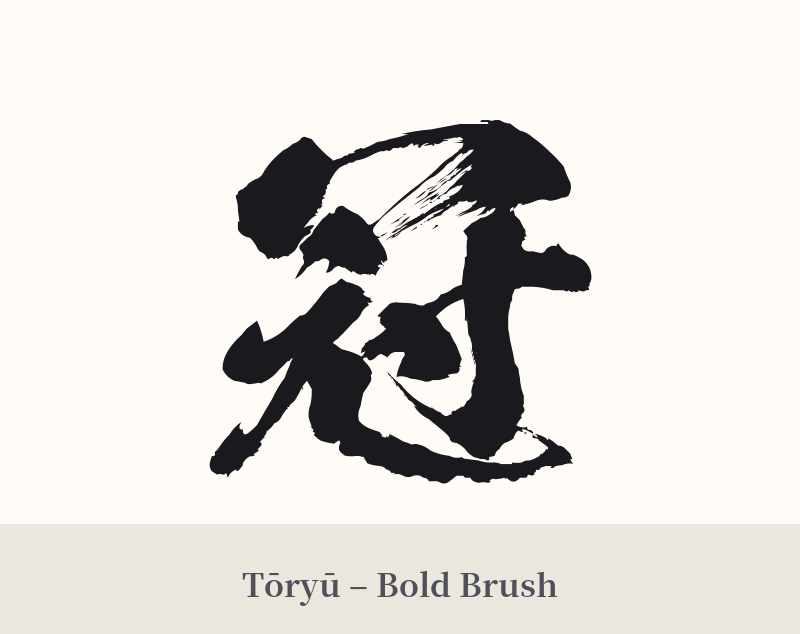
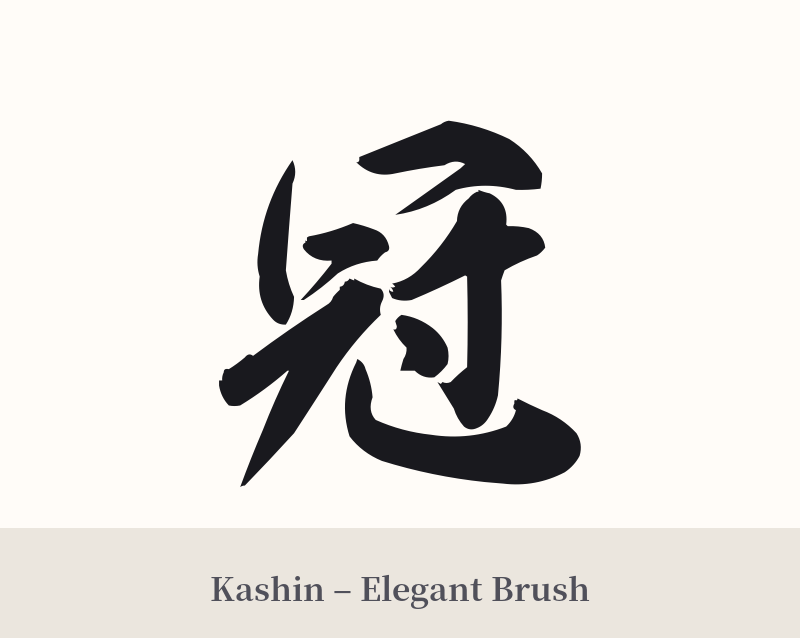
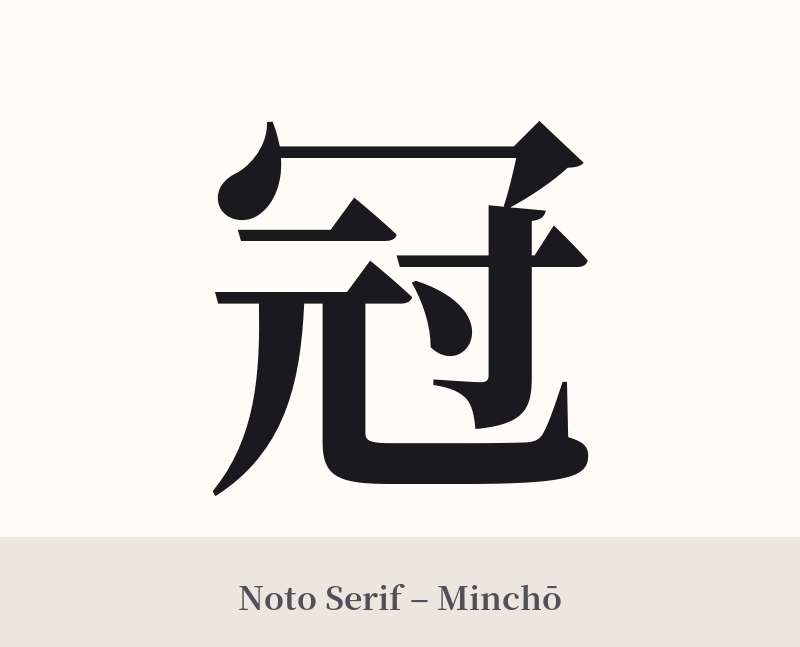
The same kanji can look dramatically different depending on the calligraphy style. Choose a font that matches the mood you want for your tattoo or design.
🎨 Tattoo Suitability
📐 Tattoo Design Guide
The kanji 冠 is a strong and visually balanced character, making it an excellent choice for a standalone tattoo.
– Placement: Consider places that enhance its meaning of 'crowning achievement'. The back of the neck, top of the shoulder, or center of the chest can be powerful spots. For a more personal reminder of victory, the inner forearm or wrist works well.
– Style: A bold, traditional Kaisho (block) script will emphasize its authority and historical weight. For a more dynamic feel, a semi-cursive Gyosho style can represent an earned victory or a flowing sense of glory. Avoid overly thin lines, as the character's internal strokes could blur over time.
– Visuals: While 冠 is strong enough to stand alone, it can be subtly integrated with other elements. A soft ink wash background or minimalist encircling lines can frame the character without overpowering it. Pairing it with a date or a single other symbol of personal victory could add another layer of meaning.
Comments