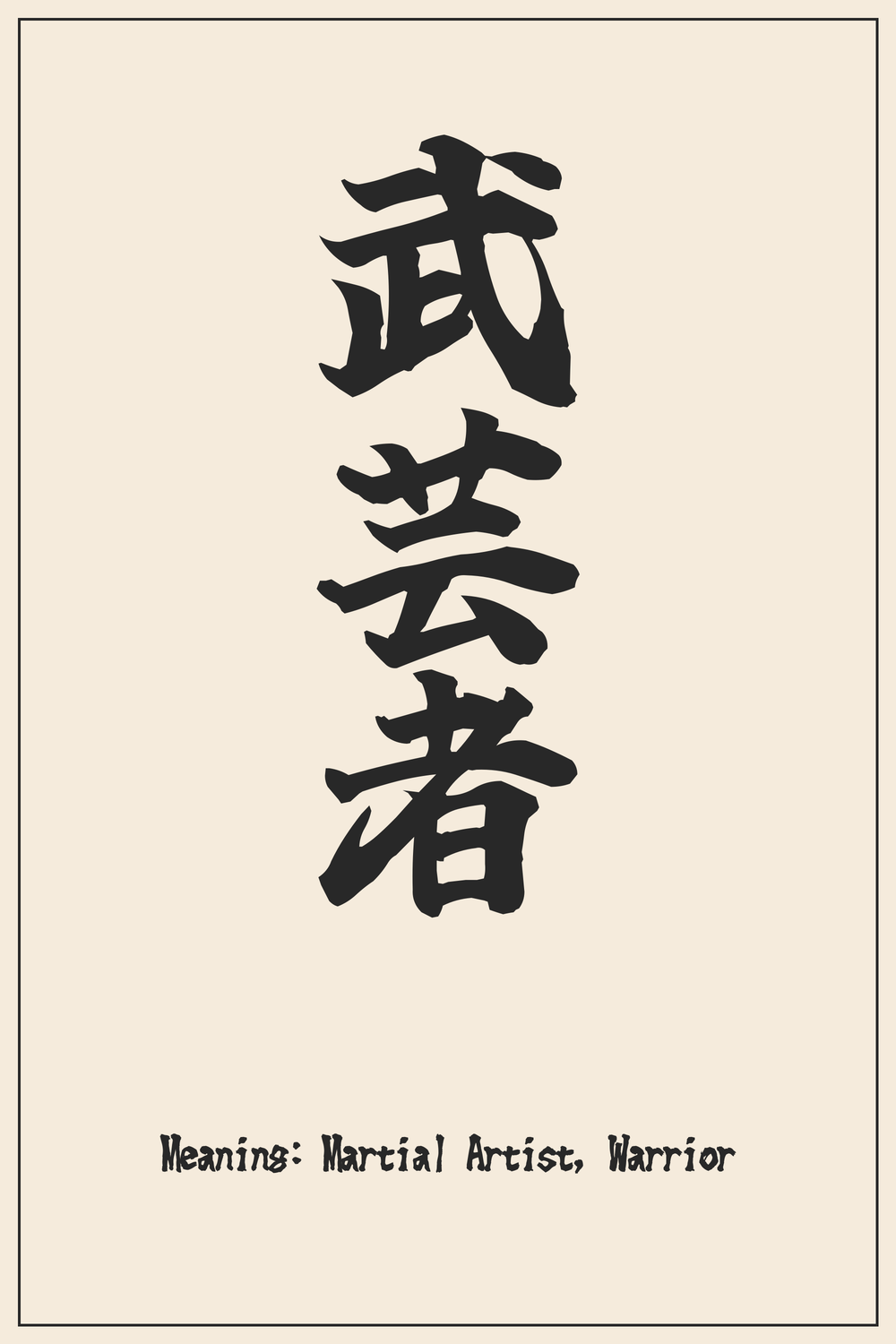
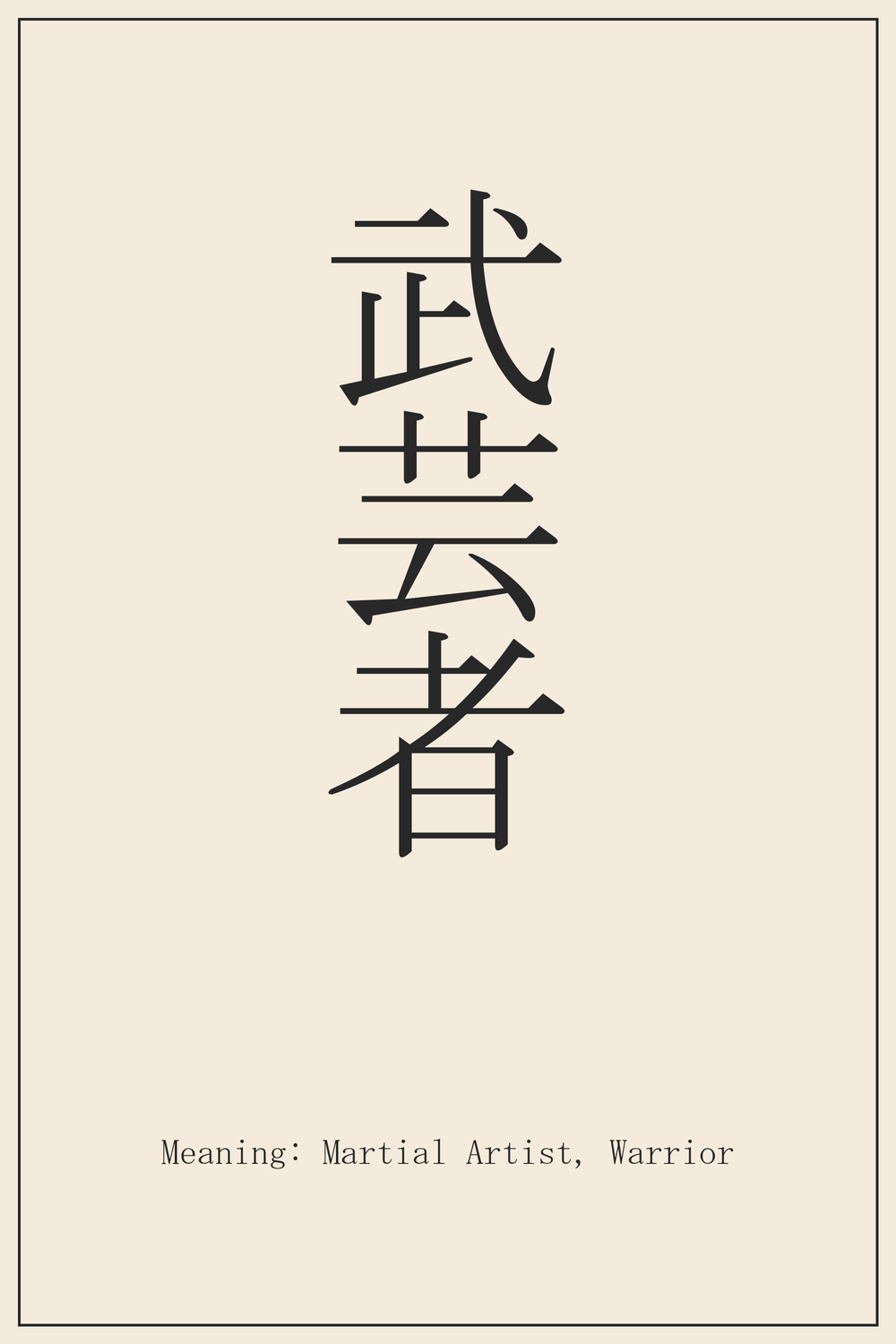
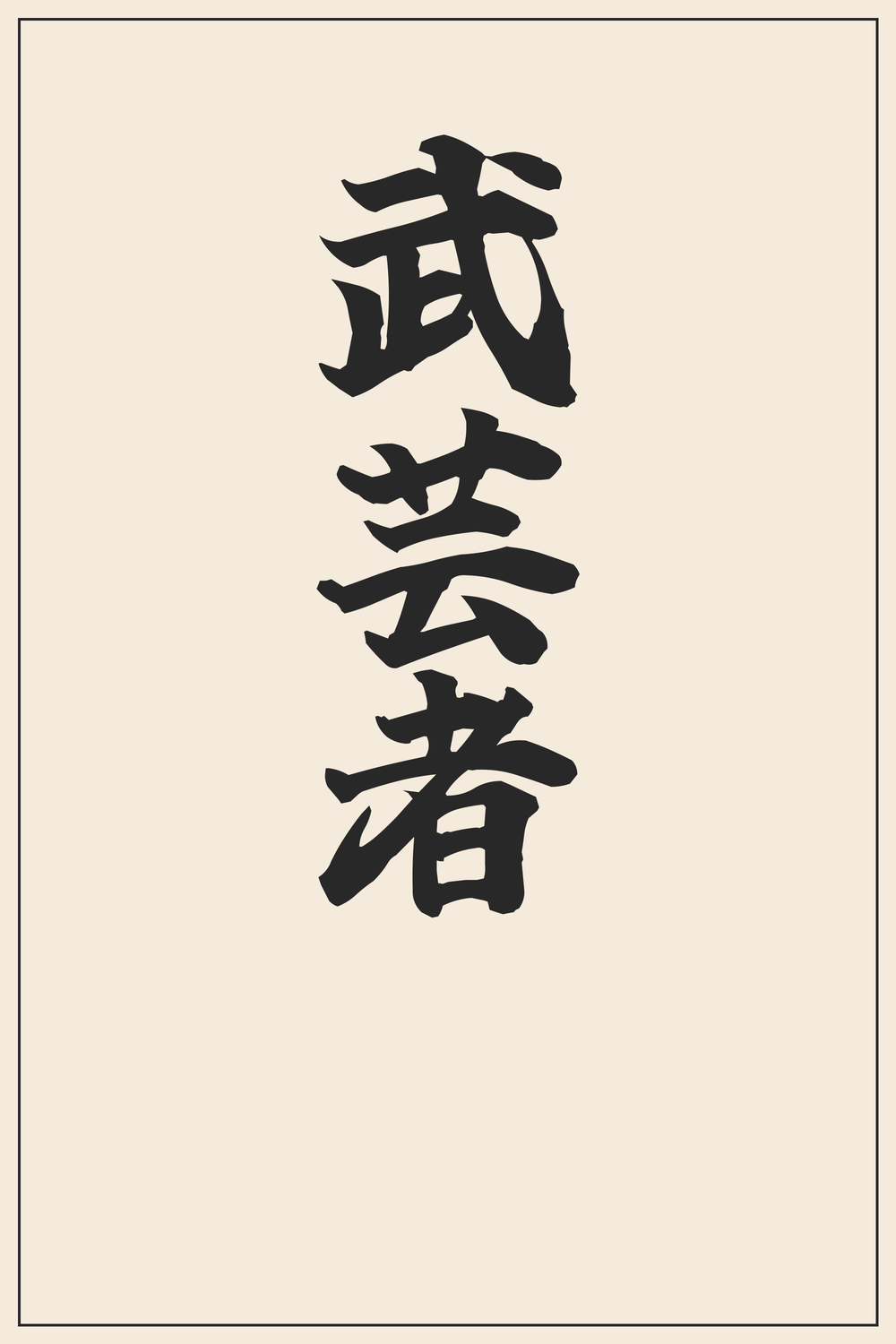
The Kanji compound 武芸者 (Bugeisha) evokes the spirit of the disciplined martial artist, a profound symbol of mastery and dedication. It represents more than just combat prowess, encompassing a lifetime devoted to the perfection of traditional arts.
The atmosphere of a Kanji character changes dramatically depending on the font style. A character that looks elegant in a brush style might look bold and modern in a different font.
Recommendation:
Since a tattoo is permanent, we strongly recommend comparing various font styles beyond what is shown here. Use our designs as a trusted reference for the correct structure, but feel free to explore different artistic variations to find the perfect match for your vision.
The Deep Meaning Behind 武芸者
The term 武芸者 (Bugeisha) originates from a rich history where ‘武’ (bu) signifies martial or military, ‘芸’ (gei) refers to art, skill, or accomplishment, and ‘者’ (sha) denotes a person. This compound succinctly describes an individual highly skilled in the martial arts, reflecting a deep historical lineage in Japanese culture.
Historically, Bugeisha were not merely fighters but practitioners who embodied a strict code of conduct and lifelong dedication to their chosen disciplines. Their training extended beyond physical combat to include mental fortitude, spiritual growth, and a profound respect for their art, making them revered figures in feudal Japan.
Kanji Breakdown
To fully appreciate 武芸者, let’s examine its individual components:
Martial, Military, Warrior: This character is composed of 止 (stop) and 戈 (halberd), often interpreted as ‘to stop a halberd’ or ‘to stop conflict.’ It symbolizes the military arts, power, and the warrior’s path, not just for aggression but for defense and maintaining peace.
Art, Skill, Talent, Performance: 芸 originally depicted plants and grass, but its meaning evolved to represent refined skills and accomplishments, particularly in arts and crafts. In 武芸者, it emphasizes the artistic and skilled nature of martial practice, elevating it beyond mere brute force.
Person, One who does/is: A common suffix in Japanese, 者 simply means ‘person’ or ‘one who does/is.’ In this context, it designates the individual who embodies and practices the ‘martial arts’ (武芸), thereby completing the meaning of ‘martial artist.’
Conclusion
Embracing 武芸者 as a tattoo symbolizes a commitment to discipline, the pursuit of mastery, and the profound respect for tradition inherent in martial arts. It is a powerful emblem for those who value skill, perseverance, and a warrior’s spirit.
Choosing 武芸者 signifies a connection to a rich cultural heritage and a personal philosophy of continuous improvement. Its clear characters and impactful meaning make it an excellent choice for a tattoo that conveys strength, artistry, and unwavering dedication.
Comments