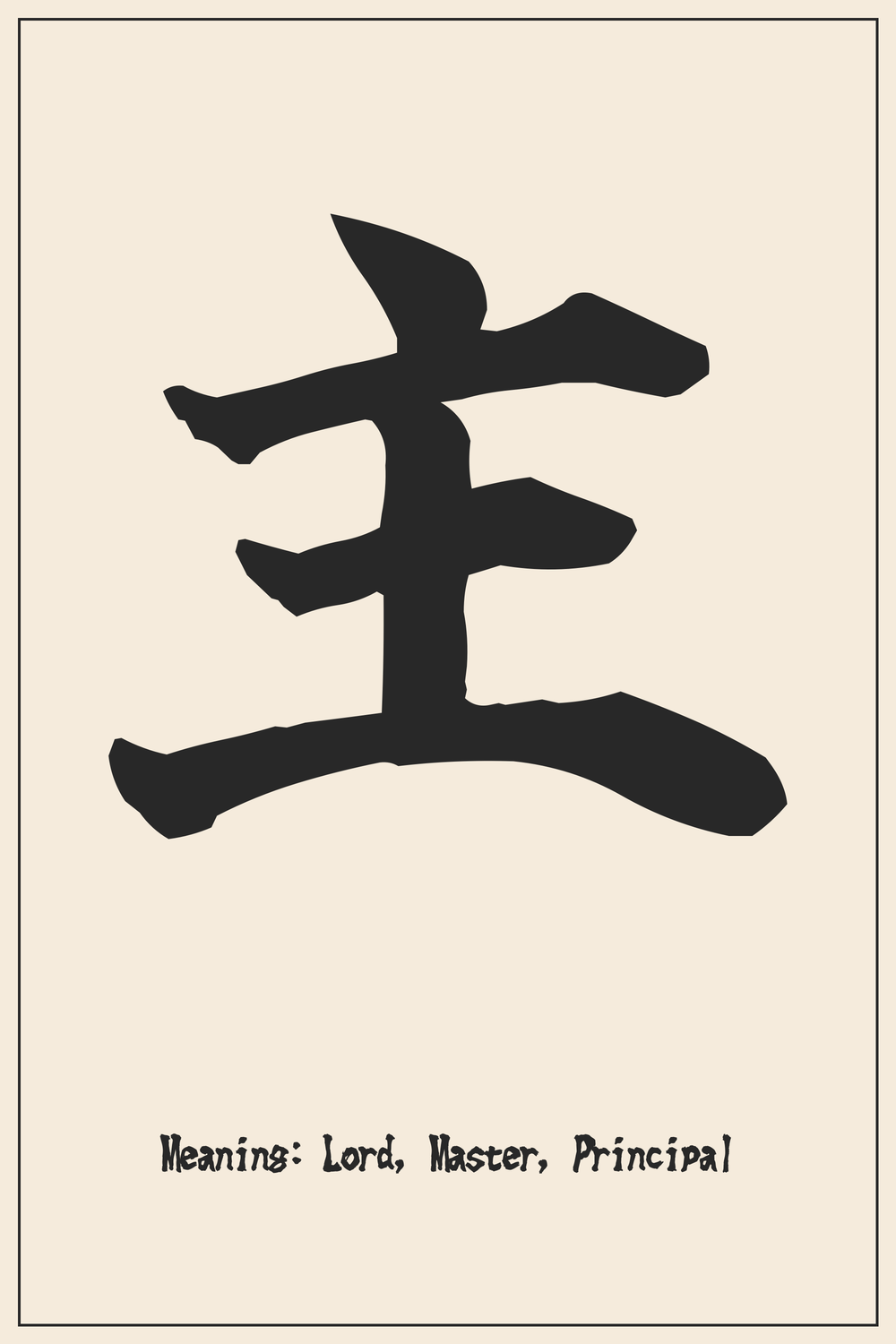
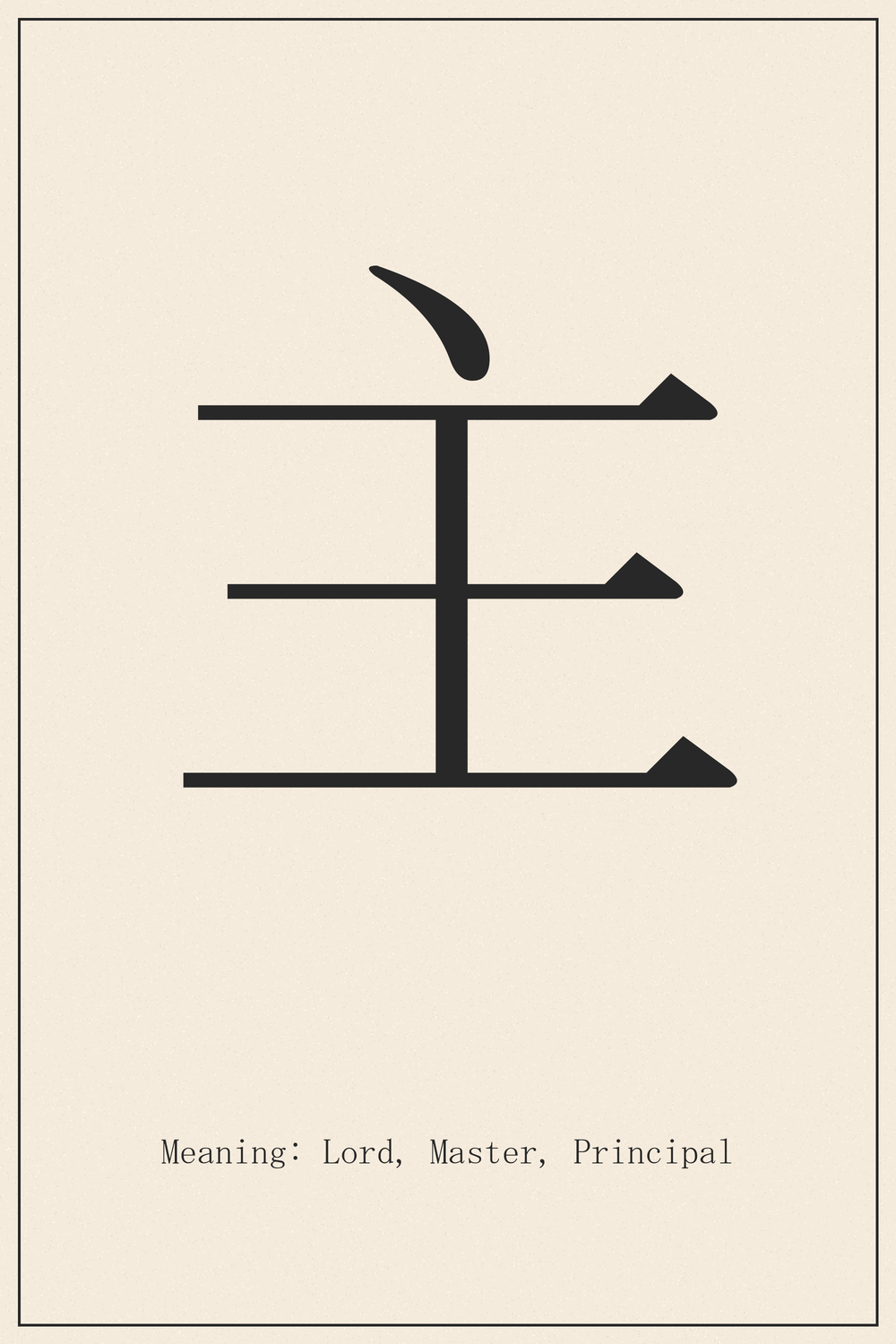
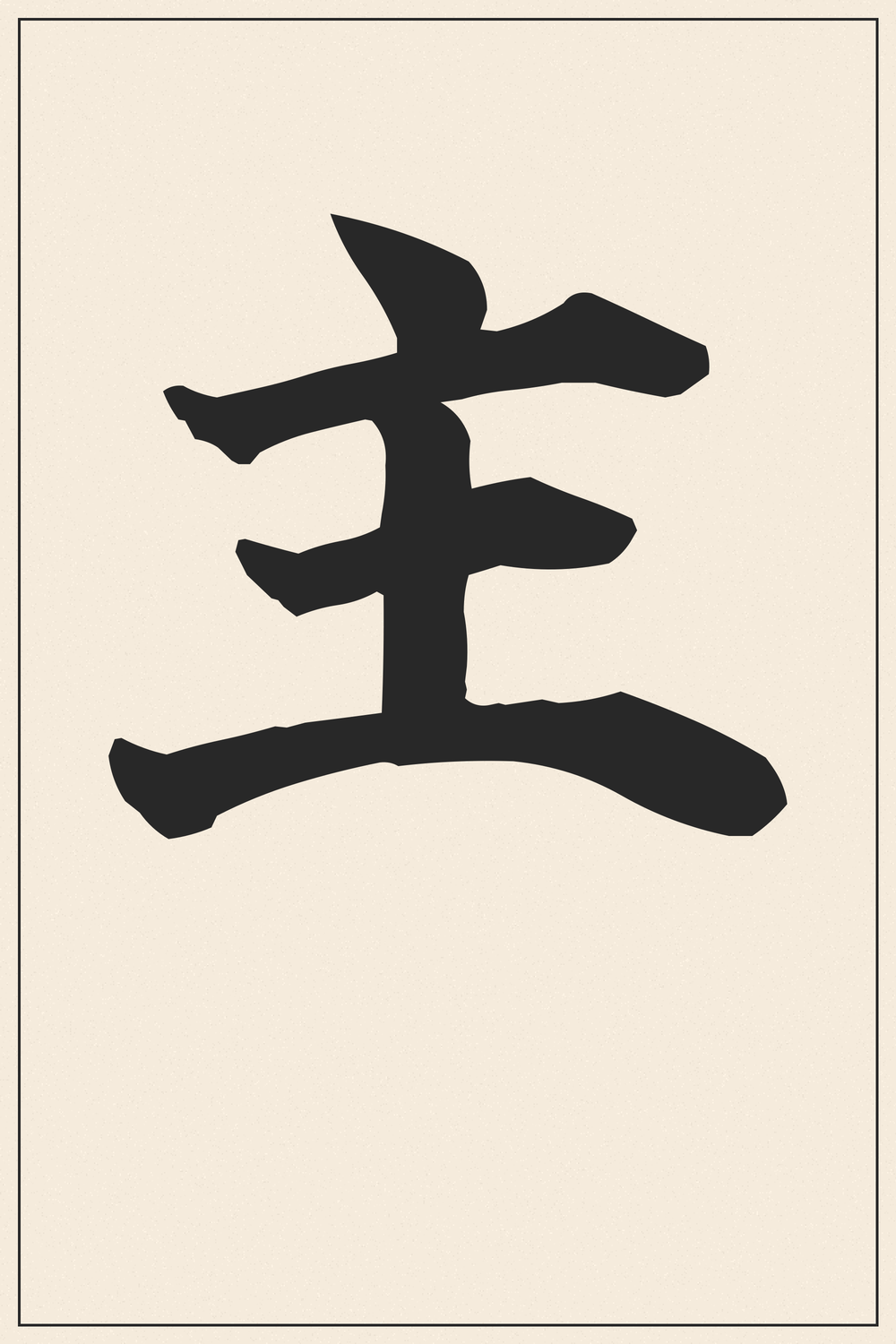
The kanji ‘主’ embodies the essence of leadership and core identity in Japanese culture. This character represents not just ownership or mastery, but the very principle of what stands central and vital.
The atmosphere of a Kanji character changes dramatically depending on the font style. A character that looks elegant in a brush style might look bold and modern in a different font.
Recommendation:
Since a tattoo is permanent, we strongly recommend comparing various font styles beyond what is shown here. Use our designs as a trusted reference for the correct structure, but feel free to explore different artistic variations to find the perfect match for your vision.
The Deep Meaning Behind 主
The ancient form of 主 depicts a lamp or a torch stand with a flame on top. This imagery symbolizes the ‘light’ or ‘focus’ of a household or community, representing the central and essential element that provides guidance and presence.
In Japanese culture, 主 (nushi or shu) signifies the head of a household (主人 – shujin), the principal person, or the owner of a business. It carries strong connotations of responsibility, leadership, and being the core or essence of something, from a tangible object to an abstract idea like a ‘main principle’ (主義 – shugi).
Kanji Breakdown
The kanji 主, while appearing simple, is a pictographic character with a rich etymology.
Meaning: This top dot represents the flickering flame or light at the very top of a lamp or torch.
Meaning: The lower component, which resembles ‘王’ (king), originally depicted the sturdy stand or base holding the light source, emphasizing its central and foundational role in illuminating its surroundings.
Conclusion
The kanji 主 is more than just a title; it encapsulates the essence of being a central figure, a leader, or a guiding principle. It represents the focal point, the source of light and authority that commands respect and provides direction.
A tattoo of 主 serves as a powerful reminder of one’s own sovereignty, responsibility, and the core principles that guide their life. It is a profound mark for those who embrace their role as masters of their own destiny, asserting their central presence in the world.
Comments