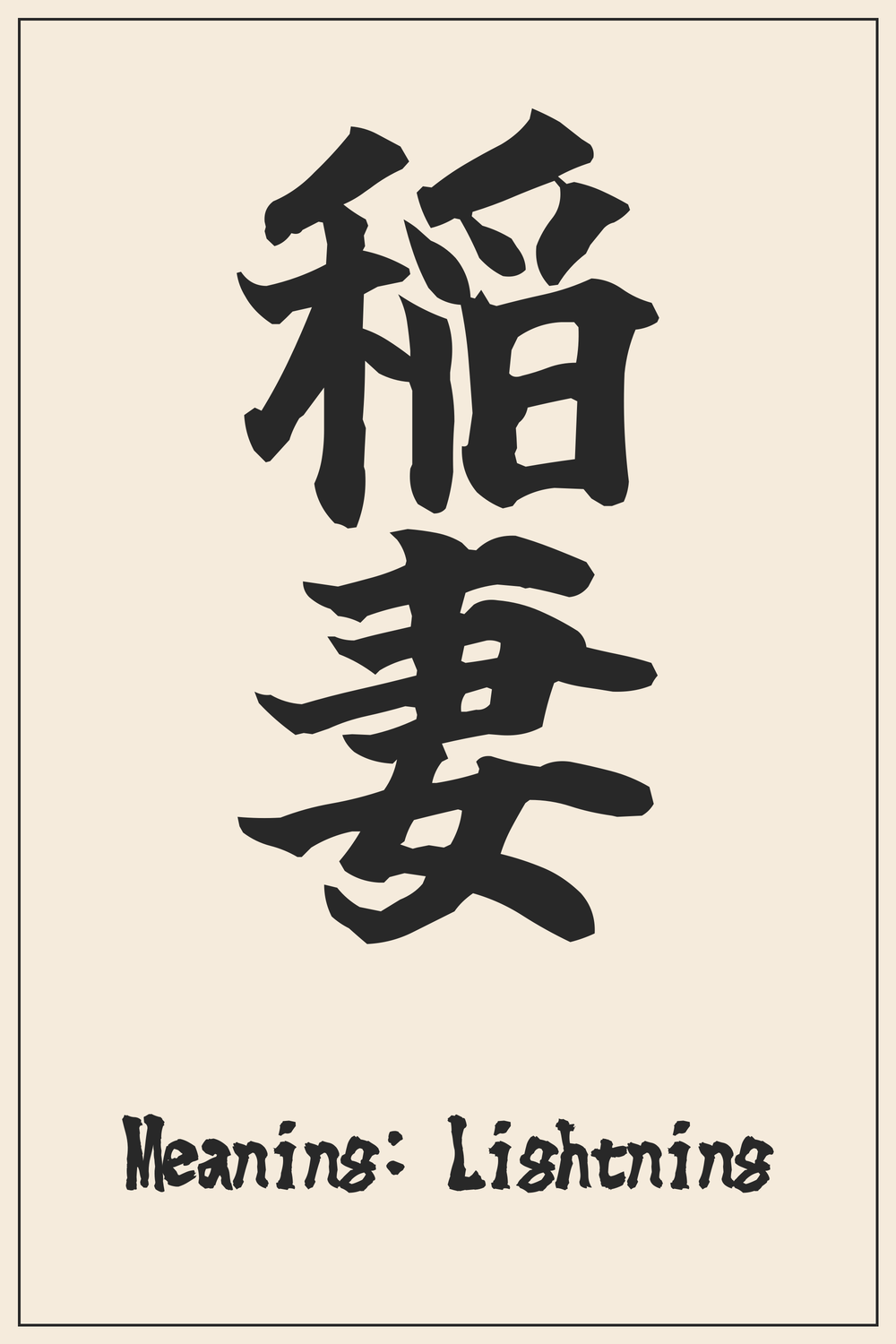
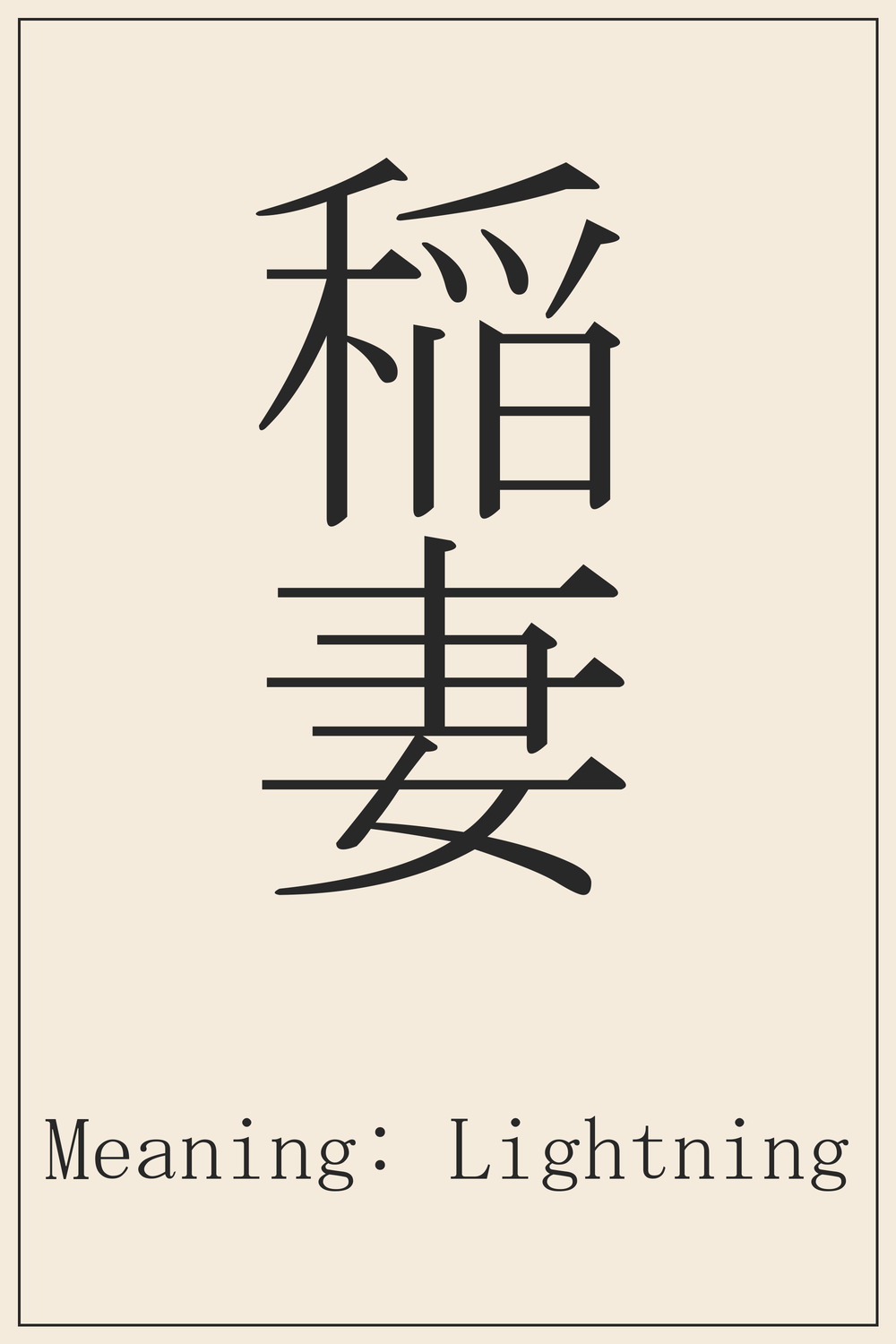
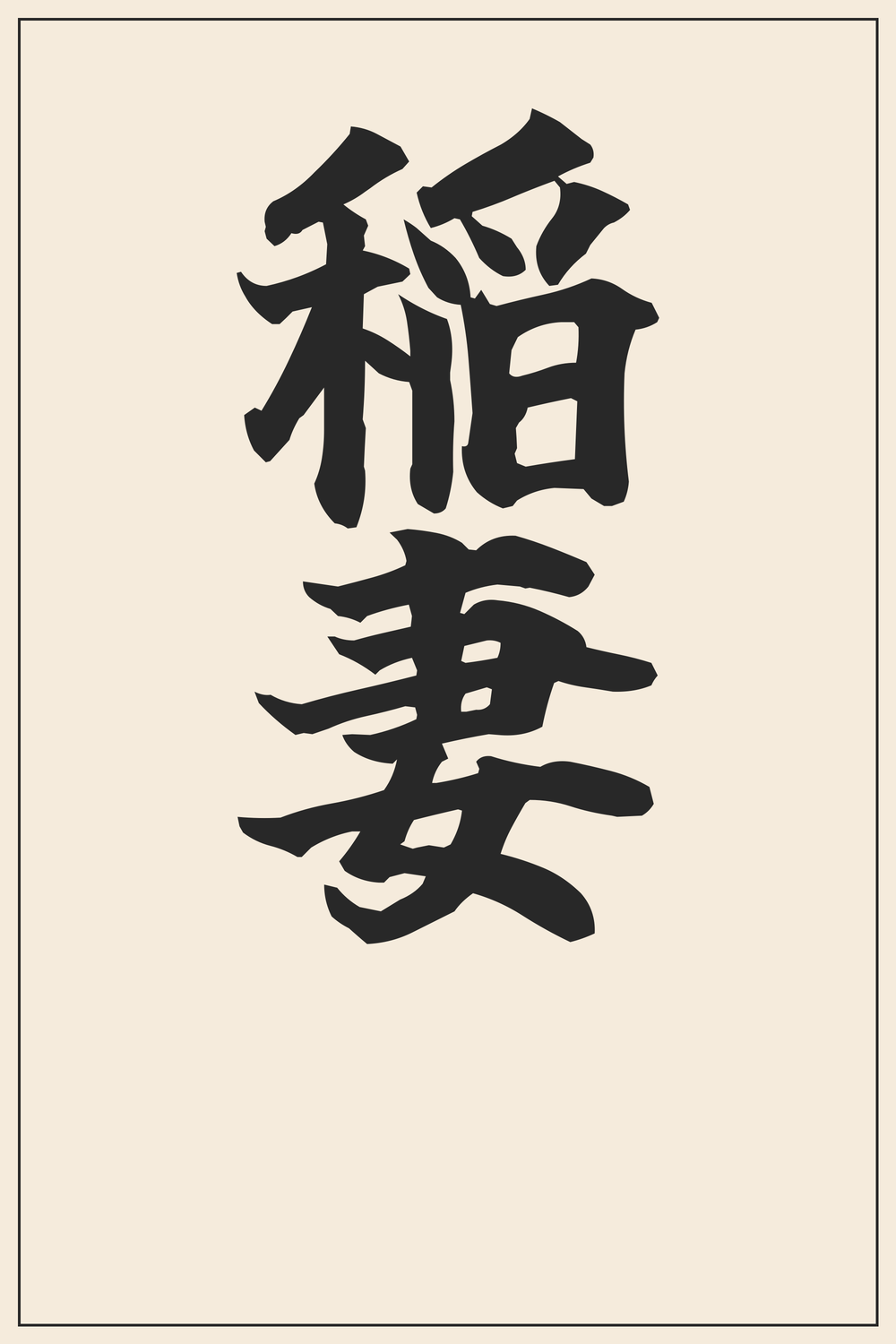
稲妻 (Inazuma), meaning ‘lightning’, captures the raw, electrifying power of nature in a single stroke. This Kanji not only symbolizes speed and intensity but also holds a fascinating cultural history rooted in ancient agricultural beliefs.
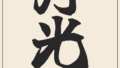
The atmosphere of a Kanji character changes dramatically depending on the font style. A character that looks elegant in a brush style might look bold and modern in a different font.
Recommendation:
Since a tattoo is permanent, we strongly recommend comparing various font styles beyond what is shown here. Use our designs as a trusted reference for the correct structure, but feel free to explore different artistic variations to find the perfect match for your vision.
The Deep Meaning Behind 稲妻
The Kanji 稲妻 (Inazuma) is a compound word with a poetic and ancient origin. 稲 (ina) refers to ‘rice plant’ or ‘rice ear,’ while 妻 (tsuma) means ‘wife.’ Historically, people believed that lightning strikes fertilized the rice paddies, ensuring a bountiful harvest. Thus, lightning was seen as the ‘wife’ of the rice plant, bringing life and sustenance to the fields.
This deep connection to agriculture highlights lightning’s role as both a destructive and life-giving force in Japanese culture. Beyond fertility, Inazuma is also associated with Raijin, the Japanese god of thunder and lightning, symbolizing divine power, sudden changes, and swift action. It embodies moments of intense energy and profound impact.
Kanji Breakdown
Let’s explore the individual components that form the captivating meaning of 稲妻.
Rice Plant: This character combines 禾 (nogi), meaning ‘grain’ or ‘standing grain,’ with 屯 (ton), which can imply ‘to encamp’ or ‘difficulty,’ but here often acts as a phonetic component. Together, they depict a thriving rice plant, central to Japanese sustenance and culture.
Wife: Originally a pictograph, this character depicts a woman adorned with hairpins, signifying a married woman or wife. In the context of 稲妻, it poetically represents the life-giving partner to the rice plant, embodying the nurturing and essential role attributed to lightning.
Conclusion
Choosing 稲妻 (Inazuma) for a tattoo is to embrace a symbol of potent natural force, speed, and the life-giving power intertwined with agricultural prosperity. It carries the essence of sudden inspiration, divine intervention, and dynamic energy.
This Kanji is a testament to nature’s awe-inspiring power, offering a visually stunning and culturally rich design. A tattoo of Inazuma serves as a constant reminder of transformative energy and the profound connection between humanity and the elements.
Comments