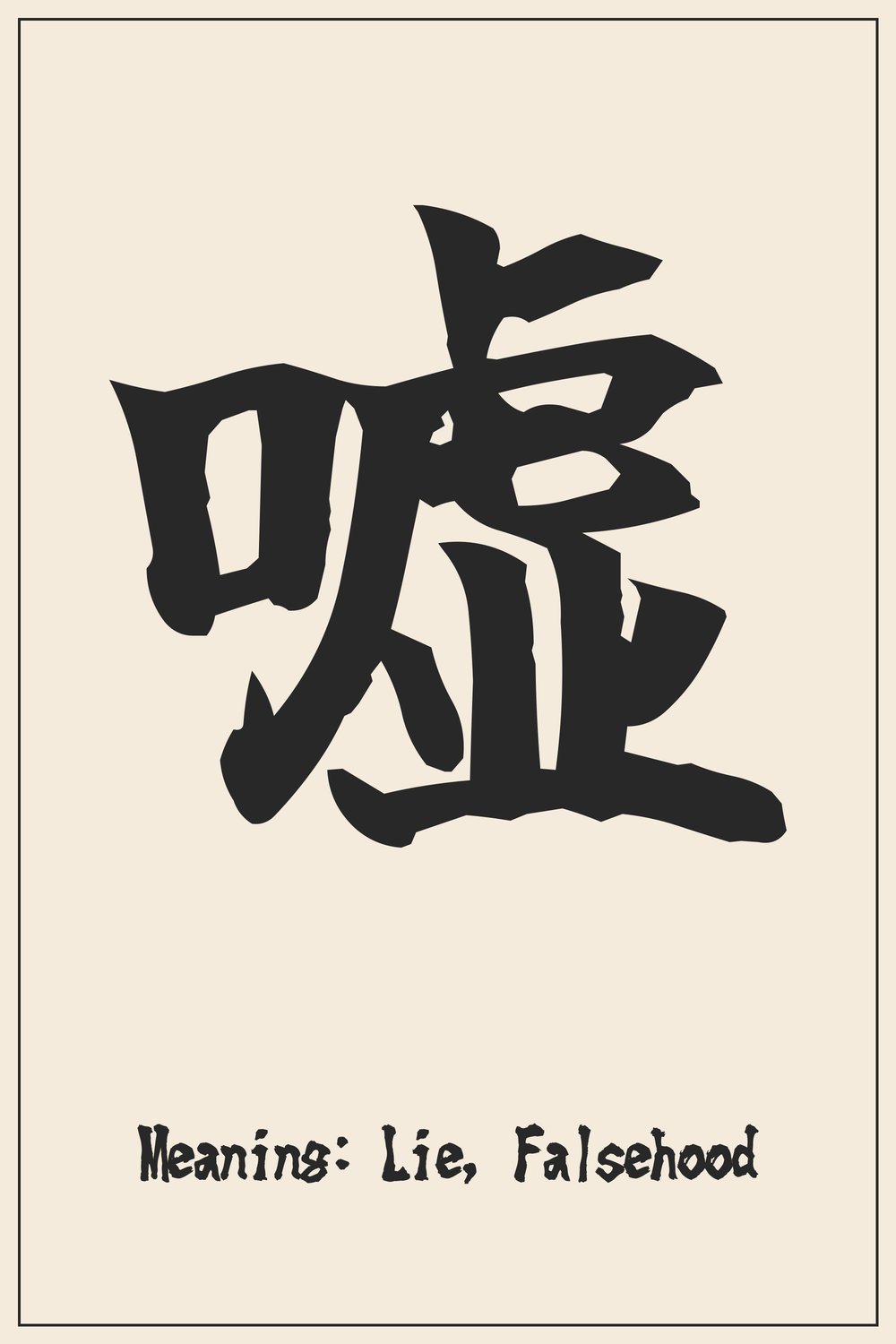
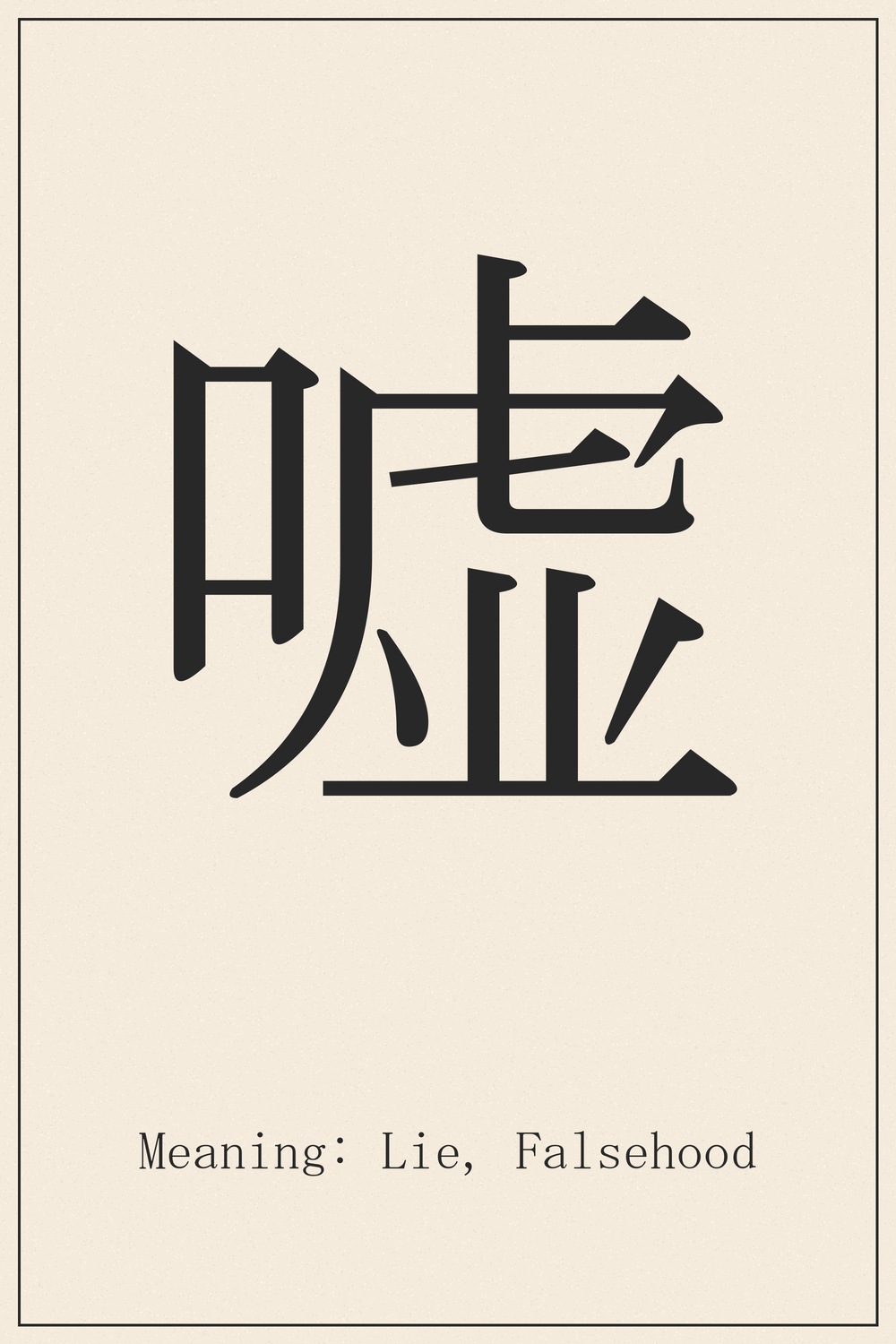
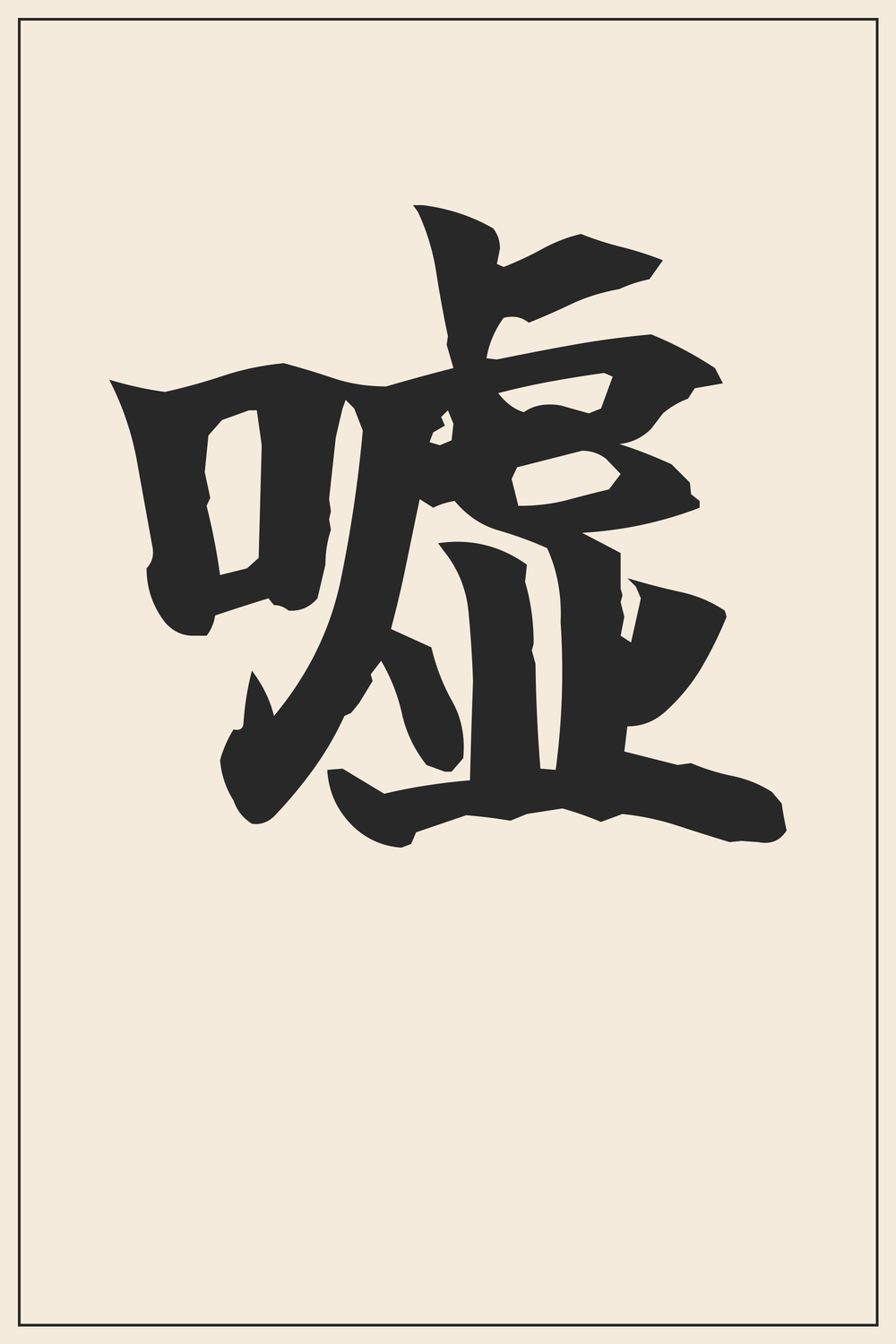
The Kanji 嘘 (Uso) directly translates to ‘lie’ or ‘falsehood’, representing a fundamental breach of trust and truth. While straightforward in meaning, its implications in personal and societal interactions are profound, highlighting the delicate balance of honesty.
The atmosphere of a Kanji character changes dramatically depending on the font style. A character that looks elegant in a brush style might look bold and modern in a different font.
Recommendation:
Since a tattoo is permanent, we strongly recommend comparing various font styles beyond what is shown here. Use our designs as a trusted reference for the correct structure, but feel free to explore different artistic variations to find the perfect match for your vision.
The Deep Meaning Behind 嘘
The Kanji 嘘 (Uso) embodies the concept of untruth and deception. Its etymological roots provide a clear insight into its meaning, combining elements that visually represent the act of speaking what is not real. It stands in direct opposition to truth and sincerity, highlighting a fundamental aspect of human communication and morality.
In Japanese culture, while politeness and harmony (和, wa) are highly valued, outright deception or 嘘 is generally frowned upon. The concept touches on themes of integrity and the impact words have on trust and relationships, making it a powerful character to consider in its social context.
Kanji Breakdown
The Kanji 嘘 is comprised of two significant components, each contributing to its overall meaning of falsehood.
Meaning: Mouth. This radical often relates to speech, eating, or openings, indicating the origin of spoken words.
Meaning: Emptiness, void, false. This component directly conveys the idea of something being hollow, not real, or fabricated.
Conclusion
The Kanji 嘘, meaning ‘lie’ or ‘falsehood’, serves as a potent reminder of the weight of words and the value of truth. Its composition clearly illustrates the concept of uttering something empty or untrue, making its meaning unambiguous and impactful.
However, due to its distinctly negative connotation, it is strongly advised against choosing 嘘 for a Kanji tattoo. While it holds a significant place in language, its meaning is not one typically sought for personal affirmation or positive expression in body art.
Comments