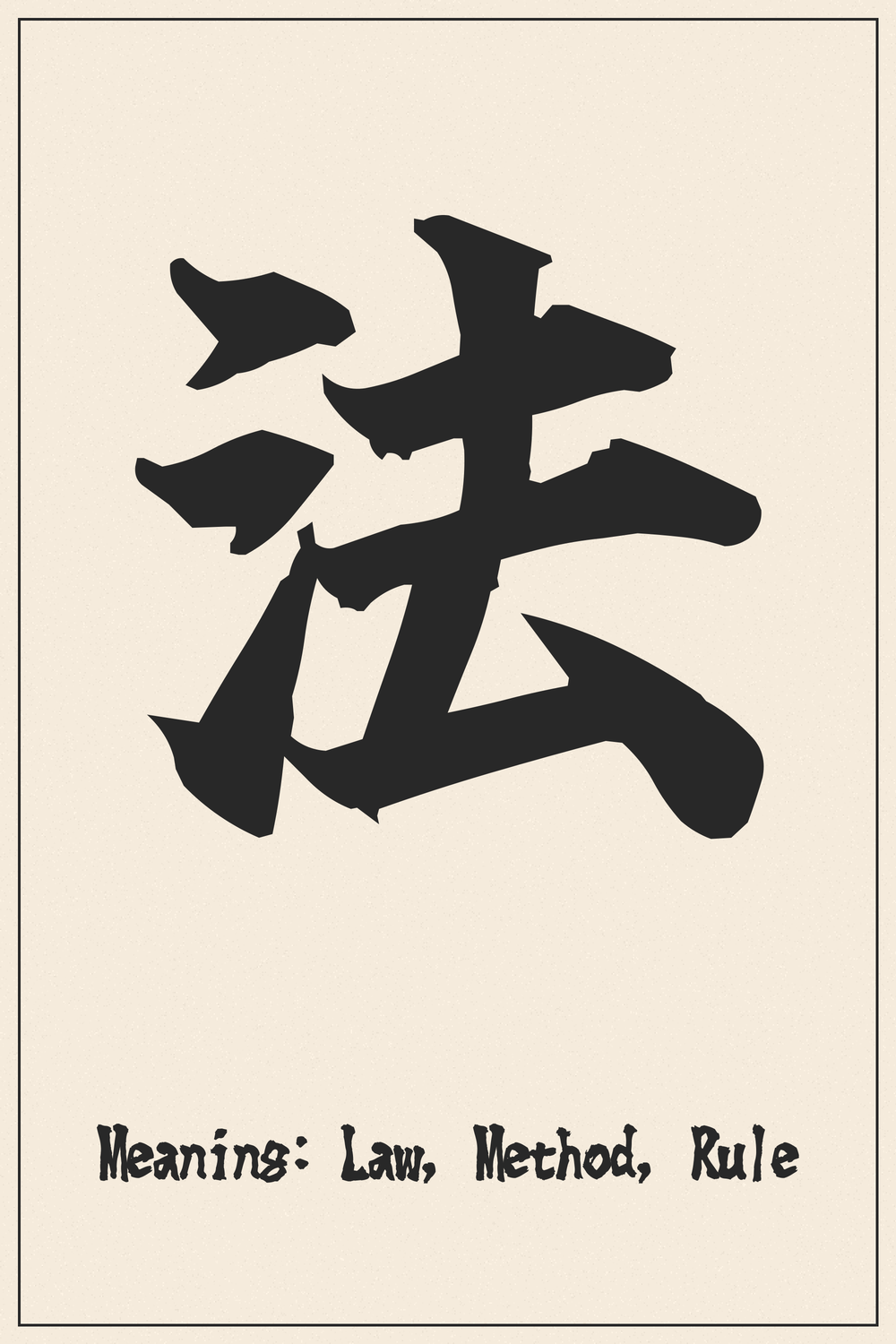
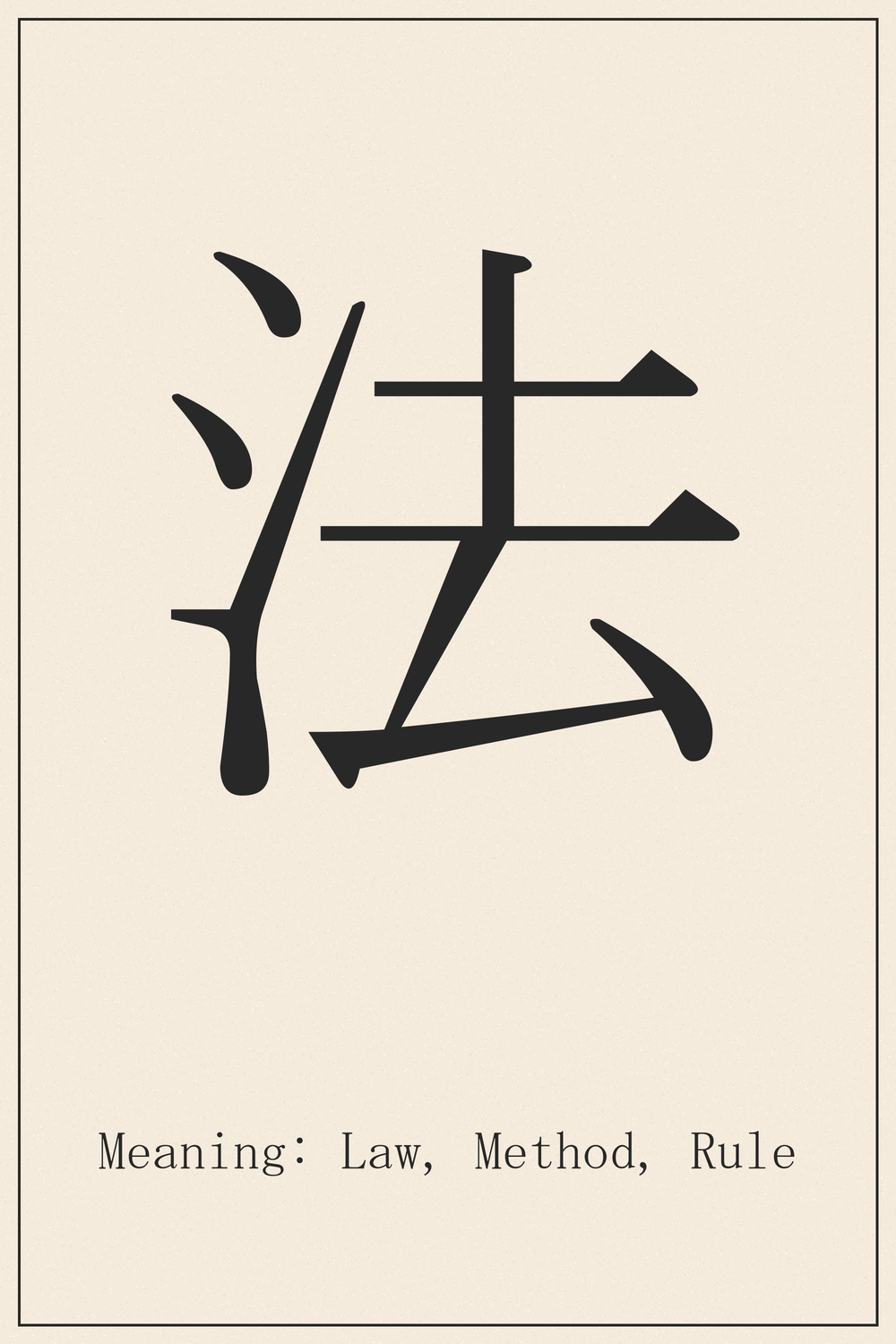
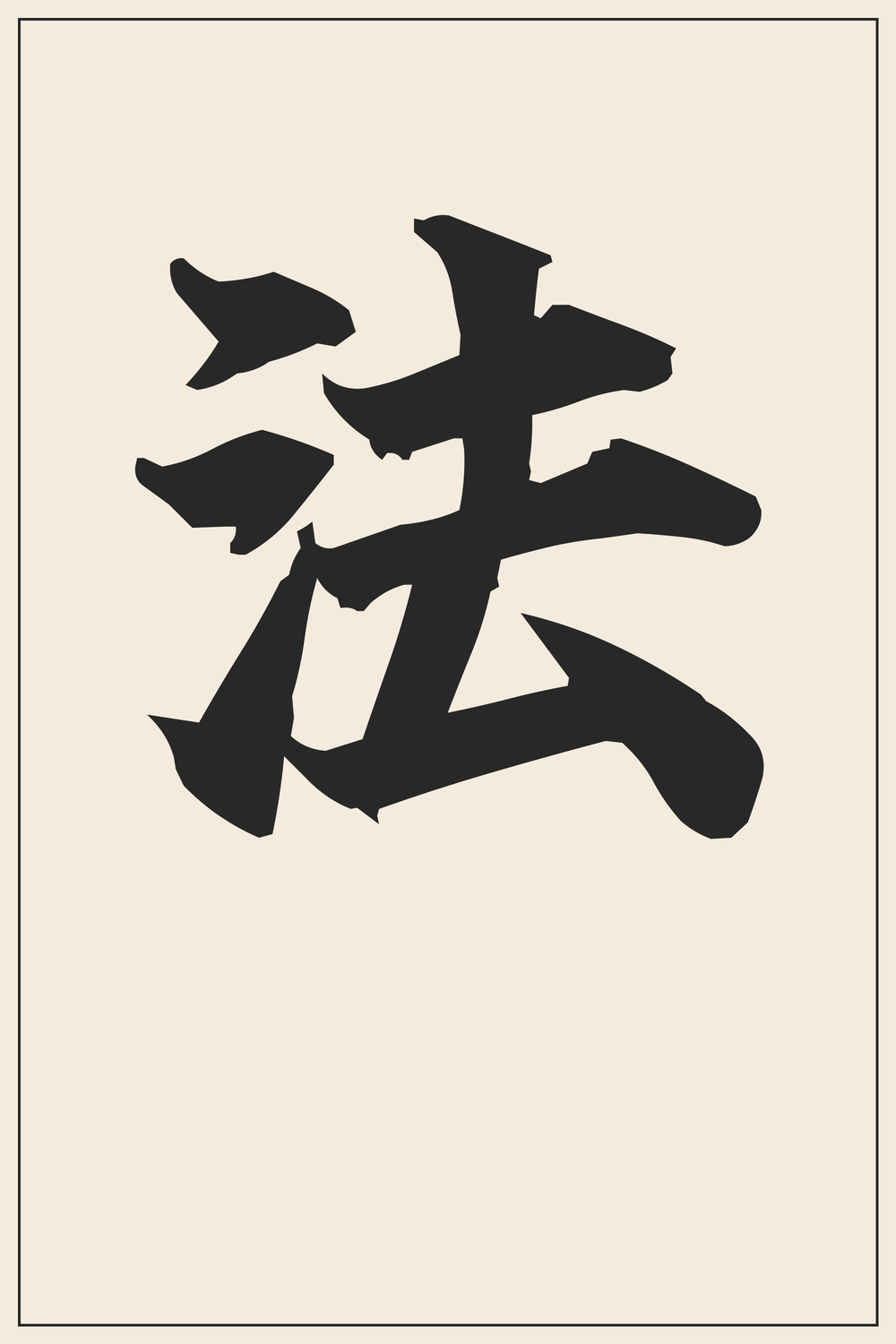
The Kanji 法 (Hou) profoundly encapsulates the essence of order, justice, and universal truth. It represents not just secular law but also the philosophical concept of Dharma, guiding principles that shape existence.
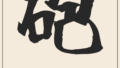
The atmosphere of a Kanji character changes dramatically depending on the font style. A character that looks elegant in a brush style might look bold and modern in a different font.
Recommendation:
Since a tattoo is permanent, we strongly recommend comparing various font styles beyond what is shown here. Use our designs as a trusted reference for the correct structure, but feel free to explore different artistic variations to find the perfect match for your vision.
The Deep Meaning Behind 法
The Kanji 法 (hō) has a rich etymological background. Its ancient form depicted water flowing away from a mythical beast called 獬豸 (xièzhì), which was believed to have the power to discern right from wrong and punish the guilty. The character thus originally symbolized the removal of injustice through divine judgment.
In Japanese culture, 法 extends beyond mere legal statutes to encompass profound philosophical and spiritual dimensions. It is intrinsically linked to the Buddhist concept of Dharma, referring to the universal truths, cosmic laws, and the teachings of the Buddha that lead to enlightenment. This dual interpretation gives 法 a revered status, embodying both societal structure and spiritual path.
Kanji Breakdown
The character 法 is composed of key elements that hint at its core meanings of law and method.
Water Radical (Sanzui): This component often suggests purification, cleansing, or the flow of things. In the context of law, it can symbolize the washing away of wrongdoing or the clear, flowing nature of justice.
To Go Away (Kyo/Ko): This element signifies departure or removal. Combined with water, it reinforces the ancient concept of justice being the removal of evil or the establishment of a clear, righteous path.
Conclusion
Choosing 法 for a tattoo is a powerful statement about one’s commitment to justice, order, and universal principles. It reflects an appreciation for both societal structure and deeper spiritual truths, representing a personal compass guided by unwavering standards.
This Kanji is a timeless symbol of profound meaning, ideal for those who wish to embody the core tenets of law, ethics, and the path of truth. Its elegant simplicity ensures a visually striking and deeply resonant piece of body art.
Comments