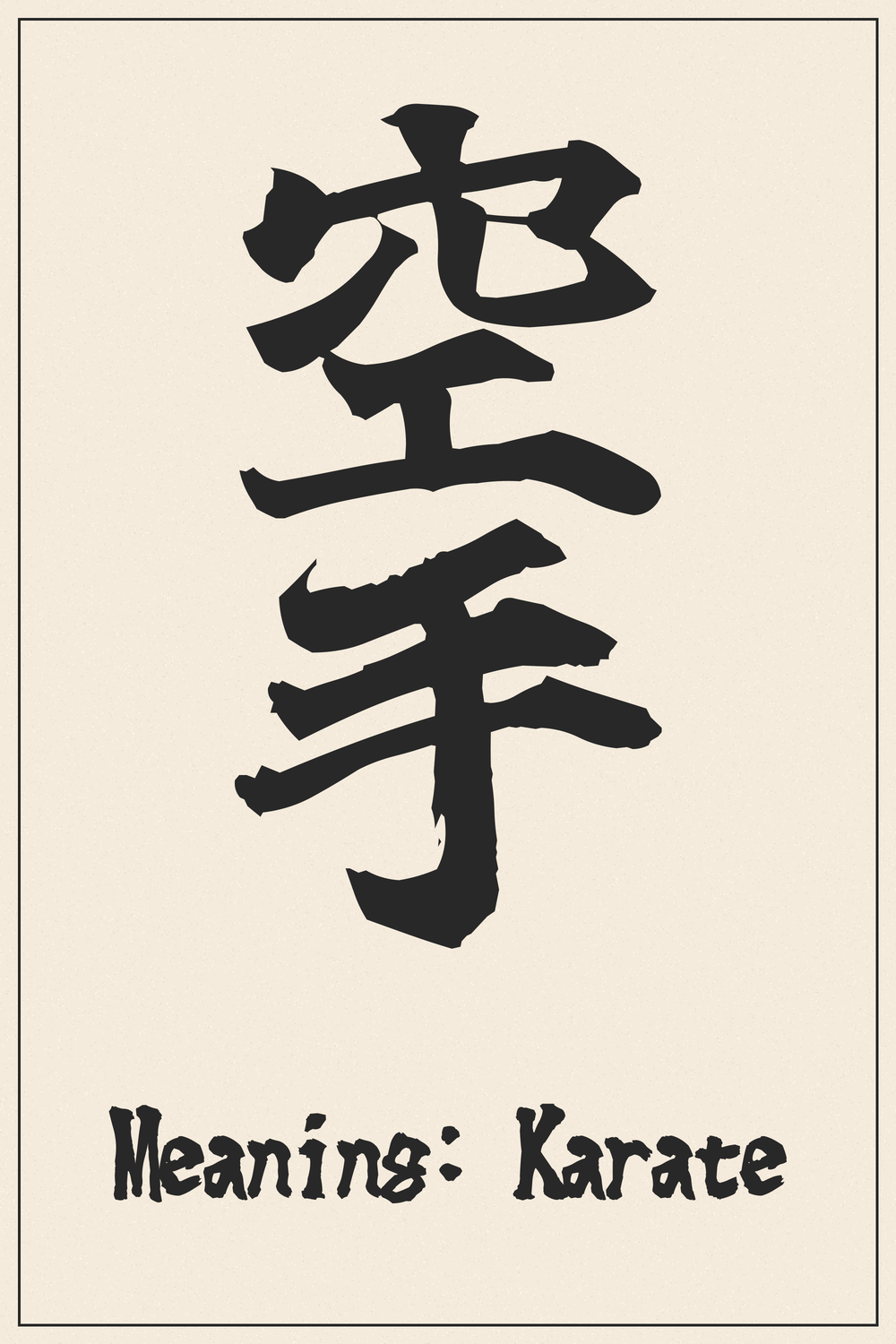
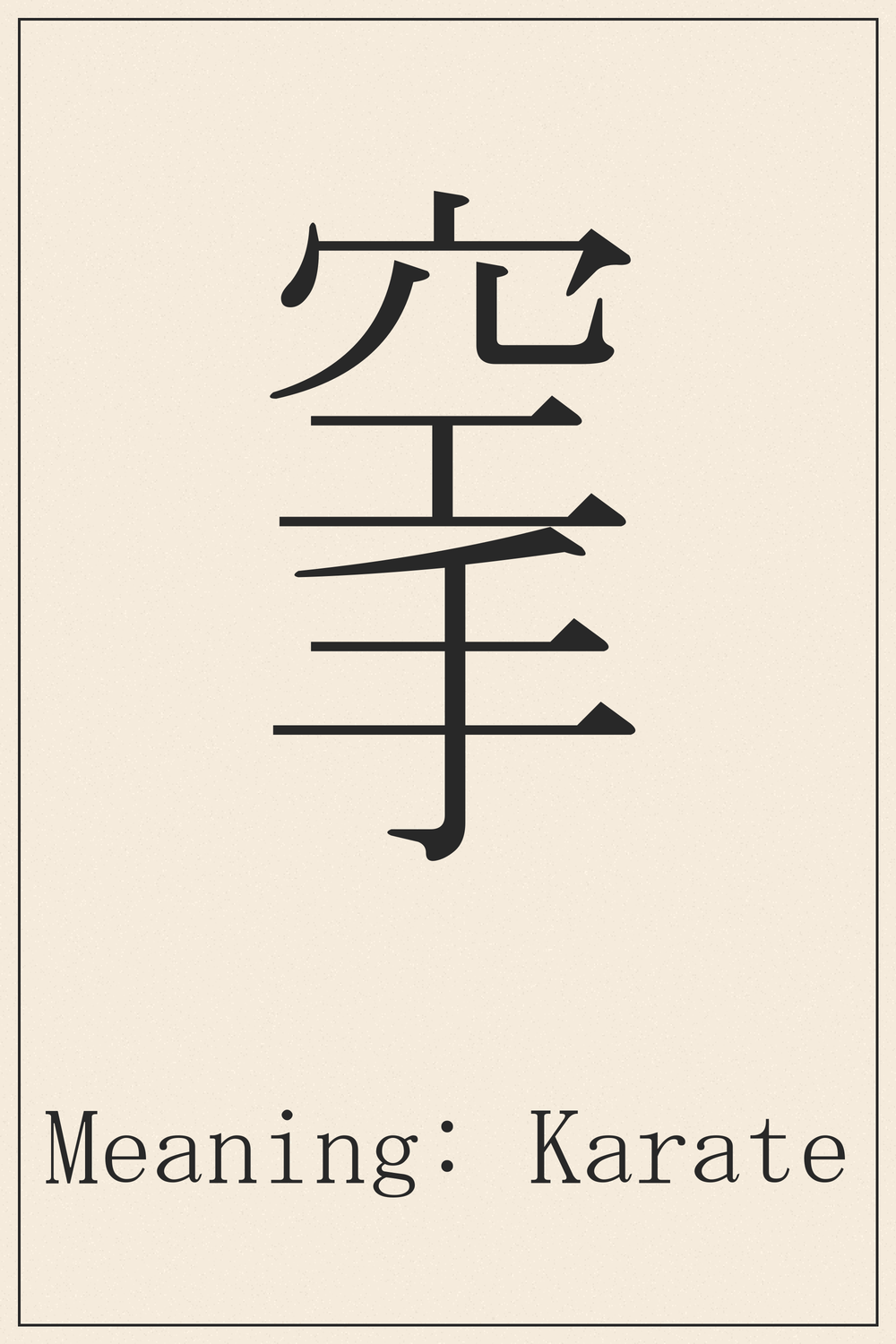
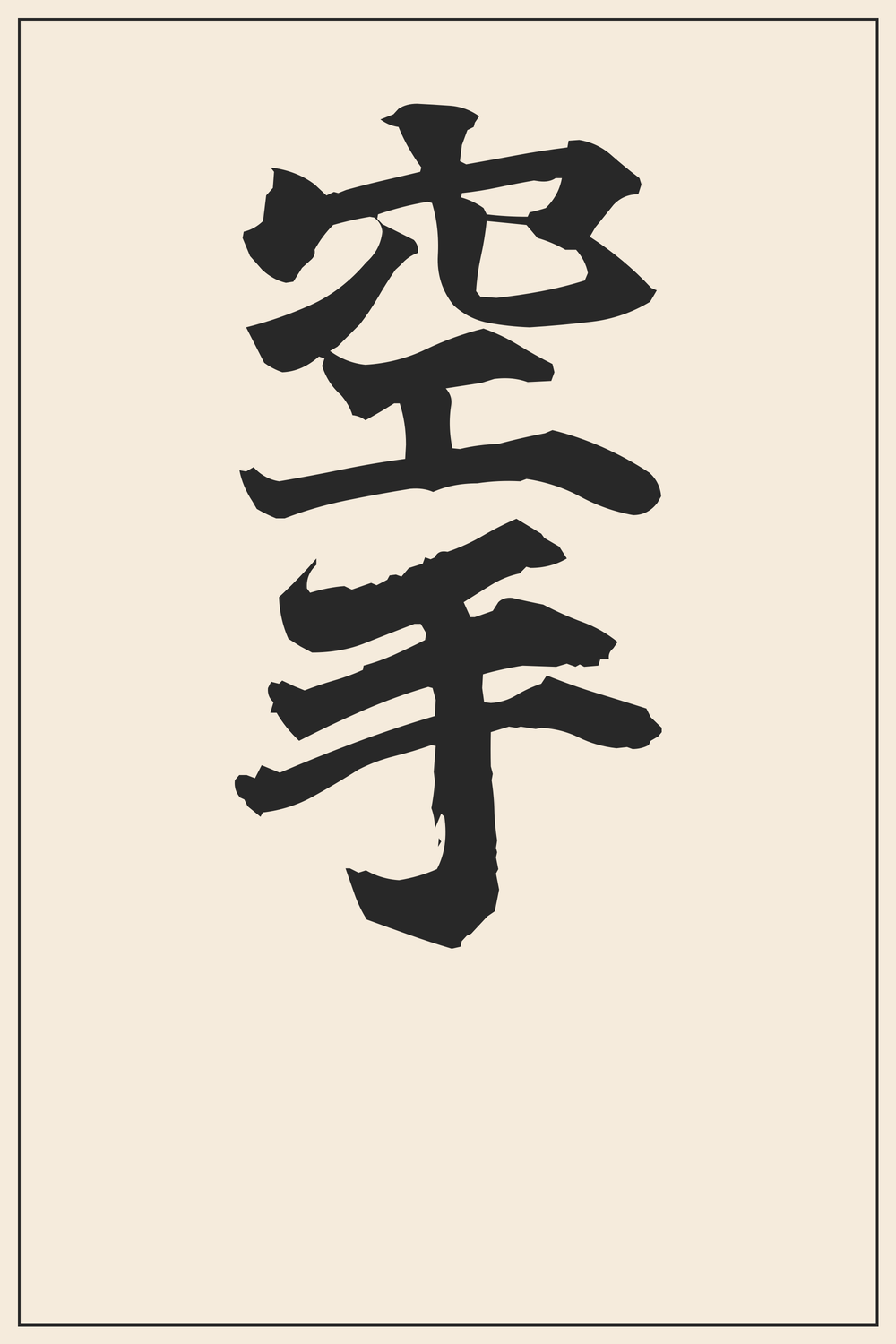
Karate, the iconic Japanese martial art, embodies a profound philosophy of self-defense and personal development. This powerful Kanji combination represents more than just combat; it signifies a journey of discipline and mastery.
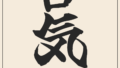
The atmosphere of a Kanji character changes dramatically depending on the font style. A character that looks elegant in a brush style might look bold and modern in a different font.
Recommendation:
Since a tattoo is permanent, we strongly recommend comparing various font styles beyond what is shown here. Use our designs as a trusted reference for the correct structure, but feel free to explore different artistic variations to find the perfect match for your vision.
The Deep Meaning Behind 空手
空手 (Karate) literally translates to ’empty hand’. The first character, 空 (kara), means ’empty’, while 手 (te) means ‘hand’. This name reflects the art’s fundamental principle of unarmed combat, emphasizing the use of the body as the primary weapon.
Originating in Okinawa, Karate developed from indigenous fighting methods and Chinese martial arts. It became widely known for its powerful strikes, blocks, and kicks, evolving beyond mere physical technique into a ‘do’ (way) of life, fostering mental fortitude, respect, and humility.
Kanji Breakdown
Understanding the individual components of 空手 illuminates its profound meaning.
Empty, Sky, Void: Originally depicted a hole, symbolizing emptiness or void. In a martial context, it represents the absence of weapons, but also the concept of a clear, open mind, free from ego.
Hand, Arm: This character is a pictogram of a hand, emphasizing the physical aspect of the art. It signifies not just the literal hand but also skill, technique, and action.
Conclusion
The Kanji 空手 transcends a simple definition of ’empty hand combat’. It is a symbol of rigorous self-improvement, unwavering discipline, and the pursuit of mastery over oneself, embodying a holistic approach to life.
For those seeking a tattoo that represents strength, martial discipline, or a personal journey of development, 空手 is a compelling choice. Its visual impact is matched by its deep philosophical roots, making it a profound mark of commitment.
Comments