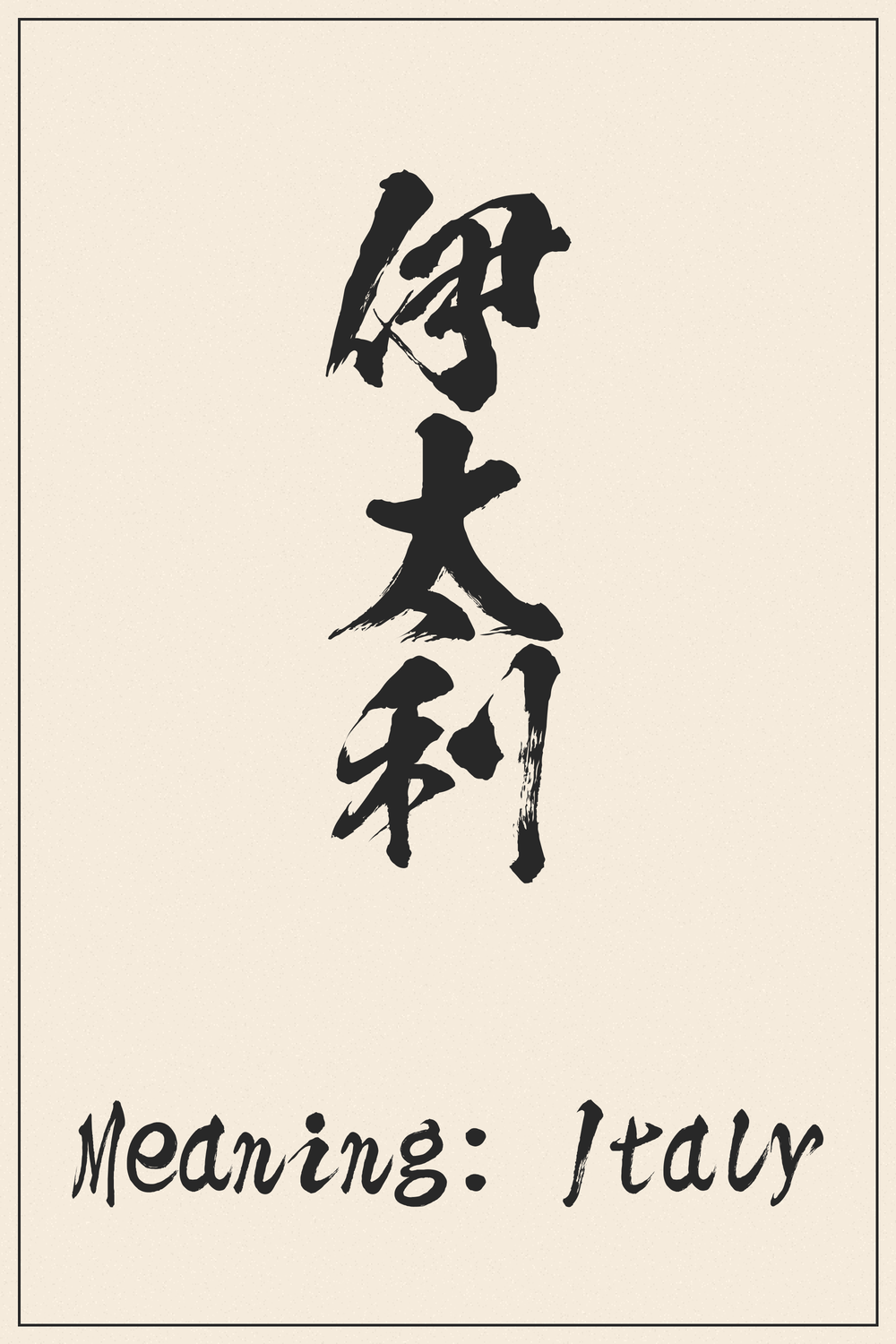
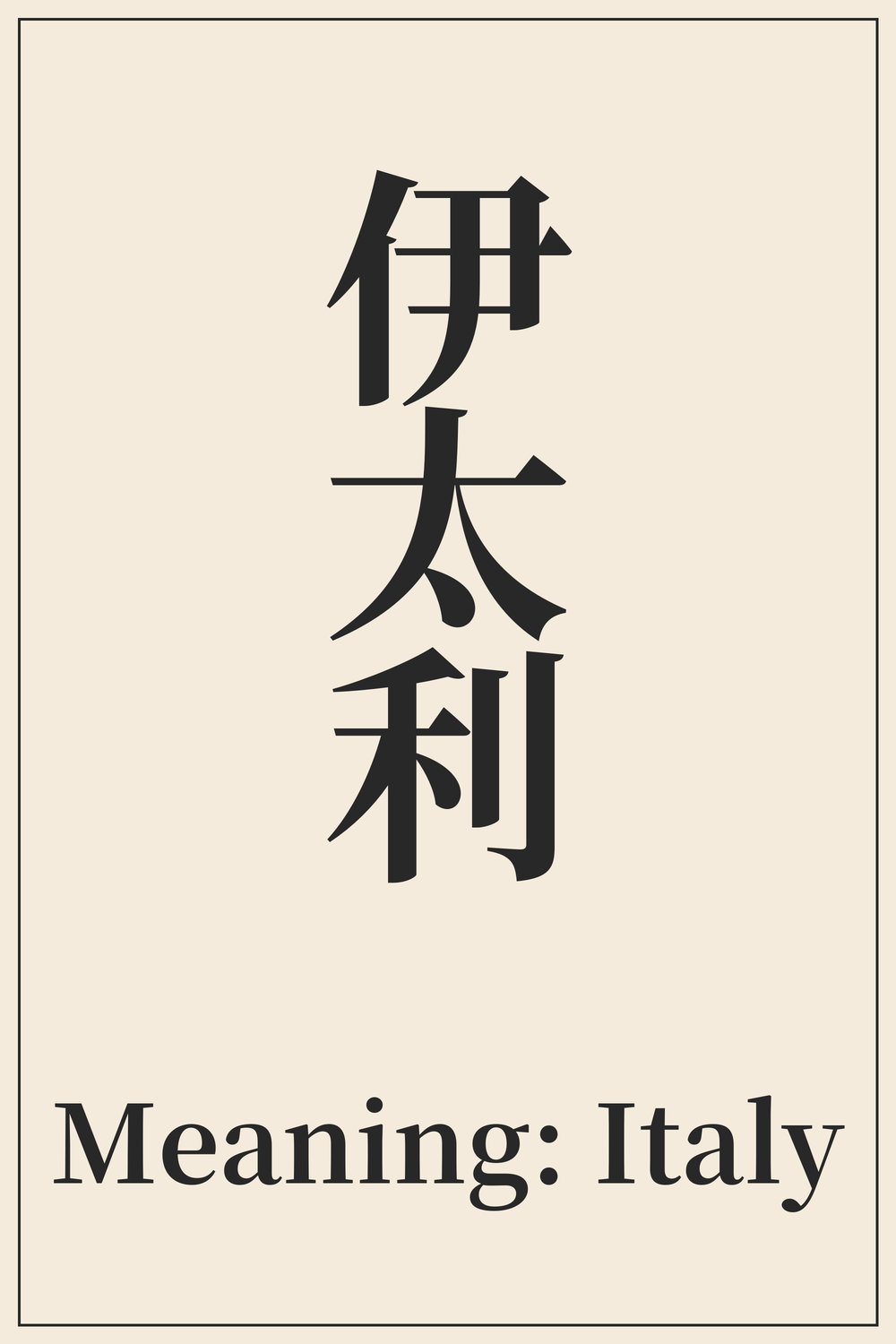
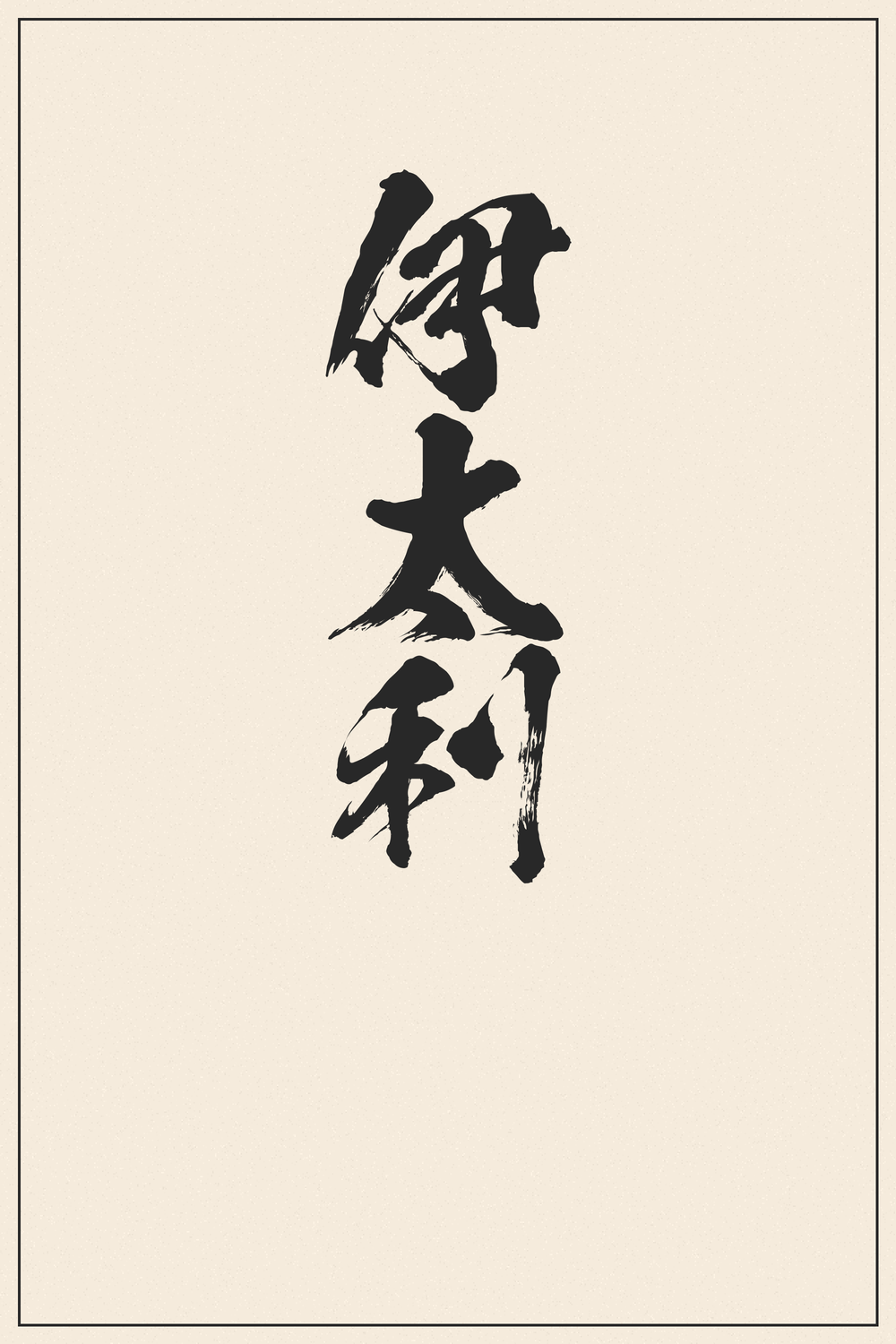
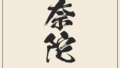
Discover the fascinating linguistic bridge between Japanese and the world with ‘伊太利’. This unique Kanji combination brings to life the vibrant culture of Italy, expressed through the elegant strokes of Japanese script.
The atmosphere of a Kanji character changes dramatically depending on the font style. A character that looks elegant in a brush style might look bold and modern in a different font.
Recommendation: Since a tattoo is permanent, we strongly recommend comparing various font styles beyond what is shown here. Use our designs as a trusted reference for the correct structure, but feel free to explore different artistic variations to find the perfect match for your vision.
The Deep Meaning Behind 伊太利
The Kanji combination 伊太利 (Itari) serves as an ateji, a phonetic transcription, to represent the country of Italy. This method of using existing Kanji characters purely for their sound, rather than their inherent meaning, is a common practice in Japanese for foreign place names and words.
Unlike many Kanji that carry deep symbolic weight, 伊太利 is a straightforward linguistic adaptation. It showcases the Japanese language’s ability to integrate foreign concepts phonetically, allowing for clear communication while maintaining a visual link to traditional script.
Kanji Breakdown
The characters in 伊太利 are chosen for their phonetic values, creating a uniquely Japanese way to refer to Italy.
Meaning: That person, often used phonetically for ‘i.’
In 伊太利, 伊 is utilized solely for its ‘i’ sound, without conveying its original meaning of ‘he’ or ‘that person.’ It’s a prime example of a character chosen for its phonetic value in ateji.
Meaning: Thick, big, grand.
The character 太 provides the ‘ta’ sound in ‘Itari.’ While its literal meanings include ‘fat’ or ‘grand,’ these are irrelevant in the context of Italy, highlighting its purely phonetic role in this ateji.
Meaning: Profit, advantage, sharp.
For the final syllable ‘ri,’ the character 利 is employed. Its primary meanings of ‘benefit’ or ‘sharpness’ are disregarded here, serving exclusively as a sound component to complete the phonetic rendition of ‘Italy.’
Conclusion
The Kanji 伊太利 (Itari) is a perfect illustration of ateji, where characters are chosen for their sounds to represent foreign words, in this case, the beautiful country of Italy. Its construction is a testament to the adaptability and phonetic flexibility of the Japanese writing system.
While 伊太利 primarily functions as a phonetic representation, its neat visual balance and connection to a beloved country make it a unique piece of cultural linguistics. For those considering its use in art or personal expression, it stands as a testament to the global reach of language and the elegance of Kanji.
Comments