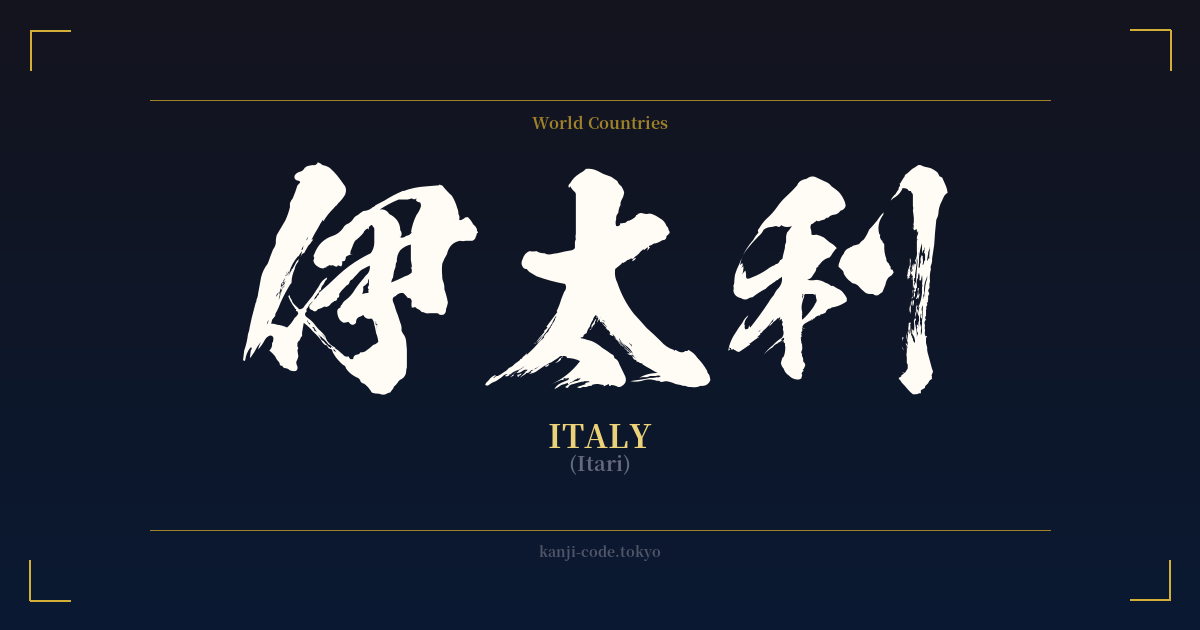
✍️ 伊太利 (Itari) — Contexto cultural
Itari (伊太利) ofrece una fascinante perspectiva de un momento específico de la historia japonesa: la Restauración Meiji (1868-1912). A medida que Japón abría sus fronteras y se modernizaba rápidamente, necesitaba incorporar una gran cantidad de conceptos, tecnologías y nombres extranjeros. Para los nombres de países, un método utilizado fue el "ateji" (当て字), donde los kanji se elegían únicamente por su sonido fonético para aproximarse a la pronunciación extranjera, ignorando sus significados originales.
Así nació precisamente 伊太利. Los caracteres 伊 (i), 太 (ta) y 利 (ri) se seleccionaron para imitar el sonido de 'Italia'. Los significados individuales de los caracteres —'ese', 'gordito/grande' y 'ganancia'— son completamente irrelevantes en este contexto. La palabra no significa 'el grande y rentable' ni ninguna otra combinación literal; es simplemente una transcripción fonética.
Sin embargo, esta práctica de usar ateji para palabras extranjeras solía ser torpe y generaba confusión. ¿Debía el lector interpretar los sonidos o los significados? Para solucionar esto, el idioma japonés estandarizó progresivamente el uso del katakana, un silabario aparte específicamente para préstamos lingüísticos, términos técnicos y onomatopeyas. Con el tiempo, 伊太利 fue reemplazado casi por completo por su equivalente moderno en katakana: イタリア (Itaria).
Hoy en día, es casi imposible ver el kanji 伊太利 en la vida cotidiana. Se considera arcaico e histórico. Su uso se limita a contextos muy específicos, a menudo nostálgicos o académicos, como en la señalización de un restaurante antiguo que intenta evocar un aire retro-europeo, en textos históricos o en ciertas abreviaturas formales. Por ejemplo, el kanji 伊 todavía se usa a veces como abreviatura de un solo carácter para Italia en contextos como 日伊関係 (Nichi-I kankei), que significa 'relaciones entre Japón e Italia'.
Para quienes consideren usar esta palabra, es fundamental comprender su historia. 伊太利 no es la palabra actual para referirse a Italia en Japón. Es un fósil lingüístico, una hermosa pero latente reliquia del viaje de Japón hacia el mundo internacional.
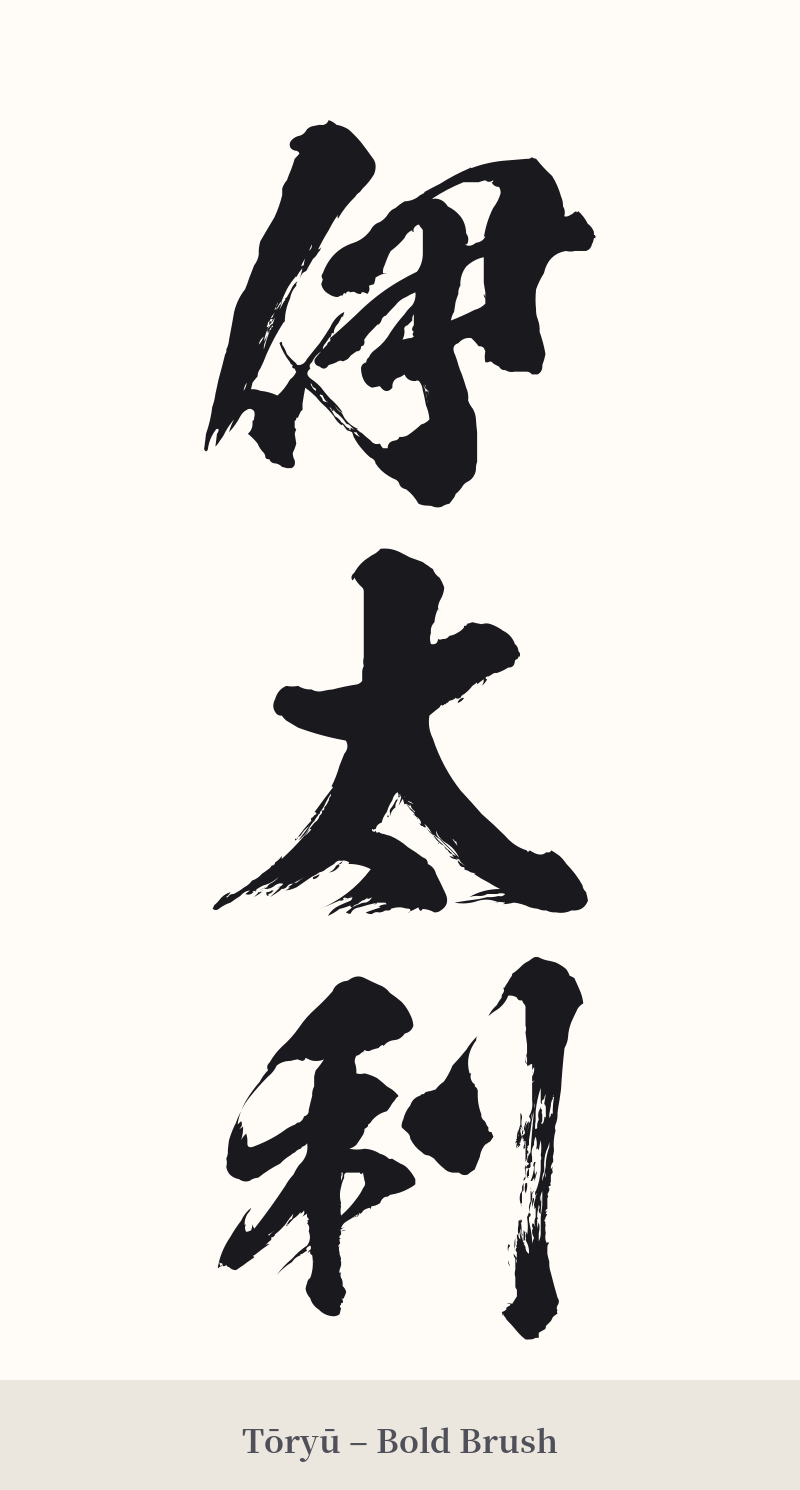
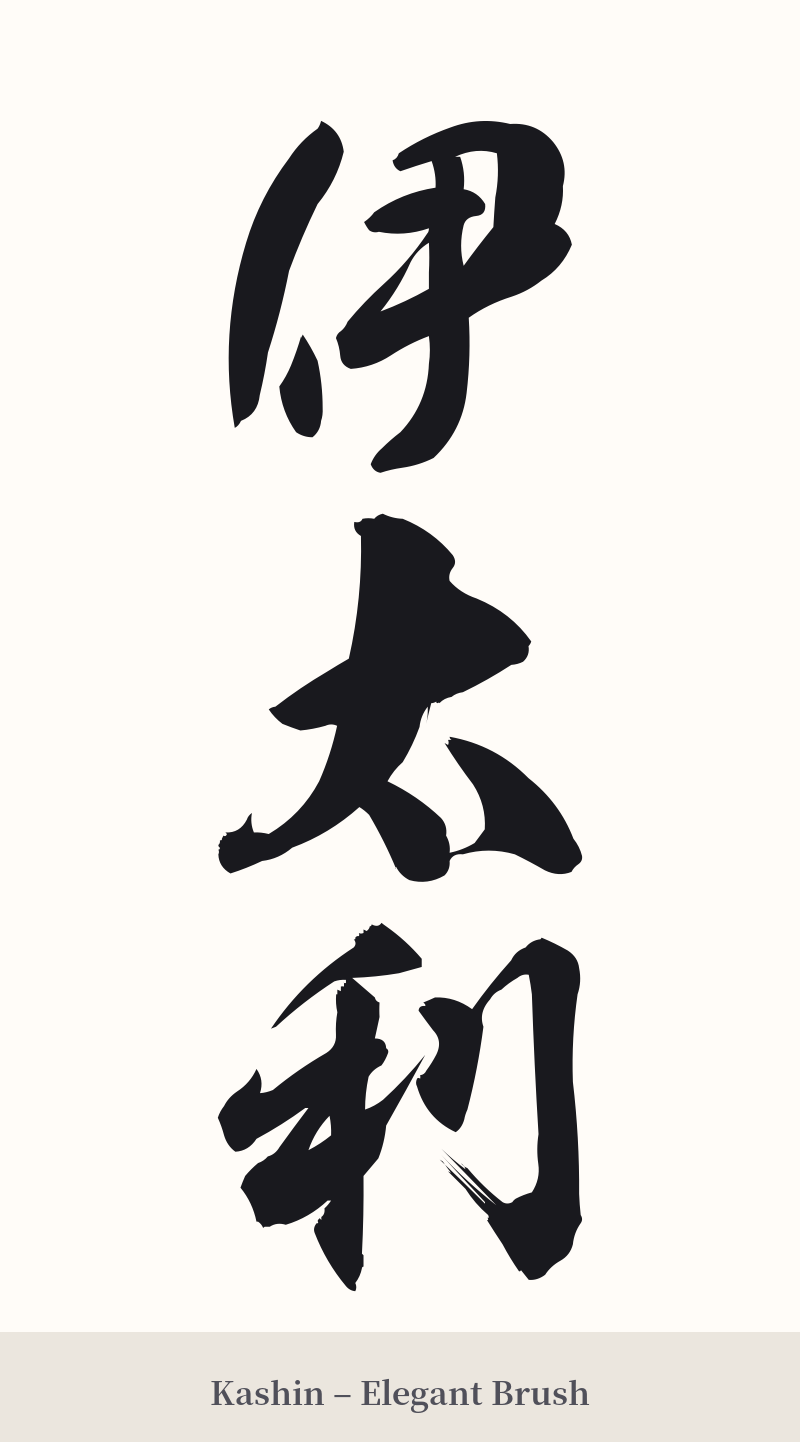
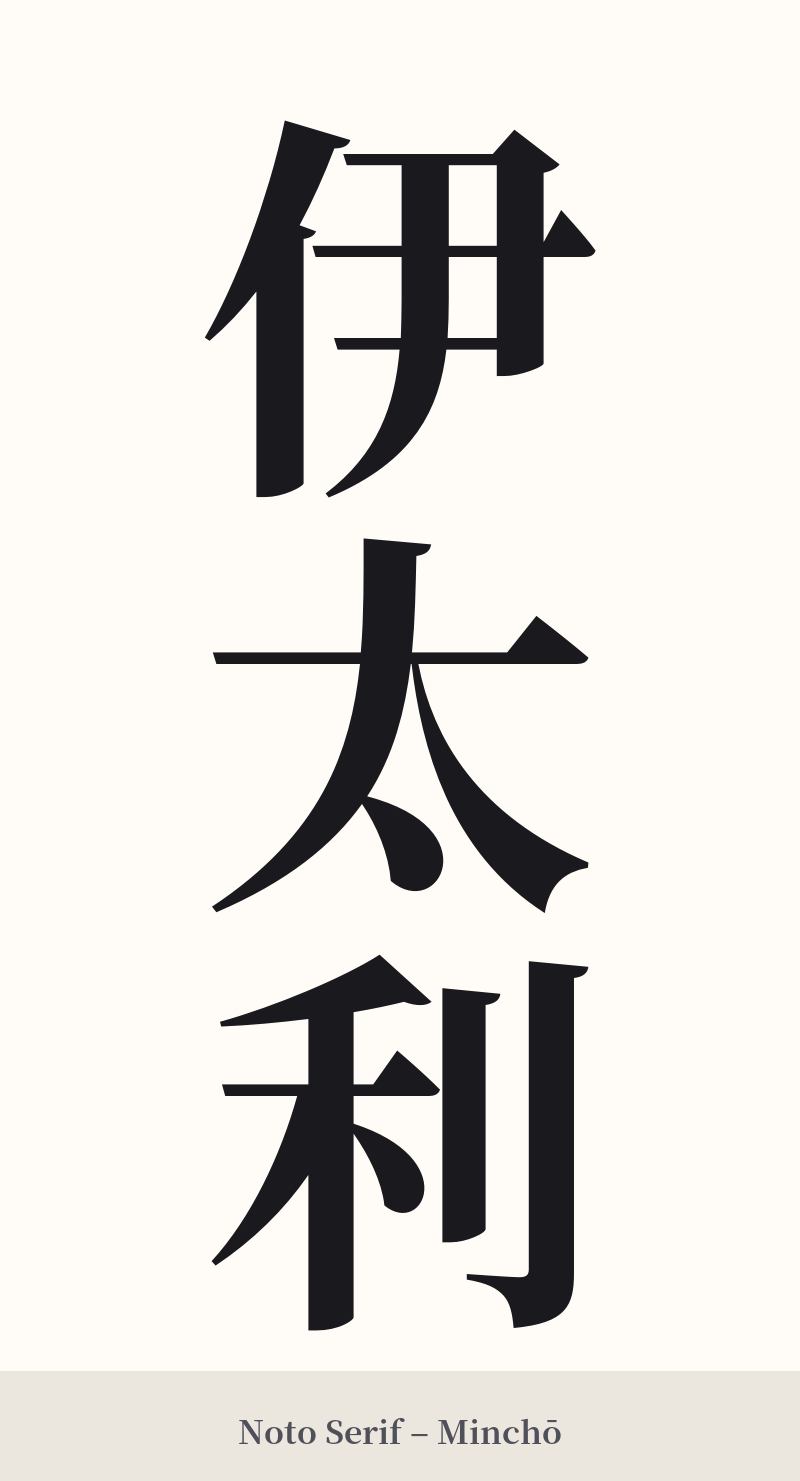
🖌️ Estilos de fuente para 伊太利
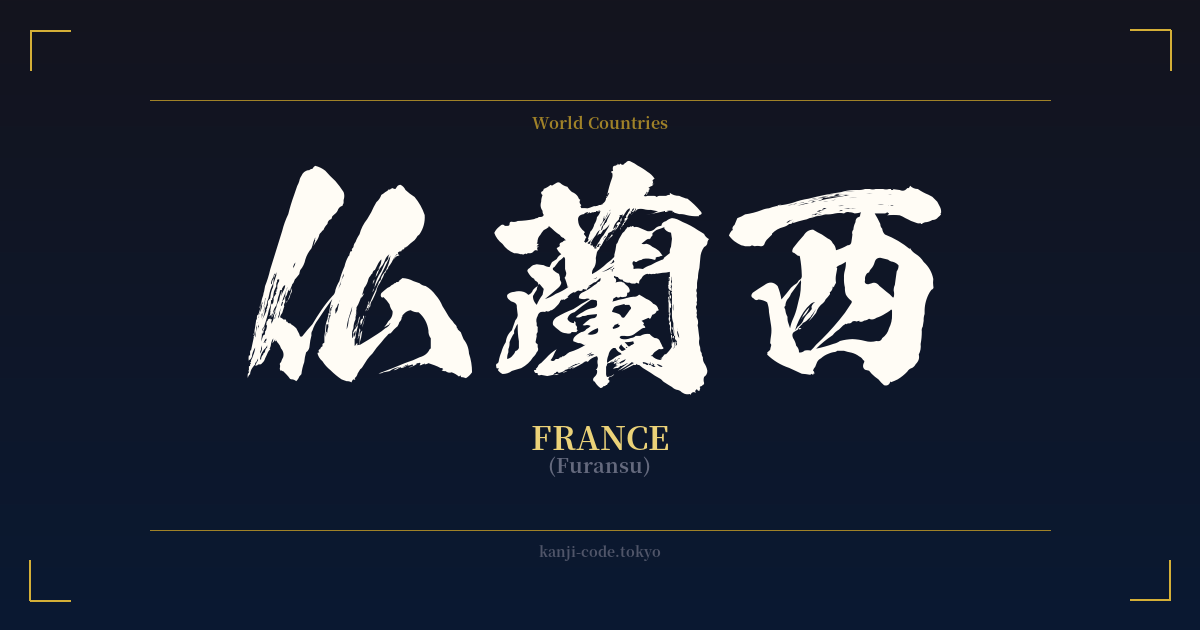
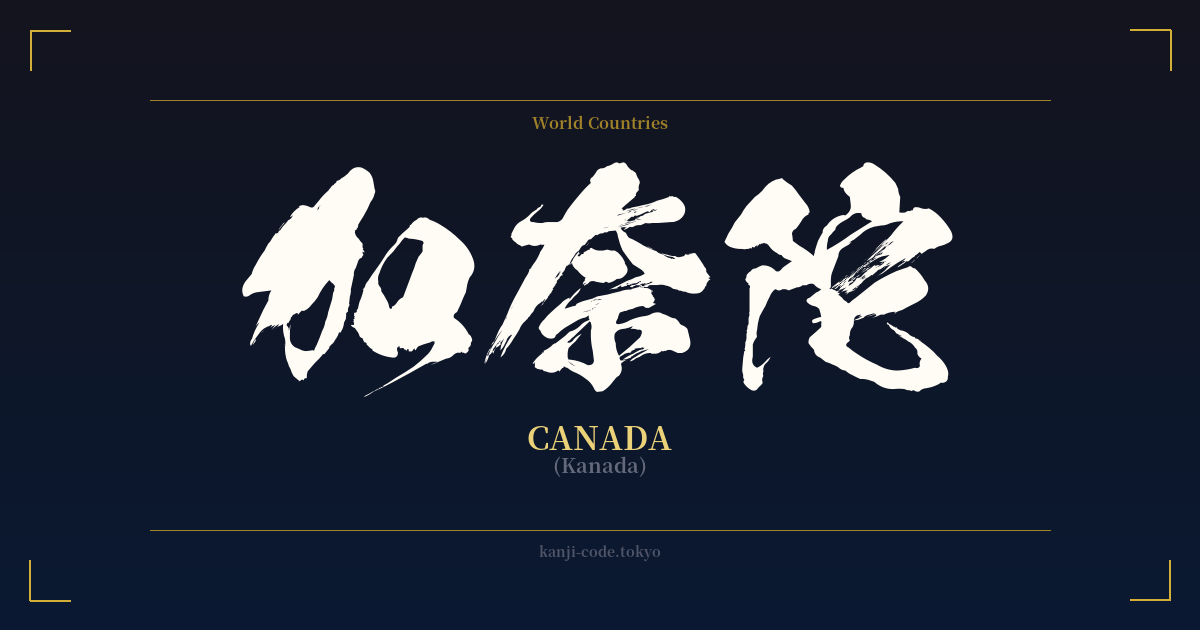
Los mismos caracteres kanji pueden verse muy diferentes según el estilo de caligrafía. Elige una fuente que se ajuste al ambiente que deseas para tu tatuaje o diseño.
🎨 Idoneidad para tatuajes
📐 Guía de diseño de tatuajes
Dada su estructura de tres caracteres y su carácter histórico, 伊太利 se presta a diseños de tatuajes tradicionales y clásicos.
– Colocación: Se recomienda encarecidamente una orientación vertical. Queda muy elegante si se coloca a lo largo de la columna vertebral, el antebrazo o la pantorrilla. También funciona bien una colocación horizontal en la parte superior de la espalda o el pecho.
– Estilo de fuente: Para honrar su aire arcaico, elige una caligrafía tradicional. Kaisho (楷書), la caligrafía estándar en bloque, aporta claridad, mientras que Gyosho (行書), un estilo semicursivo, puede añadir un toque más fluido e histórico. Evita las fuentes modernas, geométricas o sin serifa, ya que desentonarían con el origen clásico de la palabra.
Consejos visuales: Deja que los personajes sean los protagonistas. Evita sobrecargar el diseño con otras imágenes italianas como banderas o monumentos. La fuerza de este diseño reside en su tipografía sutil e histórica. Una tinta negra o gris oscuro sencilla resulta muy efectiva.
Comentarios