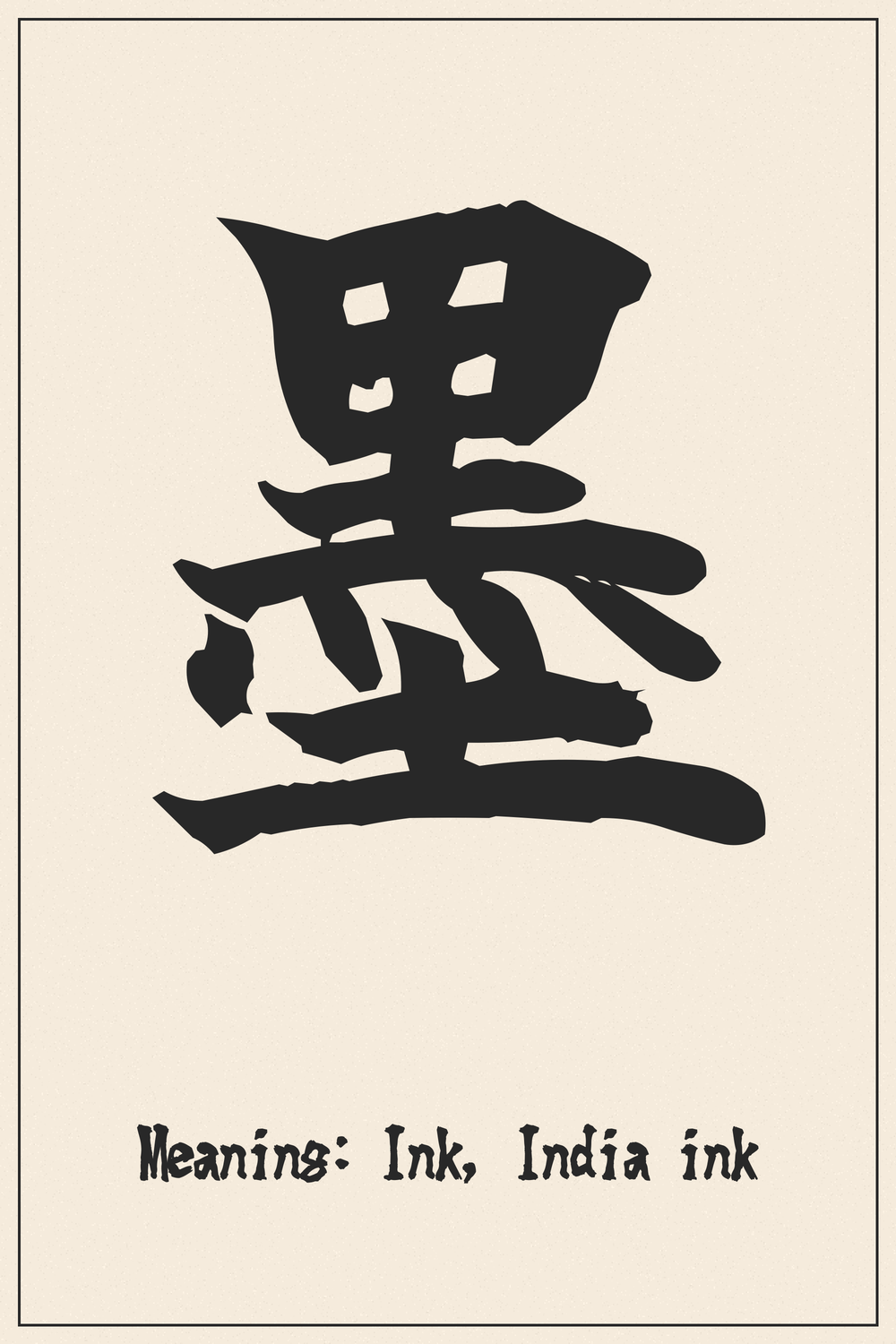
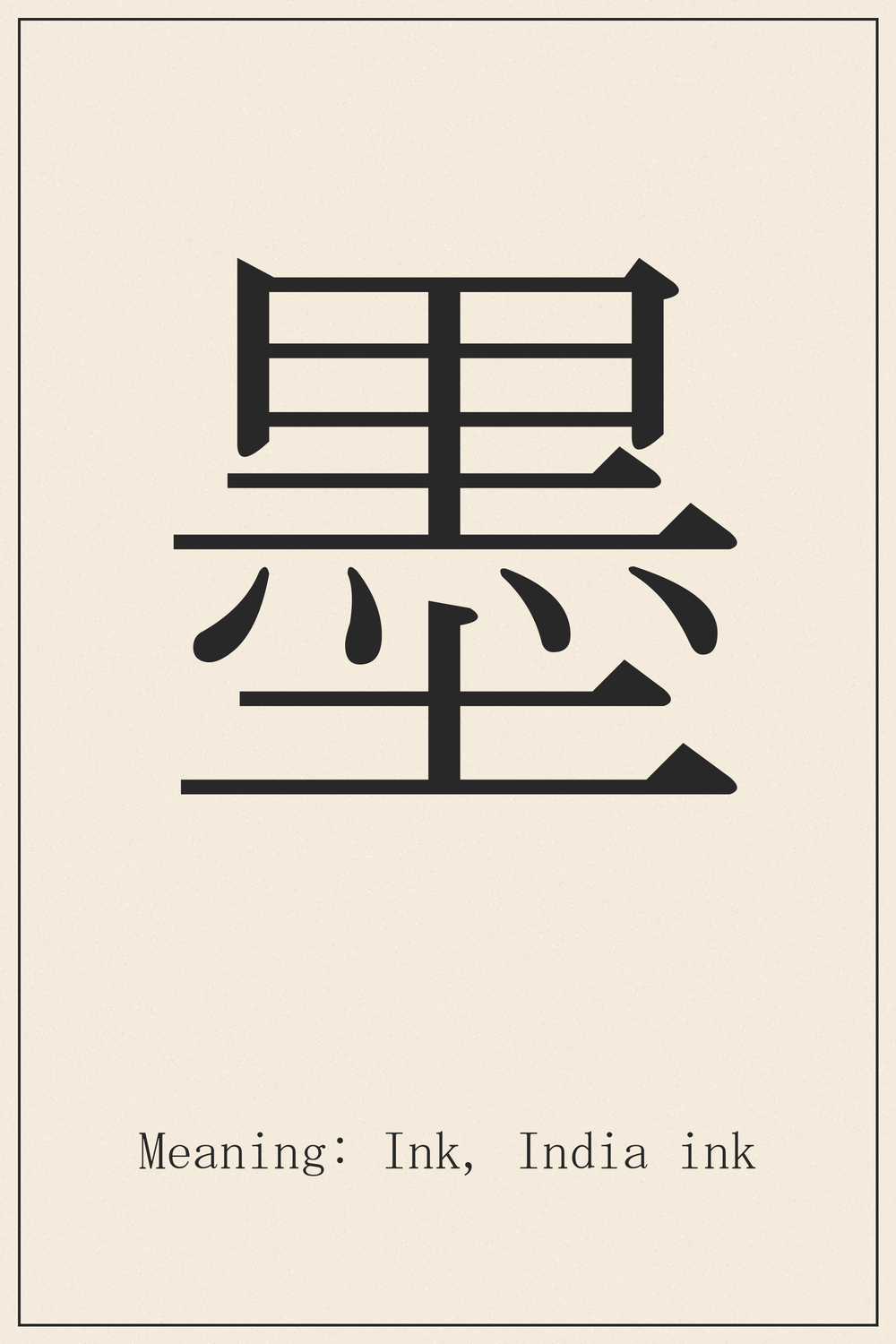
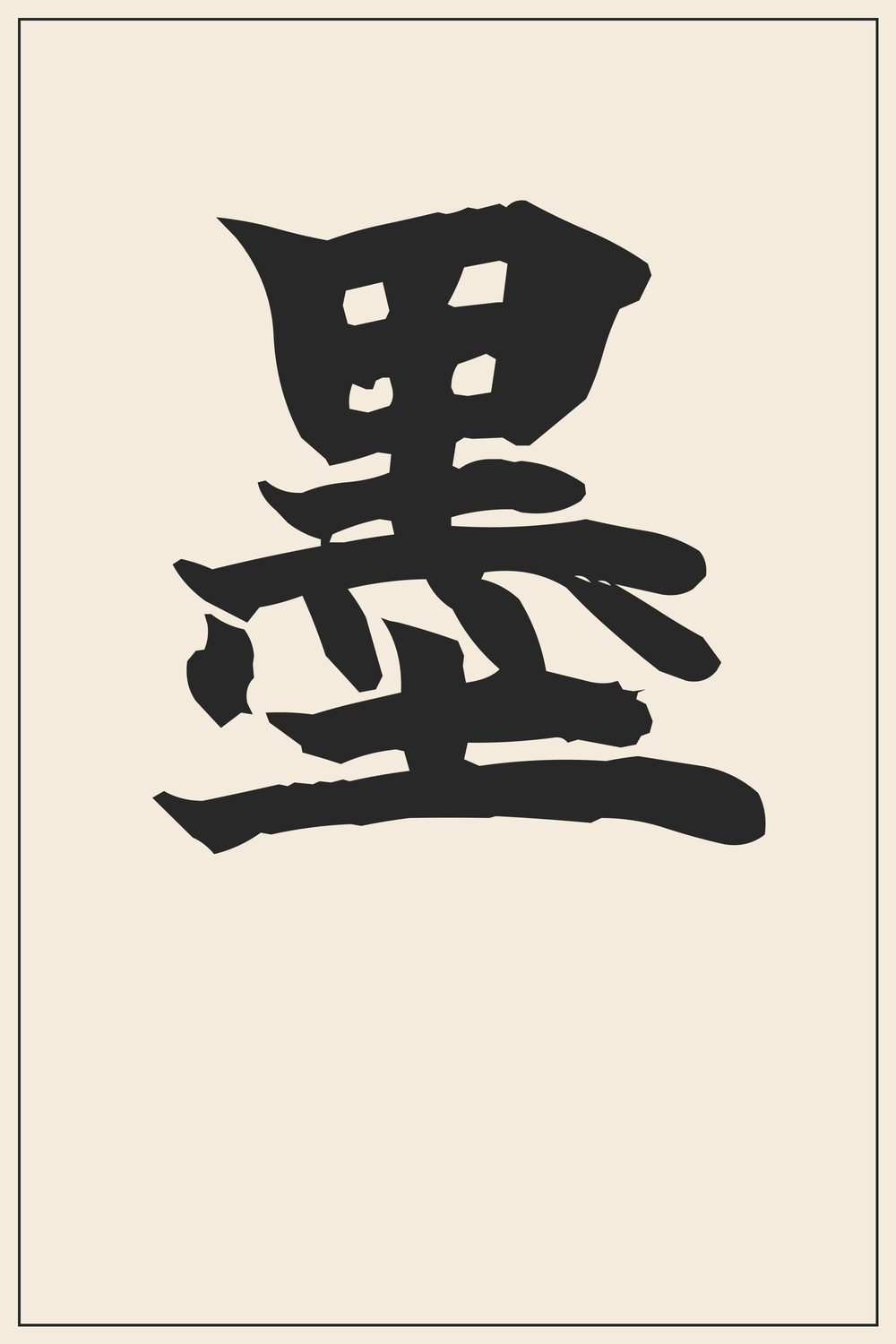
The Kanji 墨 (Sumi) is more than just ‘ink’; it embodies the very essence of traditional Japanese artistic and spiritual expression. It is the medium through which brushstrokes convey profound meaning and meditative beauty.
The atmosphere of a Kanji character changes dramatically depending on the font style. A character that looks elegant in a brush style might look bold and modern in a different font.
Recommendation:
Since a tattoo is permanent, we strongly recommend comparing various font styles beyond what is shown here. Use our designs as a trusted reference for the correct structure, but feel free to explore different artistic variations to find the perfect match for your vision.
The Deep Meaning Behind 墨
The Kanji 墨 (Sumi) signifies ink, particularly the traditional East Asian India ink used in calligraphy and brush painting. It is composed of fine soot, typically from pine or oil, combined with animal glue, pressed into a solid stick, and then ground with water on an inkstone to create liquid ink.
In Japanese culture, Sumi is not merely a pigment but a symbol of disciplined art, meditation, and the fleeting beauty of a single brushstroke. Calligraphy and Sumi-e are revered art forms that connect the practitioner to a deeper sense of focus and the expressive power of simple black ink on white paper.
Kanji Breakdown
The character 墨 (Sumi) is an ideogram combining two fundamental components:
Meaning: Black
This radical represents the color black, which is the defining characteristic of ink. It symbolizes the dark soot from which traditional ink is primarily made.
Meaning: Earth, Soil
This component suggests the grounded, earthy origin of the material or the solid, foundational aspect of the ink stick before it is prepared for use.
Conclusion
Choosing 墨 (Sumi) for a Kanji tattoo signifies a deep appreciation for Japanese traditional arts, the discipline of creation, and the elegant power of simplicity. It embodies the medium through which great works of calligraphy and painting come to life, representing artistry, mindfulness, and cultural heritage.
This Kanji is a unique choice for those who resonate with the spirit of Japanese artistic expression, reflecting a connection to creativity and the profound beauty found in the careful balance of ink, brush, and intention.
Comments