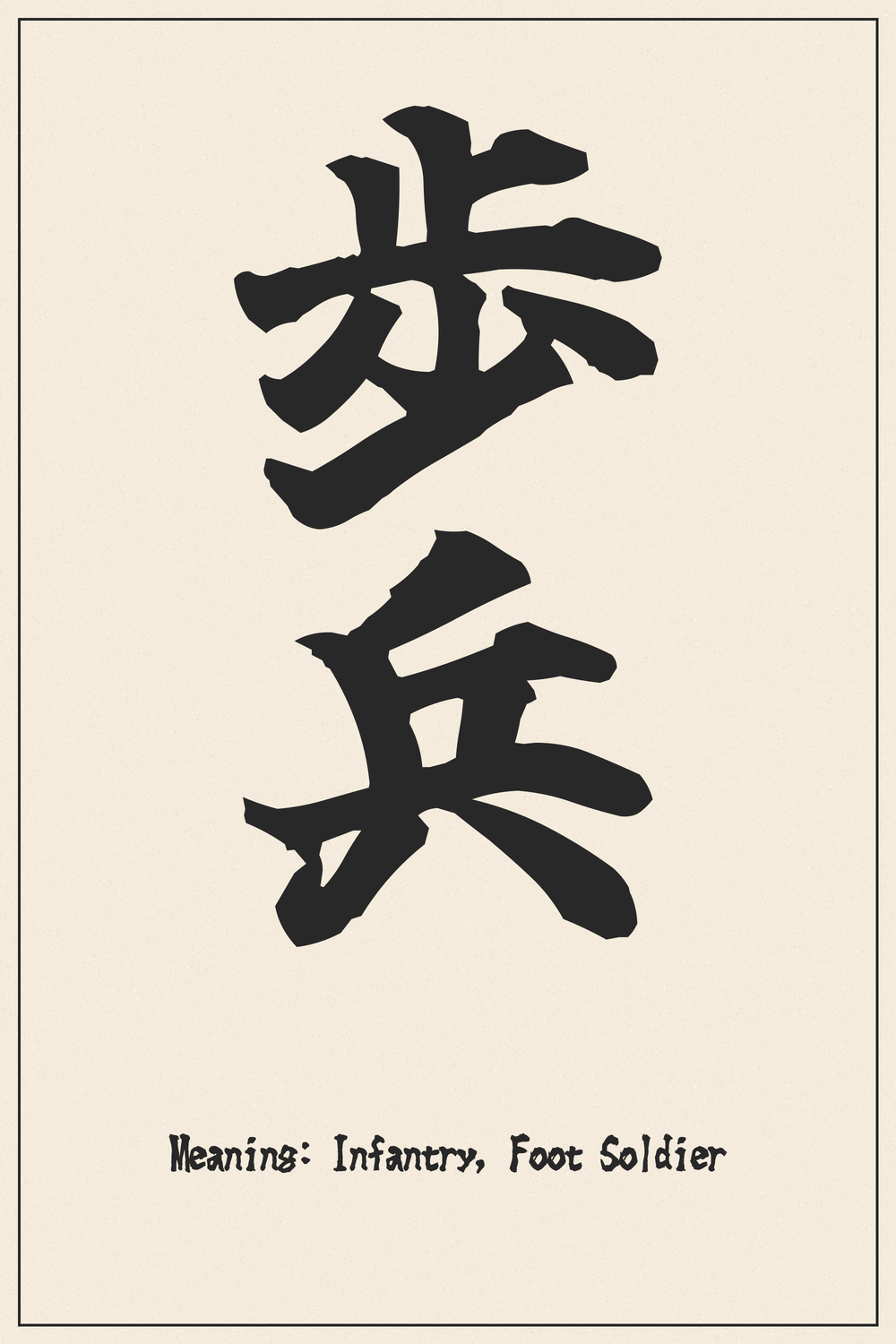
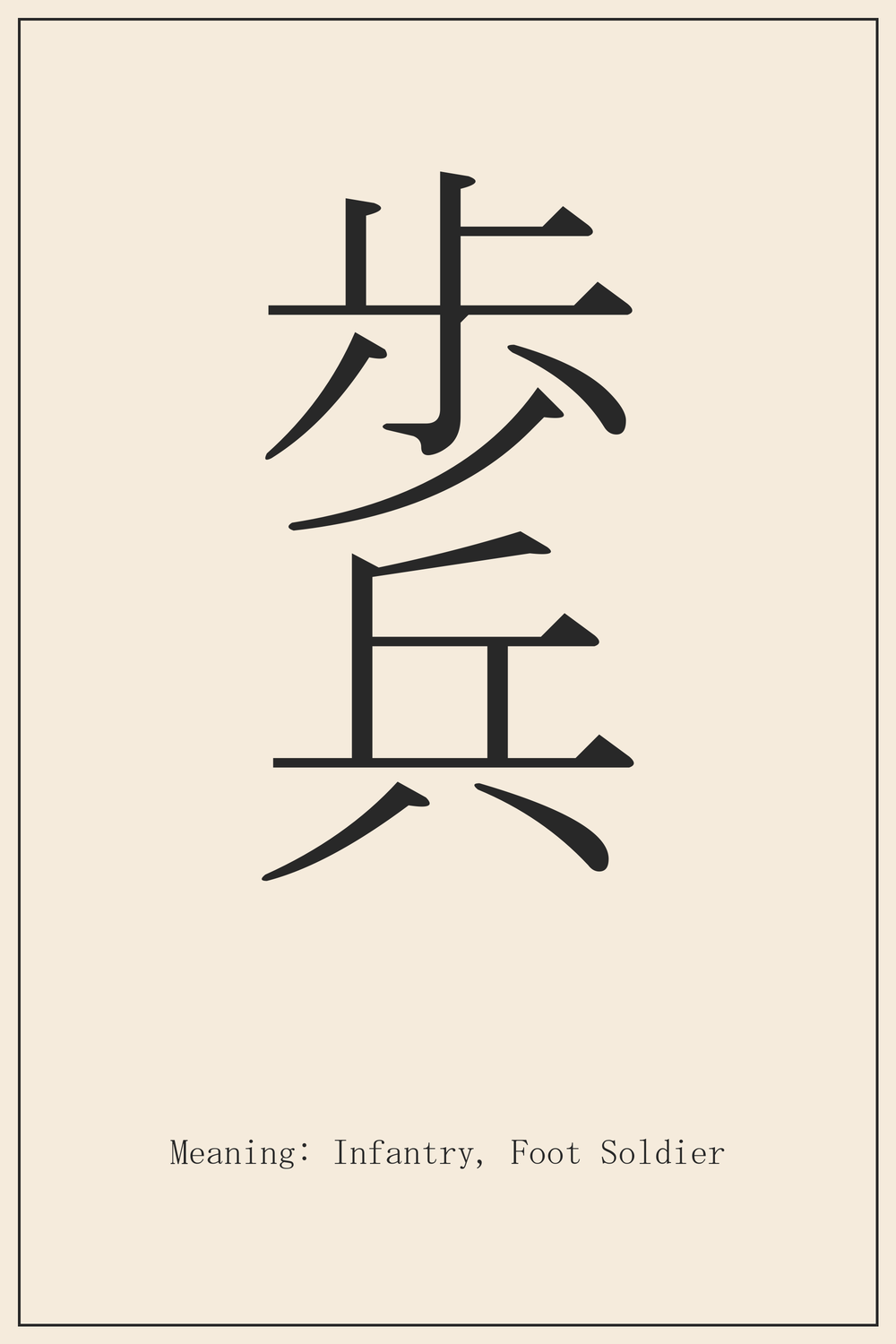
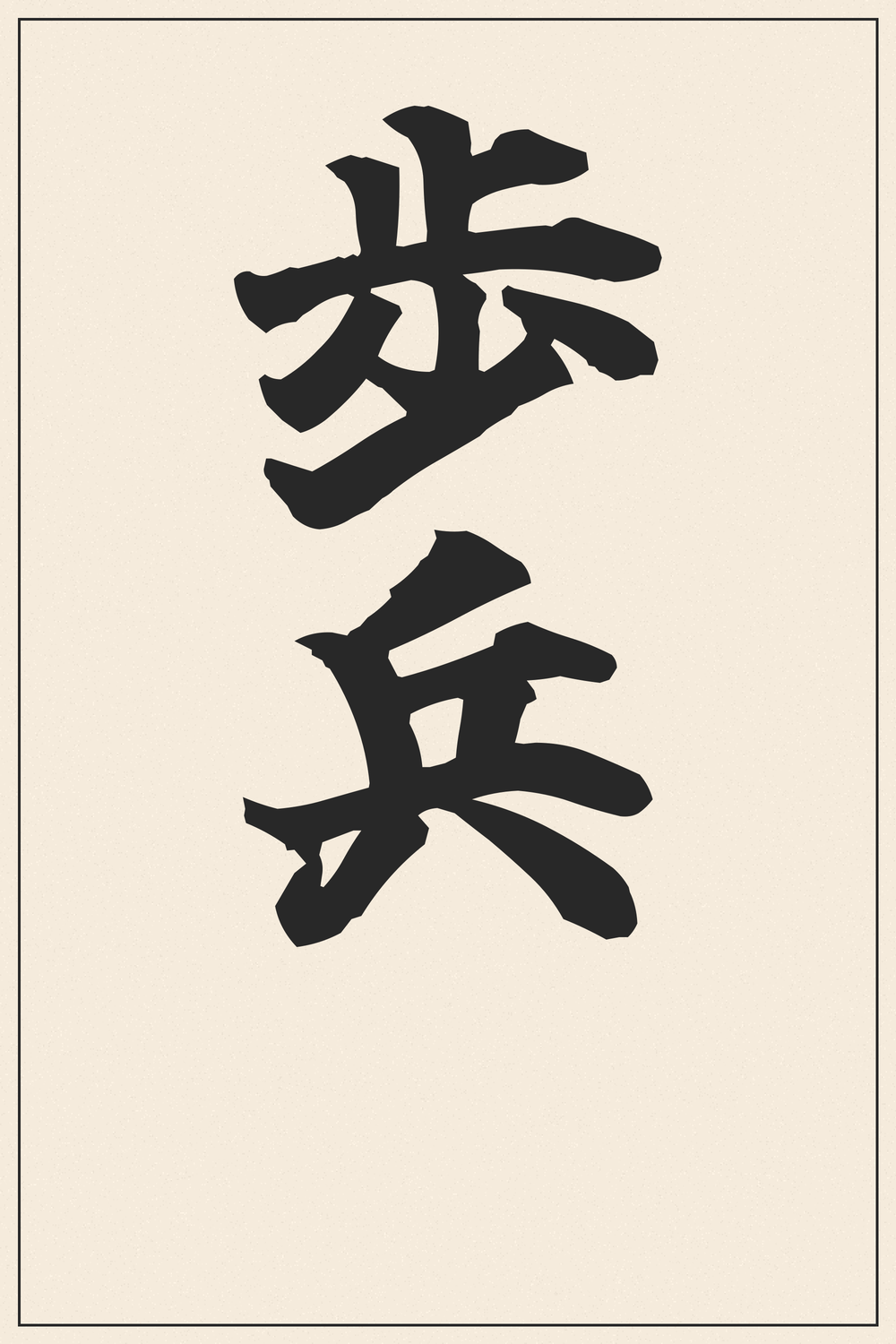
歩兵 (Hohei) embodies the foundational strength and unwavering resolve of the foot soldier in Japanese tradition and modern military thought. This compound kanji captures the essence of steadfastness and progression on the battlefield.
The atmosphere of a Kanji character changes dramatically depending on the font style. A character that looks elegant in a brush style might look bold and modern in a different font.
Recommendation:
Since a tattoo is permanent, we strongly recommend comparing various font styles beyond what is shown here. Use our designs as a trusted reference for the correct structure, but feel free to explore different artistic variations to find the perfect match for your vision.
The Deep Meaning Behind 歩兵
The term 歩兵 (Hohei) is a compound of two significant kanji. 歩 (ho, aruku) denotes ‘to walk’ or ‘a step,’ intrinsically linking to the physical act of movement on the ground. 兵 (hei) signifies ‘soldier,’ ‘arms,’ or ‘military affairs,’ representing the martial aspect. Together, they form the essential concept of a foot soldier.
Historically, the infantry formed the backbone of armies worldwide, including Japan. They were the ground forces, enduring the brunt of combat and requiring immense courage, discipline, and endurance. 歩兵 thus symbolizes the fundamental, often unsung, heroism of those who advance on foot.
Kanji Breakdown
Understanding the individual components of 歩兵 reveals its profound meaning.
Walk, Step, Stride: This kanji depicts a foot (止) taking a step, emphasizing movement and progression. In a military context, it highlights the ground-level movement characteristic of infantry.
Soldier, Troops, Arms, Military: Originally representing a weapon or war implement, 兵 evolved to signify the individuals who wield them and the military force itself. It encapsulates the martial aspect of the infantry.
Conclusion
The kanji 歩兵 encapsulates the vital role of the infantry: individuals who advance with determination, embodying perseverance and fundamental strength. It represents the courage to face challenges head-on, step by step.
For those seeking a tattoo that honors military tradition, steadfastness, or personal resilience in advancing through life’s battles, 歩兵 offers a concise and powerful symbol. It is a tribute to the enduring spirit of the foot soldier, literally moving forward.
Comments