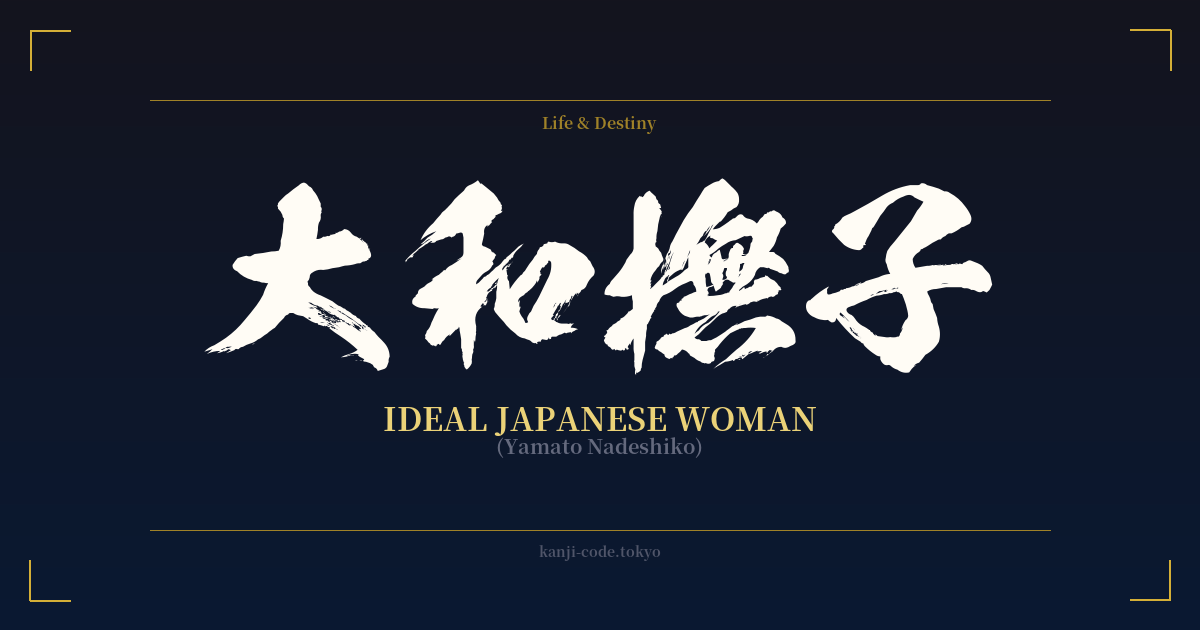
✍️ 大和撫子 (Yamato Nadeshiko) — Cultural Context
大和撫子 (Yamato Nadeshiko) is a powerful and deeply layered term that represents the traditional ideal of Japanese womanhood. On the surface, it combines 'Yamato,' an ancient name for Japan, with 'Nadeshiko,' the name of a delicate yet resilient flower, the Dianthus superbus or fringed pink. The flower itself is symbolic: beautiful and fragile in appearance, but hardy enough to thrive in harsh conditions. This duality is central to the concept.
The Yamato Nadeshiko is not merely a beautiful woman; she is the embodiment of specific virtues. These include modesty, unwavering loyalty, grace, and politeness. She is expected to be skilled in domestic arts and to manage the household with quiet competence. Crucially, she possesses immense inner strength, fortitude, and a will of steel, which she uses to support her family, particularly her husband, from behind the scenes. Her strength is not overt or confrontational but resilient and enduring.
Historically, the concept draws from a neo-Confucian framework that became prominent during the Edo period, emphasizing a patriarchal social order. The ideal woman was one who sacrificed her own needs for the good of the family and the nation. She was the silent pillar holding up society. This image was further romanticized and propagated through literature, art, and eventually, state ideology, especially during Japan's period of modernization and nationalism in the late 19th and early 20th centuries.
In contemporary Japan, the term Yamato Nadeshiko is fraught with complexity and debate. For some, it remains a nostalgic and positive symbol of feminine grace and inner strength. However, for many others, particularly feminists and younger generations, it is a relic of a patriarchal past. They argue that the ideal is restrictive, placing women on a pedestal only to limit their freedom, ambitions, and self-expression to the domestic sphere.
Interestingly, the term has been reclaimed in some contexts. The most famous example is the Japan women's national football team, nicknamed 'Nadeshiko Japan.' By adopting the name, they re-contextualize the ideal, emphasizing the 'Nadeshiko' spirit of resilience, teamwork, and tenacity in the competitive, international arena of sports, far from the traditional domestic setting. This modern usage highlights the term's ongoing evolution and its contested place in Japanese culture.
🖌️ Font Styles for 大和撫子
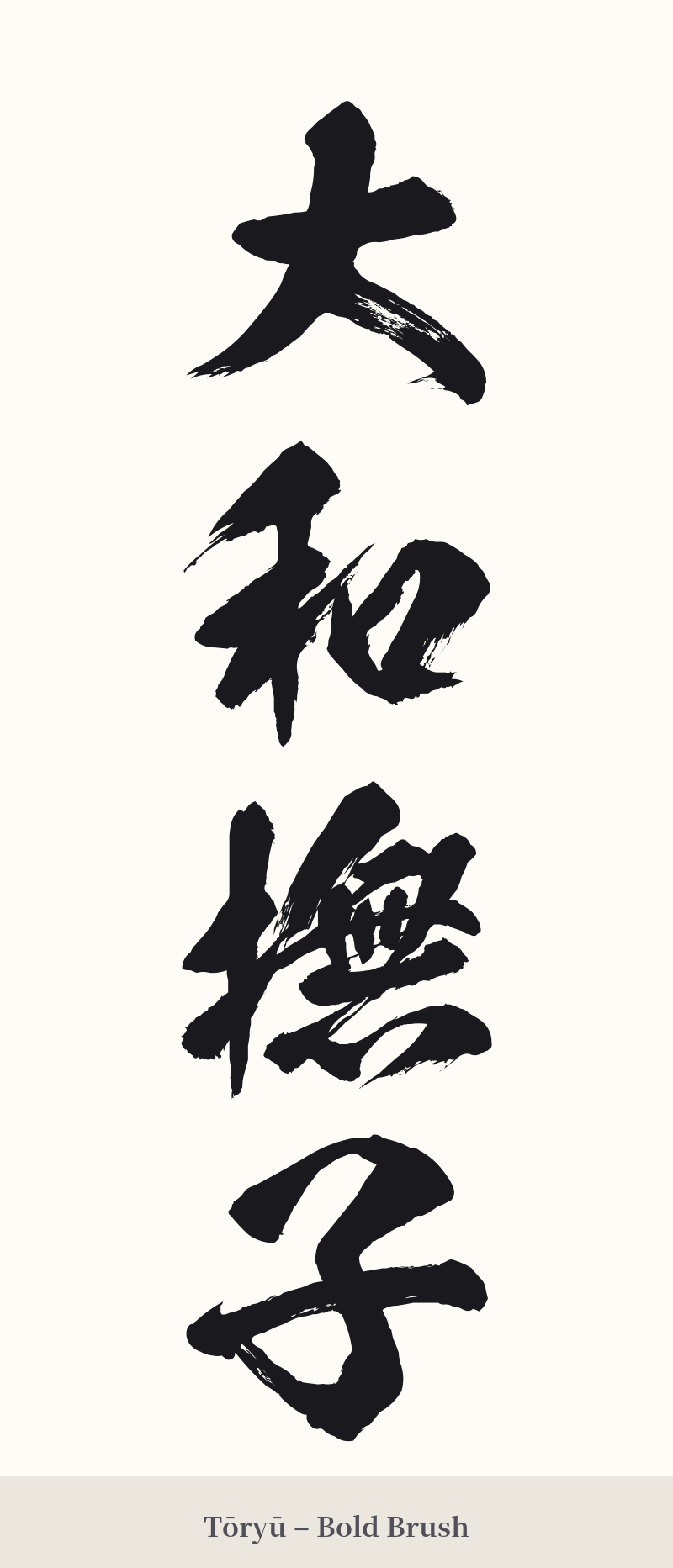
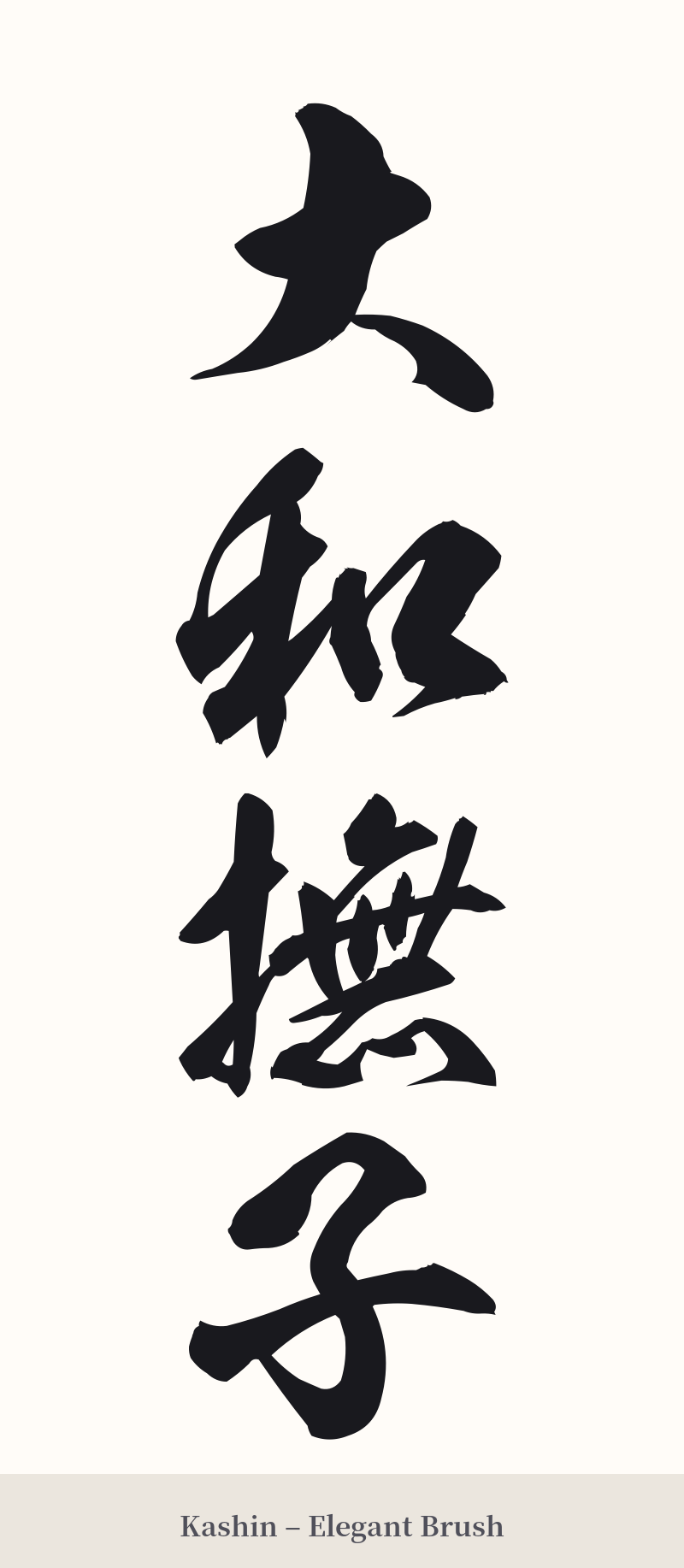
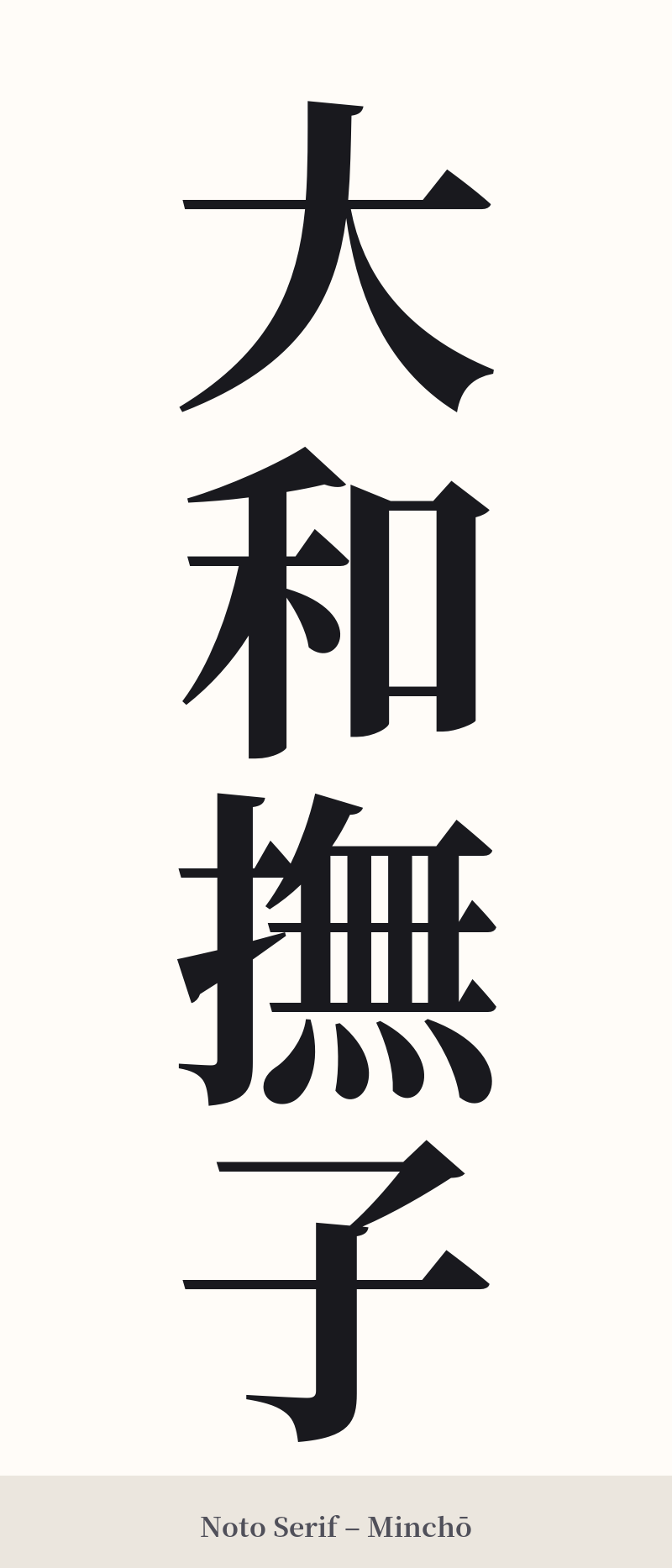
The same kanji can look dramatically different depending on the calligraphy style. Choose a font that matches the mood you want for your tattoo or design.
🎨 Tattoo Suitability
📐 Tattoo Design Guide
For a 大和撫子 tattoo, the design choices should reflect the term's traditional and graceful nuances.
– Placement: As a four-character compound, it is best displayed vertically. Classic placements include the spine, the side of the ribs, or down the inner forearm or calf. This allows the characters to flow elegantly one after the other.
– Font Style: An elegant and traditional calligraphy style is most appropriate. A standard block script (Kaishotai) offers clarity and timelessness. A semi-cursive script (Gyoshotai) can add a touch of grace and flow, mirroring the concept's feminine qualities. Avoid overly aggressive or modern, stylized fonts, as they would clash with the word's meaning.
– Visual Tips: The character 撫 (nadesu) is quite complex with 15 strokes. The tattoo must be sized appropriately to prevent the lines from blurring together over time. A skilled artist is crucial. Consider incorporating a subtle image of the nadeshiko flower (a fringed pink) near the kanji to visually tie the literal and figurative meanings together.


Comments