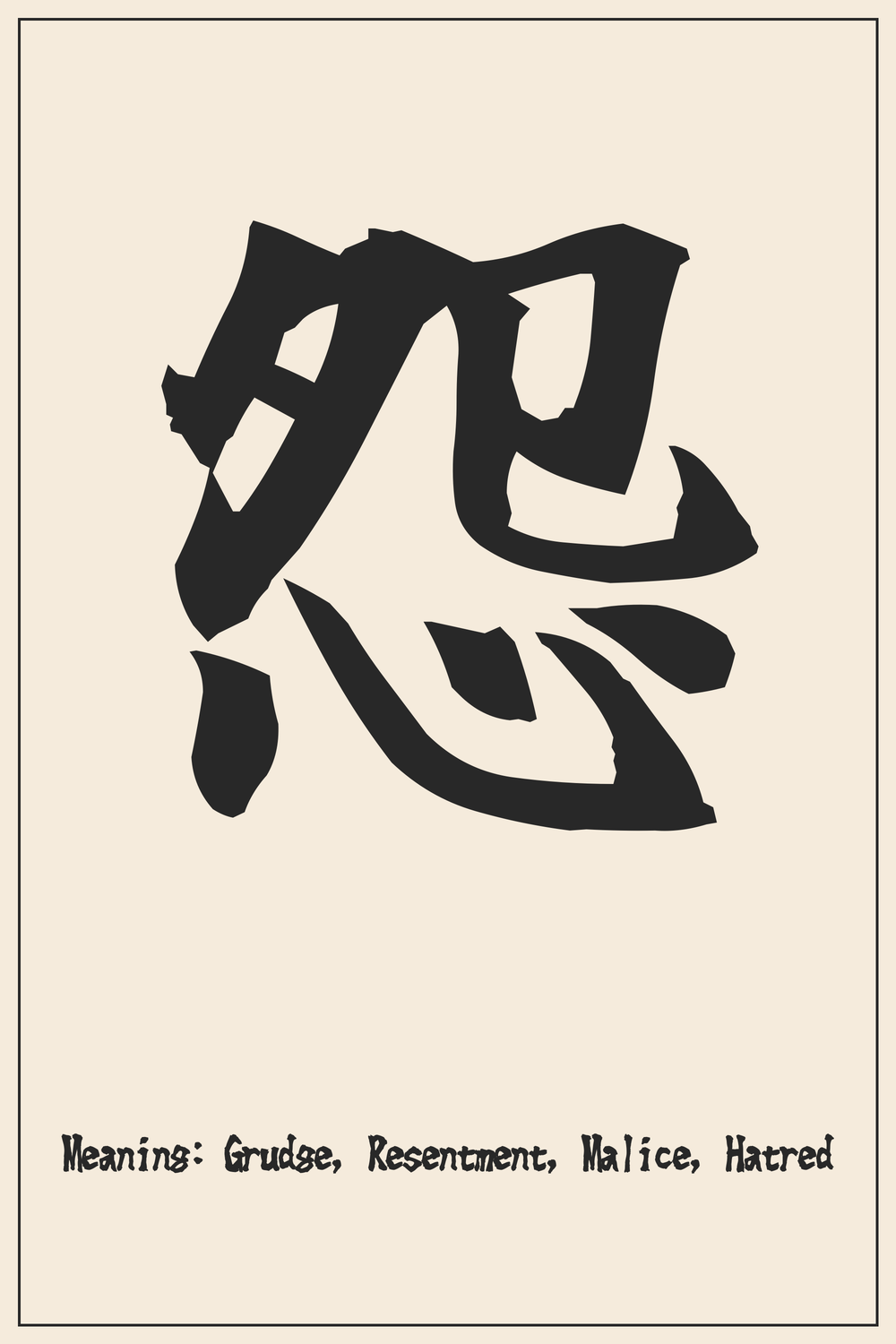
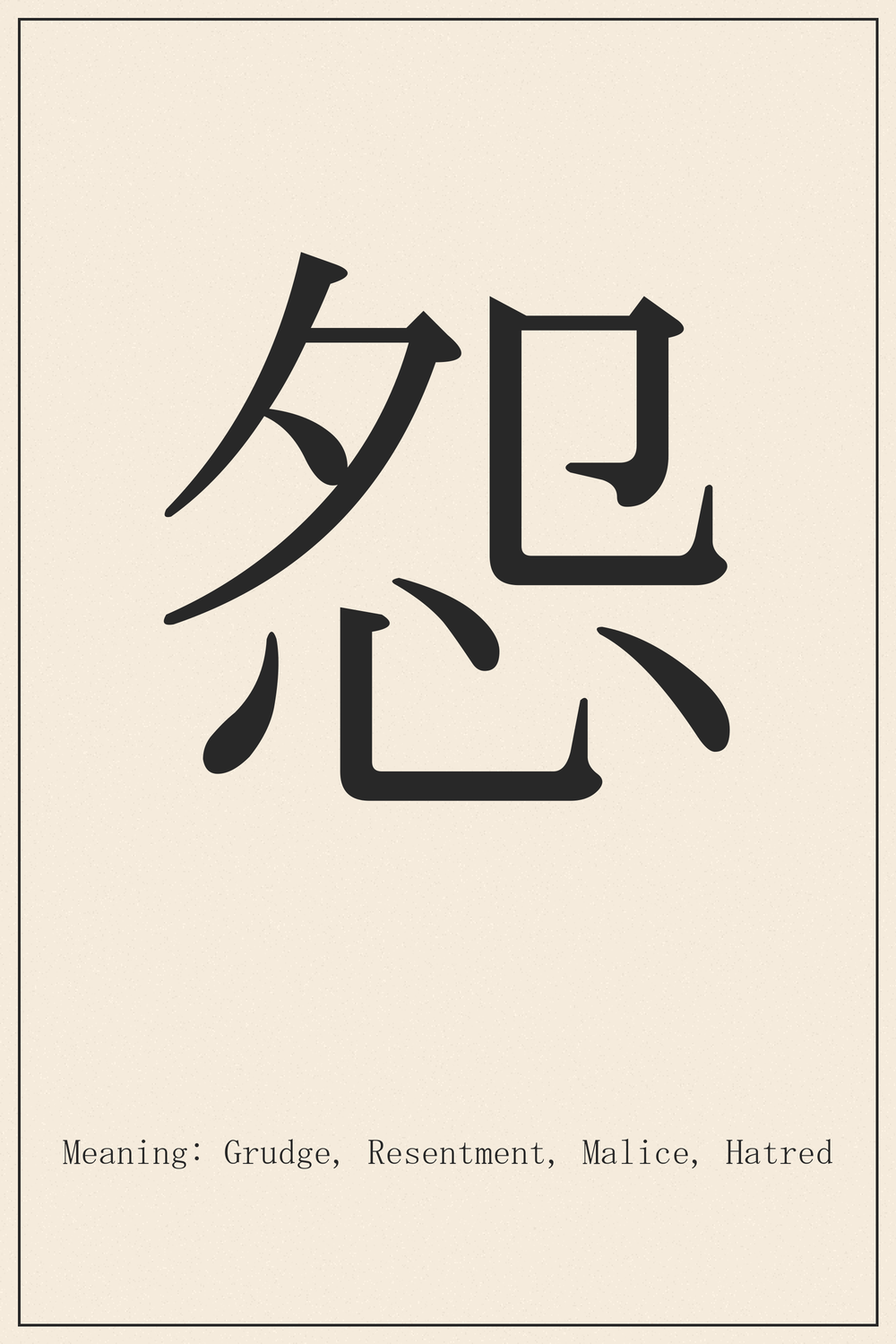
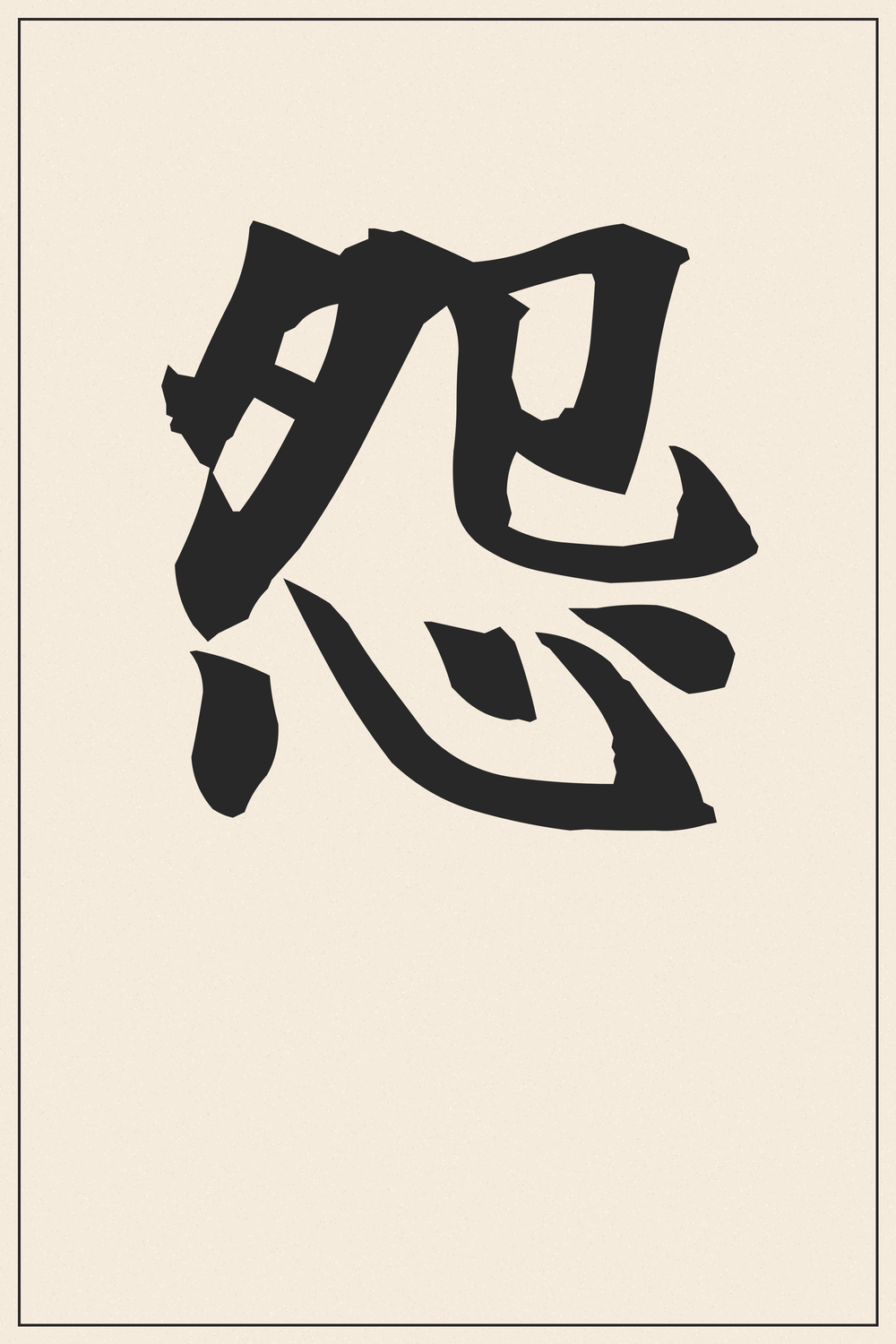
The Kanji 怨 (on) encapsulates the potent and often destructive emotion of resentment. It delves into the lingering bitterness and ill will that can deeply affect the human spirit.
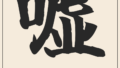
The atmosphere of a Kanji character changes dramatically depending on the font style. A character that looks elegant in a brush style might look bold and modern in a different font.
Recommendation:
Since a tattoo is permanent, we strongly recommend comparing various font styles beyond what is shown here. Use our designs as a trusted reference for the correct structure, but feel free to explore different artistic variations to find the perfect match for your vision.
The Deep Meaning Behind 怨
The Kanji 怨 (on) fundamentally conveys the concept of resentment or grudge. Its formation illustrates a person (implied by the original form of 夗, meaning ‘to turn over in distress’) beneath a shelter or cliff (厂), suggesting a state of confinement or being weighed down by a persistent, negative emotion.
This visual etymology effectively captures the internalized nature of a grudge. In Japanese culture, 怨 (on) represents a deep-seated grievance or a sense of ill-will that can be profoundly impactful, often leading to tragic narratives in literature and folklore. While primarily negative, understanding 怨 is crucial for comprehending narratives of revenge or justice in traditional and modern storytelling. Its strong emotional resonance makes it a potent symbol.
Kanji Breakdown
The Kanji 怨 is composed of two primary elements that combine to express its complex meaning of resentment.
Cliff/Shelter: This radical represents a cliff, a side of a hill, or a simplified form of a house or shelter. In the context of 怨, it often suggests confinement or a surrounding structure that encloses, hinting at the internalized nature of a grudge.
Writhing/Distress: This component is an ancient character depicting a person turning over or writhing in distress, often due to sorrow or regret. It vividly implies a state of being consumed by an inner turmoil, perfectly aligning with the idea of a persistent and deeply felt grudge or resentment.
Conclusion
The Kanji 怨 is a profound symbol of internalized pain, encapsulating resentment, hatred, and deep-seated grudges. While representing challenging emotions, its stark honesty makes it a powerful emblem in conveying the darker, more complex facets of the human spirit.
For those contemplating a tattoo, 怨 serves as a potent reminder of the profound nature of human emotions. Its striking appearance and deep cultural resonance make it a truly impactful choice for conveying depth and emotional intensity, resonating with a timeless appeal in personal expression.
Comments