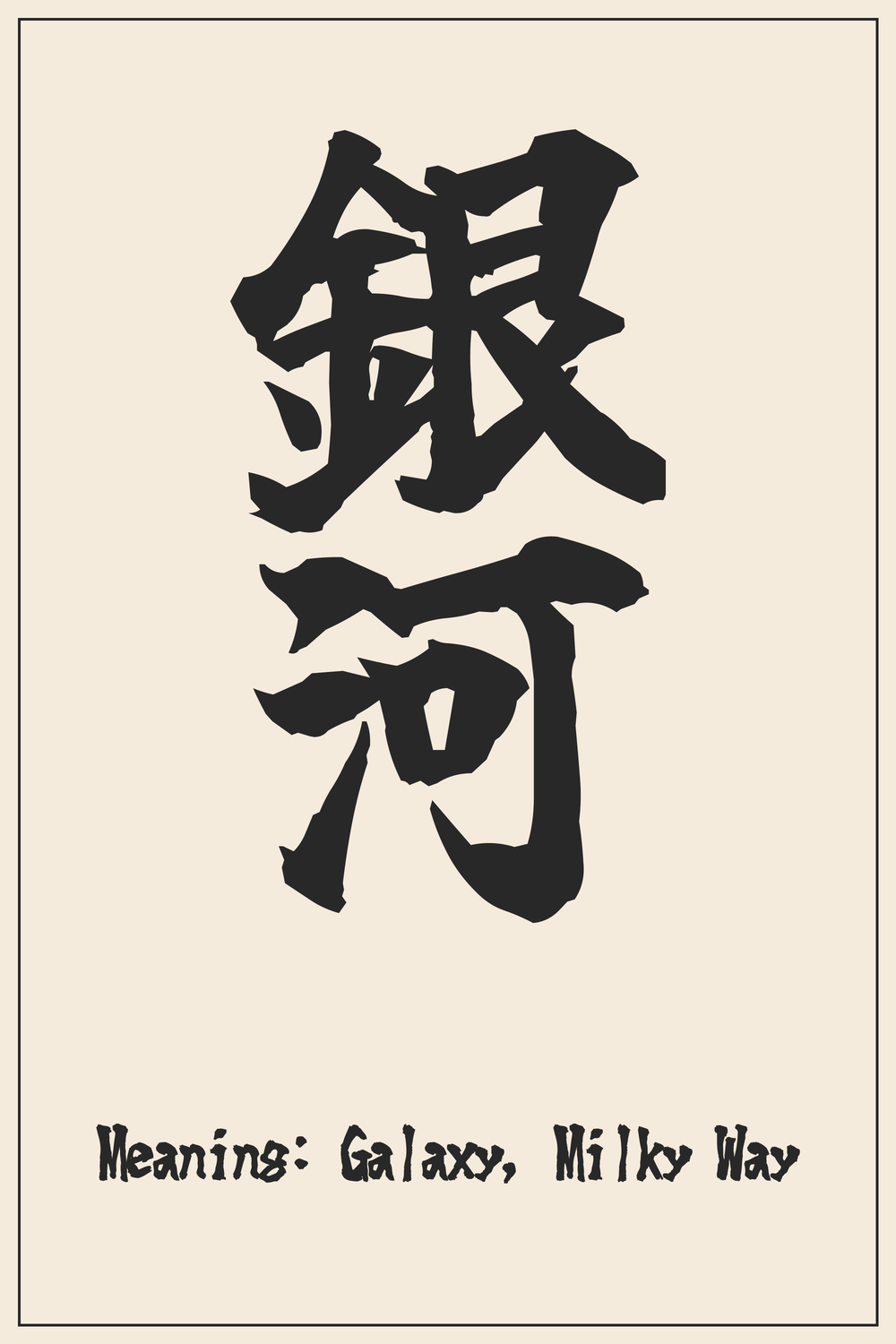
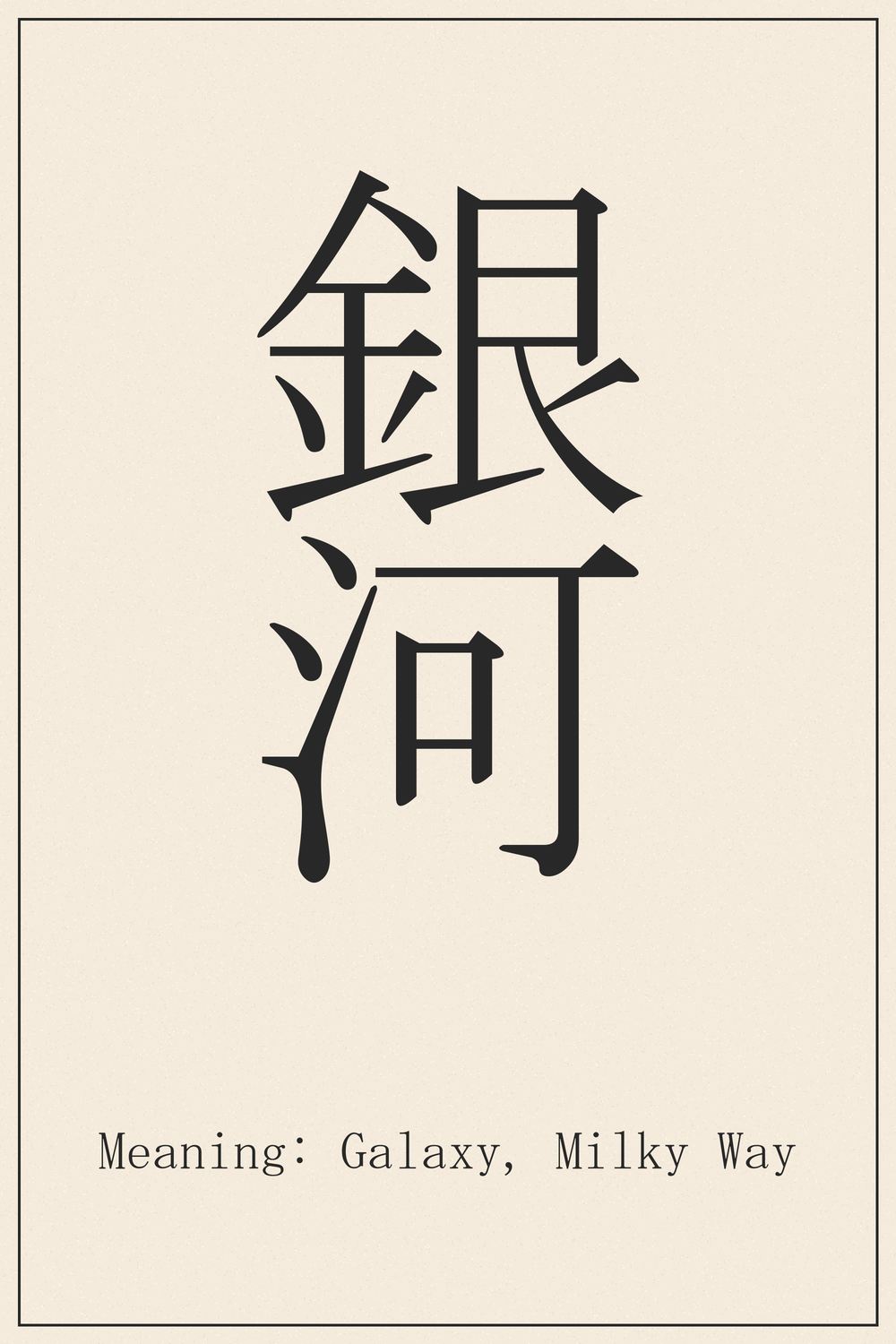
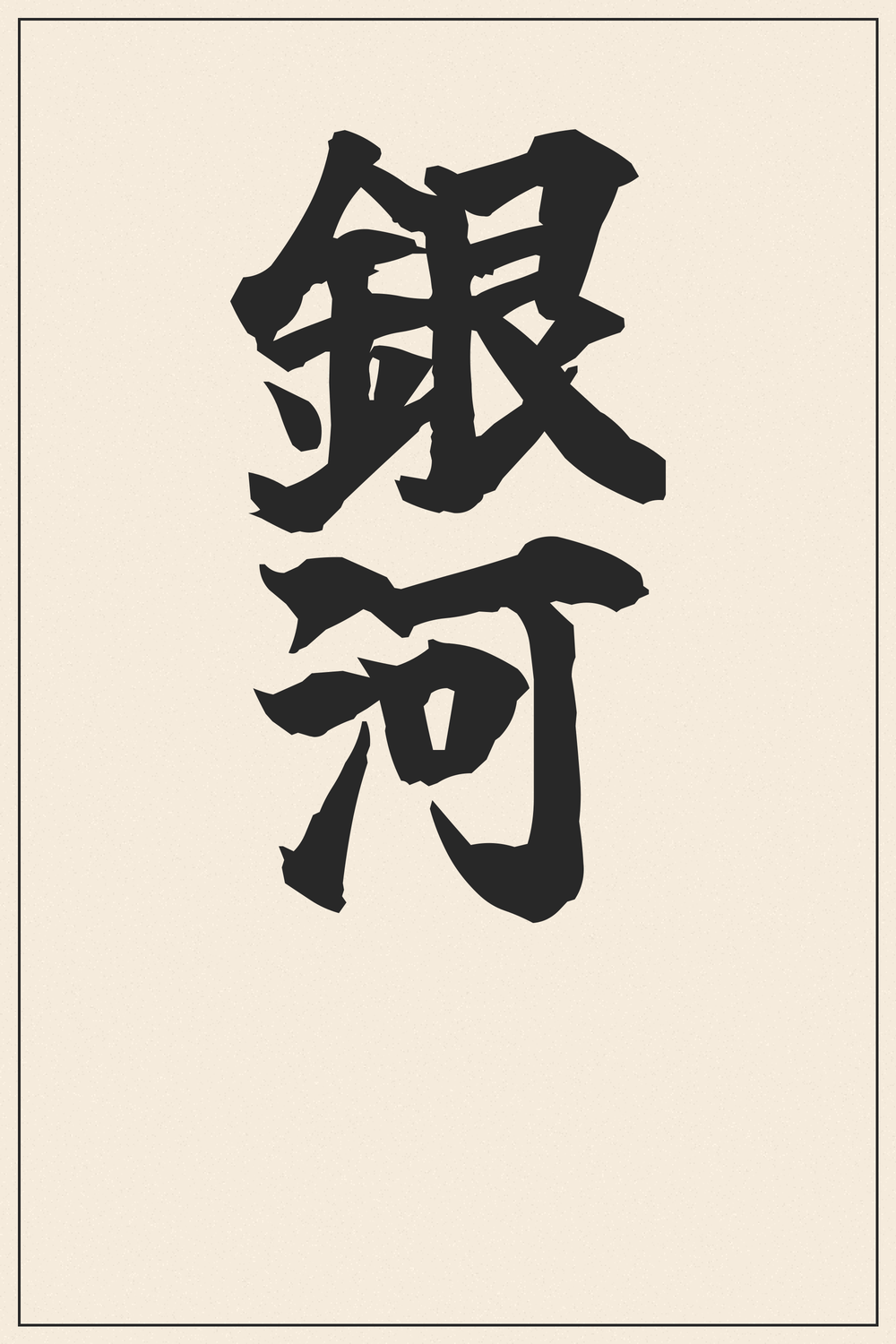
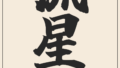
The Kanji ‘銀河’ encapsulates the breathtaking beauty and infinite mystery of the cosmos. It represents the magnificent spectacle of the galaxy, inviting contemplation on universal grandeur.
The atmosphere of a Kanji character changes dramatically depending on the font style. A character that looks elegant in a brush style might look bold and modern in a different font.
Recommendation:
Since a tattoo is permanent, we strongly recommend comparing various font styles beyond what is shown here. Use our designs as a trusted reference for the correct structure, but feel free to explore different artistic variations to find the perfect match for your vision.
The Deep Meaning Behind 銀河
The term ‘銀河’ (Ginga) literally translates to ‘silver river.’ This poetic imagery is derived from the appearance of the Milky Way, which, to the naked eye, appears as a luminous, shimmering band of light stretching across the night sky, reminiscent of a vast, flowing river made of silver.
Culturally, ‘Ginga’ is deeply embedded in Japanese lore, particularly in the context of the Tanabata festival. Here, the Milky Way is known as ‘Amanogawa’ (天の川), the ‘Heavenly River,’ which tragically separates the celestial lovers Orihime and Hikoboshi. This symbolism adds layers of longing, beauty, and cosmic scale to the Kanji’s meaning, connecting it to timeless narratives of separation and reunion under the vast expanse of the stars.
Kanji Breakdown
The compound ‘銀河’ is formed by two distinct Kanji, each contributing to its celestial meaning:
Meaning: Silver, money.
This character is composed of 金 (kin/kane), meaning ‘metal’ or ‘gold,’ indicating its metallic nature, and 艮 (gon/kon), which primarily serves as a phonetic component here. It signifies the valuable, shining element that lends its luster to the ‘silver river.’
Meaning: River, stream.
This character combines the 氵 (sanzui) radical, denoting ‘water,’ with 可 (ka), which acts as a phonetic component. It directly refers to a large flowing body of water, perfectly capturing the riverine aspect of the Milky Way’s visual appearance.
Conclusion
The Kanji ‘銀河’ beautifully encapsulates the awe-inspiring spectacle of the Milky Way, a celestial ‘silver river’ that spans the heavens. It speaks to vastness, beauty, and the profound mysteries of the universe, connecting humanity to the grandeur of the cosmos.
Choosing ‘銀河’ for a tattoo signifies an appreciation for cosmic grandeur and the endless possibilities of existence. It’s a timeless symbol of wonder, inspiring contemplation and a connection to something much larger and more enduring than ourselves, making it a profound and visually stunning statement.
Comments