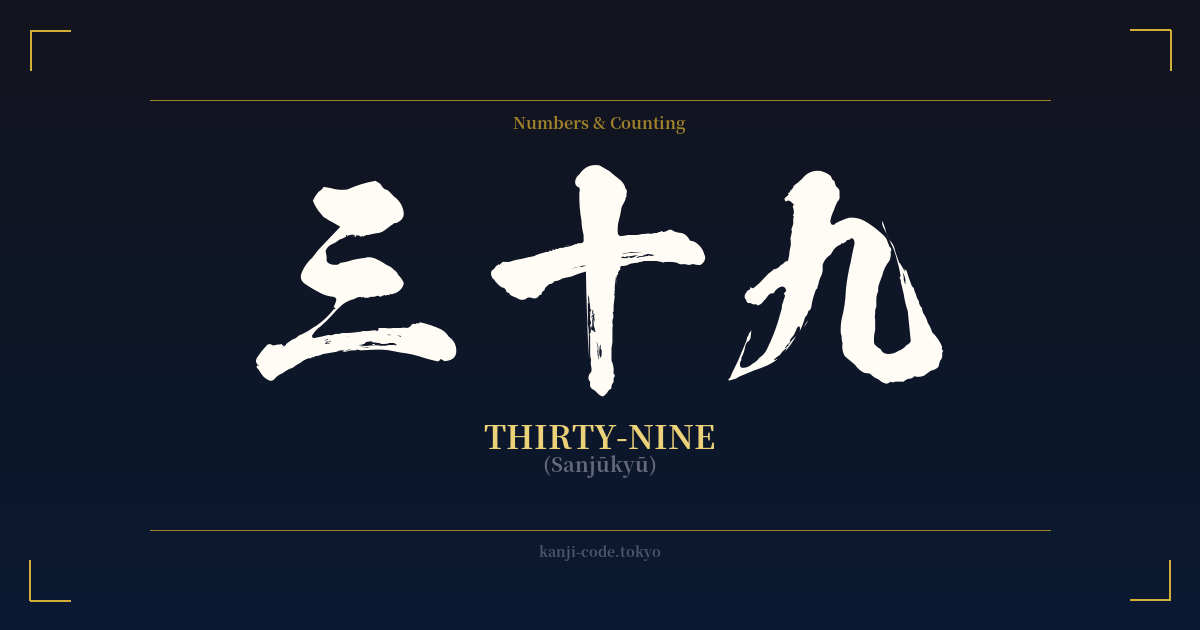
✍️ 三十九 (Sanjūkyū) — Cultural Context
At first glance, 三十九 (sanjūkyū) is simply the Japanese representation of the number thirty-nine. The construction is straightforward and logical, following Japan's base-ten system: 三 (san, three), 十 (jū, ten), and 九 (kyū, nine). It literally translates to 'three-tens-nine'. While numbers are fundamental, most don't carry profound standalone meaning in the way words like 'honor' or 'courage' do. However, to dismiss 三十九 as just a number would be to miss one of the most charming aspects of modern Japanese culture: goroawase.
Goroawase (語呂合わせ) is a form of numerical wordplay where numbers are read with alternate phonetic pronunciations to create words and phrases. It's a cultural shorthand seen everywhere from marketing slogans and phone numbers to inside jokes. In this system, '3' can be read as 'san' and '9' can be read as 'kyū'. Put them together, and 'san-kyū' sounds remarkably like the English phrase 'thank you'.
This clever pun transforms the mundane number 39 into a heartfelt expression of gratitude. It's often written as '39' in digital messages as a quick, informal way to say thanks. This hidden meaning elevates the kanji from a simple numeral to a secret message. Someone choosing this for a tattoo isn't just marking a number; they're potentially encoding a permanent 'thank you' note on their skin, perhaps dedicated to a person, a memory, or life itself.
It's also worth noting the individual components. The number nine (九, ku) can be considered unlucky in Japan because its pronunciation is a homophone for 苦 (ku), meaning 'suffering' or 'hardship'. This is why you might not find a Room 9 or Floor 9 in some Japanese hospitals or hotels. However, in the context of 'sanjūkyū', the 'thank you' association completely overrides this negative connotation, turning it into something positive and playful. This duality makes 三十九 a fascinating example of how context and culture can imbue simple characters with layers of meaning.
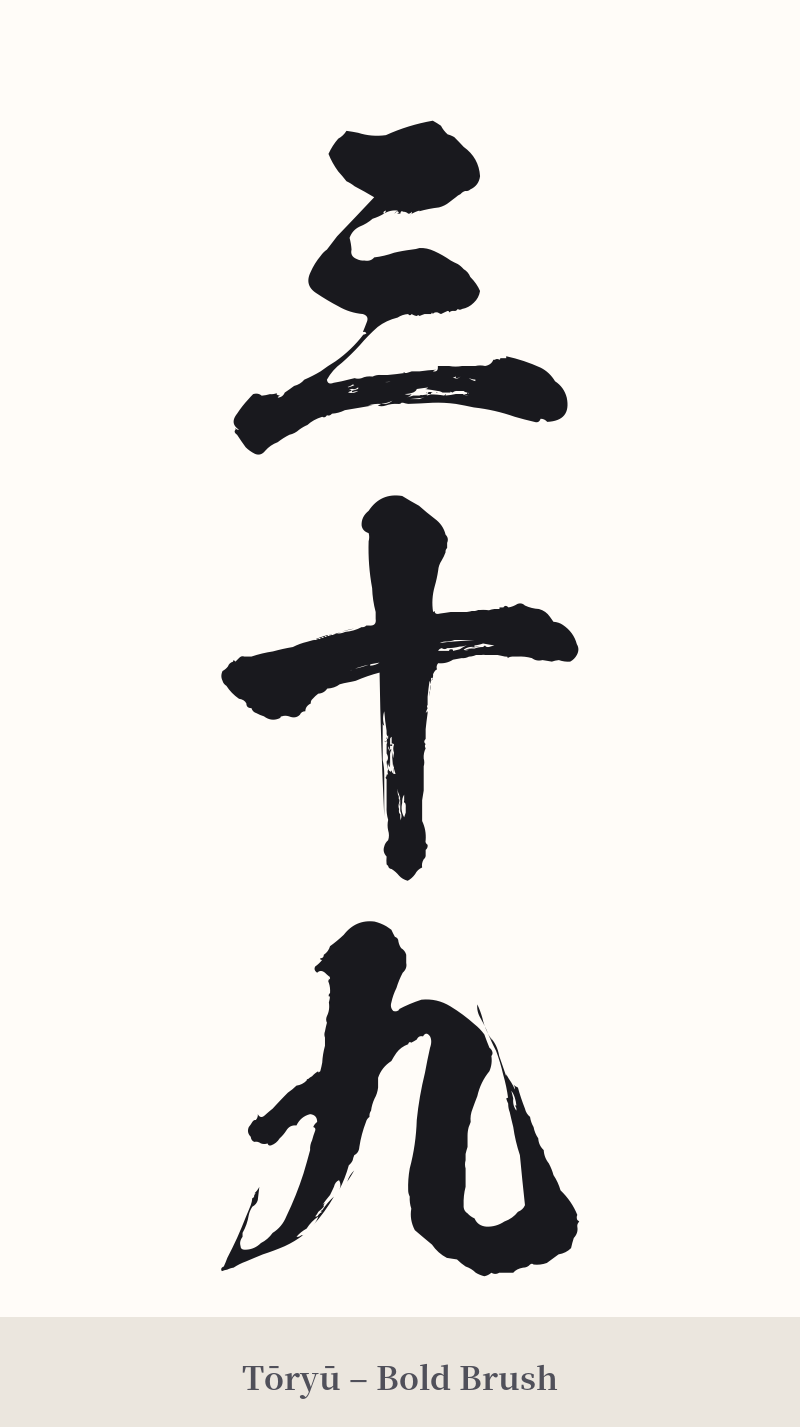
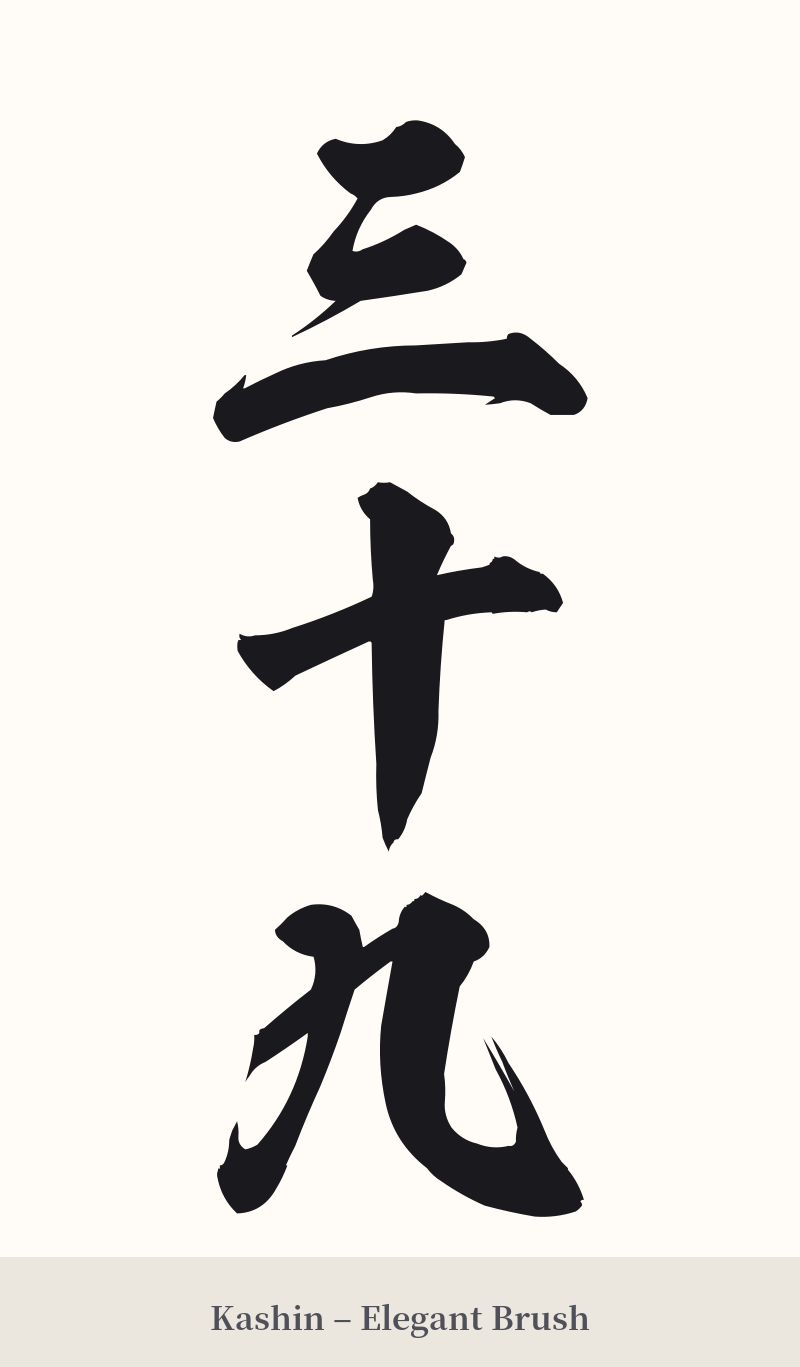
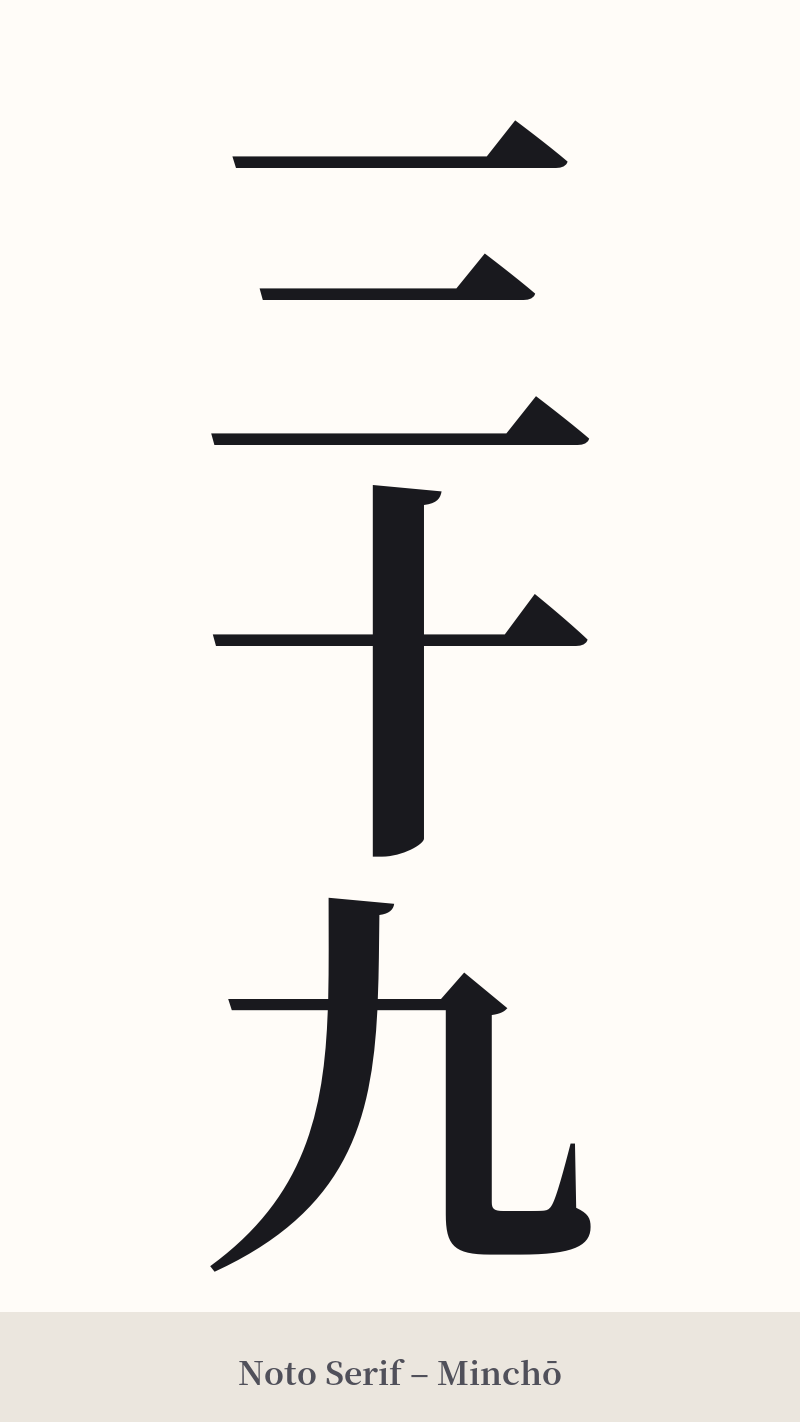
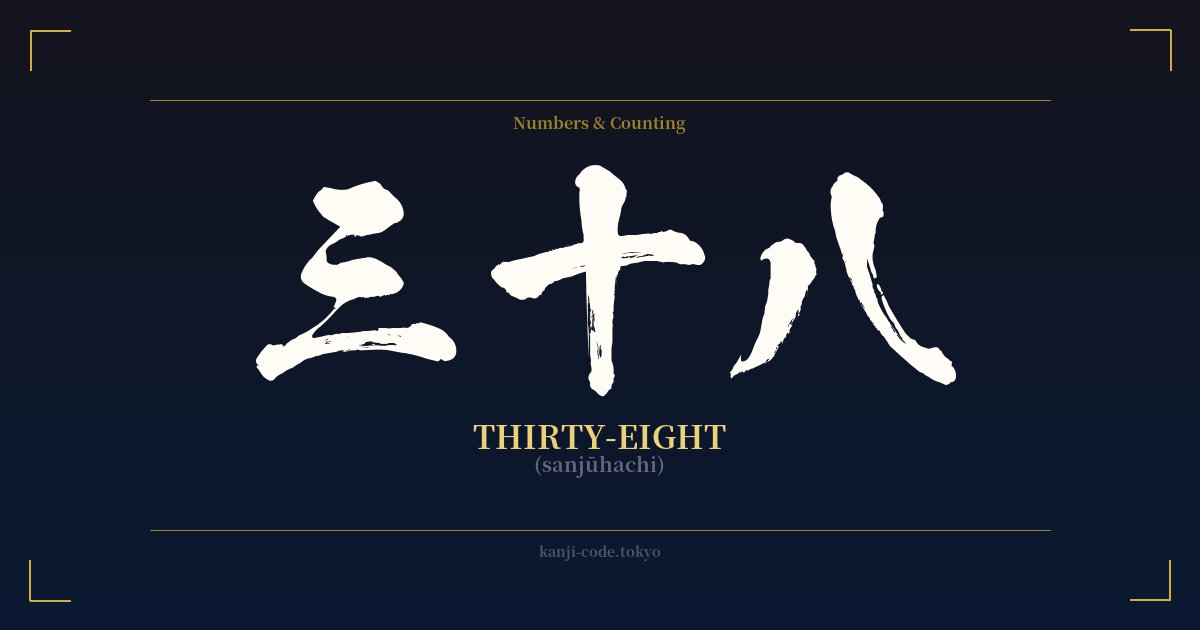
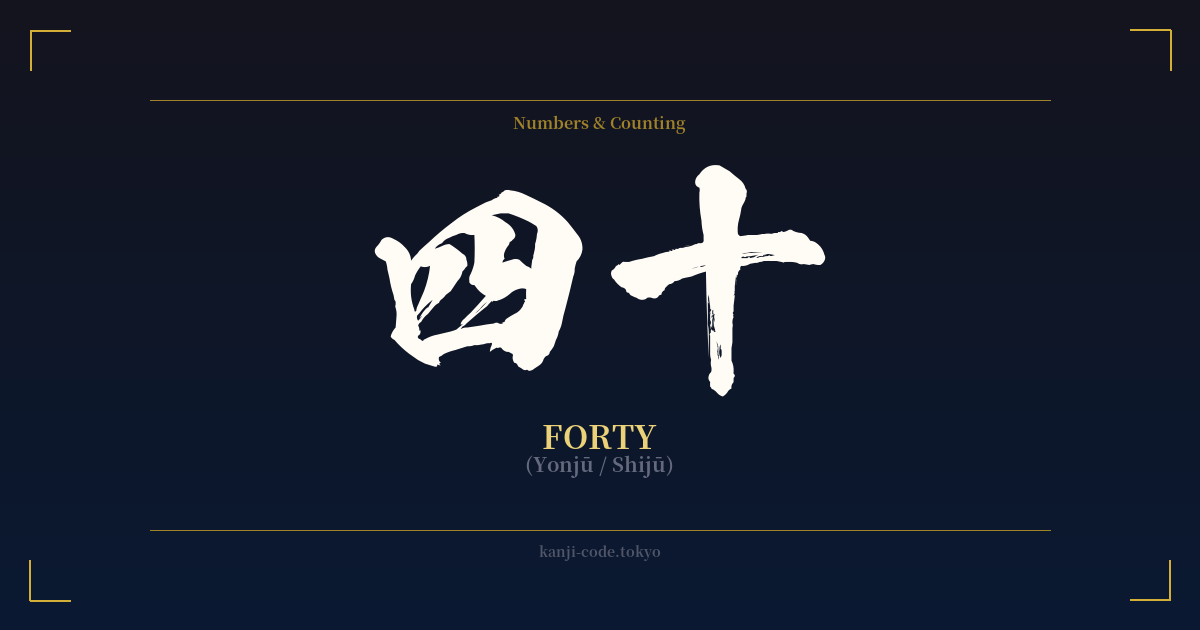
🖌️ Font Styles for 三十九
The same kanji can look dramatically different depending on the calligraphy style. Choose a font that matches the mood you want for your tattoo or design.
🎨 Tattoo Suitability
📐 Tattoo Design Guide
The design for 三十九 (sanjūkyū) can be approached in two main ways: embracing its numerical simplicity or hinting at its hidden 'thank you' meaning.
– Placement: Because it's a personal and subtle message, smaller placements often work best. Consider the inner wrist, behind the ankle, along the collarbone, or on the ribs. These spots allow the design to be a personal secret rather than a public statement.
– Font Style: For a traditional look, a classic calligraphy script like Kaisho (block style) or Gyosho (semi-cursive) highlights the simple elegance of the characters. For a more modern feel that plays on the 'thank you' pun, a clean, minimalist sans-serif font can be very effective.
– Visual Tips: You could have the characters arranged vertically, which is a traditional orientation for Japanese writing and creates a nice linear flow. To add context to the 'thank you' meaning, you could incorporate a small, simple element like a single cherry blossom petal or a minimalist heart, though the kanji alone offers a cleaner, more cryptic aesthetic.
Comments