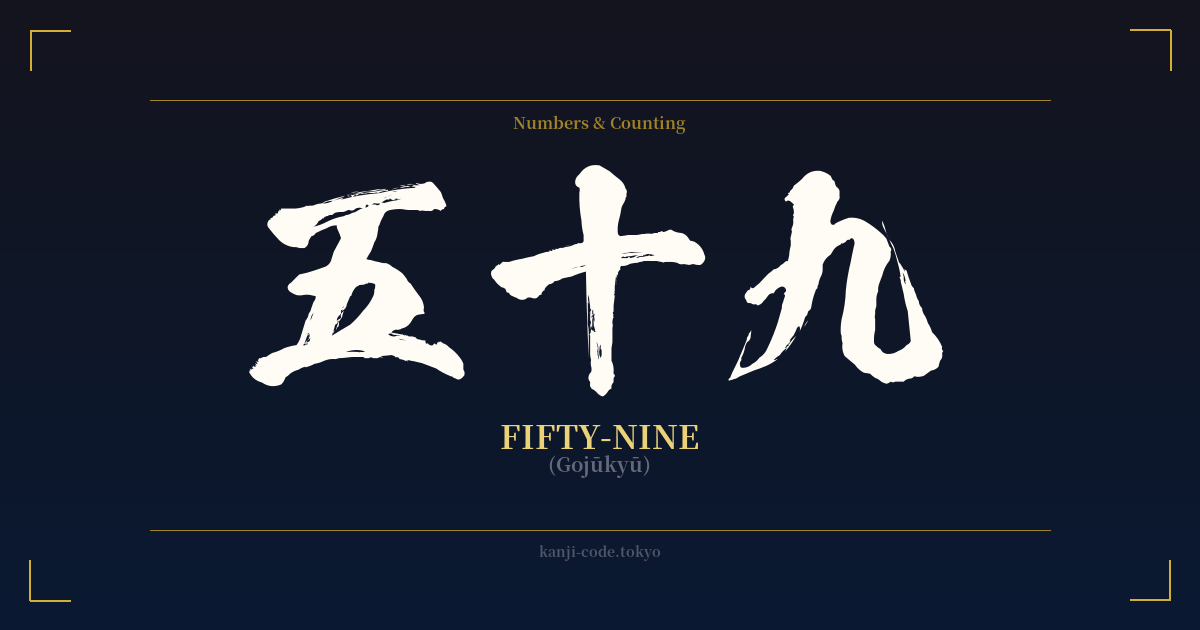
✍️ 五十九 (Gojūkyū) — Cultural Context
The Japanese word for fifty-nine, 五十九 (Gojūkyū), is a perfect example of the logical and transparent system used for constructing numbers in Japanese. Unlike the opaque English word 'fifty-nine,' the kanji breaks down into a simple mathematical formula: 五 (go, five) times 十 (jū, ten) plus 九 (kyū, nine). This structure, (5 x 10) + 9, makes large numbers easy to read and understand once you know the basic characters from one to ten.
While the number fifty-nine itself doesn't carry a heavy symbolic weight like seven or eight, its significance in Japanese culture is tied to its position in the human lifespan. It represents the final year before one of the most important milestones in a person's life: the 60th birthday, known as 還暦 (Kanreki).
Kanreki marks the completion of five cycles of the 12-year Chinese zodiac, returning the person to the zodiac sign of their birth year. It is considered a rebirth, a time when one can 'return to the calendar' and start anew. Traditionally, the person celebrating their Kanreki wears red, a color associated with babies and protection, to symbolize this new beginning. Therefore, the age of fifty-nine is a period of anticipation and reflection, the final chapter before a major life transition. It's the year of looking back on one's accomplishments and preparing for the celebratory 'rebirth' at sixty.
In the context of 'unlucky years' or 厄年 (Yakudoshi), fifty-nine is not a primary unlucky age. However, it falls just before the major Yakudoshi for men at 61 (by traditional age counting). The year preceding an unlucky year is called 前厄 (Maeyaku), or 'pre-calamity,' and is also considered a time for caution. Thus, for some, fifty-nine might carry a subtle undertone of being a preparatory year for a challenging period ahead.
The individual kanji themselves have their own stories. 五 (go) and 十 (jū) are straightforward numerical characters. The character 九 (kyū), however, has a dual nature. Its reading 'ku' is a homophone for 苦 (suffering), giving the number nine a sometimes unlucky reputation. Conversely, its 'kyū' reading is a homophone for 久 (long-lasting), making it auspicious in other contexts. In the word Gojūkyū, this nuance is minimal, and the primary meaning is simply the numerical value.
🖌️ Font Styles for 五十九
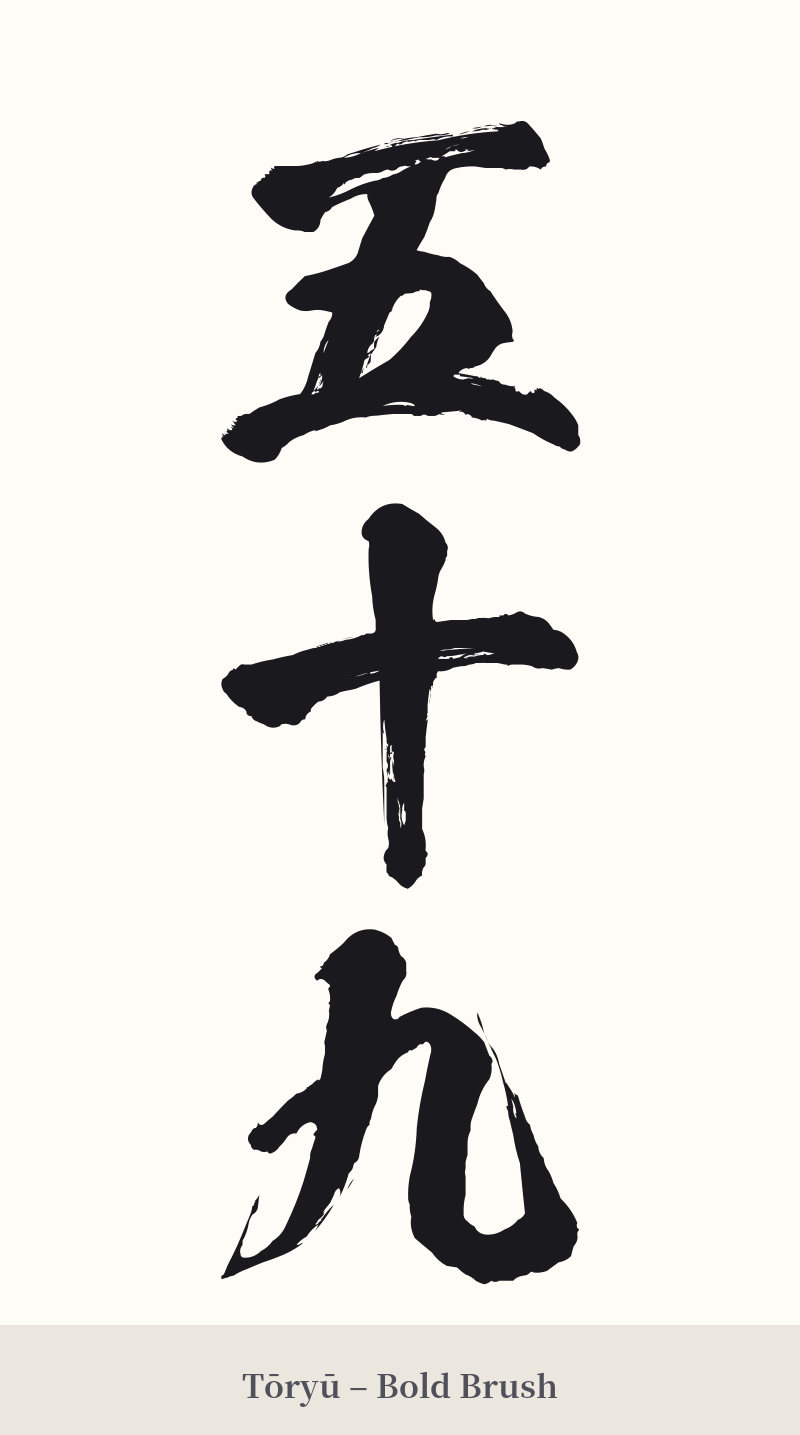
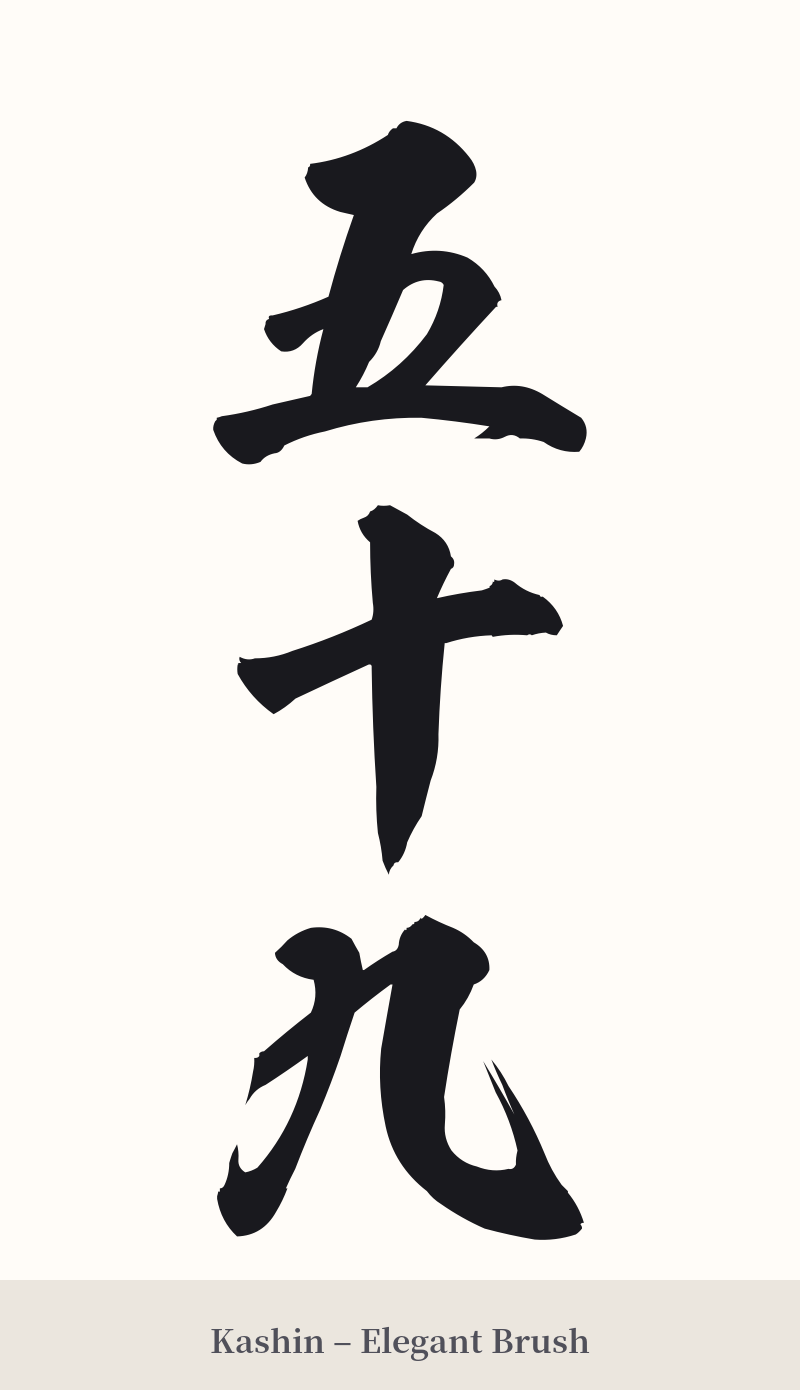
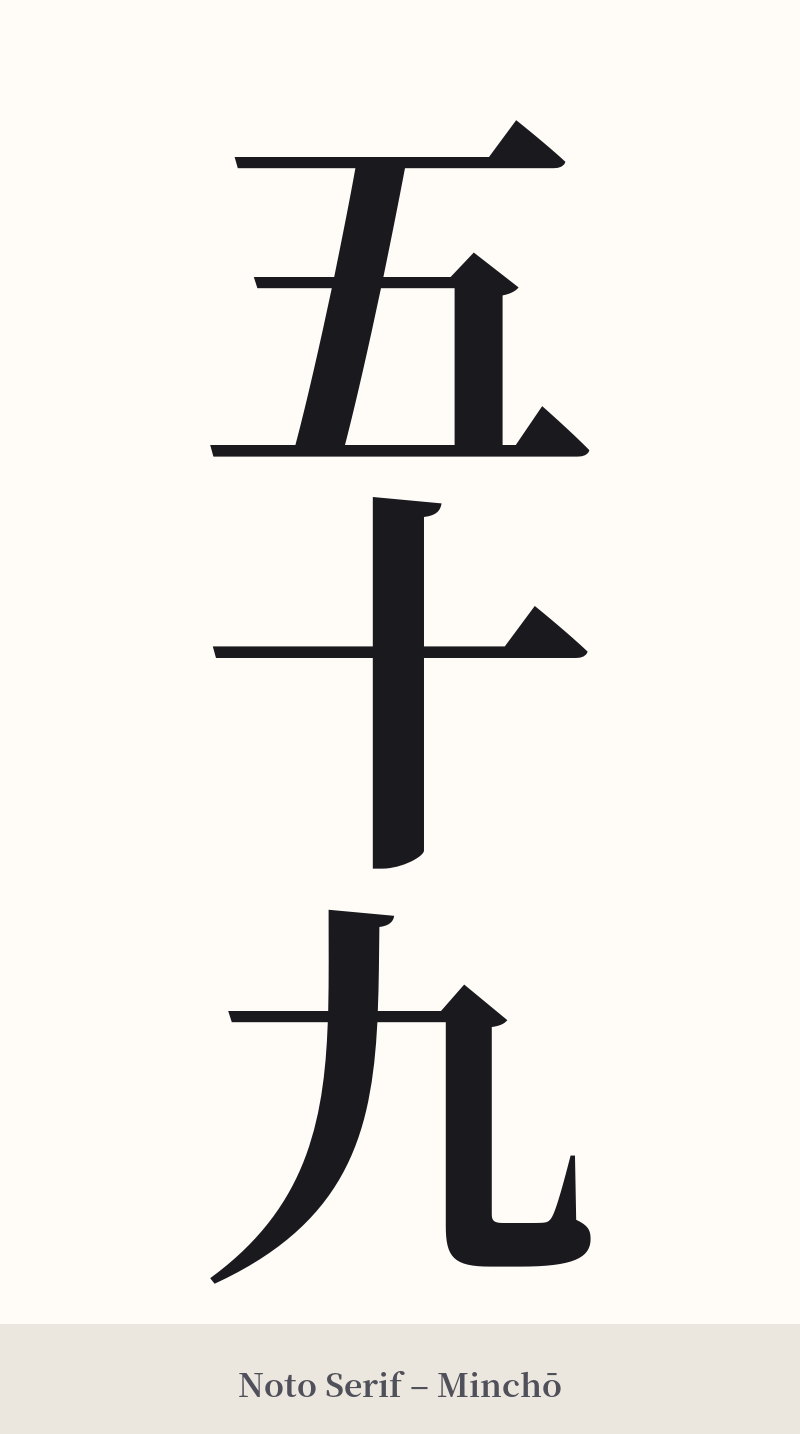
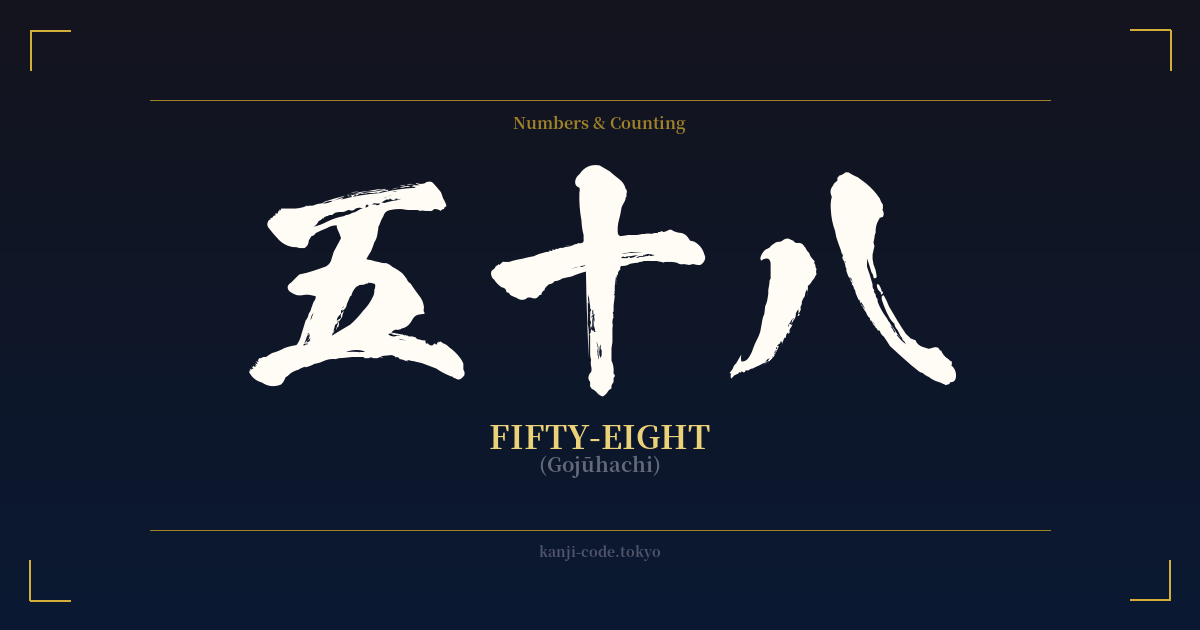
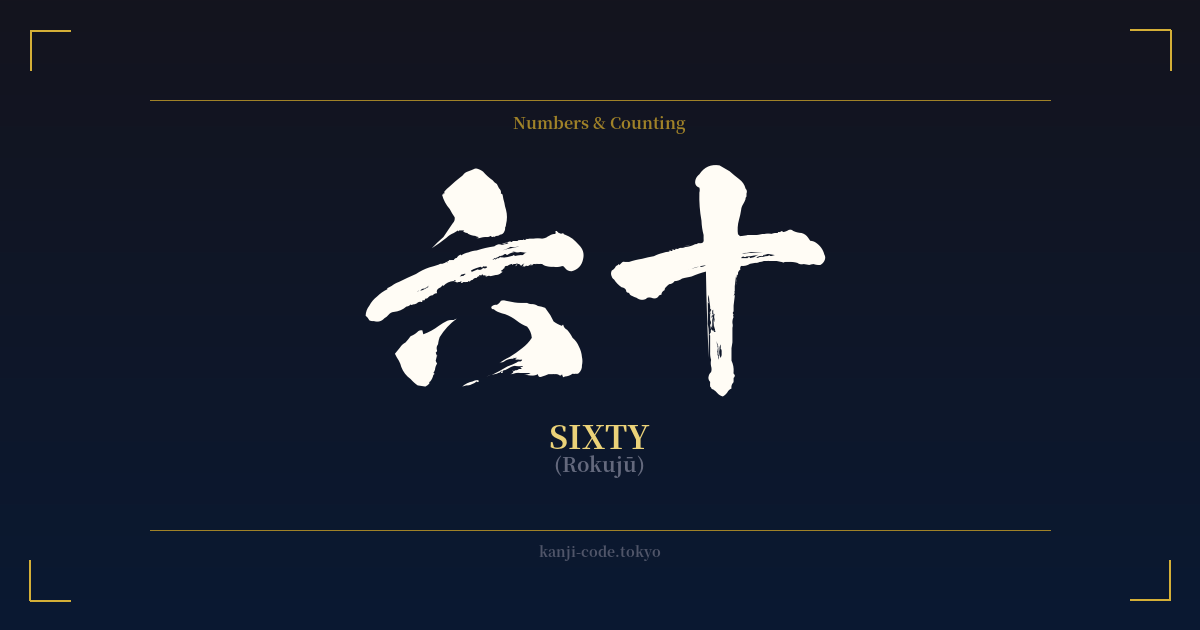
The same kanji can look dramatically different depending on the calligraphy style. Choose a font that matches the mood you want for your tattoo or design.
🎨 Tattoo Suitability
📐 Tattoo Design Guide
The kanji for fifty-nine, 五十九, is composed of simple, low-stroke-count characters, making it versatile for various tattoo designs.
– Placement: Its simplicity works well in smaller, more discreet locations like the inner wrist, behind the ear, or on the ankle. For a more prominent piece, a vertical arrangement looks excellent along the forearm, bicep, or spine.
– Font Style: A bold, clean Gothic (sans-serif) font emphasizes its numerical, modern quality. For a more classic and readable look, a Kaisho (block) script is ideal. To add a touch of artistic flair to the simple characters, a flowing Gyōsho (semi-cursive) style can connect them beautifully.
– Visual Tips: The design can be oriented horizontally (五十九) or vertically. The vertical layout is more traditional for Japanese script and often has a more elegant flow. Because the characters are not complex, the precision of the artist's line work is crucial to ensure it looks sharp and intentional, not crude. This kanji could also be part of a larger design, such as a full date or a sequence of personally significant numbers.
Comments