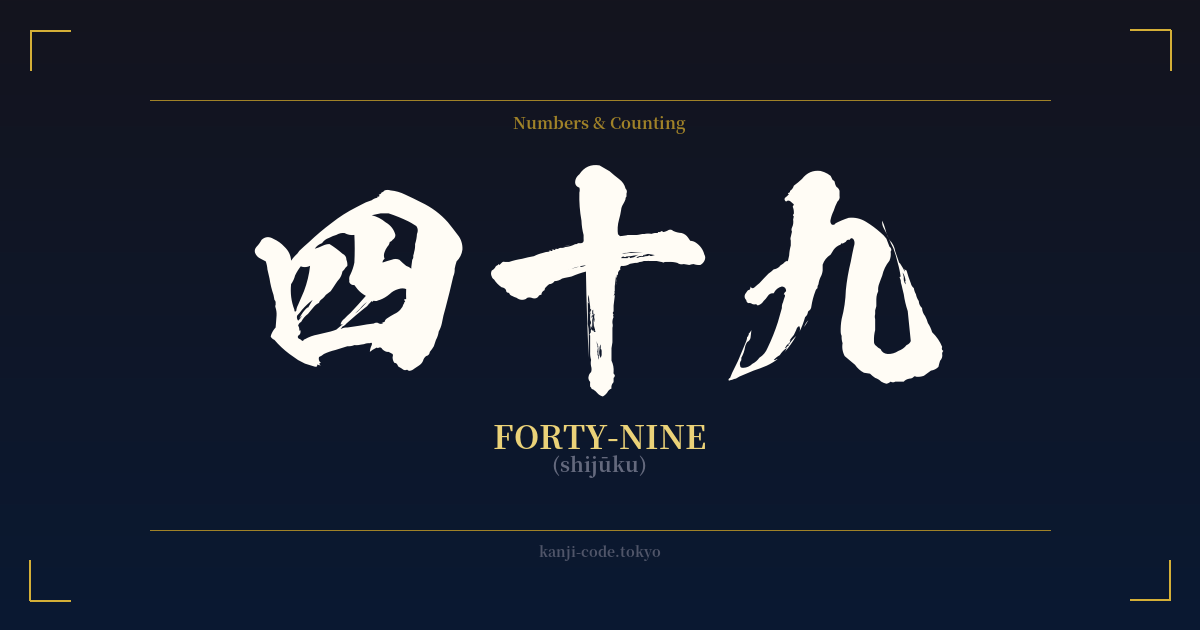
✍️ 四十九 (shijūku) — Cultural Context
On the surface, 四十九 (shijūku) is simply the Japanese word for the number forty-nine. It is constructed logically: 四 (yon/shi) for four, 十 (jū) for ten, and 九 (ku) for nine, literally translating to "four-tens-nine." However, to see it as just a number is to miss its profound and somber cultural significance, which is deeply rooted in Japanese Buddhist traditions.
The primary context for 四十九 is the term 四十九日 (shijūkunichi), the 49-day mourning period following a person's death. In many schools of Japanese Buddhism, it is believed that the spirit of the deceased lingers in a liminal state between the physical world and the afterlife for 49 days. During this period, the spirit undergoes a series of seven judgments, occurring every seven days, which will ultimately determine its fate—whether it will be reborn in a favorable realm, a lesser one, or in one of the Buddhist hells.
For the grieving family, these 49 days are a crucial time for rituals and prayer. They hold memorial services, known as 法要 (hōyō), on each of the seven-day anniversaries of the death. The purpose of these ceremonies is to offer prayers and generate merit on behalf of the deceased, with the hope of influencing the judges of the afterlife to grant a favorable outcome. The final service on the 49th day, called 満中陰 (manchūin), is the most important. It marks the conclusion of the judgment period and the spirit's final departure to its next existence. After this day, the initial, most intense period of mourning is considered over.
This association is so strong that the number itself carries the weight of this funereal tradition. The individual components add to this somber tone. The number four, read as 'shi,' is a homophone for 死 (shi), meaning death. The number nine, read as 'ku,' is a homophone for 苦 (ku), meaning suffering. While these are common superstitions in Japan, their combination in the specific number 49 amplifies its connection to the difficult journey after death. Therefore, 四十九 is not a number one would use lightly or in a celebratory context; it is inextricably woven into the fabric of Japanese beliefs about life, death, and remembrance.
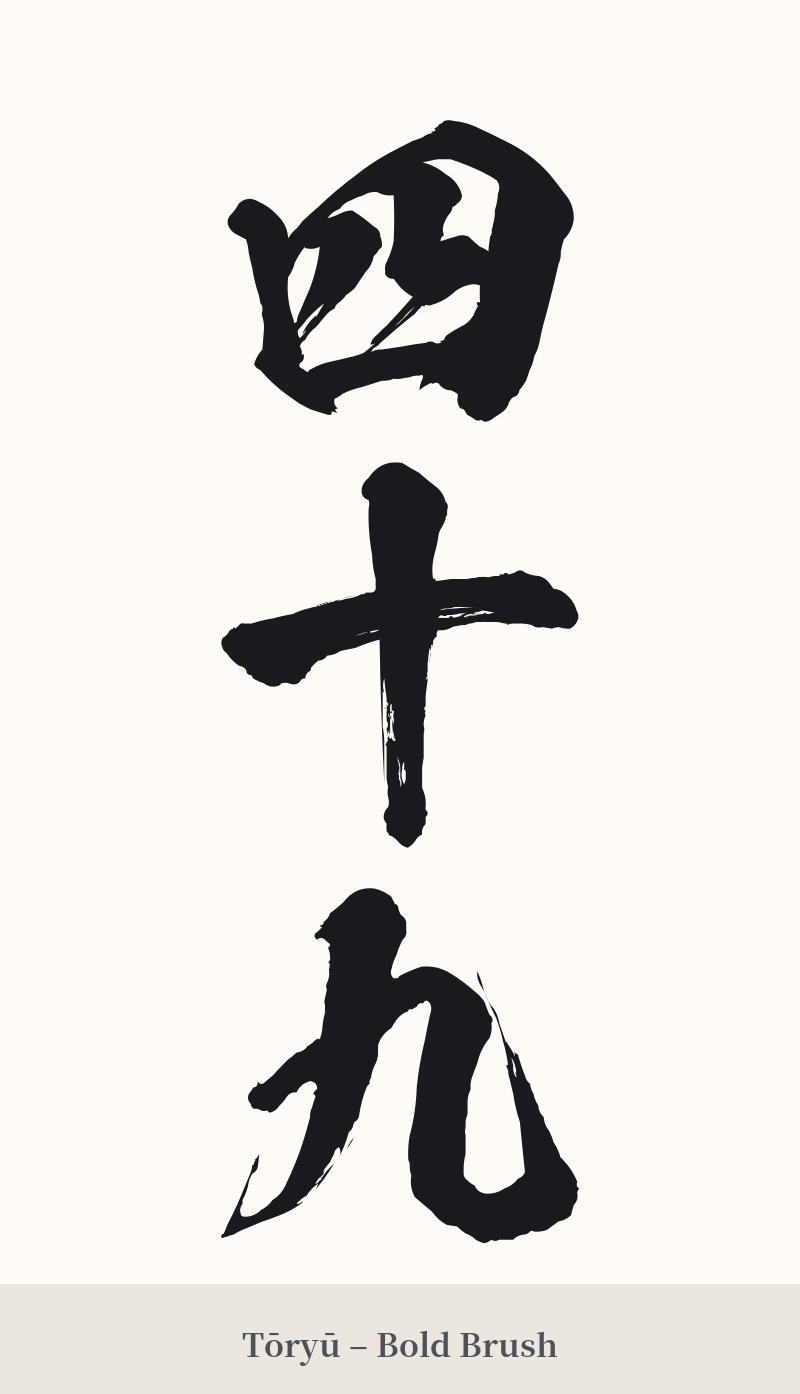
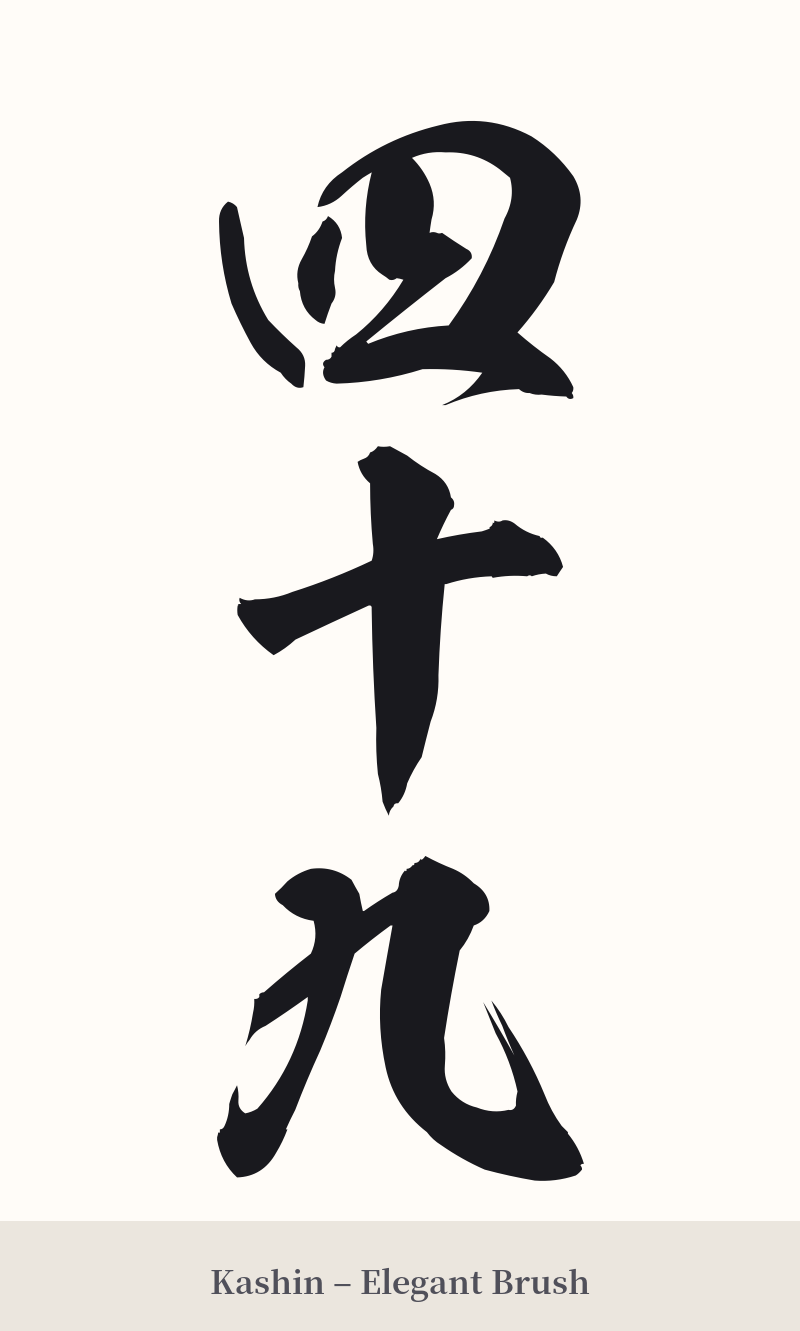
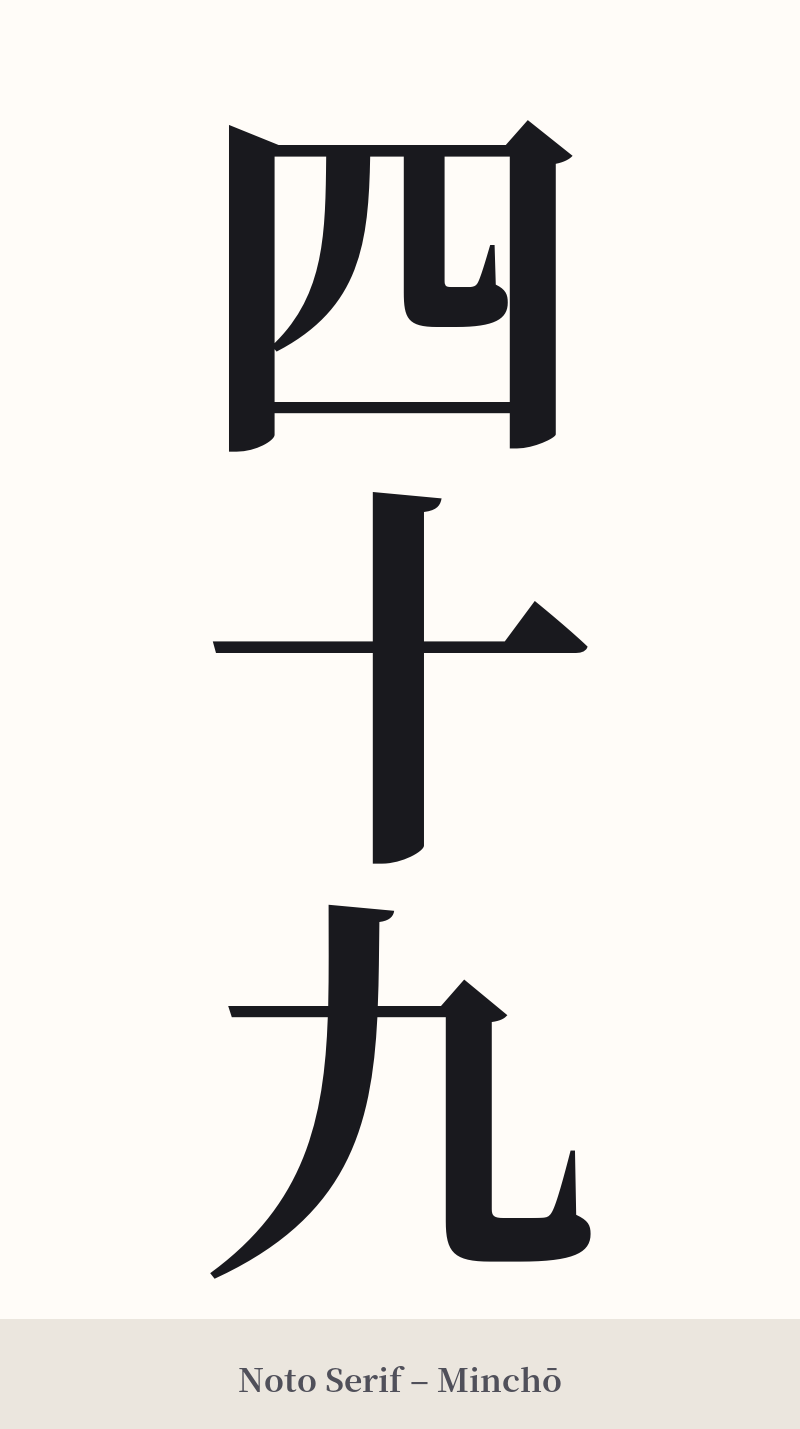
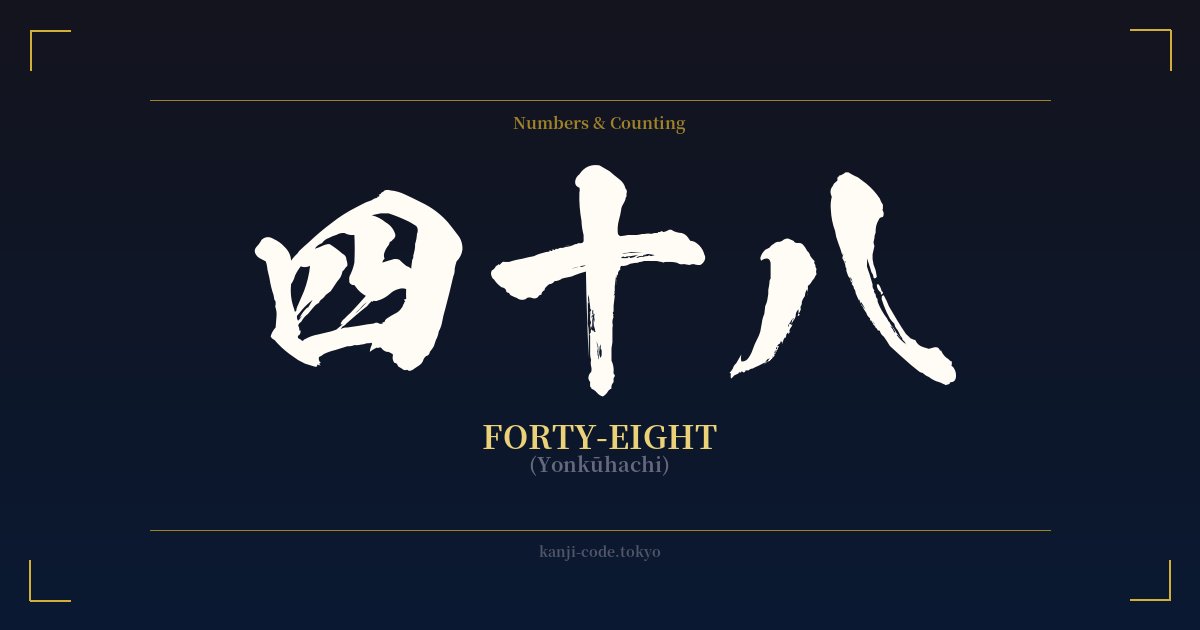
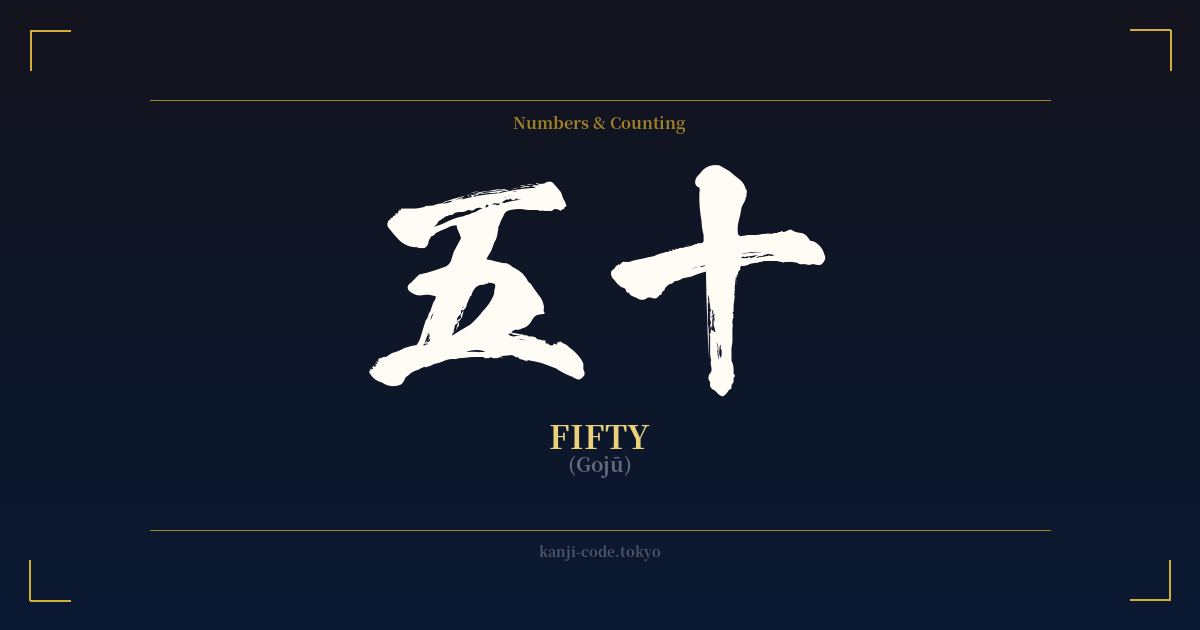
🖌️ Font Styles for 四十九
The same kanji can look dramatically different depending on the calligraphy style. Choose a font that matches the mood you want for your tattoo or design.
🎨 Tattoo Suitability
📐 Tattoo Design Guide
Given its direct and somber association with death and mourning, 四十九 is strongly not recommended as a tattoo for general aesthetic purposes. It would be highly unusual and potentially confusing or unsettling to a native Japanese speaker.
If chosen for a deeply personal reason, such as a memorial tattoo to honor the 49-day mourning period for a loved one, the design should be handled with sensitivity and respect. Consider these points:
– Context is Key: Do not get this tattooed as a standalone number. It should be part of a larger memorial piece that provides context, such as alongside a name, a date, or a symbolic image like a lotus flower (a symbol of purity and rebirth in Buddhism) or a portrait.
– Placement: A private and personal placement is more appropriate than a highly visible one. The inner bicep, ribs, or back shoulder would be more respectful choices than the neck, hand, or forearm.
– Font Style: A traditional, formal script is best. Kaisho (block script) or Gyosho (semi-cursive script) would convey a sense of solemnity. Avoid modern, playful, or aggressive fonts which would clash severely with the meaning.
Comments