✍️ 五十六 (Gojūroku) — Cultural Context
The Japanese word 五十六 (Gojūroku) literally translates to 'fifty-six.' It is constructed in a straightforward, mathematical way that is characteristic of East Asian numbering systems: 五 (go, five) followed by 十 (jū, ten) and then 六 (roku, six). This structure implies 'five times ten, plus six,' creating the number 56. On its own, it is simply a number, no different from any other.
However, in Japanese culture, 五十六 is not just a number. It is overwhelmingly and immediately associated with one of the most significant and controversial figures in modern Japanese history: Yamamoto Isoroku (山本五十六), the Marshal Admiral of the Imperial Japanese Navy and the commander-in-chief of the Combined Fleet during World War II.
The name 'Isoroku' was given to him because his father was 56 years old at the time of his birth. This practice of naming a child after a parent's age was not uncommon. Consequently, the number itself has become a powerful shorthand for the man.
Yamamoto Isoroku was a brilliant, complex, and paradoxical figure. Educated at Harvard University, he understood the industrial might of the United States better than most of his contemporaries. He was personally against the Tripartite Pact with Germany and Italy and cautioned against a prolonged war with America, famously stating he could 'run wild for six months,' but had no confidence in the outcome after that.
Despite his private reservations, his duty compelled him to plan and execute the devastatingly successful attack on Pearl Harbor, an event that propelled the United States into the war. His strategic genius was undeniable, making him a national hero in Japan during the war. His death in 1943, when his plane was shot down by American fighters who had cracked Japanese naval codes, was a massive blow to Japanese morale.
Because of this singular, powerful association, the kanji 五十六 is rarely seen in any other context. It doesn't represent a concept, a virtue, or a piece of philosophy. It represents a man—a man whose legacy is one of military brilliance, national duty, and the instigation of one of history's most destructive conflicts. Choosing this word is choosing to evoke the memory of Yamamoto Isoroku and all the complex history that comes with him.
🖌️ Font Styles for 五十六
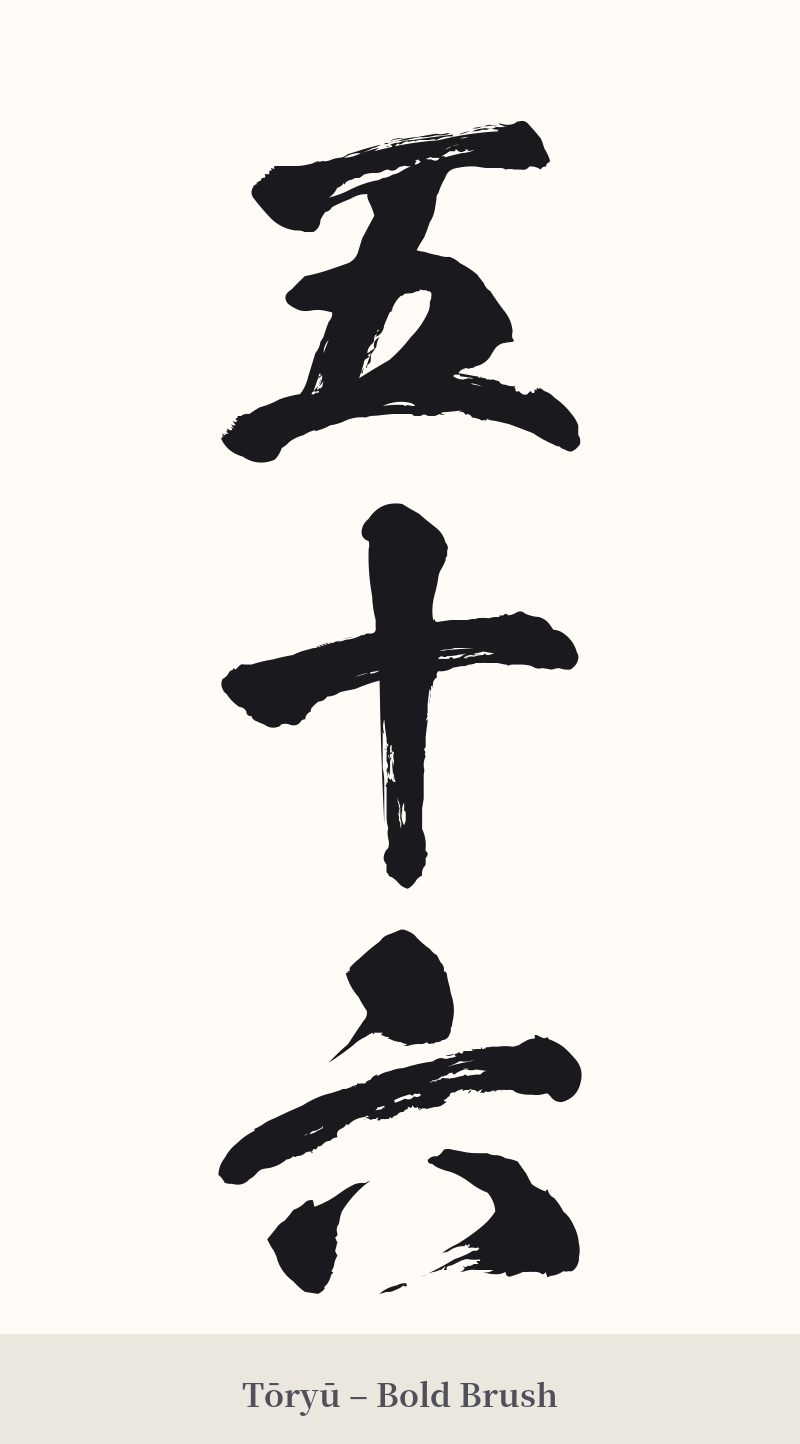
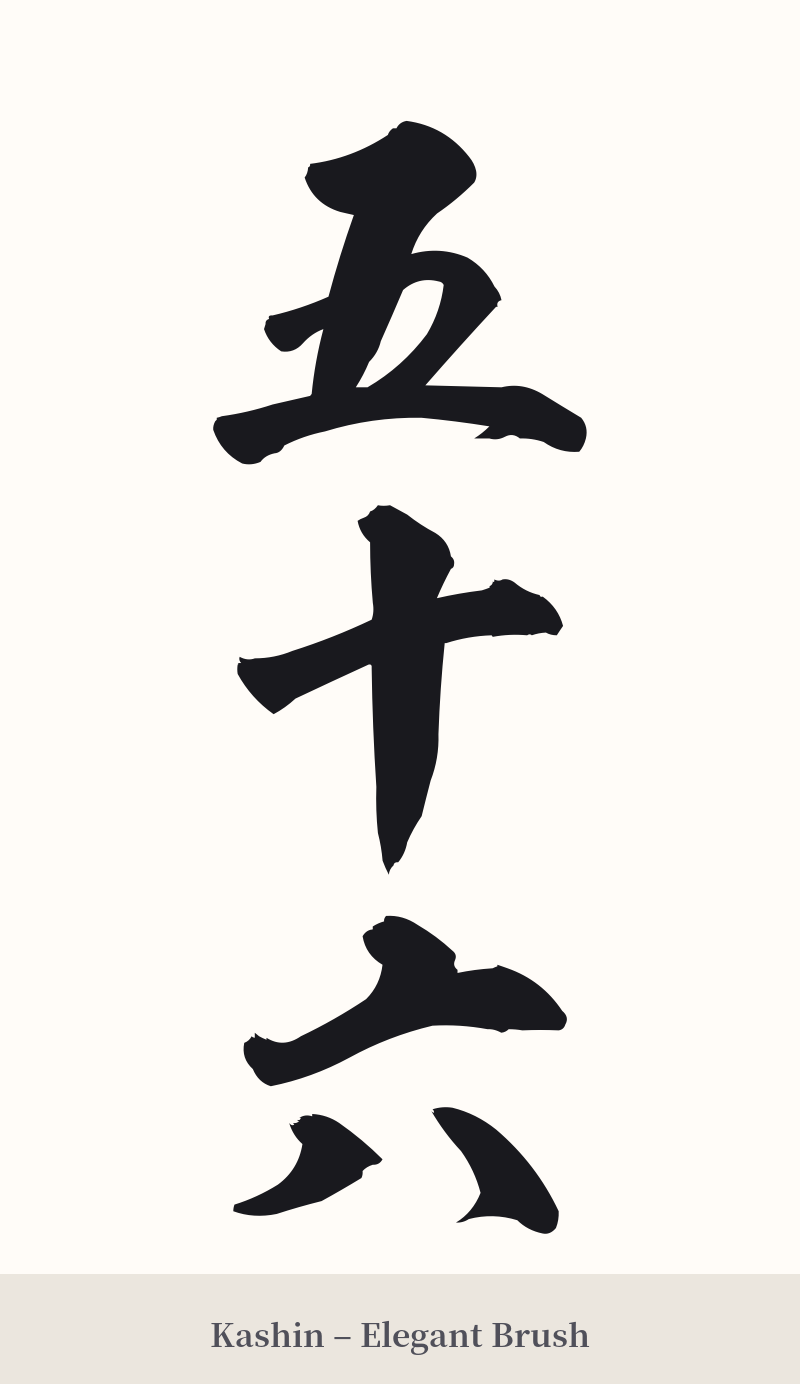
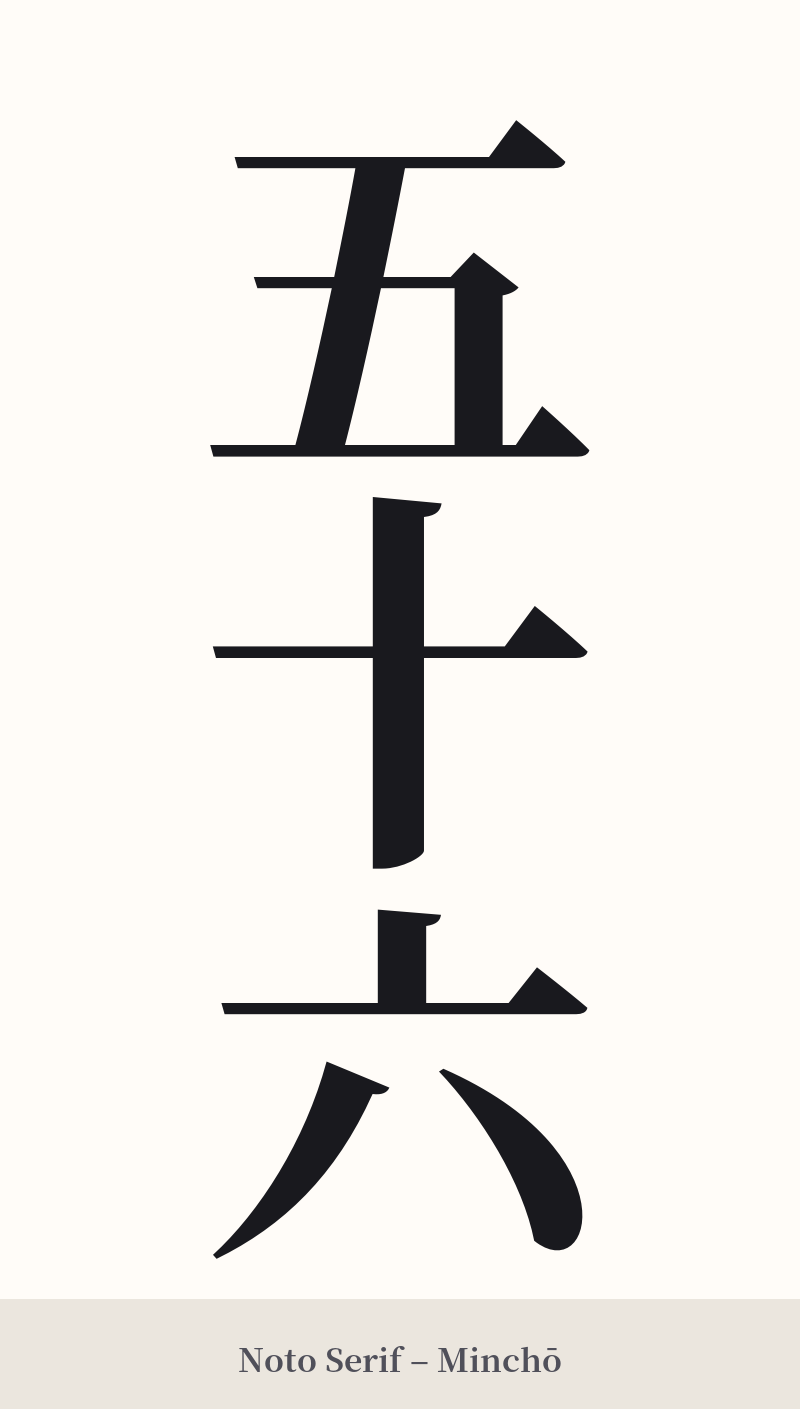
The same kanji can look dramatically different depending on the calligraphy style. Choose a font that matches the mood you want for your tattoo or design.
🎨 Tattoo Suitability
📐 Tattoo Design Guide
Given the highly controversial nature of this term, it is strongly advised to reconsider it for a tattoo. However, if you are proceeding with full awareness of its historical weight, the design should be treated with sobriety and precision.
– Placement: Vertical alignment is most appropriate, reflecting traditional Japanese script. A placement on the inner arm or along the ribs would follow the body's natural lines.
– Font Style: A crisp, clear Kaisho (block script) font would be most fitting. This style conveys a sense of formality and historical weight. Avoid overly expressive or cursive styles like Gyosho or Sosho, as they would clash with the term's severe, military connotation.
– Visual Tips: Do not pair this kanji with other imagery, especially anything related to WWII, such as flags or airplanes. This would amplify the controversial message and remove any ambiguity about its intent. The three characters should stand alone, stark and unadorned, to be read as the historical reference they are.
Comments