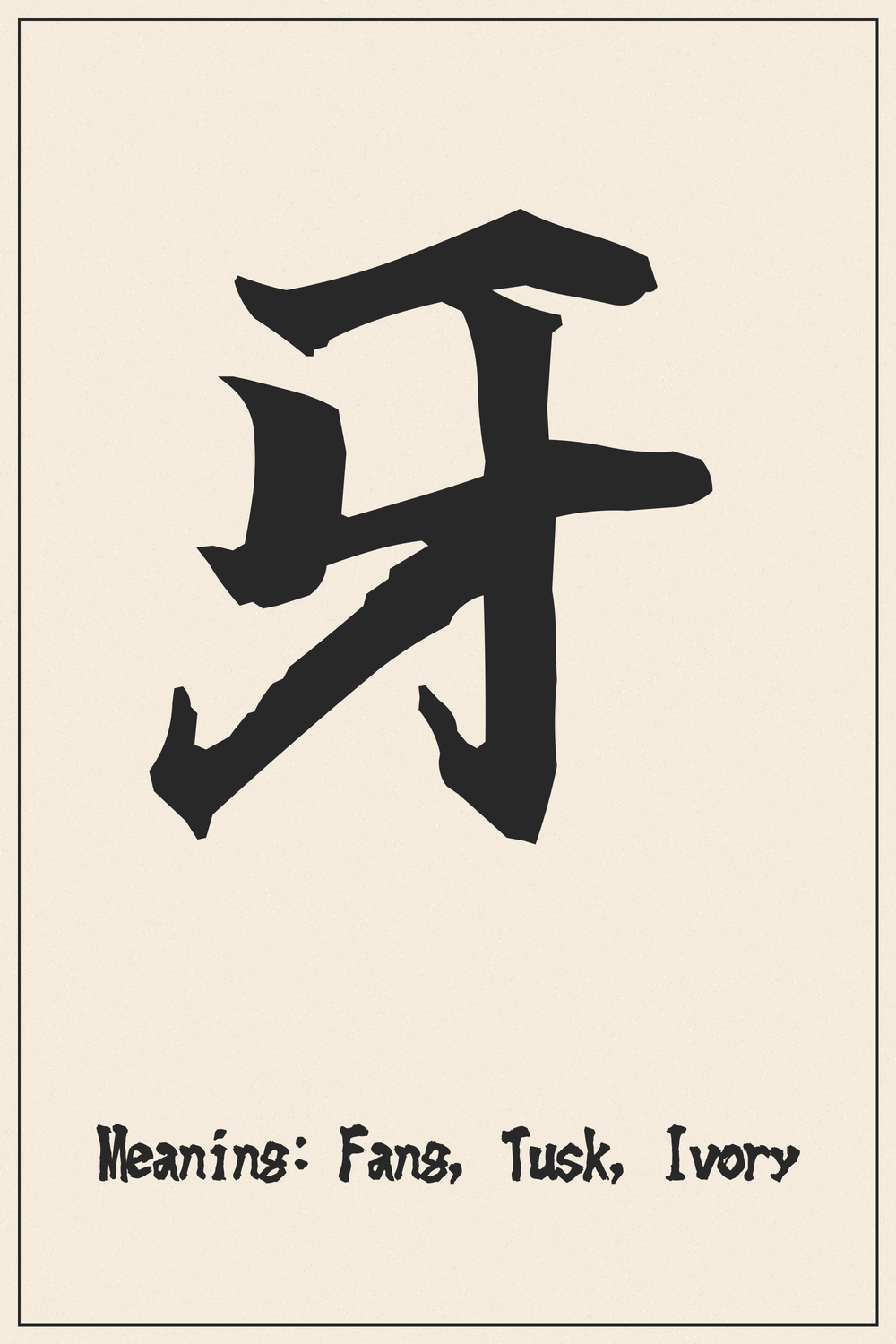
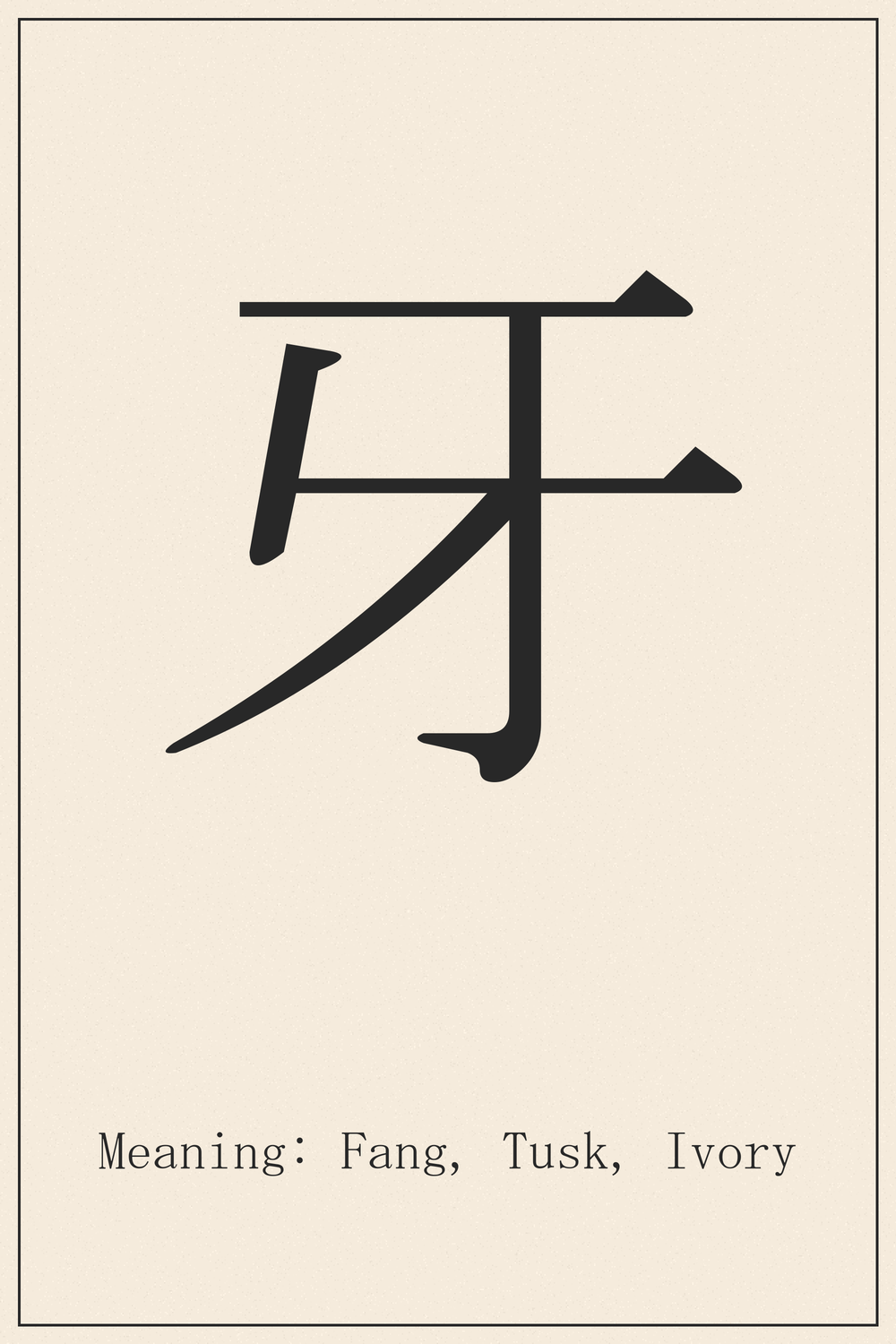
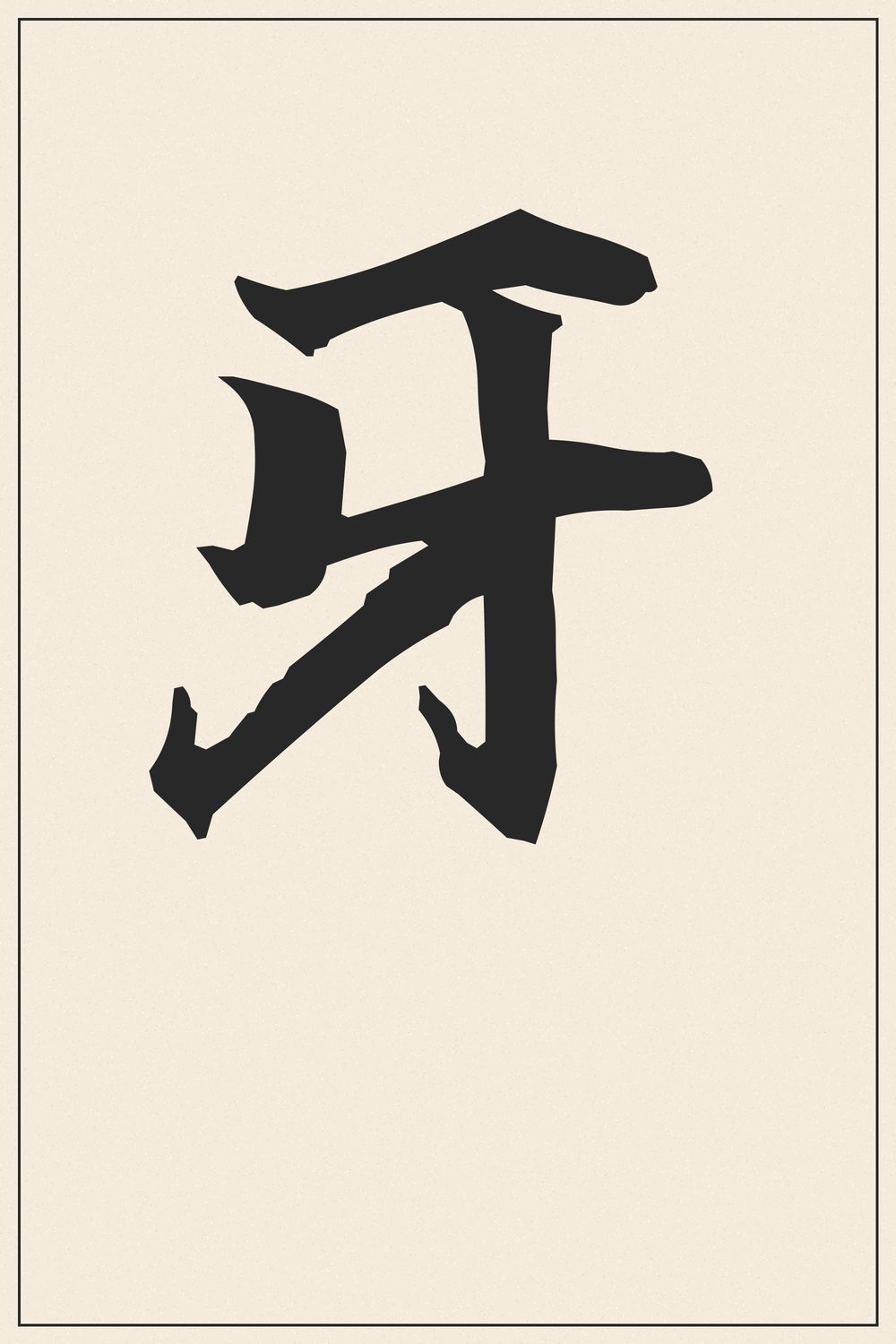
The Kanji 牙 embodies raw power and primal instinct, representing the formidable fangs and tusks of powerful creatures. It symbolizes strength, defense, and the untamed spirit of the wild.
The atmosphere of a Kanji character changes dramatically depending on the font style. A character that looks elegant in a brush style might look bold and modern in a different font.
Recommendation:
Since a tattoo is permanent, we strongly recommend comparing various font styles beyond what is shown here. Use our designs as a trusted reference for the correct structure, but feel free to explore different artistic variations to find the perfect match for your vision.
The Deep Meaning Behind 牙
The Kanji 牙 graphically depicts a fang or tusk, resembling its pointed shape. It is an ideogram that directly illustrates the concept it represents, capturing the sharpness and strength of an animal’s natural weapon.
In Japanese culture, 牙 is strongly associated with the raw power and ferocity of wild animals. Beyond its literal meaning, it can metaphorically represent the ‘claws’ or ‘talons’ of power, influence, or the ability to strike decisively.
Kanji Breakdown
The Kanji 牙 is a standalone character that also functions as its own radical, making its structure direct and potent. It is a visual representation of the concept it embodies.
Fang, Tusk: This character visually depicts the sharp, pointed tooth of an animal, emphasizing its primal and defensive nature. Its form is an ancient pictograph directly illustrating a tusk or fang.
Conclusion
The Kanji 牙 powerfully encapsulates the essence of primal strength and protective instinct. It represents not just a physical attribute but also the fierce spirit and resilience inherent in nature, symbolizing a deep connection to the wild.
For those seeking a tattoo that signifies courage, defense, or an untamed spirit, 牙 offers a profound and visually striking choice, embodying the formidable power and protective force found in the natural world.
Comments