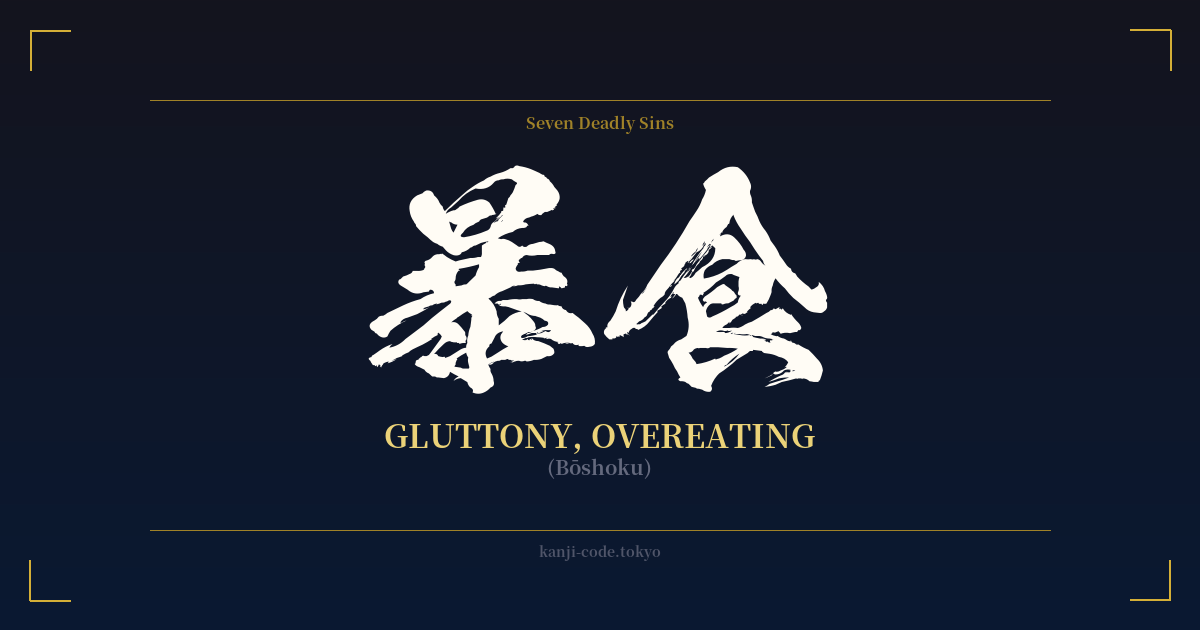
✍️ 暴食 (Bōshoku) — Cultural Context
The Japanese word for gluttony, 暴食 (Bōshoku), is a powerful and visceral term. It is formed by combining the kanji for 'violence' or 'outburst' (暴) with the kanji for 'eat' or 'food' (食). The resulting meaning is not just 'overeating' but rather 'violent eating' or 'binge-eating,' painting a picture of consumption that is uncontrolled, destructive, and excessive.
Historically and culturally, 暴食 is most closely associated with the concept of the Seven Deadly Sins (七つの大罪, Nanatsu no Taizai), which was introduced to Japan through Christianity. While the idea of sin exists in Japanese Buddhism, the specific list of seven is a Western import. In Buddhist teachings, gluttony is seen as a form of attachment and craving (煩悩, bonnō), a worldly desire that binds individuals to the cycle of suffering and rebirth. The path to enlightenment requires moderation in all things, including eating, making 暴食 a clear obstacle to spiritual progress.
This creates a fascinating contrast with modern Japanese culture's vibrant and often extreme food scene. Japan is famous for its culinary excellence, but also for a phenomenon known as 大食い (ōgui), or 'big eating' competitions. These televised events celebrate individuals who can consume massive quantities of food, turning excess into a form of entertainment. Similarly, the expression 食い倒れ (kuidaore), particularly associated with Osaka, means 'to eat oneself into bankruptcy,' a testament to the city's dedication to its culinary delights. This shows a cultural appreciation for food that can, on the surface, seem to glorify the very act that 暴食 condemns.
However, the distinction is crucial. 大食い is framed as a sport or a feat of endurance, while 食い倒れ is a hyperbolic expression of enjoying life through food. 暴食, in contrast, remains a term with heavy, negative weight. It is used in medical contexts to describe binge eating disorders and in moral discussions about a lack of self-control. It speaks to a loss of discipline and an indulgence so extreme that it becomes self-destructive. Choosing this word is to invoke its dark, cautionary meaning, not the celebratory aspects of Japanese food culture.
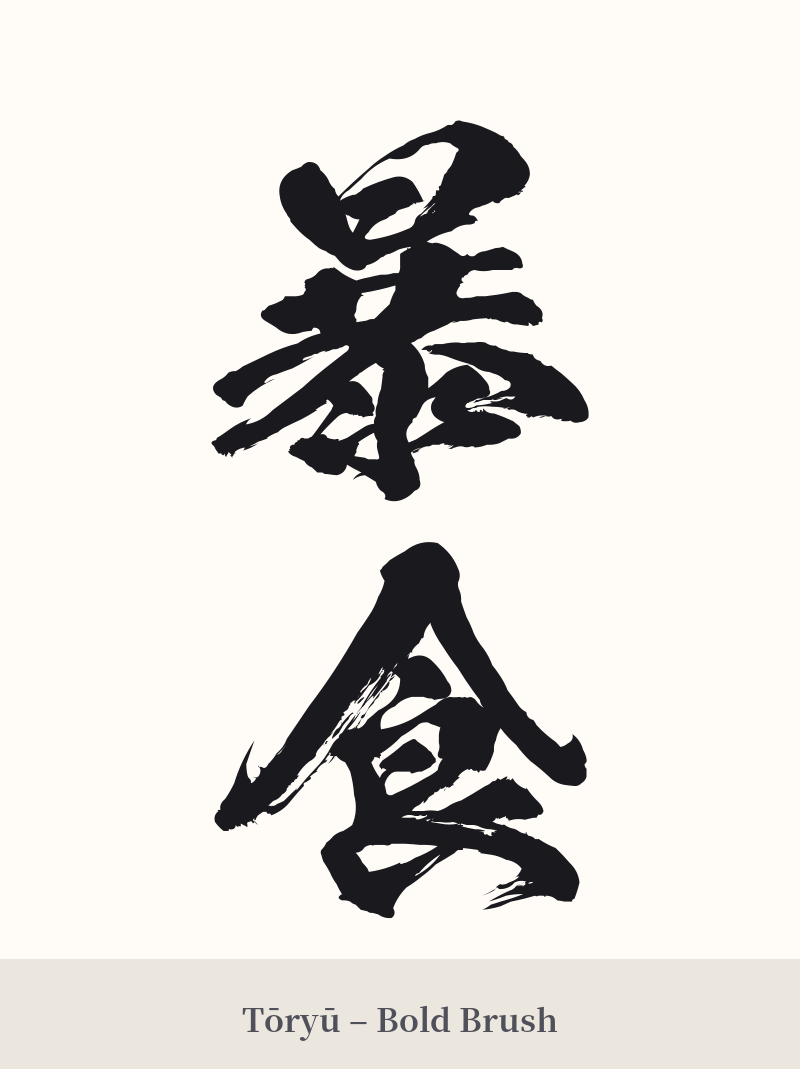
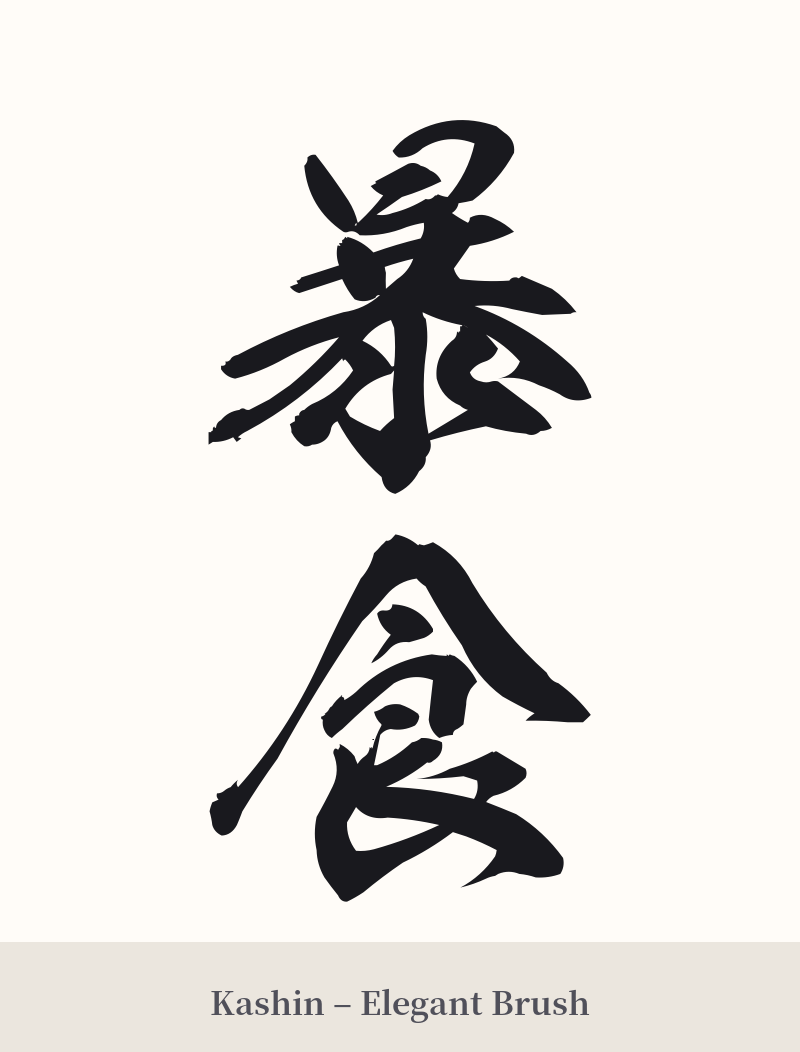
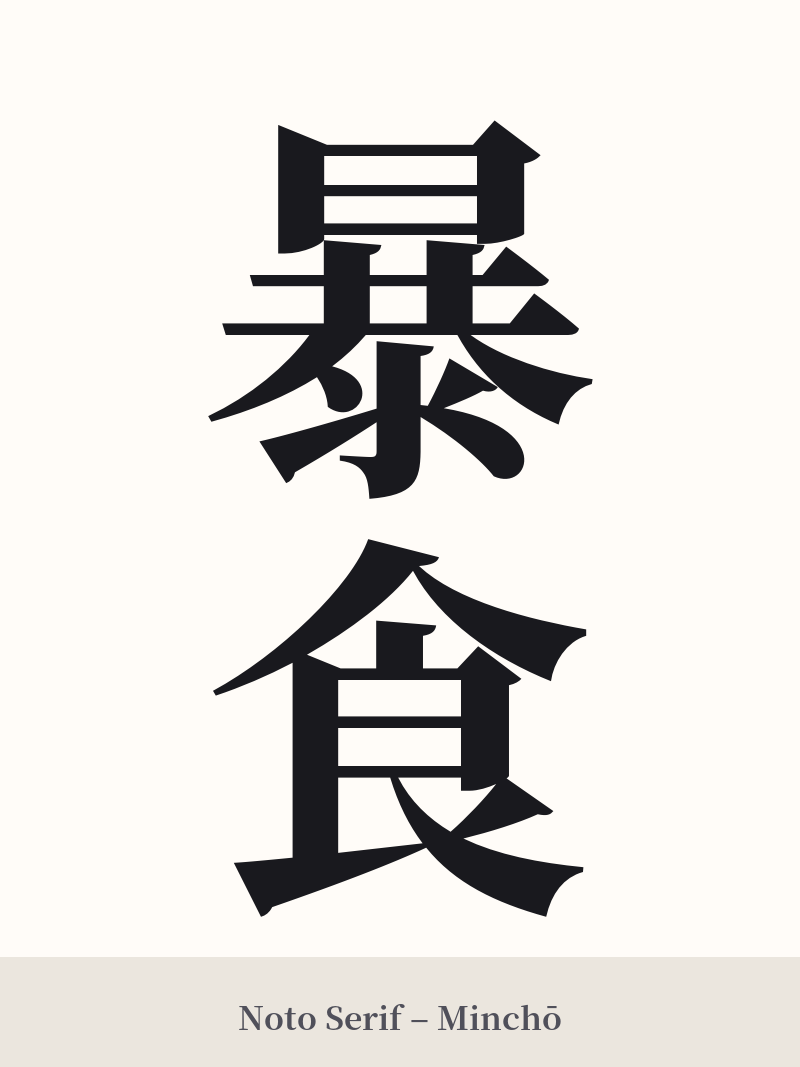
🖌️ Font Styles for 暴食
The same kanji can look dramatically different depending on the calligraphy style. Choose a font that matches the mood you want for your tattoo or design.
🎨 Tattoo Suitability
📐 Tattoo Design Guide
A tattoo of 暴食 (Bōshoku) makes a very specific and intense statement. The design should reflect the 'violent' and 'uncontrolled' nature of the word.
– Placement: Due to the complexity of the first character (暴), this design works best in a medium to large format. Consider a vertical alignment on the forearm, calf, or along the spine to give the characters room to breathe.
– Font Style: Avoid delicate or graceful fonts. A bold, aggressive calligraphy style like a rough Gyosho (semi-cursive) or a heavy, angular Kaisho (block) script would be most effective. A font with a scratchy, frantic energy could also powerfully convey the meaning.
– Visual Tips: The kanji alone is very potent. If you wish to add imagery, consider abstract elements rather than literal ones. A shattered bowl, ink splatters that look like spilled food, or a background that evokes chaos could amplify the theme without being too on-the-nose. Pairing it with an Oni (demon) mask could also link it to the idea of being possessed by a destructive appetite.
Comments