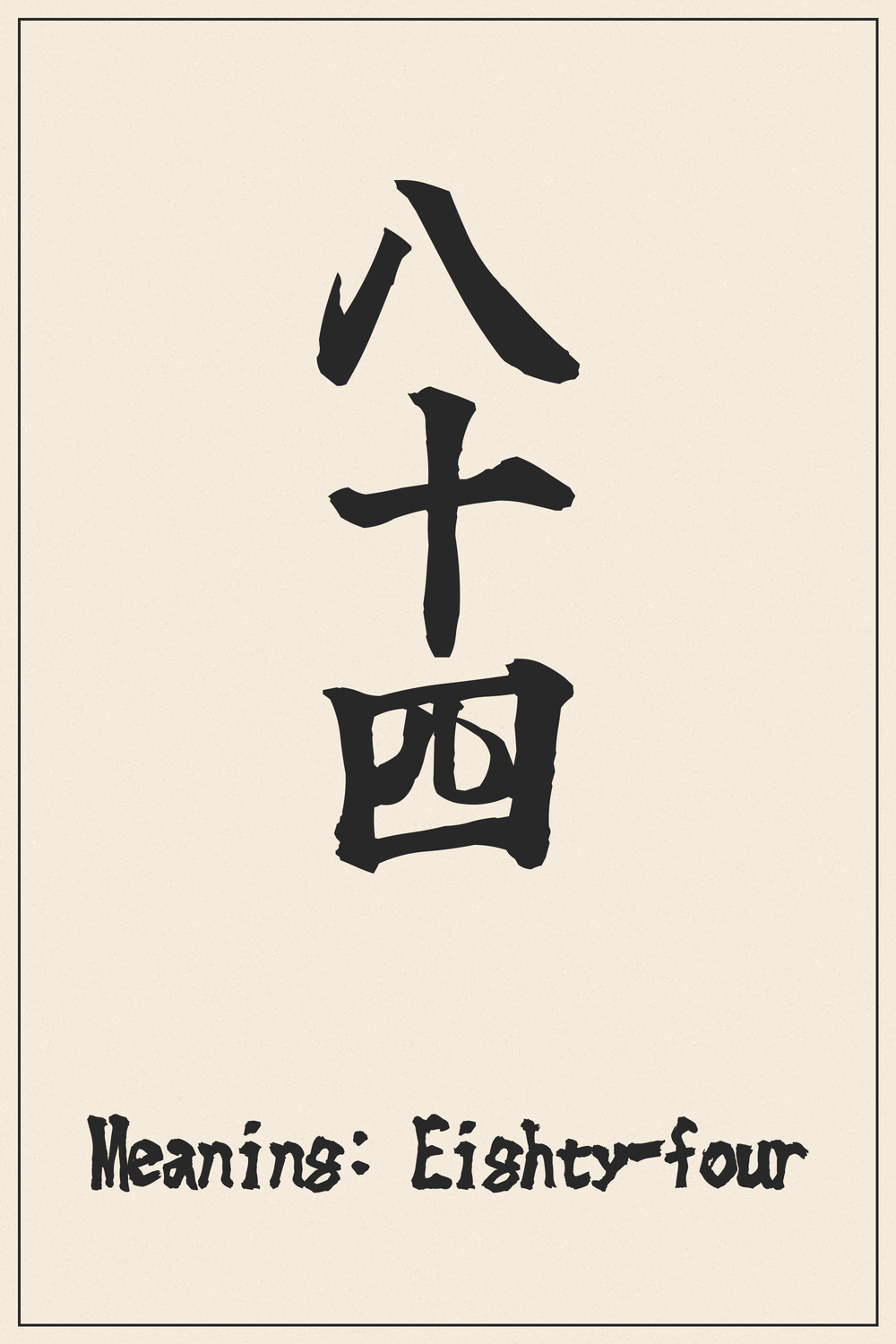
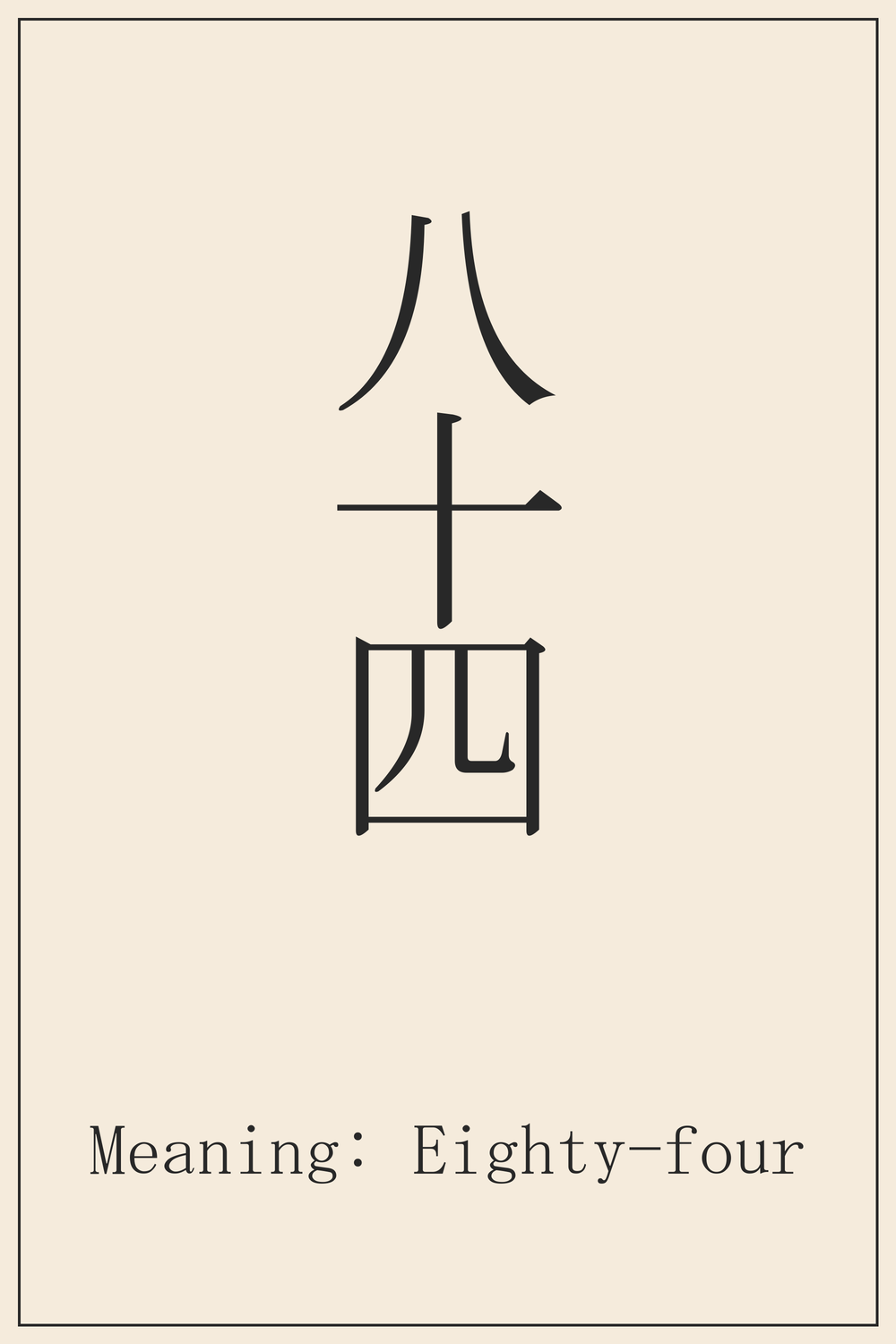
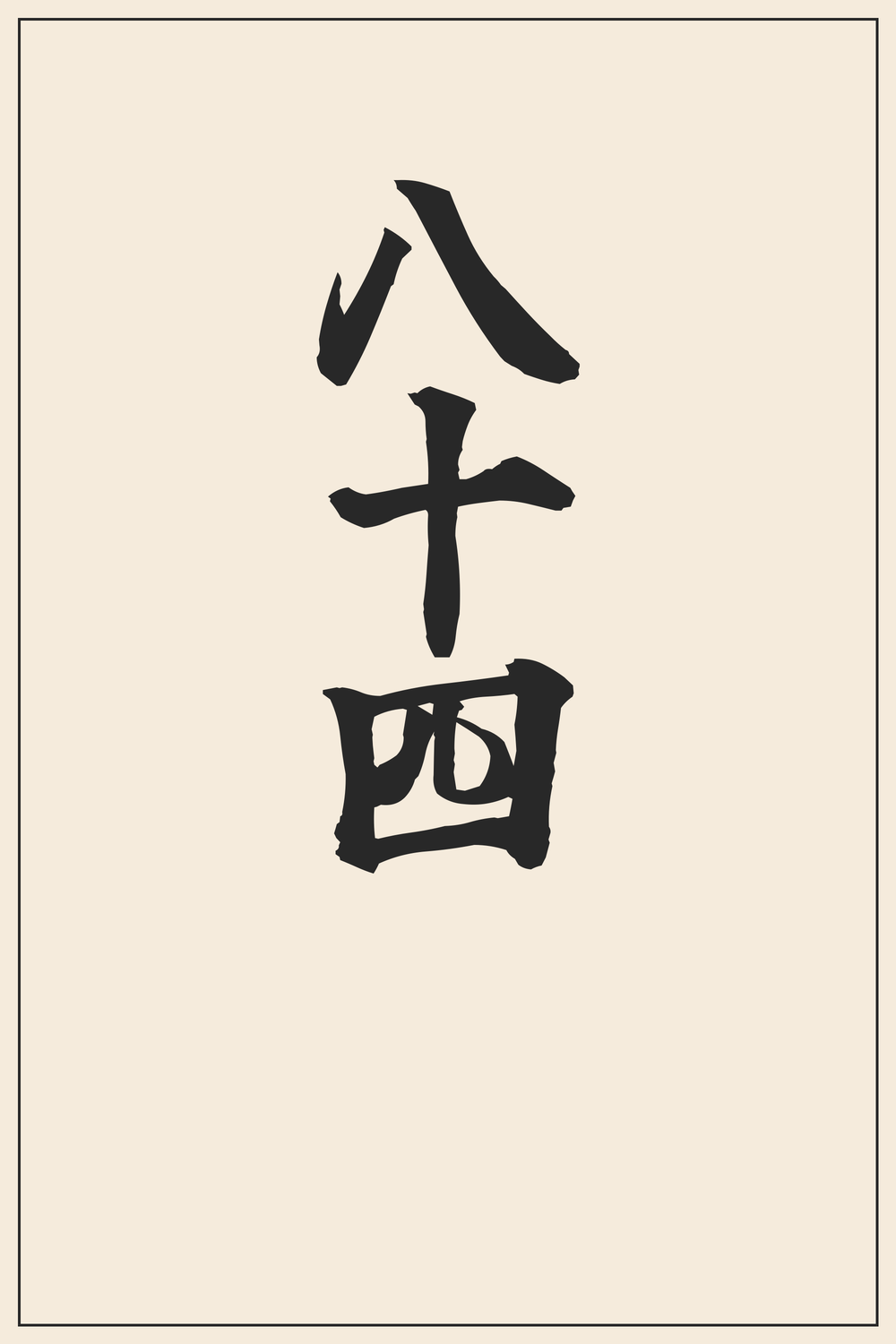
Numbers often carry more than just quantitative value; they can mark milestones, symbolize order, or signify specific qualities. The Kanji ‘八十四’ represents the number eighty-four, a figure that, while straightforward, can embody a rich tapestry of personal meaning.
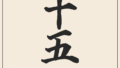
The atmosphere of a Kanji character changes dramatically depending on the font style. A character that looks elegant in a brush style might look bold and modern in a different font.
Recommendation:
Since a tattoo is permanent, we strongly recommend comparing various font styles beyond what is shown here. Use our designs as a trusted reference for the correct structure, but feel free to explore different artistic variations to find the perfect match for your vision.
The Deep Meaning Behind 八十四
The Kanji for numbers are among the most fundamental in the Japanese writing system, deriving from ancient pictographic and ideographic representations. ‘八’ (hachi) visually suggests a dividing line or ‘eight,’ ‘十’ (jū) is a simple cross for ‘ten,’ and ‘四’ (shi/yon) is a contained enclosure signifying ‘four.’ Together, they form the compound number eighty-four.
While specific numbers like ‘seven,’ ‘eight,’ or ‘ninety-nine’ hold strong cultural symbolism in Japan, eighty-four itself does not carry a prominent traditional or celebratory meaning like certain longevity ages (e.g., 88 for 米寿 ‘beiju’). However, the individual component ‘四’ (shi) is notable for its homophonic connection to ‘death’ (死), though this negative connotation is often mitigated when ‘四’ appears within larger numbers or specific contexts, making ‘八十四’ generally neutral in its everyday usage.
Kanji Breakdown
Each component of ‘八十四’ contributes to its overall numerical value and visual balance.
Eight (はち): Originating from a pictogram of something being divided, this Kanji represents the number eight. In Japanese culture, eight is often considered a lucky number, symbolizing prosperity and growth.
Ten (じゅう): A simple cross ideogram, 十 signifies the number ten, serving as a foundational unit in numerical counting systems.
Four (し / よん): This character depicts an enclosed space, signifying the number four. While ‘shi’ (し) shares a pronunciation with ‘death’ (死), ‘yon’ (よん) is often preferred to avoid negative associations, particularly when counting or referring to quantity.
Conclusion
The Kanji ‘八十四’ precisely conveys the number eighty-four, a straightforward numerical value. For those marking a significant age, a year of importance, or a personal count, it serves as a clear and unambiguous symbol.
Opting for ‘八十四’ as a tattoo is a statement of personal significance tied to this specific number. Its simple, elegant strokes make for a clean design, ensuring that its meaning remains a personal marker of a journey or milestone that resonates deeply with the wearer.
Comments