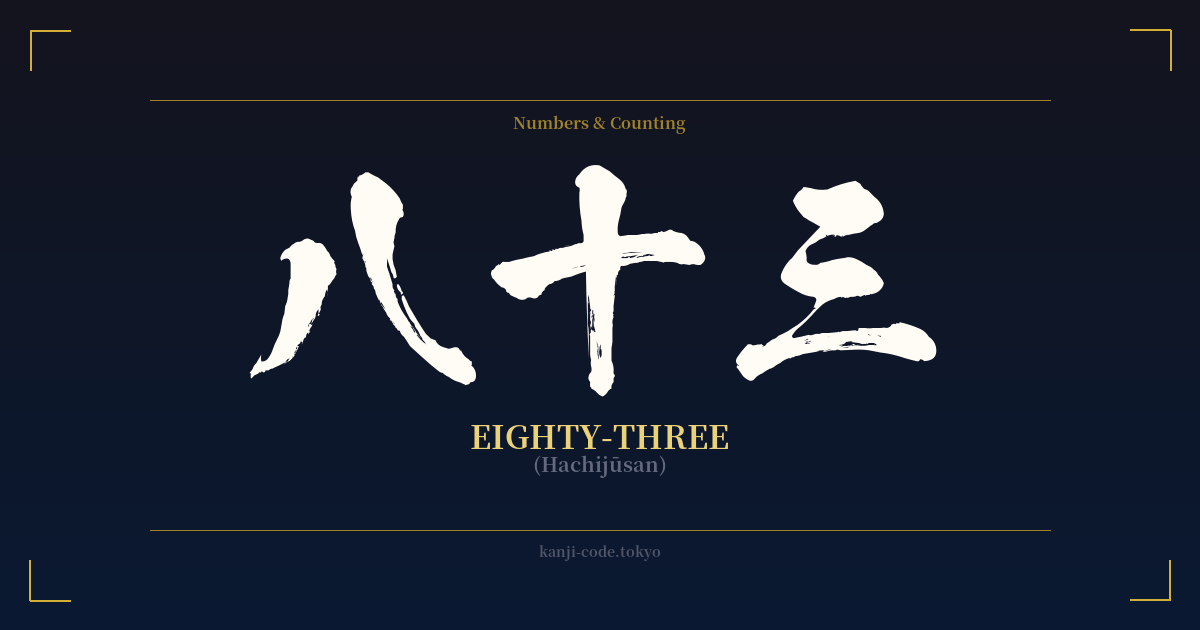
✍️ 八十三 (Hachijūsan) — Cultural Context
The Japanese word for eighty-three, 八十三 (Hachijūsan), is a straightforward numerical compound, yet it is built from characters rich with individual symbolism. The construction itself is a lesson in Japanese counting logic: 八 (hachi) means eight, 十 (jū) means ten, and 三 (san) means three. Together, they form '(eight x ten) + three,' or eighty-three. This logical system, inherited from Chinese, makes large numbers easy to construct and understand.
While the number eighty-three itself does not hold a specific, famous place in Japanese folklore or proverbs, its component parts are deeply significant. The character for eight, 八 (hachi), is considered one of the luckiest numbers in Japanese culture. This is due to its shape, which widens at the bottom. This form is called 'suehirogari' (末広がり), which literally means 'widening towards the end' and symbolizes ever-increasing prosperity, growth, and good fortune. This association makes the number eight a frequent feature in celebrations, gift-giving, and brand names.
The character for three, 三 (san), is also culturally important. The concept of threes appears frequently in Japanese thought, representing stability and completeness. Examples include the 'Three Sacred Treasures of Japan' (the sword, the mirror, and the jewel), the 'Three Friends of Winter' (pine, bamboo, and plum), and the 'Three Great Gardens of Japan.' The number three often implies a foundational set or a complete cycle.
The character for ten, 十 (jū), represents a full unit in the decimal system and acts as a multiplier. Its simple cross shape is one of the most basic and recognizable kanji, learned by every first-grade student in Japan.
Therefore, while 八十三 is literally just 'eighty-three,' it can be interpreted as a number imbued with the auspiciousness of eight and the stability of three. It represents a specific point in a sequence, but one that carries the positive connotations of its building blocks. In modern Japan, a number like this would most often be seen in contexts like age, addresses, prices, or dates. Its significance is usually practical rather than poetic, unless it holds a specific personal meaning for an individual, such as a birth year (1983) or a special anniversary.
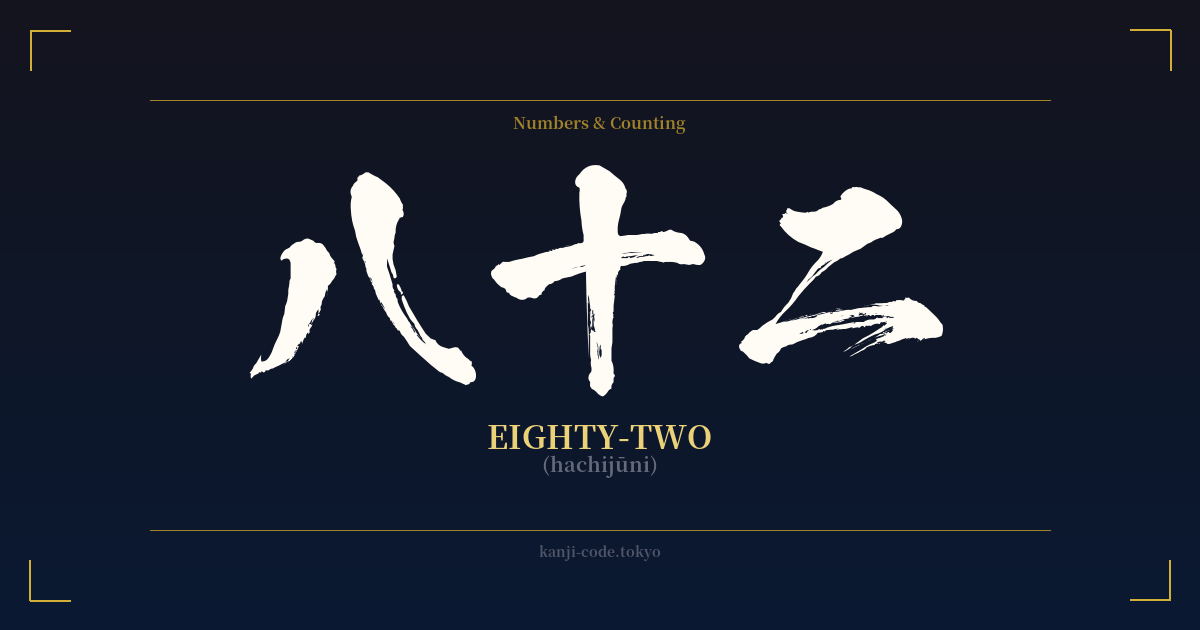
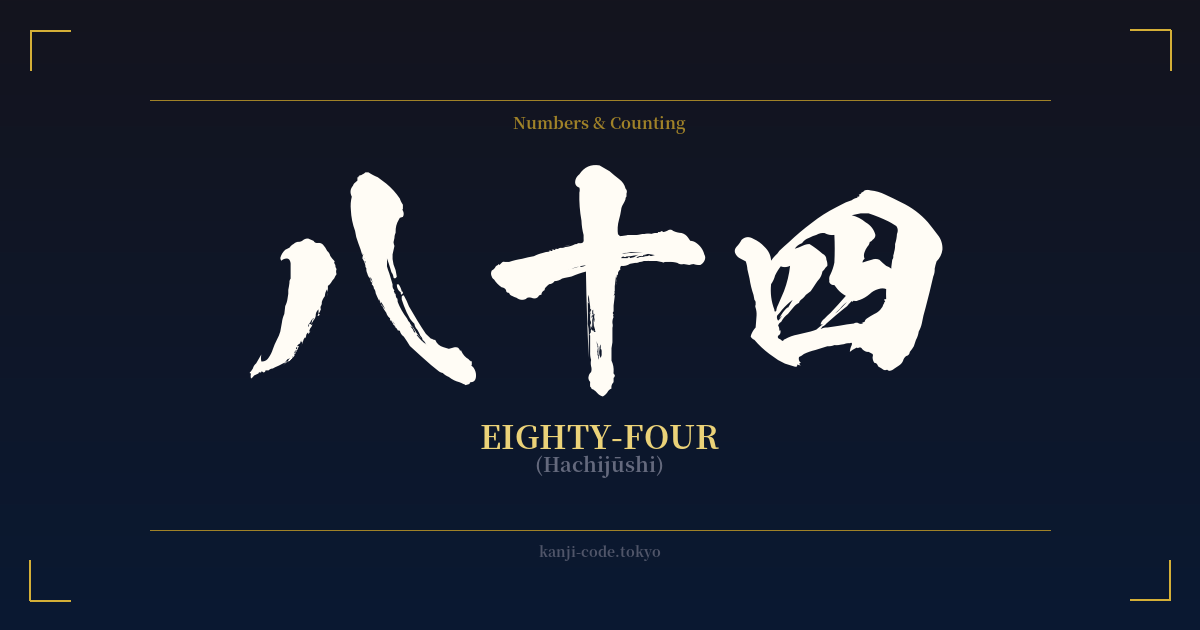
🖌️ Font Styles for 八十三
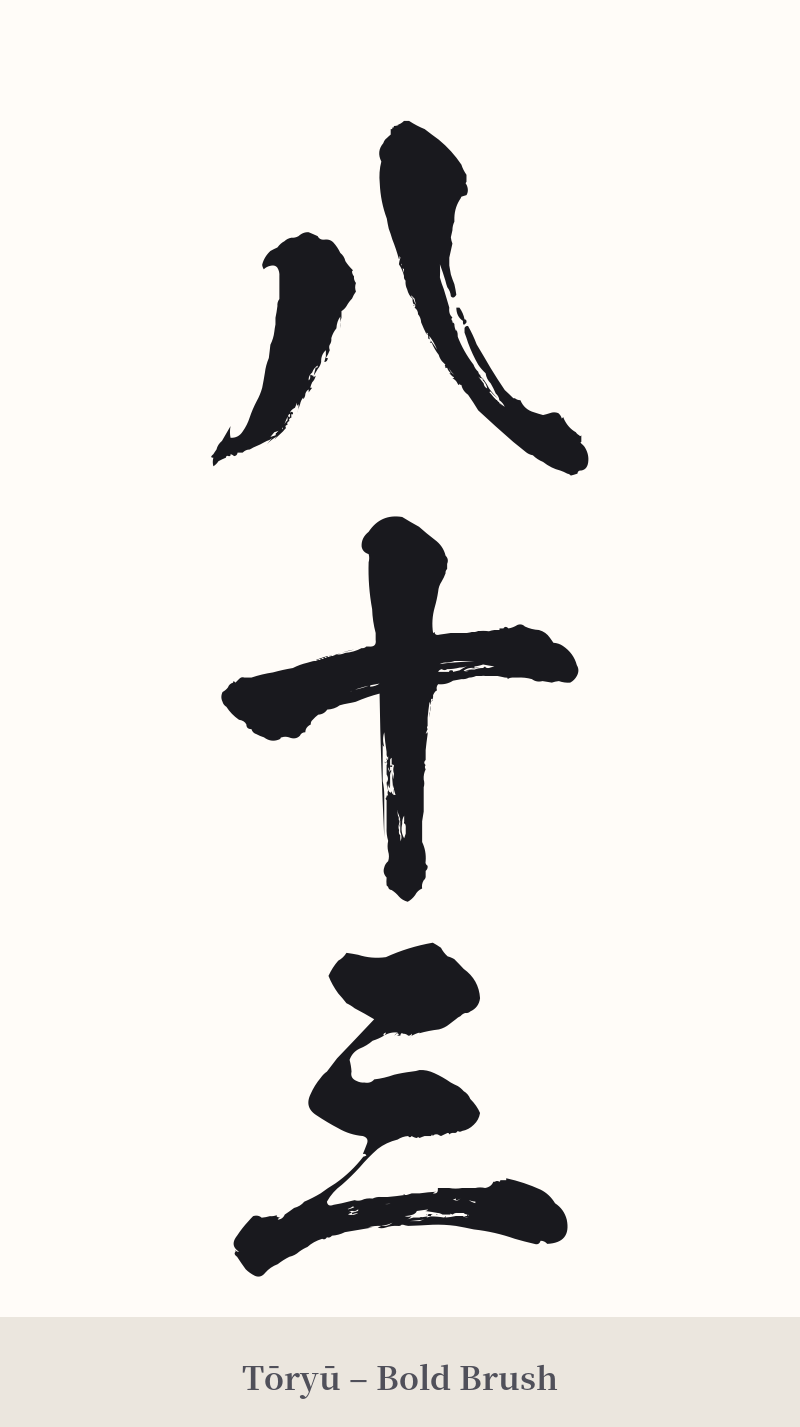
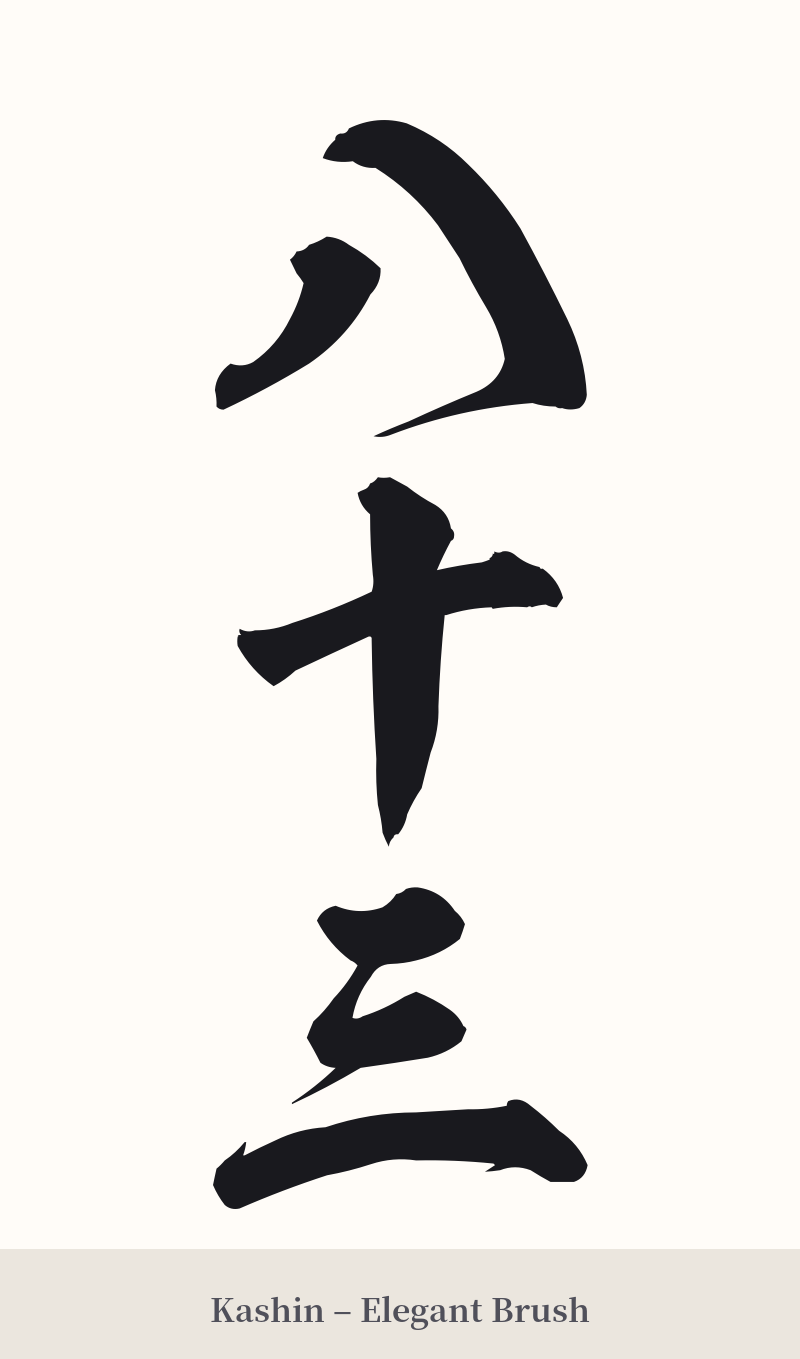
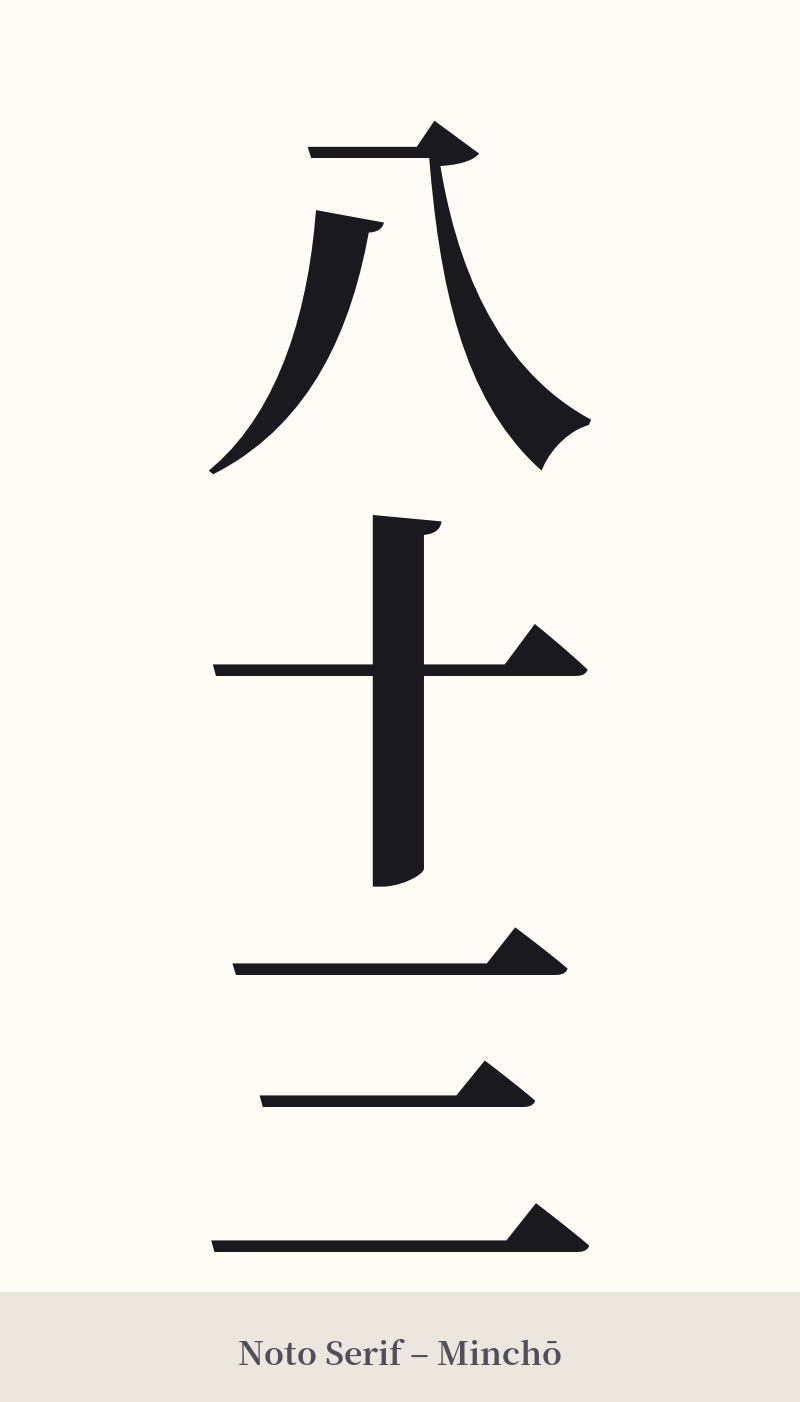
The same kanji can look dramatically different depending on the calligraphy style. Choose a font that matches the mood you want for your tattoo or design.
🎨 Tattoo Suitability
📐 Tattoo Design Guide
For a tattoo of 八十三, the simple elegance of the characters should be the focus. The three-character structure lends itself well to a vertical arrangement, which is the traditional direction for Japanese writing.
– Placement: A vertical design would look striking along the spine, forearm, or calf. A horizontal layout could work across the chest, upper back, or below the collarbone.
– Font Style: A classic 'Kaisho' (block script) font will provide clarity and a timeless, formal look. For a more artistic and fluid feel, a 'Gyosho' (semi-cursive) script can connect the characters gracefully, though care must be taken to ensure legibility. A minimalist, thin-lined style can also be very effective, emphasizing the simple geometry of the kanji.
– Visual Tips: Consider the spacing between the characters. In a vertical design, ensure even spacing to create a balanced column. You could also incorporate this kanji as a small detail within a larger piece that explains its personal significance—for example, as a date on a scroll or a label on an object meaningful to you.
Comments