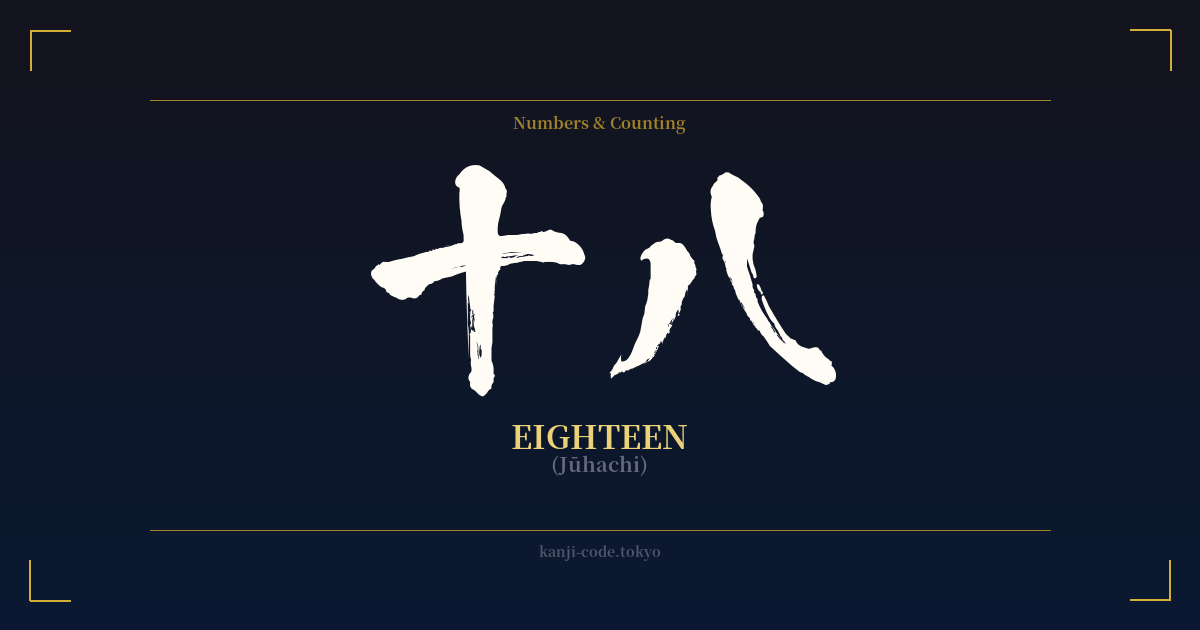
✍️ 十八 (Jūhachi) — Cultural Context
At first glance, 十八 (Jūhachi) is simply the Japanese word for the number eighteen, constructed by combining the characters for 'ten' (十) and 'eight' (八). While correct, this literal interpretation misses the rich cultural tapestry woven into this seemingly ordinary number.
Its most famous and significant association is with the world of Kabuki, the classical Japanese dance-drama. The term 'Kabuki Jūhachiban' (歌舞伎十八番) refers to a collection of eighteen iconic plays established by the celebrated Ichikawa Danjūrō line of actors. These plays were considered the pinnacle of their repertoire, showcasing the very best of their acting style and dramatic power. They were the family's signature works, their greatest hits.
This historical context gave birth to a modern Japanese expression: 'ohako' (おはこ). While written with different characters, the pronunciation is an alternative reading of 十八. A person's 'ohako' is their specialty, their signature skill, the one thing they do better than anything else—just as the Jūhachiban were the signature plays of the Ichikawa clan. If a friend's 'ohako' at karaoke is a specific song, it means that's their go-to, show-stopping performance. This elevates 十八 from a mere number to a symbol of mastery and one's personal forte.
Beyond the stage, the number eighteen also holds significance as a milestone of maturity. In 2022, Japan officially lowered its age of majority from 20 to 18. This change aligned Japan with many other nations and granted 18-year-olds new rights, such as entering contracts without parental consent. While the traditional Coming of Age Day ceremony often still centers around the age of 20, the number 18 is now legally recognized as the threshold of adulthood, adding a contemporary layer of meaning to the word.
Therefore, 十八 is not just a numerical value. It is a concept steeped in artistic tradition, a modern idiom for personal expertise, and a legal marker of adulthood. It represents a collection of masterworks, the peak of one's ability, and the transition into a new phase of life.
🖌️ Font Styles for 十八
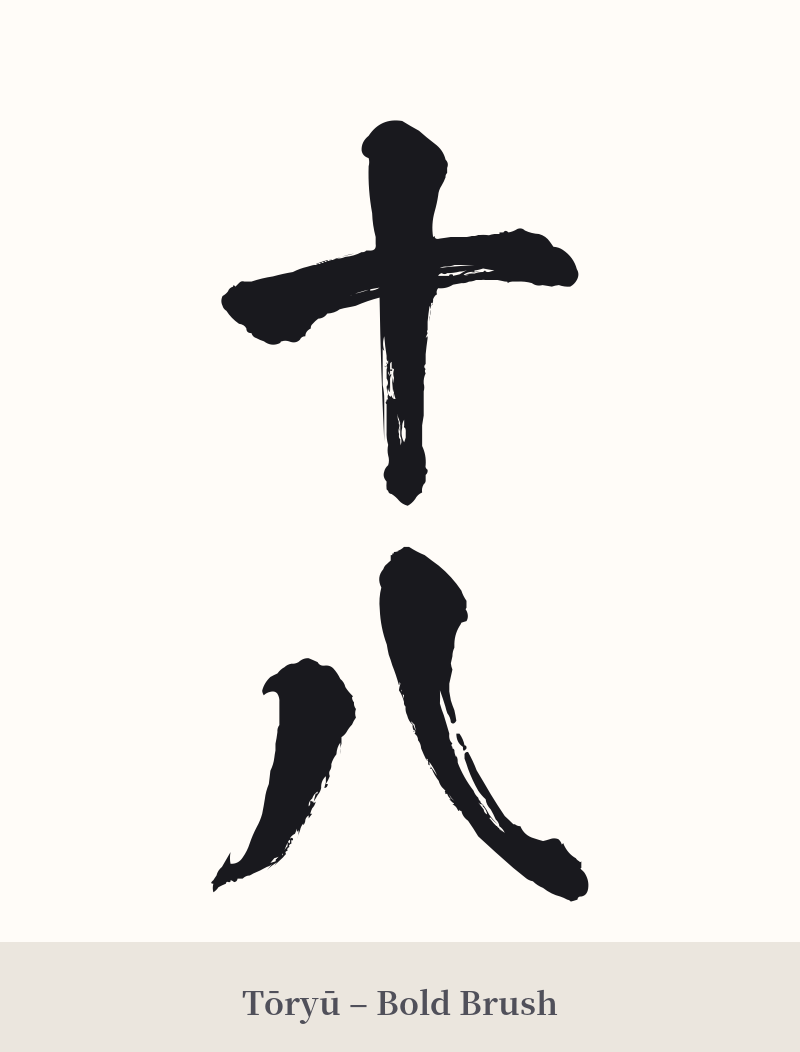
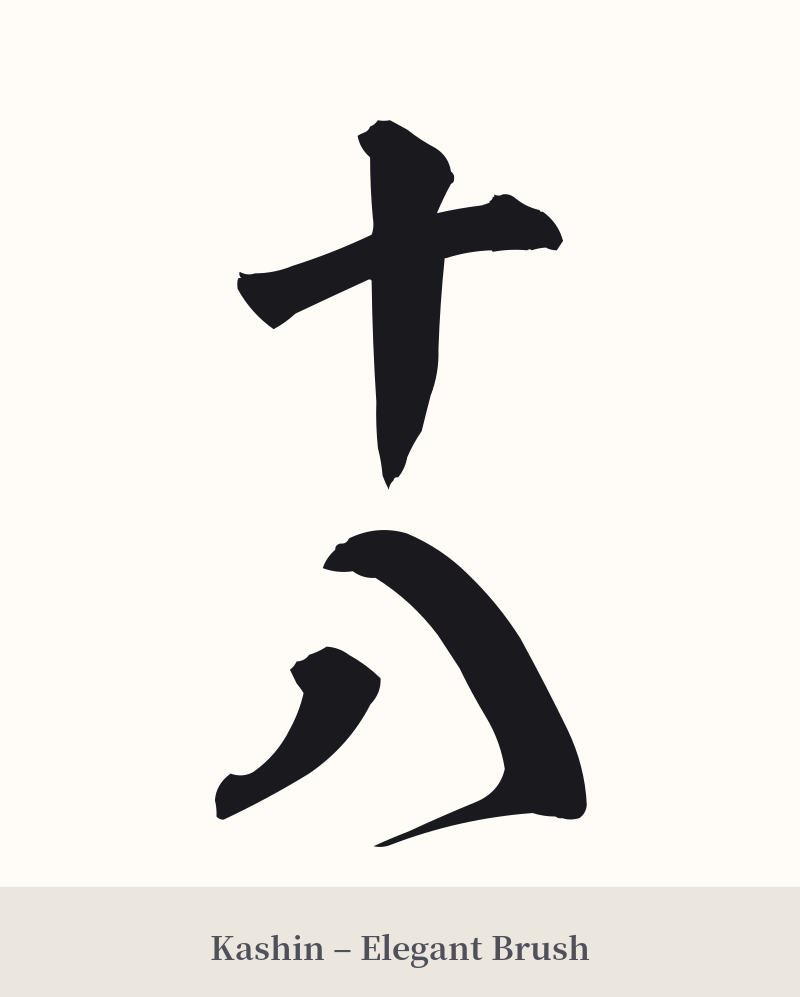
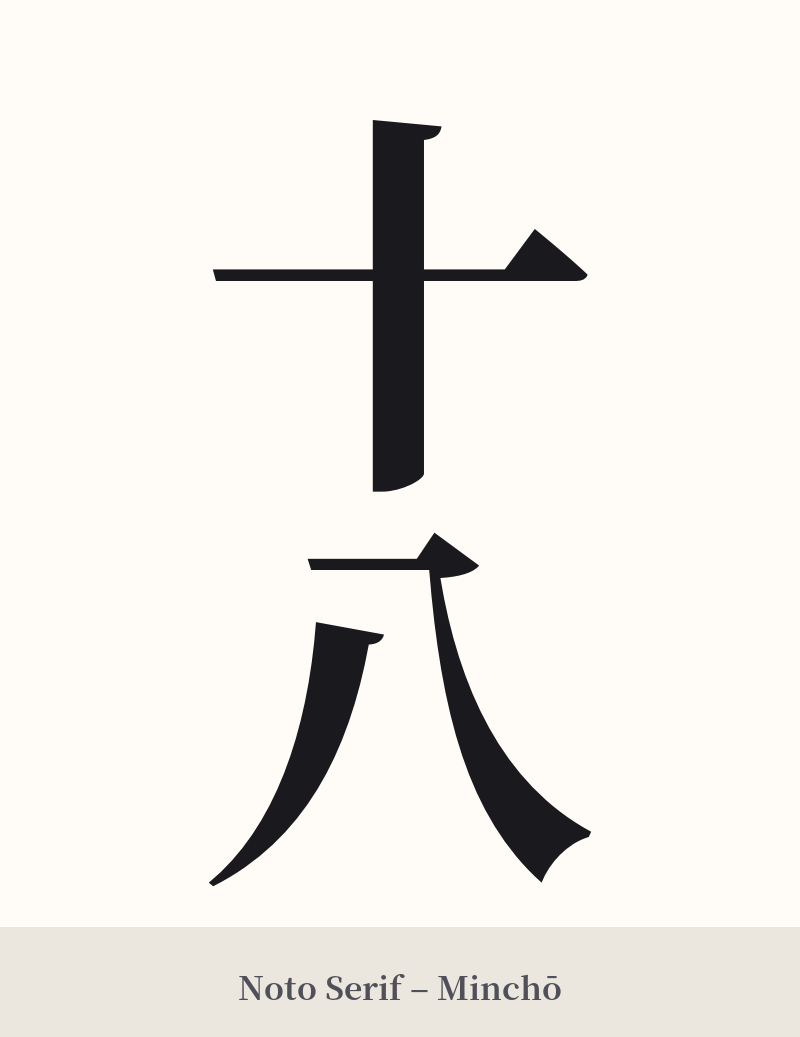
The same kanji can look dramatically different depending on the calligraphy style. Choose a font that matches the mood you want for your tattoo or design.
🎨 Tattoo Suitability
📐 Tattoo Design Guide
The beauty of 十八 in a tattoo lies in its stark simplicity. Its minimalist nature lends itself to clean, deliberate design choices.
– Placement: This kanji works exceptionally well in vertical arrangements (十 placed above 八). Consider placements that accentuate this verticality, such as the forearm, the spine, the back of the calf, or along the ribs.
– Font Style: Avoid generic computer fonts, which can make the characters look sterile. A bold, blocky Kaisho (楷書) script will give it a strong, foundational feel. For a more artistic and fluid look, a Gyōsho (行書) or even a highly stylized Sōsho (草書) script can transform the simple strokes into a dynamic piece of art.
– Visual Tips: To add contextual depth, consider incorporating a subtle element related to its meaning. A small, stylized kabuki mask, a fan motif, or even a single red brushstroke could be placed near the kanji. This can help guide the viewer towards the intended cultural meaning beyond just the number itself.
Comments