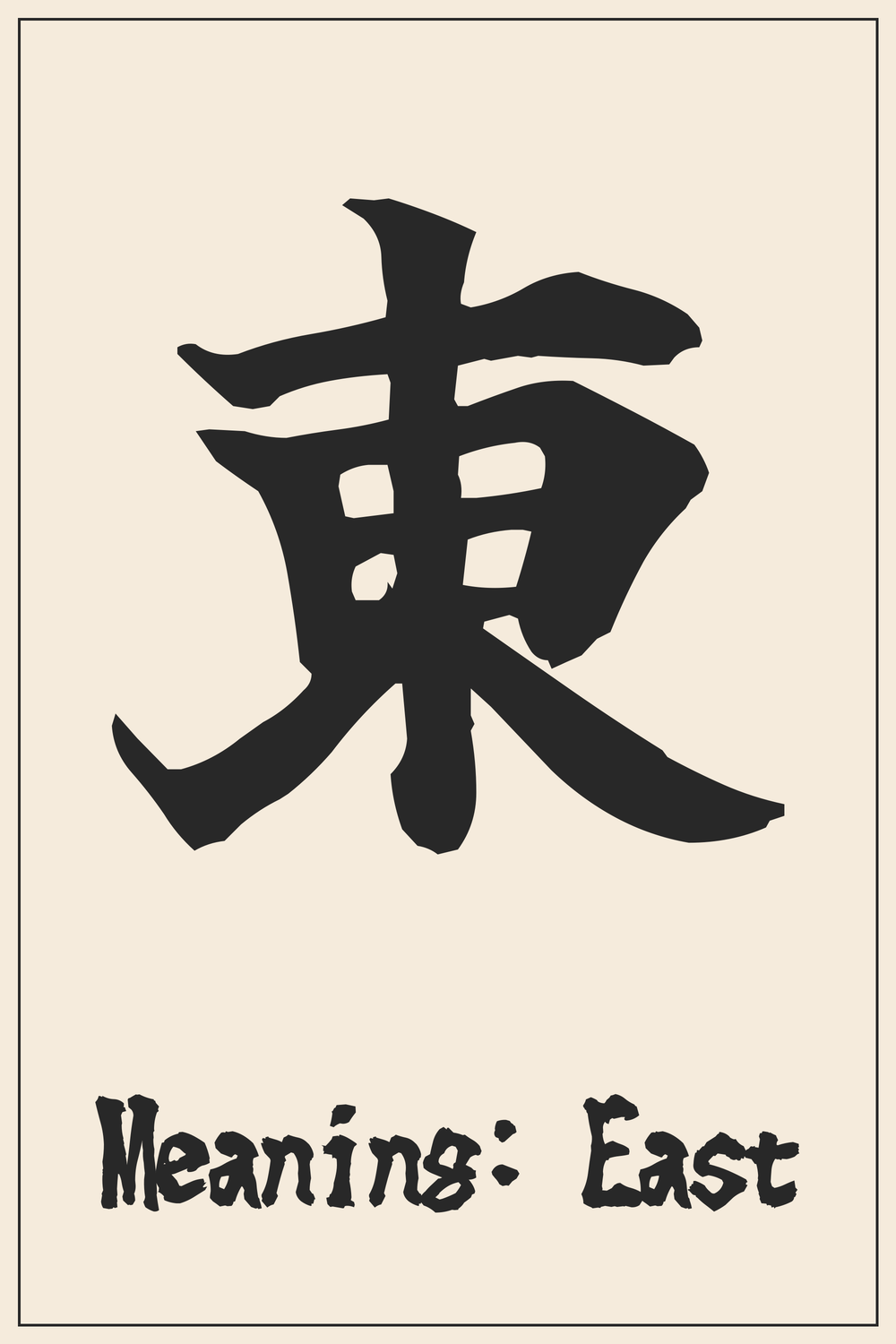
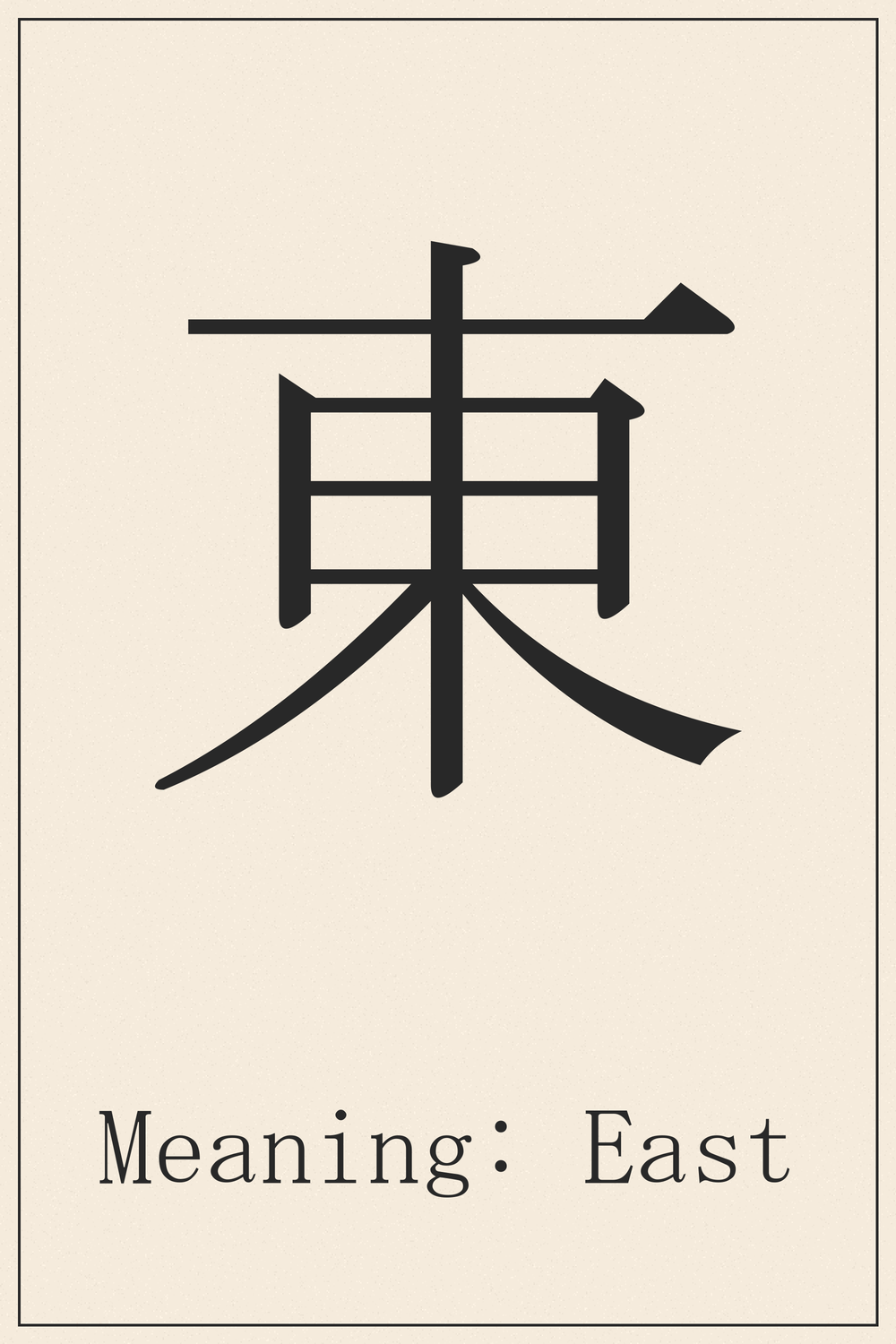
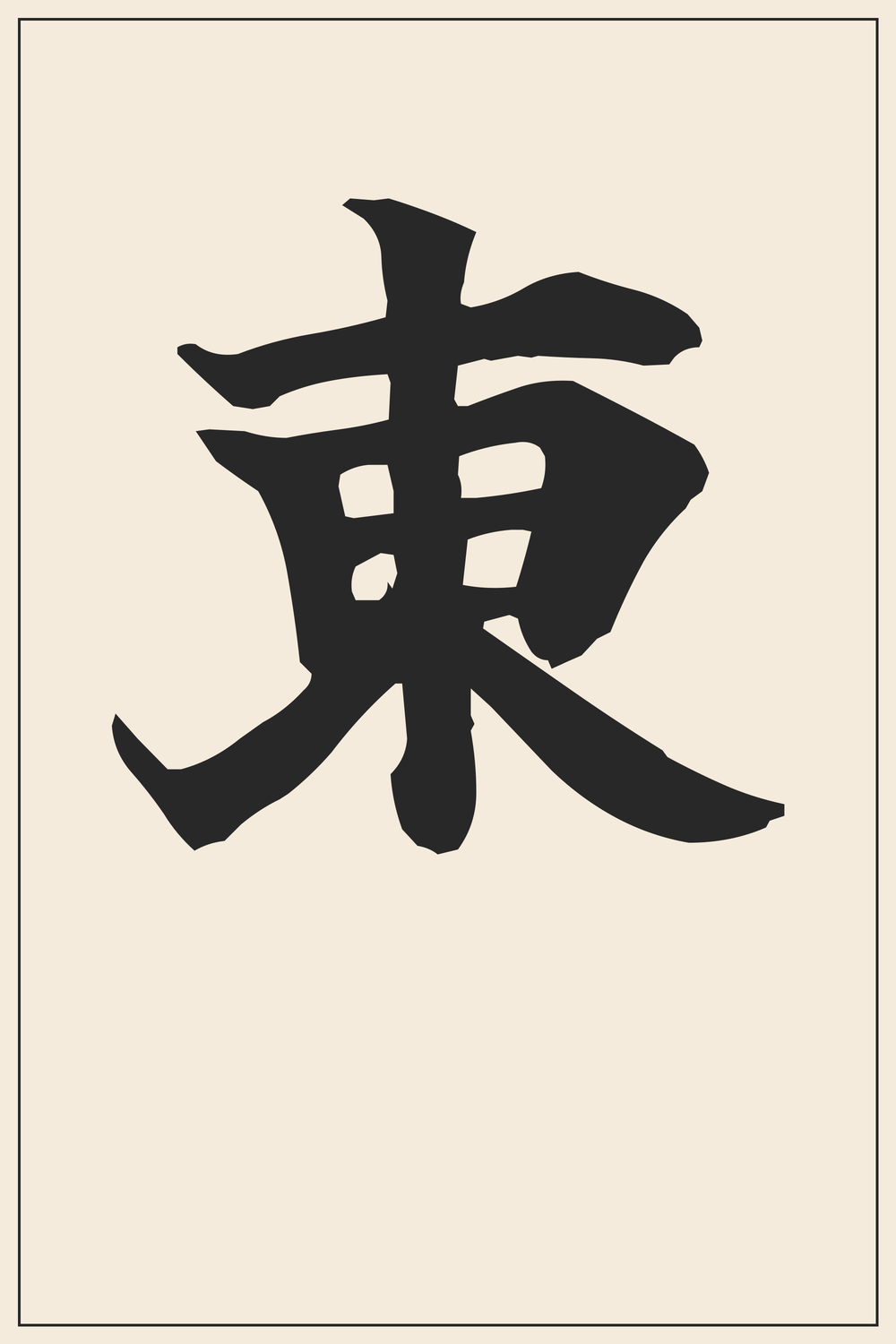
The Kanji 東, representing ‘East,’ embodies the timeless cycle of dawn and renewal. It signifies not just a geographical direction but also the symbolic origin of light and new beginnings.
The atmosphere of a Kanji character changes dramatically depending on the font style. A character that looks elegant in a brush style might look bold and modern in a different font.
Recommendation:
Since a tattoo is permanent, we strongly recommend comparing various font styles beyond what is shown here. Use our designs as a trusted reference for the correct structure, but feel free to explore different artistic variations to find the perfect match for your vision.
The Deep Meaning Behind 東
The character 東 is a pictographic representation, anciently depicting the sun (日) rising behind a tree (木). This evocative image directly conveys the moment of dawn when the sun emerges from the eastern horizon, giving birth to a new day.
In Japanese culture, ‘East’ holds profound significance, notably in the phrase ‘Nihon’ (日本), meaning ‘the origin of the sun’ or ‘Land of the Rising Sun.’ It is often associated with beginnings, growth, and the onset of new eras, symbolizing hope and vitality.
Kanji Breakdown
The Kanji 東 is a unified symbol, but its structure reveals its ancient roots, blending two fundamental elements to convey its meaning.
Meaning: Tree. This radical depicts a tree, fundamental to the landscape and life, symbolizing growth and stability.
Meaning: Sun, Day. Representing the sun, this component signifies light, warmth, and the passage of time. When combined with ‘tree,’ it paints the picture of sunrise.
Conclusion
The Kanji 東 is far more than a simple compass direction; it encapsulates the essence of the sunrise, a universal symbol of hope, new beginnings, and the eternal cycle of nature. Its elegant form connects deeply to ancient origins and cultural identity.
Choosing 東 for a tattoo is to embrace a powerful emblem of renewal and the enduring spirit of the East. It serves as a constant reminder of light, potential, and the promising start of each new day.
Comments