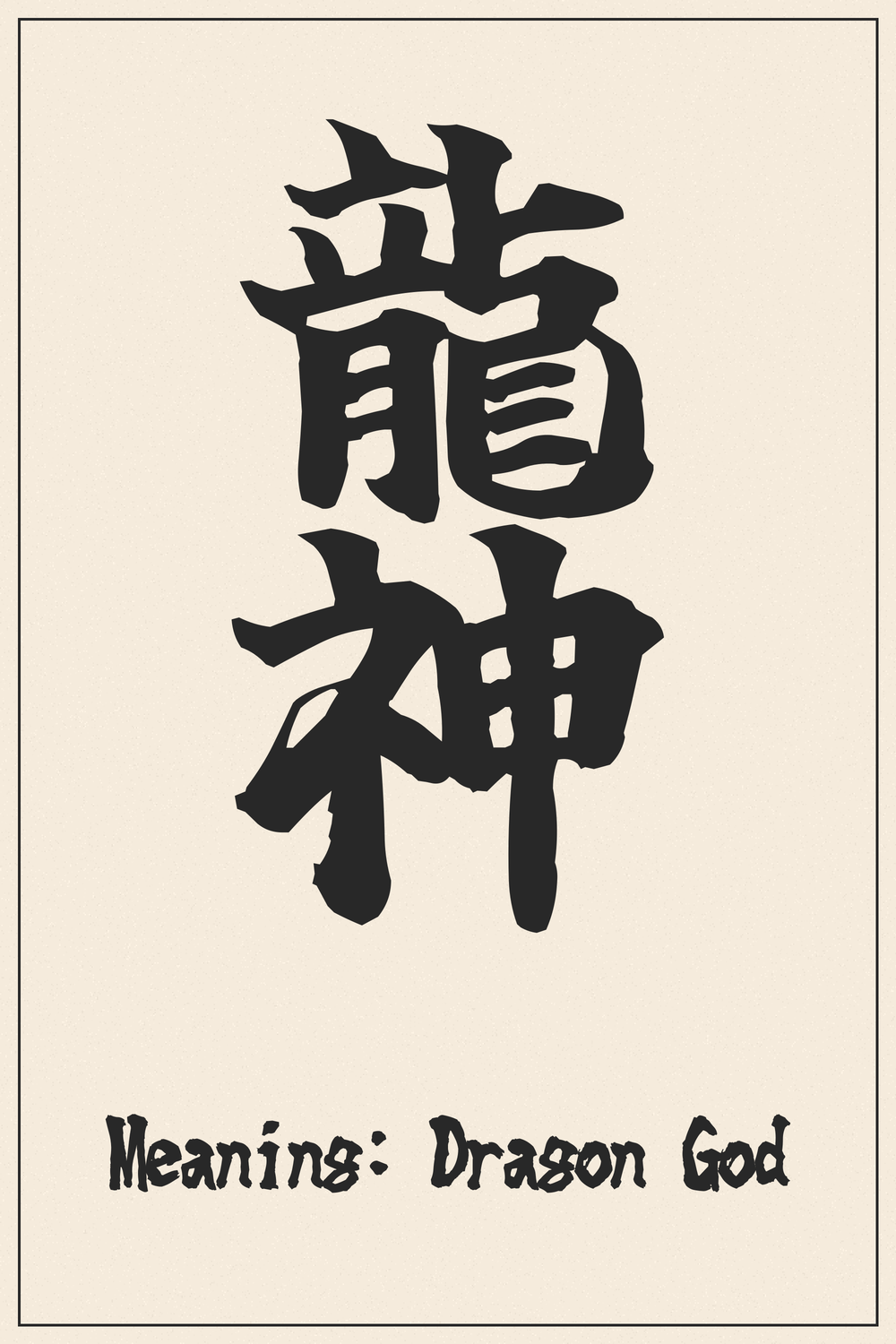
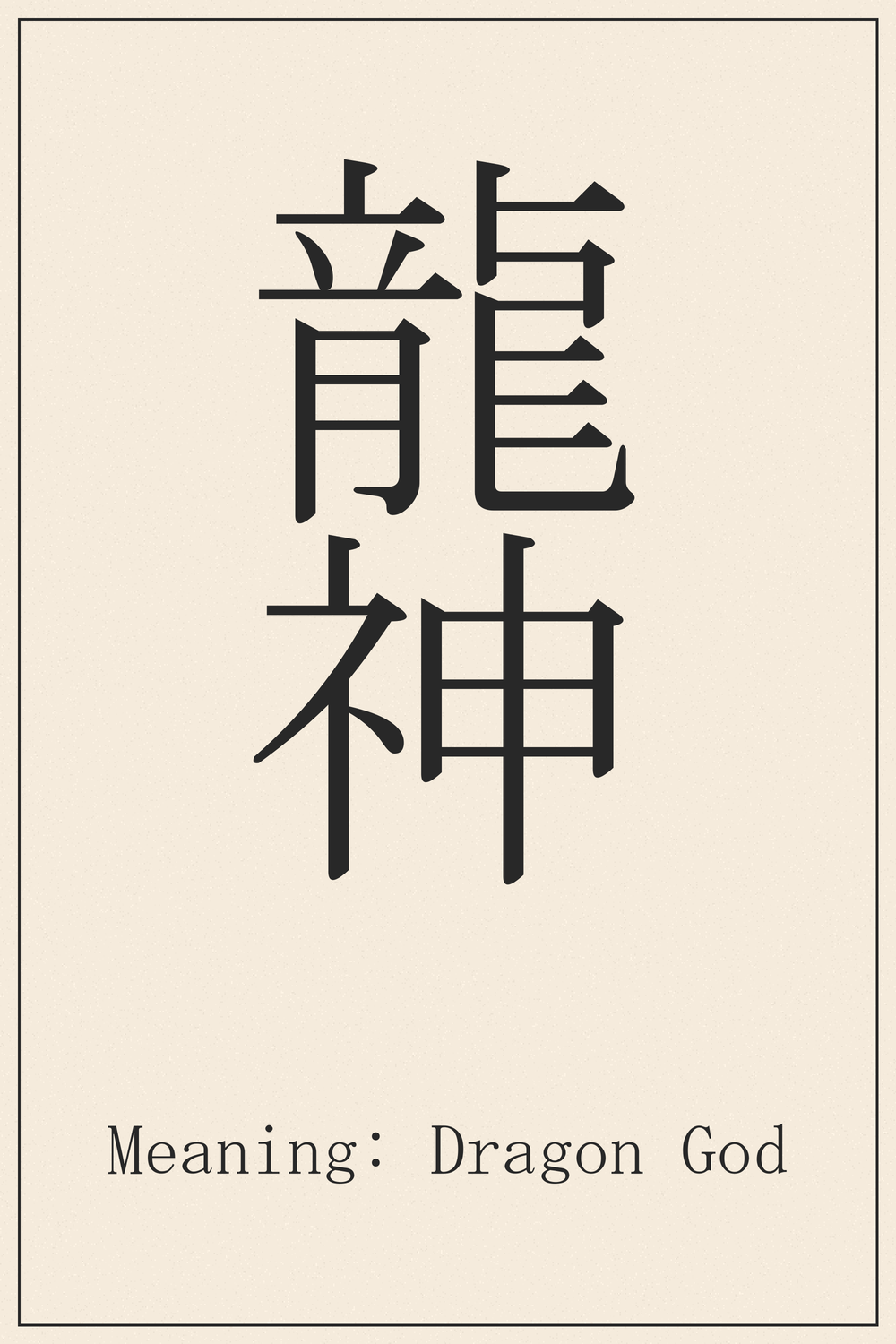
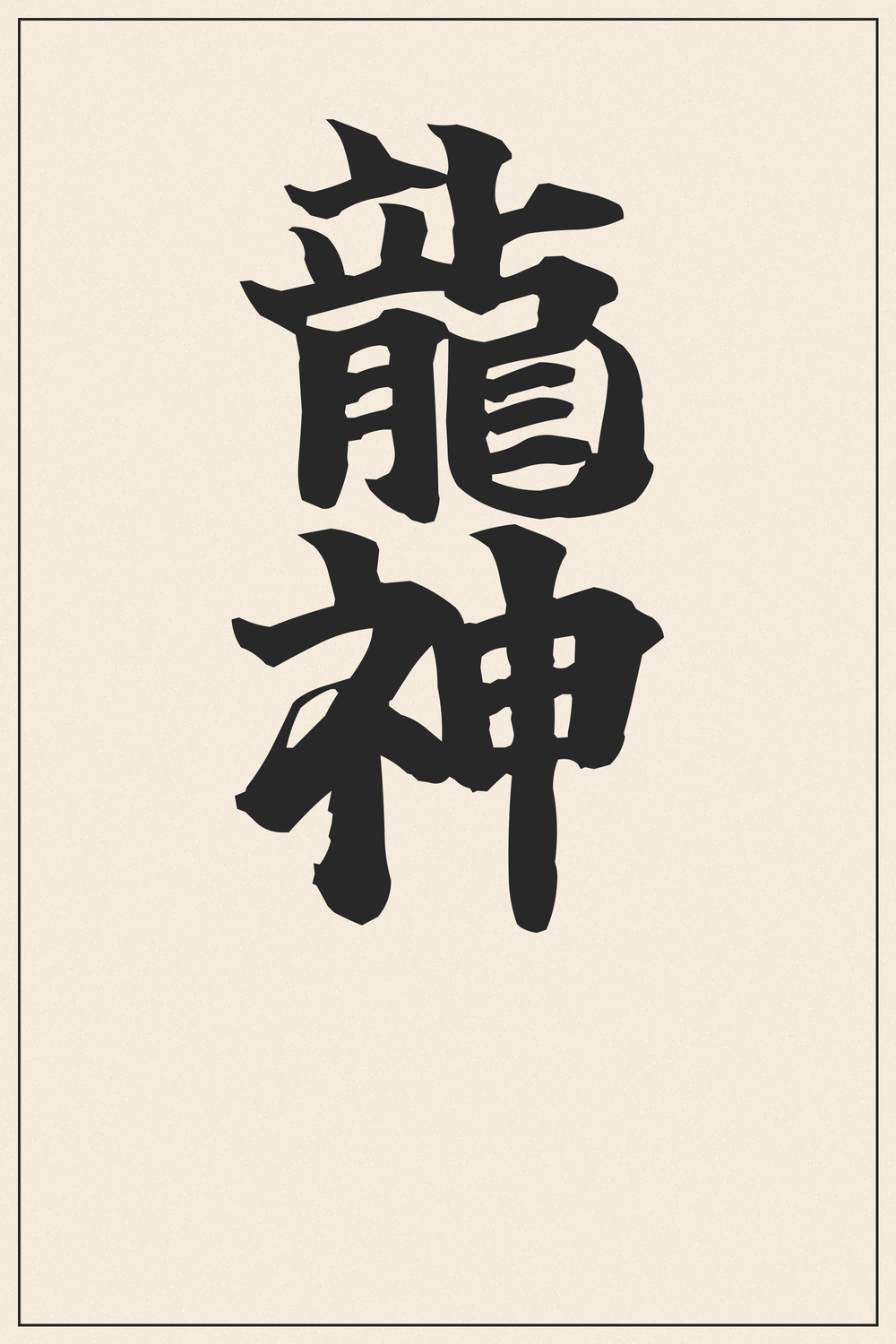
The Kanji 龍神 (Ryujin) embodies the majestic power and divine presence of the Dragon God, a revered figure in Japanese mythology. This symbol invokes ancient reverence for nature’s forces and the potent guardianship of mythical beings.
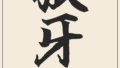
The atmosphere of a Kanji character changes dramatically depending on the font style. A character that looks elegant in a brush style might look bold and modern in a different font.
Recommendation:
Since a tattoo is permanent, we strongly recommend comparing various font styles beyond what is shown here. Use our designs as a trusted reference for the correct structure, but feel free to explore different artistic variations to find the perfect match for your vision.
The Deep Meaning Behind Ryujin
The concept of 龍神, the Dragon God, traces its origins to ancient East Asian mythology, where dragons were seen not merely as beasts but as powerful deities controlling water, weather, and the very forces of nature. In Japan, Ryujin is often associated with the sea and rain, believed to dwell in magnificent underwater palaces.
Ryujin is a prominent figure in Shinto belief, revered as a protector deity, bringing both blessings of rain for bountiful harvests and acting as a guardian of the seas. Legends abound with tales of Ryujin’s benevolence and formidable power, making it a symbol of both destructive and creative natural forces.
Kanji Breakdown
Delving into the individual Kanji characters of 龍神 reveals layers of ancient symbolism and cultural significance.
Dragon: This character depicts a stylized image of a dragon, with its powerful head, flowing mane, and coiled body. It embodies mythical power, wisdom, and auspicious fortune across East Asian cultures.
God, Deity, Spirit: Composed of 示 (altar/sacred) and 申 (to state/extend), suggesting a divine entity revealing itself. It represents a spiritual being, a deity, or the sacred essence of something.
Conclusion
Choosing 龍神 for a tattoo signifies a connection to immense power, divine protection, and the profound mysteries of nature. It represents a reverence for ancient myths and the enduring strength of the dragon deity.
Embrace the legacy of Ryujin, a symbol that is not just aesthetically compelling but also resonates with deep cultural and spiritual significance, offering a powerful emblem of guardianship and mystical energy for those who wear it.
Comments