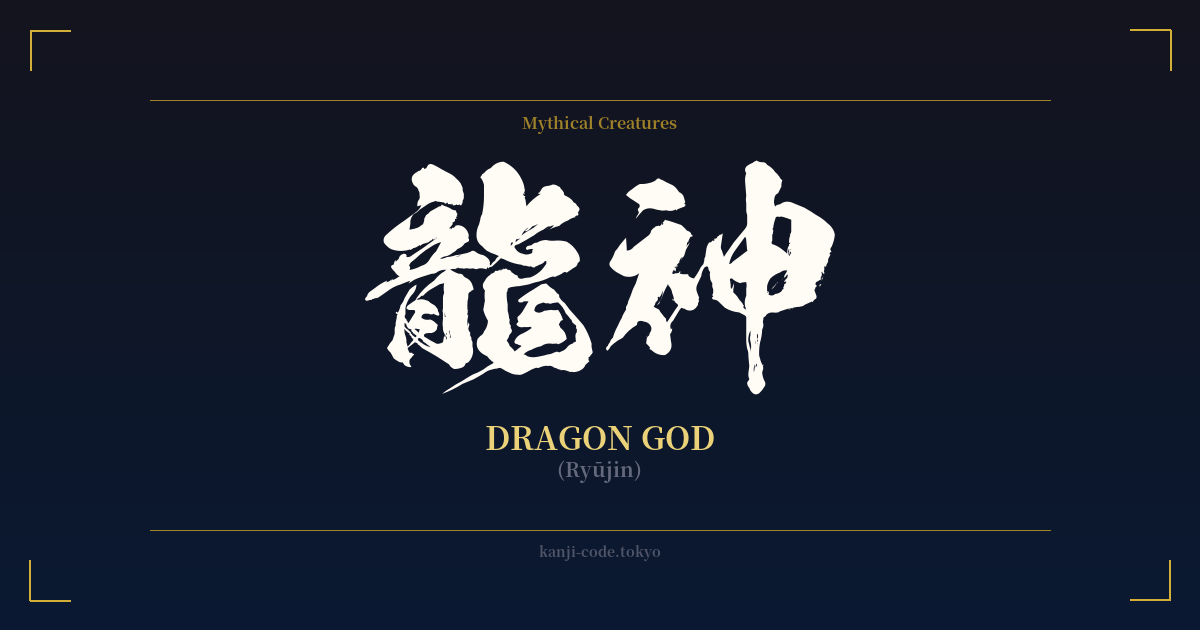
✍️ 龍神 (Ryūjin) — Contexto cultural
Ryūjin (龍神), el Dios Dragón, es una de las deidades más poderosas y veneradas del panteón japonés. Como dios tutelar del mar, preside el vasto e impredecible poder del océano, controlando las mareas, las tormentas y toda la vida marina. Su identidad está profundamente arraigada en la espiritualidad japonesa, fusionando antiguas creencias sintoístas con influencias budistas.
En el sintoísmo, Ryūjin es un kami (dios o espíritu) prominente, una encarnación del poder de la naturaleza. A menudo se encuentran santuarios dedicados a él a lo largo de las costas, donde pescadores y marineros han rezado por un viaje seguro y capturas abundantes durante siglos. No se le considera bueno ni malo, sino una fuerza de la naturaleza misma, capaz de otorgar inmensas bendiciones en forma de lluvia para las cosechas, pero también de desatar devastadores tsunamis y tifones cuando se enfurece.
Uno de los mitos más famosos sobre Ryūjin involucra a la legendaria emperatriz Jingū. Al prepararse para invadir Corea, buscó la ayuda del Dios Dragón. Los mensajeros de Ryūjin le presentaron dos joyas mágicas que controlaban las mareas: la kanju (joya de la marea baja) y la manju (joya de la marea alta). Gracias a ellas, pudo manipular el mar, dejando varada a la flota enemiga y asegurando una victoria decisiva. Esta historia consolidó el papel de Ryūjin como un poderoso protector nacional y un maestro de la estrategia divina.
Se dice que Ryūjin reside en un magnífico palacio bajo las olas, conocido como Ryūgū-jō (竜宮城). Este reino fantástico, construido con coral rojo y blanco, es el hogar de su familia de dragones y una multitud de criaturas marinas. La historia de Urashima Tarō, un joven pescador que es invitado al palacio tras salvar a una tortuga, es uno de los cuentos populares más queridos de Japón. Su estancia en Ryūgū-jō, donde un solo día equivale a un siglo en tierra firme, es una conmovedora historia sobre la pérdida, el tiempo y el misterioso atractivo del reino divino.
Como símbolo, Ryūjin representa el poder supremo, la autoridad sobre el mundo natural y la dualidad de creación y destrucción. Su forma de dragón lo conecta con la sabiduría, la fuerza y la buena fortuna. En Japón, a diferencia de la mitología occidental, los dragones son casi siempre deidades acuáticas benévolas o neutrales, no bestias malévolas que escupen fuego. Elegir a 龍神 significa abrazar este profundo respeto por el poder puro de la naturaleza y la sabiduría ancestral que encierra.
🖌️ Estilos de fuente para 龍神
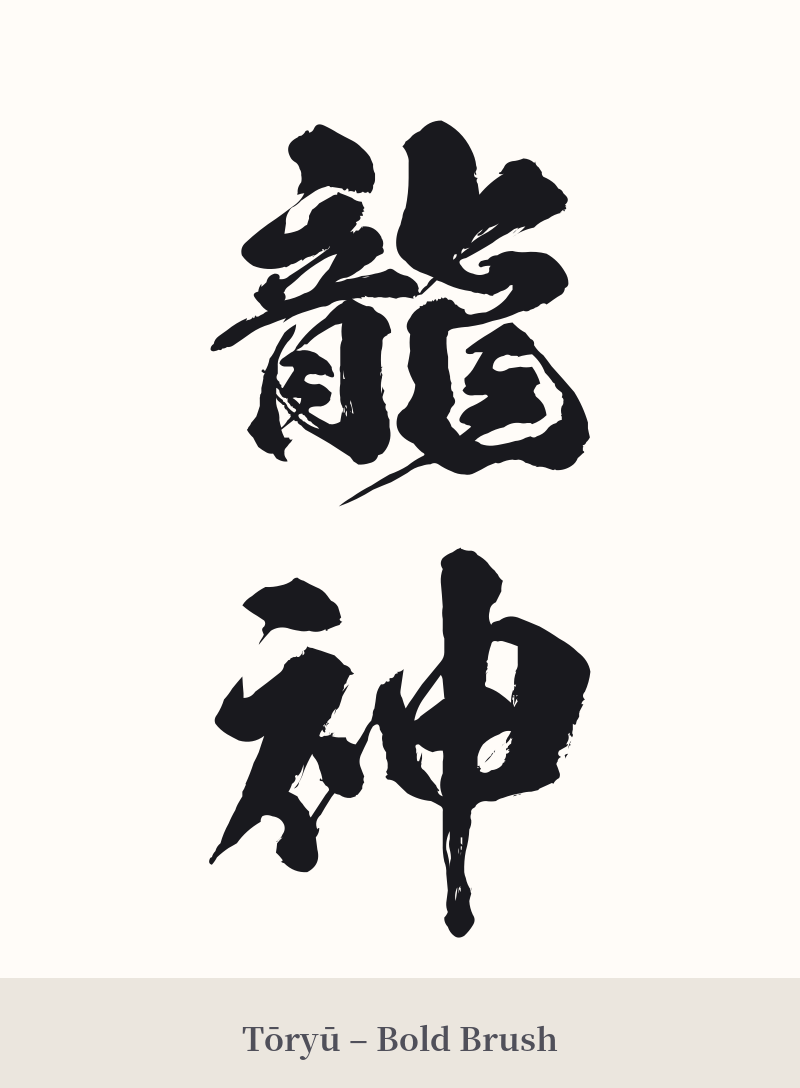
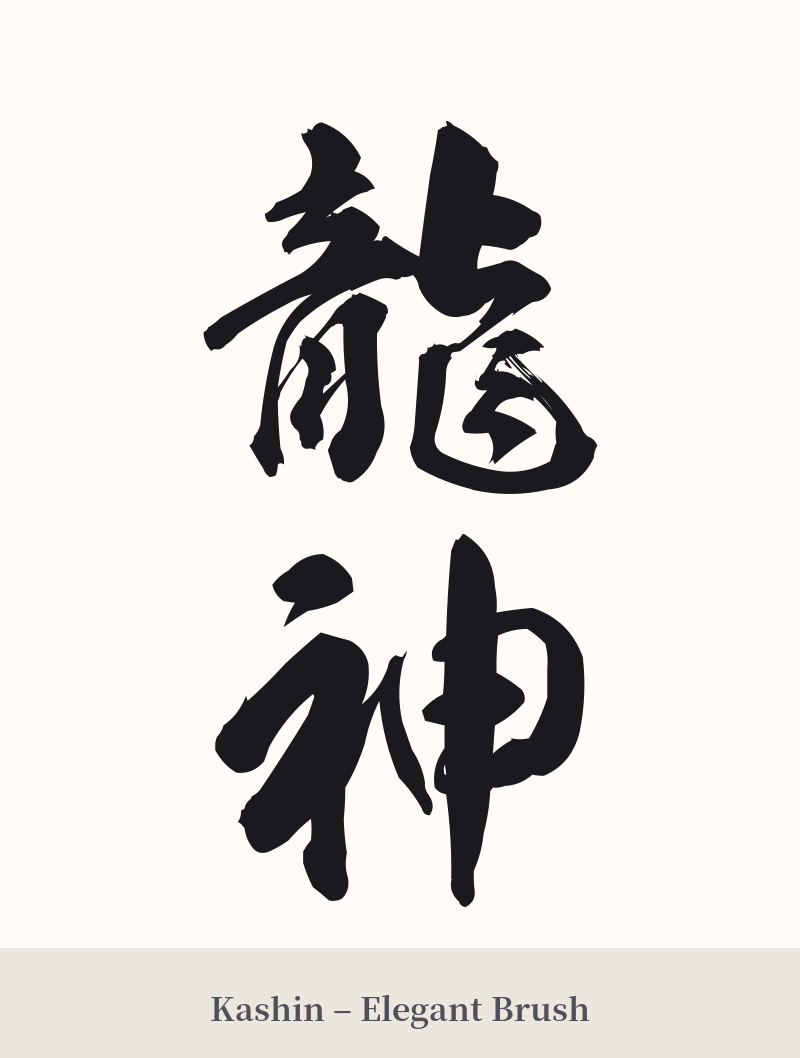
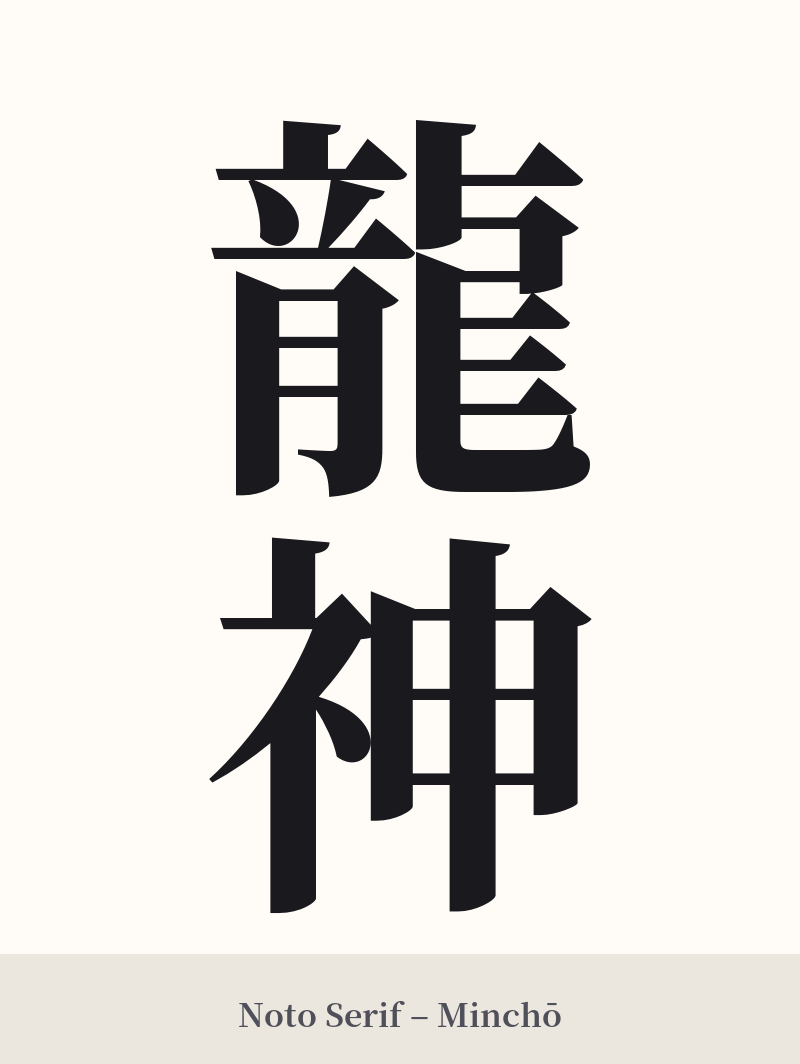
Los mismos caracteres kanji pueden verse muy diferentes según el estilo de caligrafía. Elige una fuente que se ajuste al ambiente que deseas para tu tatuaje o diseño.
🎨 Idoneidad para tatuajes
📐 Guía de diseño de tatuajes
Un tatuaje de 龍神 es una declaración de poder y respeto por la naturaleza. Su diseño debe reflejar esta solemnidad.
– Ubicación: Esta combinación de kanji requiere una ubicación destacada. La espalda es una opción clásica, ya que permite una composición vertical amplia que puede integrarse con un dragón japonés completo (tatsu). Otras opciones interesantes incluyen el antebrazo, el costado del torso o el muslo.
– Estilo de fuente: Para una sensación dinámica y fluida, considere un estilo de caligrafía semicursiva (gyōsho) o cursiva (sōsho). Estos estilos imitan el movimiento del agua y el viento, lo que encaja a la perfección con la naturaleza elemental del Dios Dragón. Para una apariencia más formal y divina, una letra de imprenta audaz y precisa (kaisho) puede transmitir una sensación de autoridad inquebrantable.
Consejos visuales: Se recomienda encarecidamente combinar los kanji con imágenes. Incorpore elementos como olas rompiendo, nubes arremolinadas o relámpagos para enfatizar el dominio de Ryūjin sobre los elementos. La representación de un dragón japonés, caracterizado por su cuerpo serpentino, patas de tres garras y cuernos de ciervo, puede rodear los caracteres o emerger de ellos. Añadir las joyas sagradas de la marea (tama) es otro poderoso detalle simbólico.
Comentarios