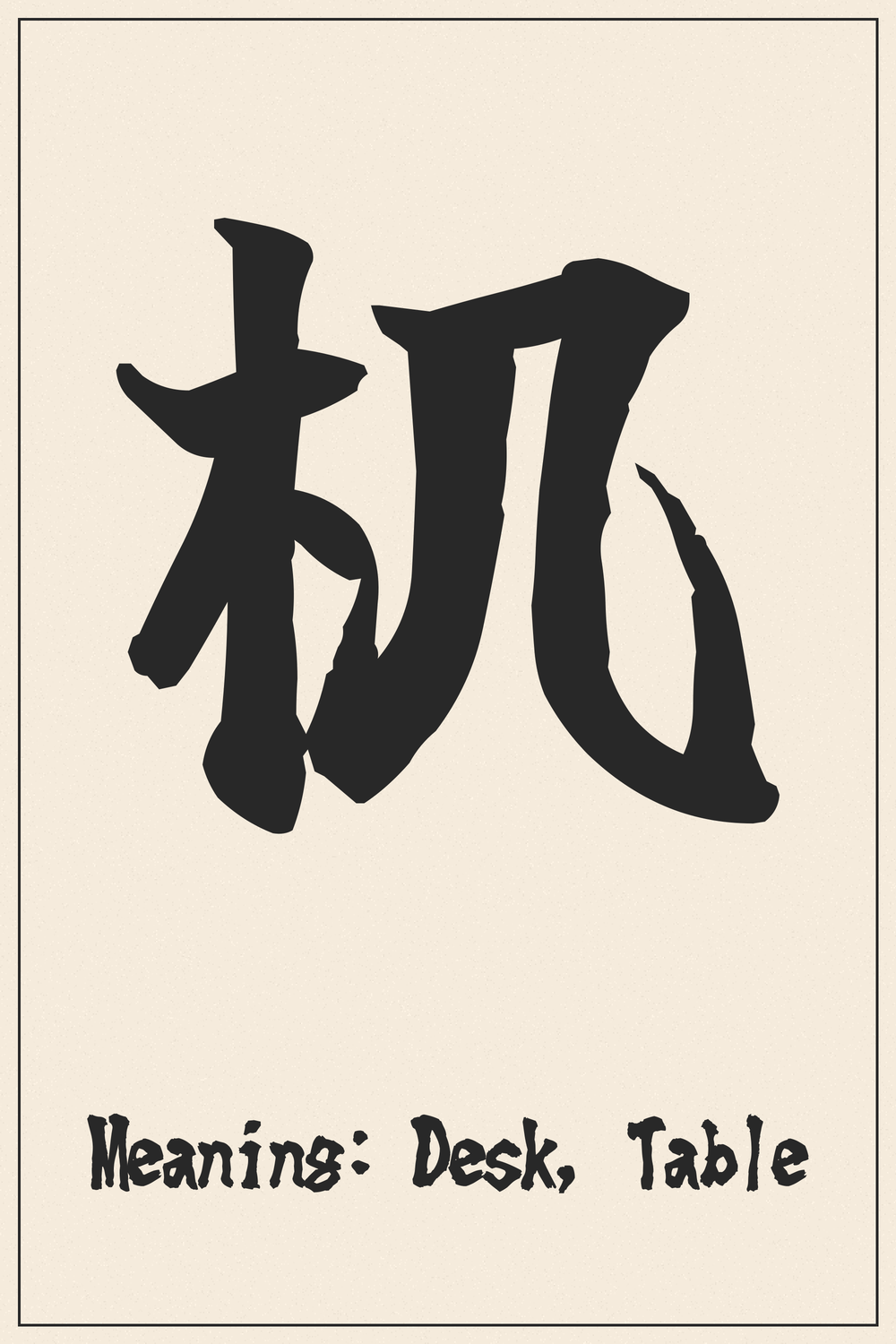
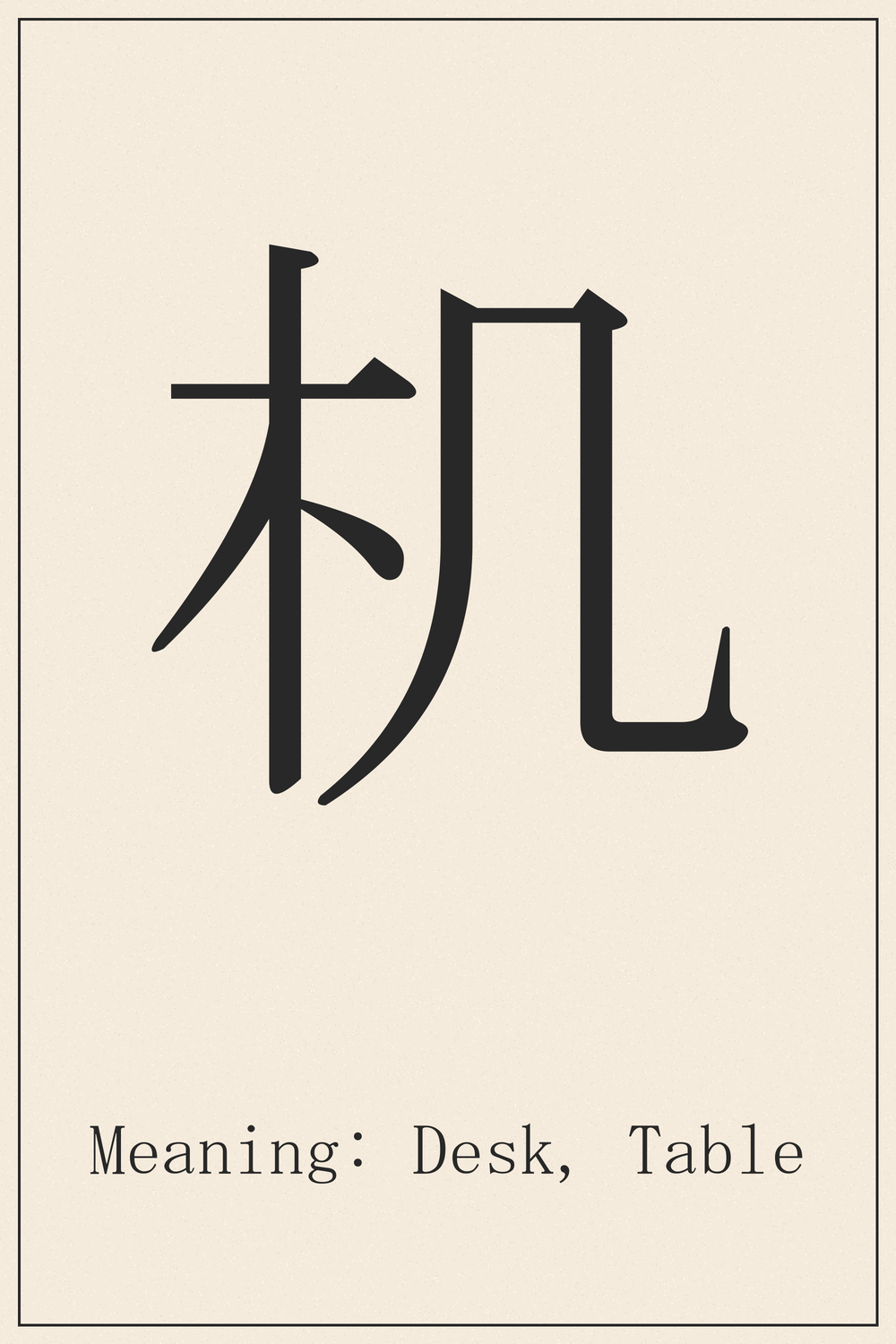
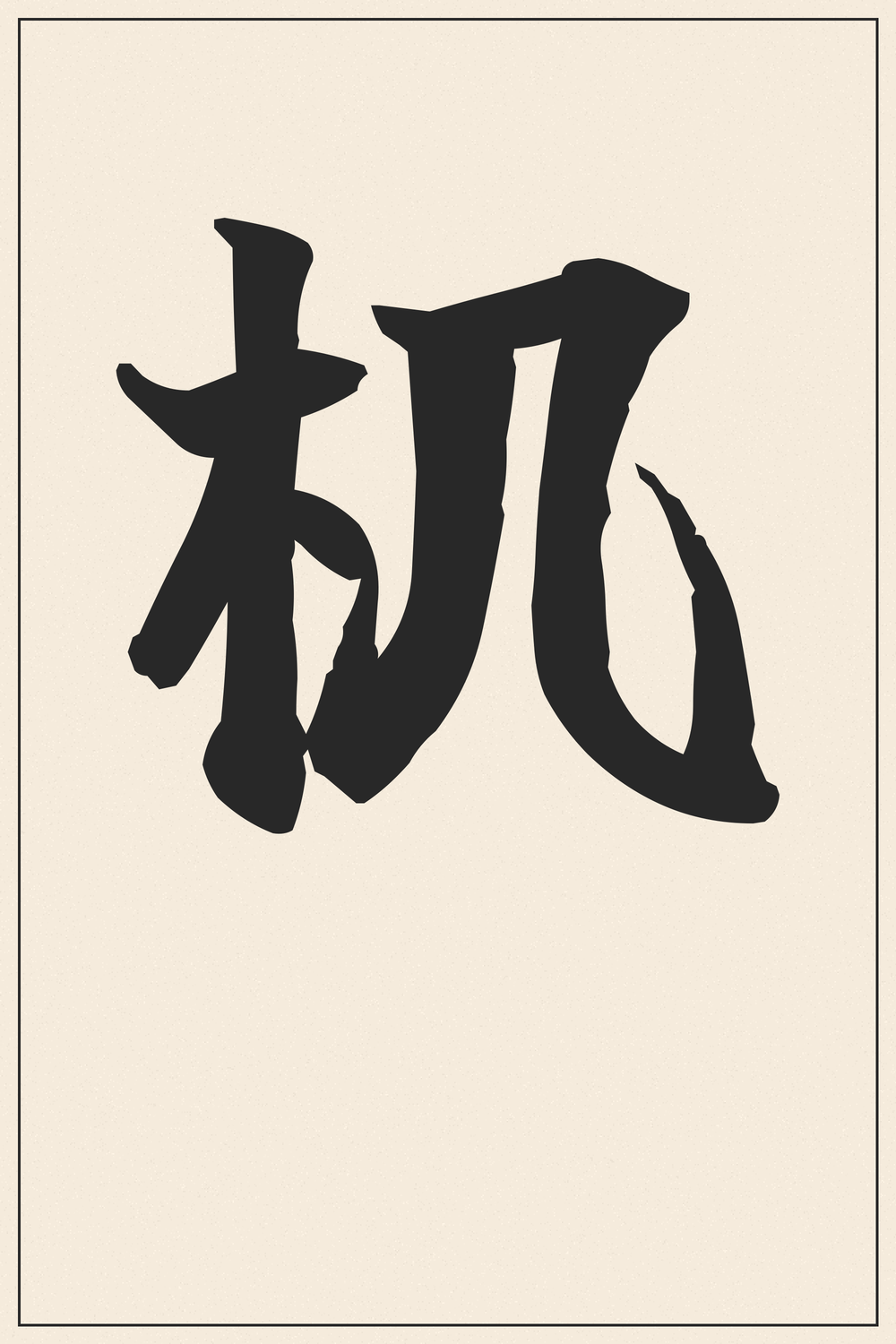
The Kanji 机 represents a fundamental object in daily life: the desk or table. While seemingly simple, it embodies the space of study, work, and quiet contemplation.
The atmosphere of a Kanji character changes dramatically depending on the font style. A character that looks elegant in a brush style might look bold and modern in a different font.
Recommendation:
Since a tattoo is permanent, we strongly recommend comparing various font styles beyond what is shown here. Use our designs as a trusted reference for the correct structure, but feel free to explore different artistic variations to find the perfect match for your vision.
The Deep Meaning Behind 机
The Kanji 机 (tsukue) literally denotes a ‘desk’ or ‘table.’ Its etymological roots suggest a pictogram of a flat surface supported by legs, serving as a basic piece of furniture. In ancient times, such low tables were essential for various activities, from eating to writing.
Culturally, the desk is universally recognized as a space dedicated to work, study, and creative pursuits. In Japanese homes and schools, the desk is a focal point for learning and intellectual development. While not imbued with mystical or philosophical depth, it quietly symbolizes diligence, concentration, and the pursuit of knowledge.
Kanji Breakdown
The character 机 is a single Kanji, but its structure can be analyzed into semantic and phonetic components, revealing its meaning more clearly.
Meaning: This radical means ‘tree’ or ‘wood.’ It serves as a semantic component, indicating that desks are typically made from wood.
Meaning: This component signifies a ‘small table’ or ‘desk.’ It is the primary semantic and phonetic element that gives 机 its core meaning and pronunciation.
Conclusion
The Kanji 机 represents a desk or table, a common and functional piece of furniture. While it serves as a silent partner in intellectual pursuits and daily tasks, its meaning is straightforward and literal, rather than deeply symbolic or abstract.
For those considering a tattoo, 机 might appeal to individuals who value practicality, order, or a simple representation of their workspace or dedication to study. However, for a Kanji tattoo, it lacks the profound cultural or philosophical resonance that often characterizes popular choices, making it a distinctly personal and understated statement rather than a grand declaration.
Comments