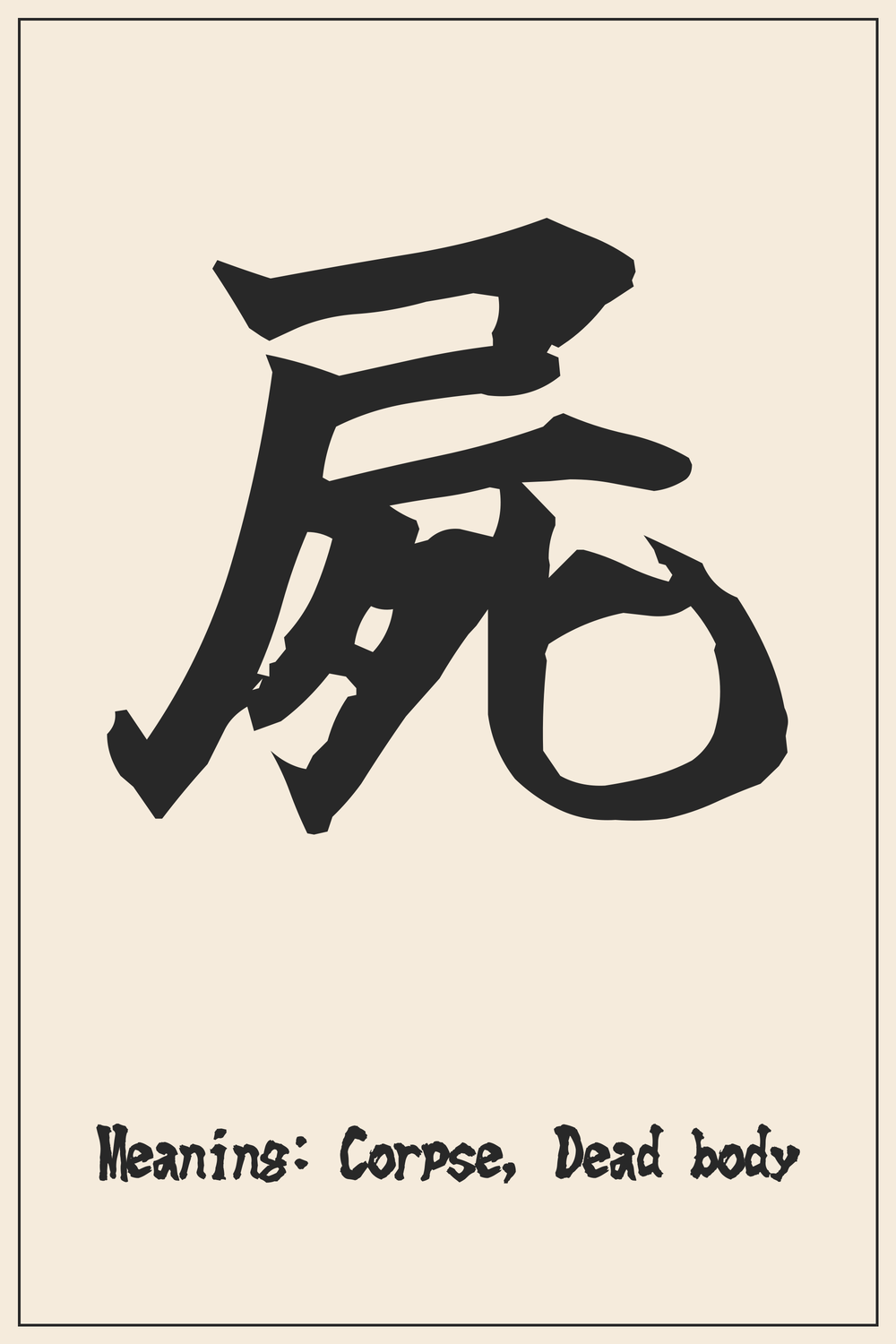
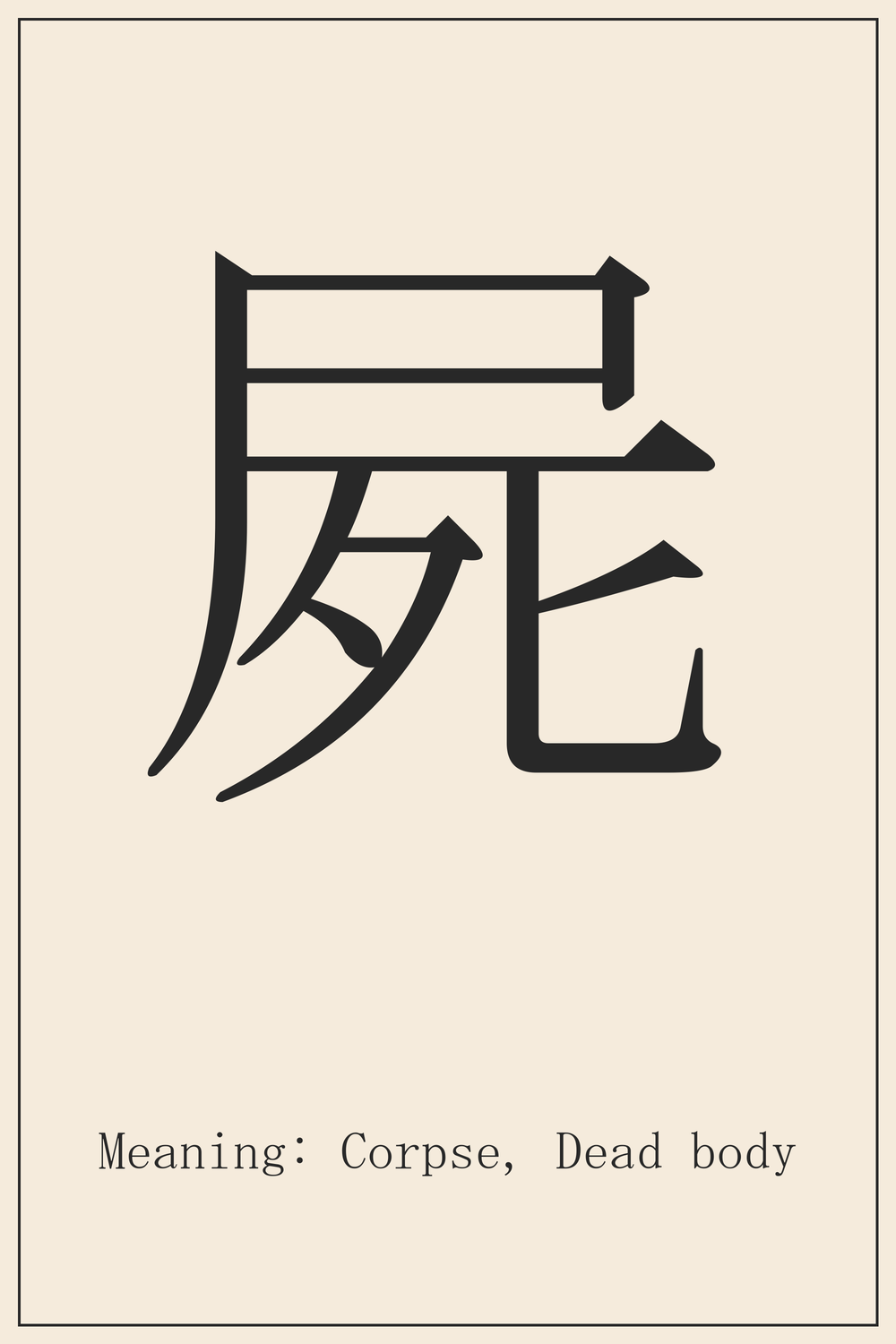
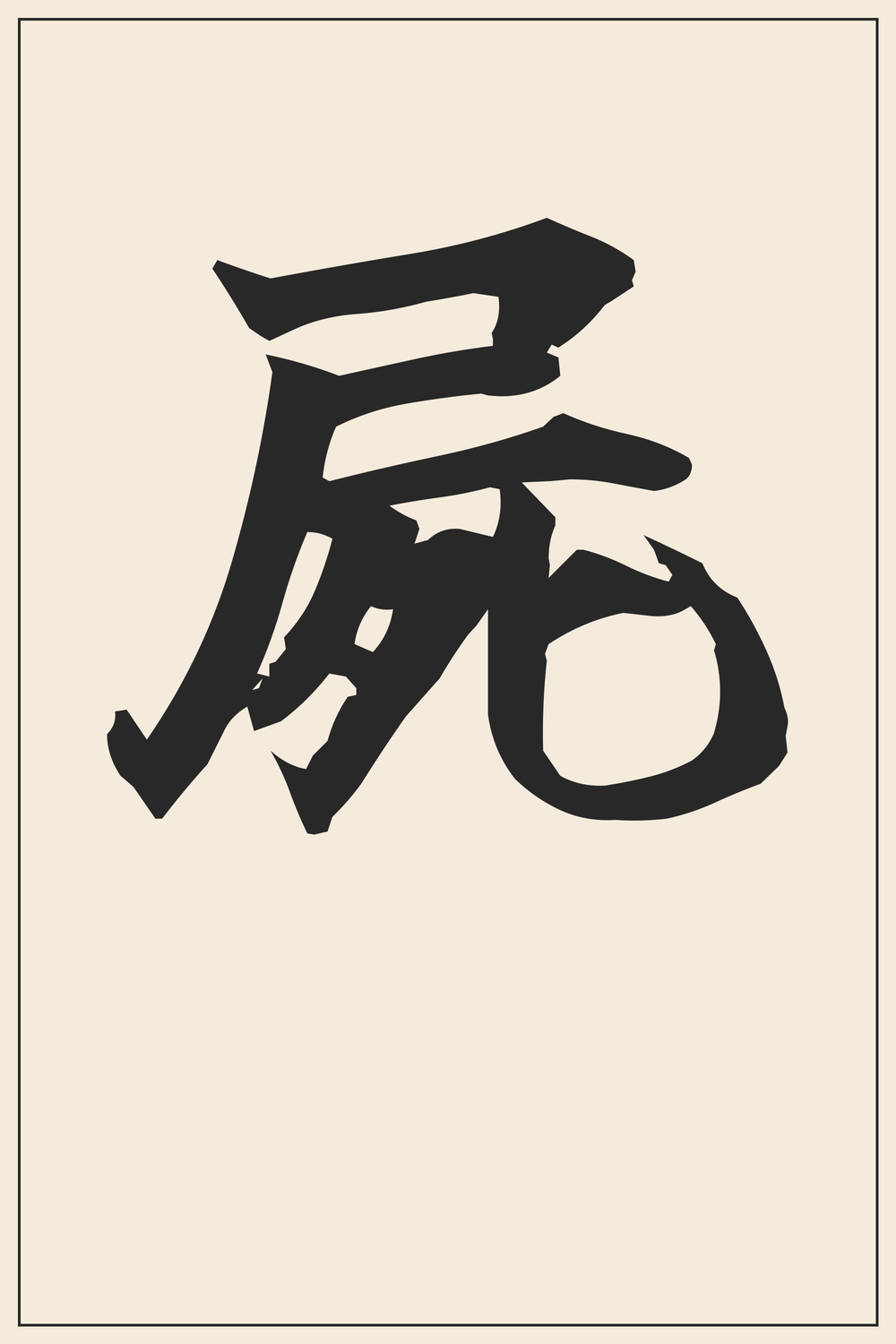
Embodying the stark reality of existence, the Kanji 屍 represents the physical remnants of life. This character offers a profound, albeit somber, reflection on mortality and the cycle of being.
The atmosphere of a Kanji character changes dramatically depending on the font style. A character that looks elegant in a brush style might look bold and modern in a different font.
Recommendation:
Since a tattoo is permanent, we strongly recommend comparing various font styles beyond what is shown here. Use our designs as a trusted reference for the correct structure, but feel free to explore different artistic variations to find the perfect match for your vision.
The Deep Meaning Behind 屍
The character 屍 combines 尸 (corpse/person lying down) and 死 (death). The radical 尸 visually represents a recumbent person or body, while 死 signifies death. Together, they powerfully convey the ultimate state of a lifeless body.
In Japanese culture, the concept of a corpse is often treated with reverence and solemnity, particularly in funerary rites. It underscores the transient nature of life (無常, mujō) but is rarely celebrated as an independent symbol in a positive context.
Kanji Breakdown
The Kanji 屍 (shi/kabane) is composed of two significant components that together convey its meaning of ‘corpse’ or ‘dead body’.
Meaning: This radical represents ‘corpse’ or ‘person lying down’, providing the visual and conceptual base of a body in repose.
Meaning: This component explicitly means ‘death’, directly conveying the state of being deceased and confirming the character’s interpretation as a lifeless body.
Conclusion
The Kanji 屍 profoundly signifies a corpse or dead body, offering a stark reminder of life’s impermanence. It is a symbol that confronts the inevitability of mortality directly.
Choosing 屍 for a tattoo is a powerful statement, signifying a deep engagement with themes of finitude and the physical end of existence. Its unvarnished meaning makes it a distinctive and deeply personal choice for those who resonate with its somber truth.
Comments