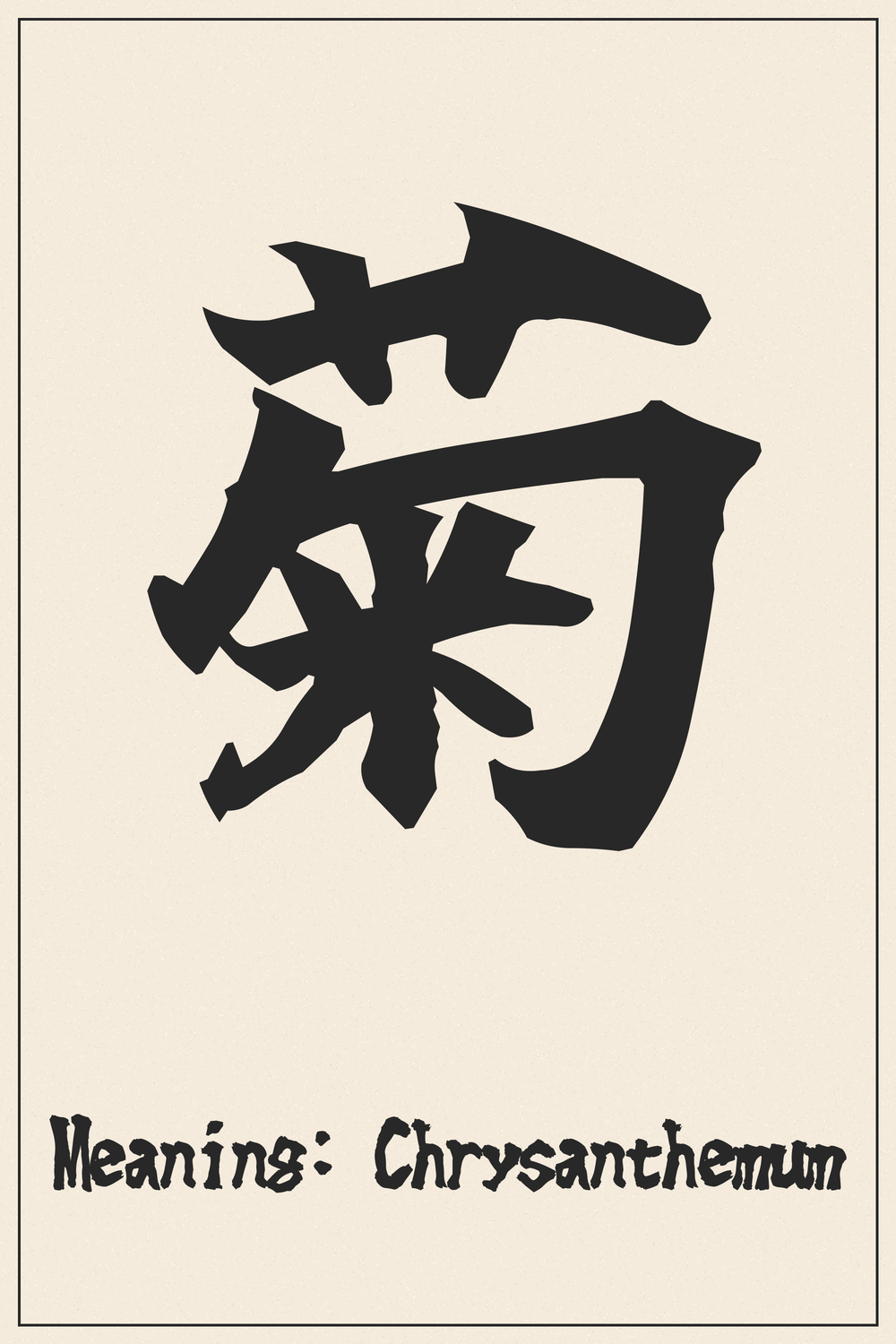
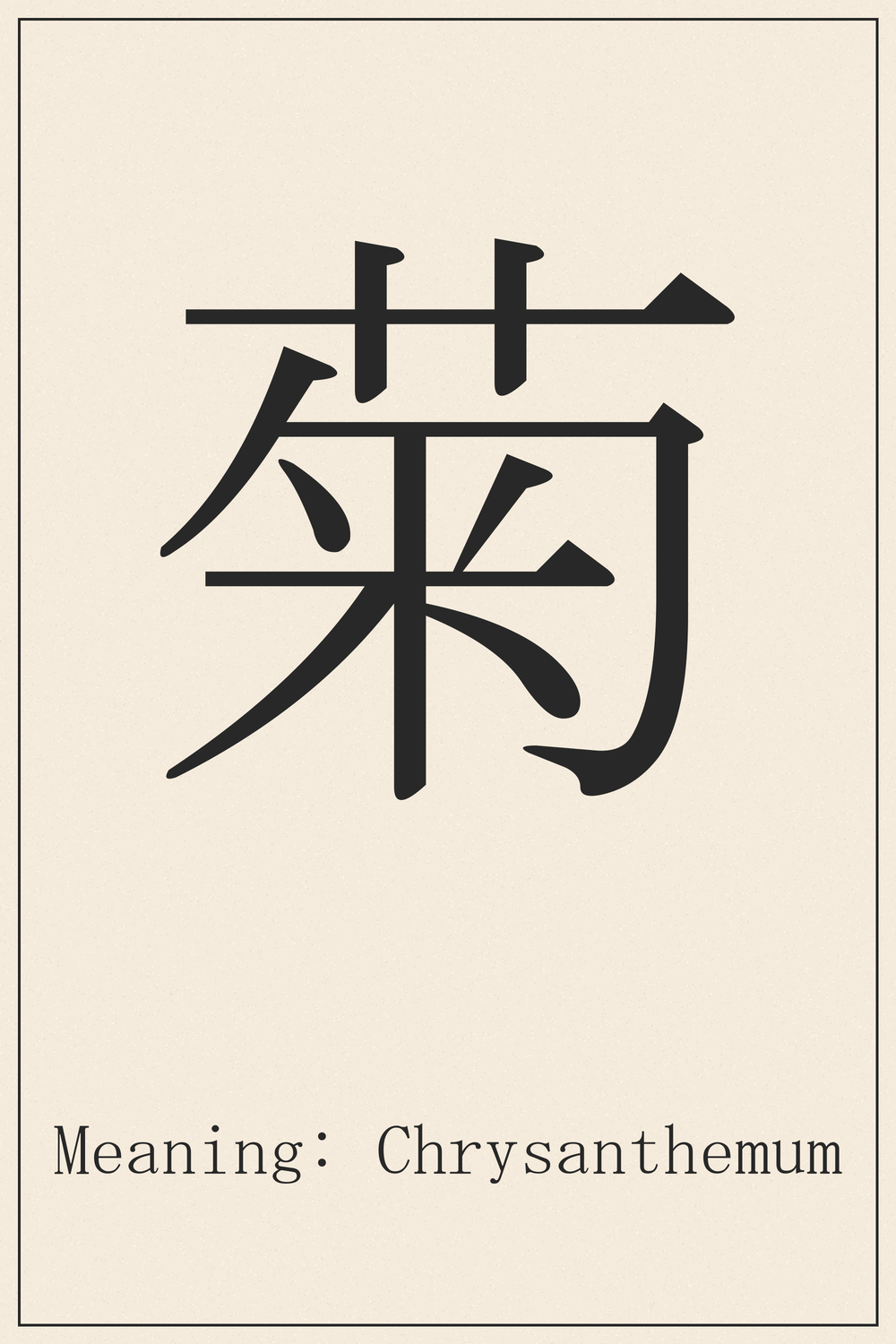
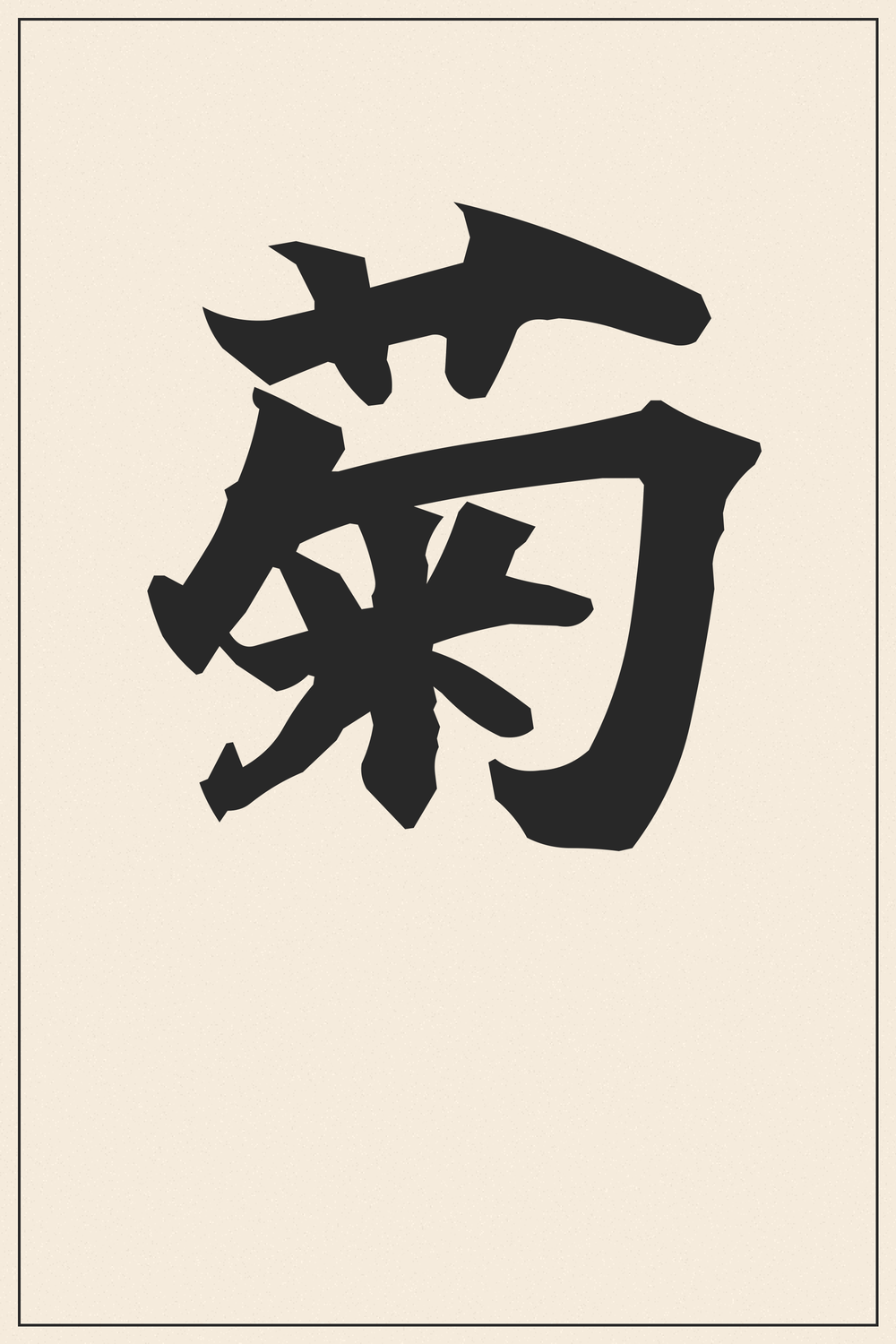
The Kanji 菊 embodies the profound beauty and rich cultural heritage of the chrysanthemum, a flower revered across Japan. It symbolizes nobility, longevity, and the elegance of autumn.
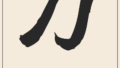
The atmosphere of a Kanji character changes dramatically depending on the font style. A character that looks elegant in a brush style might look bold and modern in a different font.
Recommendation:
Since a tattoo is permanent, we strongly recommend comparing various font styles beyond what is shown here. Use our designs as a trusted reference for the correct structure, but feel free to explore different artistic variations to find the perfect match for your vision.
The Deep Meaning Behind 菊
The Kanji 菊 (kiku) is a phono-semantic compound. Its left radical, 艹 (kusakanmuri), signifies ‘grass’ or ‘plant,’ clearly indicating its botanical nature. The right side, 匊 (kyoku), provides the phonetic element and suggests the idea of “gathering” or “holding in both hands,” possibly alluding to the flower’s clustered petals or its harvest.
In Japan, the chrysanthemum is far more than just a flower; it is the national flower and the emblem of the Imperial Family. It symbolizes longevity, rejuvenation, and nobility, deeply intertwined with the “Chrysanthemum Throne” and the autumnal season. The flower is celebrated in festivals and arts, embodying a rich tapestry of history and tradition.
Kanji Breakdown
The Kanji 菊 is composed of two main elements, each contributing to its meaning and form.
Meaning: Grass / Plant radical. This radical is commonly found in characters related to plants, herbs, and flowers, immediately placing 菊 within the botanical realm. It signifies the organic, growing nature of the chrysanthemum.
Meaning: Phonetic component; also “to gather” or “to hold”. While primarily phonetic, 匊 also carries a nuance of gathering or holding, which could visually connect to the dense, clustered petals of a chrysanthemum, or the act of gathering these revered flowers.
Conclusion
The Kanji 菊 elegantly encapsulates the essence of the chrysanthemum, representing not only a beautiful flower but also profound symbols of longevity, nobility, and cultural heritage. It is a powerful emblem steeped in Japanese history and tradition, particularly its connection to the Imperial family and the rich tapestry of autumn.
Choosing 菊 for a tattoo is to embrace a symbol of deep cultural significance and enduring beauty. Its intricate form and noble associations make it a distinguished choice, a timeless representation of resilience and autumnal elegance.
Comments