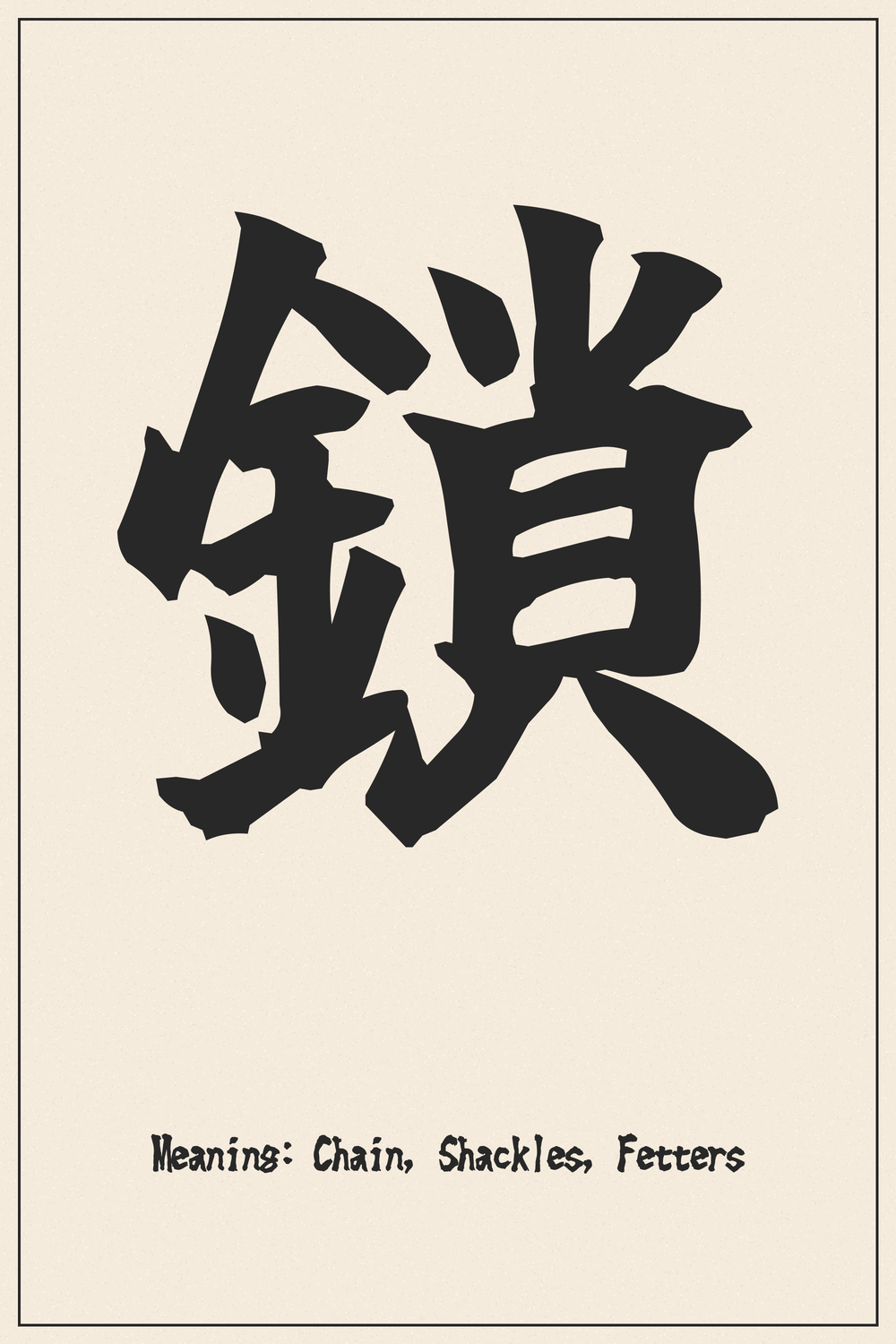
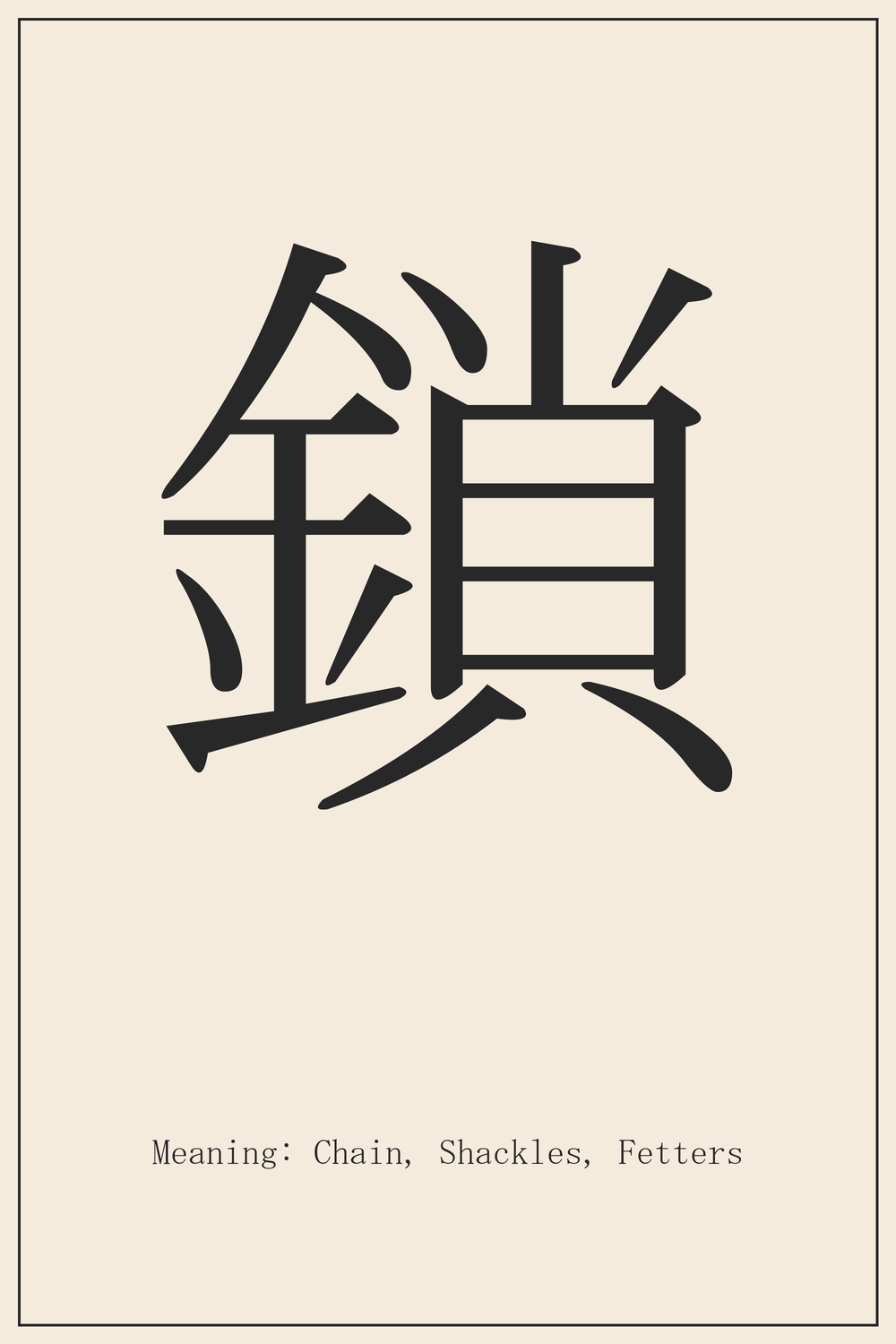
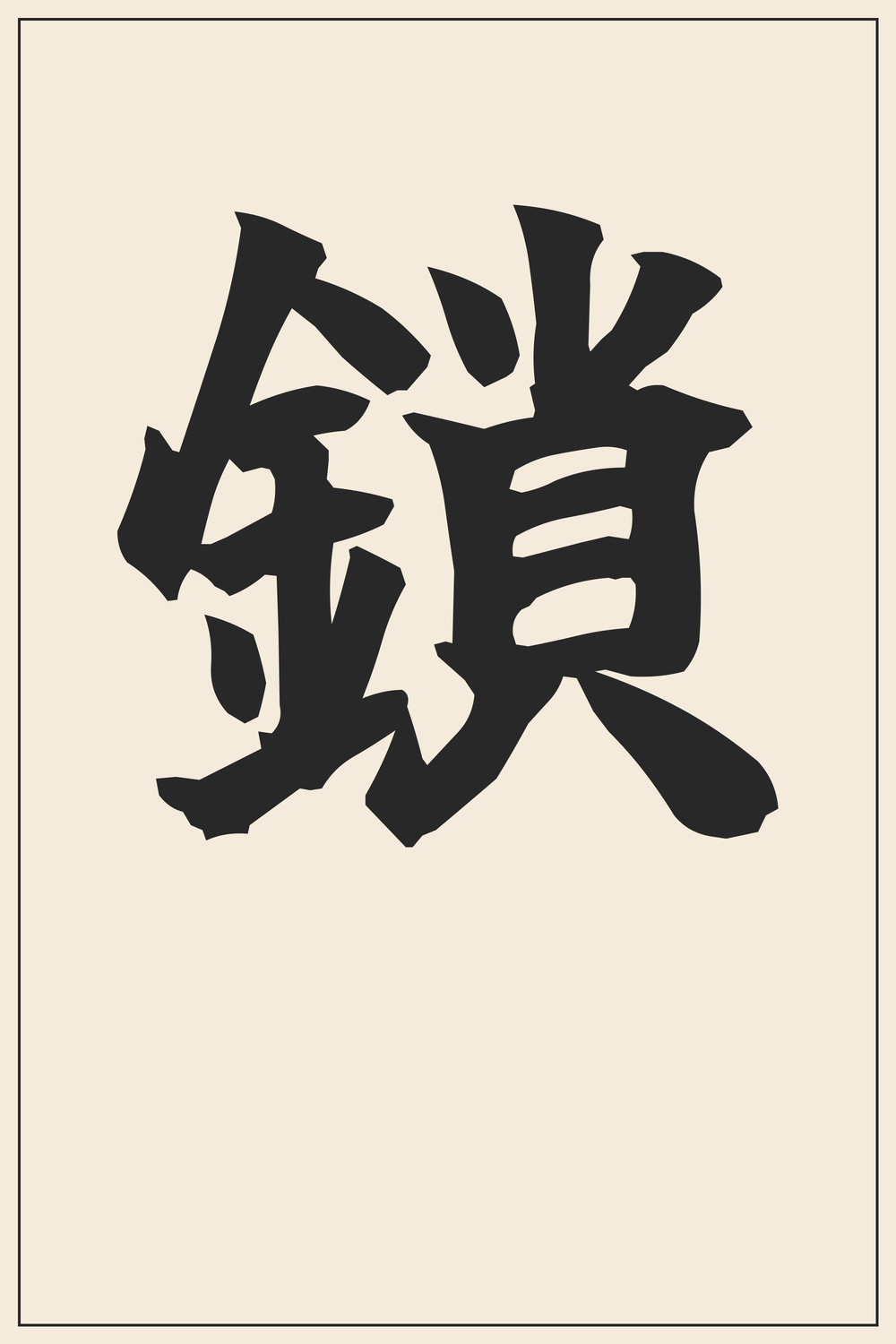
The Kanji 鎖 (Kusari) embodies the multifaceted nature of connections – from sturdy bonds to restrictive shackles. It’s a symbol of both strength and restraint, security and confinement.
The atmosphere of a Kanji character changes dramatically depending on the font style. A character that looks elegant in a brush style might look bold and modern in a different font.
Recommendation:
Since a tattoo is permanent, we strongly recommend comparing various font styles beyond what is shown here. Use our designs as a trusted reference for the correct structure, but feel free to explore different artistic variations to find the perfect match for your vision.
The Deep Meaning Behind 鎖
The Kanji 鎖 (Kusari) primarily denotes a ‘chain,’ carrying rich symbolism in Japanese culture. It can represent a physical object used for connection or restraint, such as an anchor chain or handcuffs. Beyond its literal meaning, it often alludes to unbreakable bonds, whether familial or spiritual, or conversely, to limitations and imprisonment, both physical and metaphorical.
Historically, chains have been integral to various aspects of life, from securing property and ships to being instruments of justice or warfare. Its presence in literature and art frequently evokes themes of destiny, fate, and the struggle for freedom, making it a powerful and evocative symbol for personal reflection.
Kanji Breakdown
The Kanji 鎖 (Kusari) is a phono-semantic compound, combining a semantic component related to metal with a phonetic component that hints at its meaning of binding or constriction.
Meaning: This radical (かねへん, kanehen) literally means ‘metal’ or ‘gold.’ It indicates that the material composition of a chain is typically metallic.
Meaning: This component (さく, saku) acts as the phonetic element, but also conveys a sense of ‘locking,’ ‘narrowing,’ or ‘constricting.’ Together with 金, it forms the concept of a metal structure used for binding or connecting.
Conclusion
Choosing 鎖 (Kusari) for a tattoo is a statement about the bonds and constraints that shape one’s life. It can signify enduring connection, a fight for freedom, or the unbreakable spirit that overcomes obstacles. Its meaning is deeply personal, reflecting the wearer’s journey through attachment and release.
Whether you see it as a symbol of unity, a reminder of challenges overcome, or a tribute to unyielding strength, 鎖 is a Kanji that holds profound weight. Embrace its dual nature as you consider this powerful emblem for your skin, allowing it to tell your unique story.
Comments