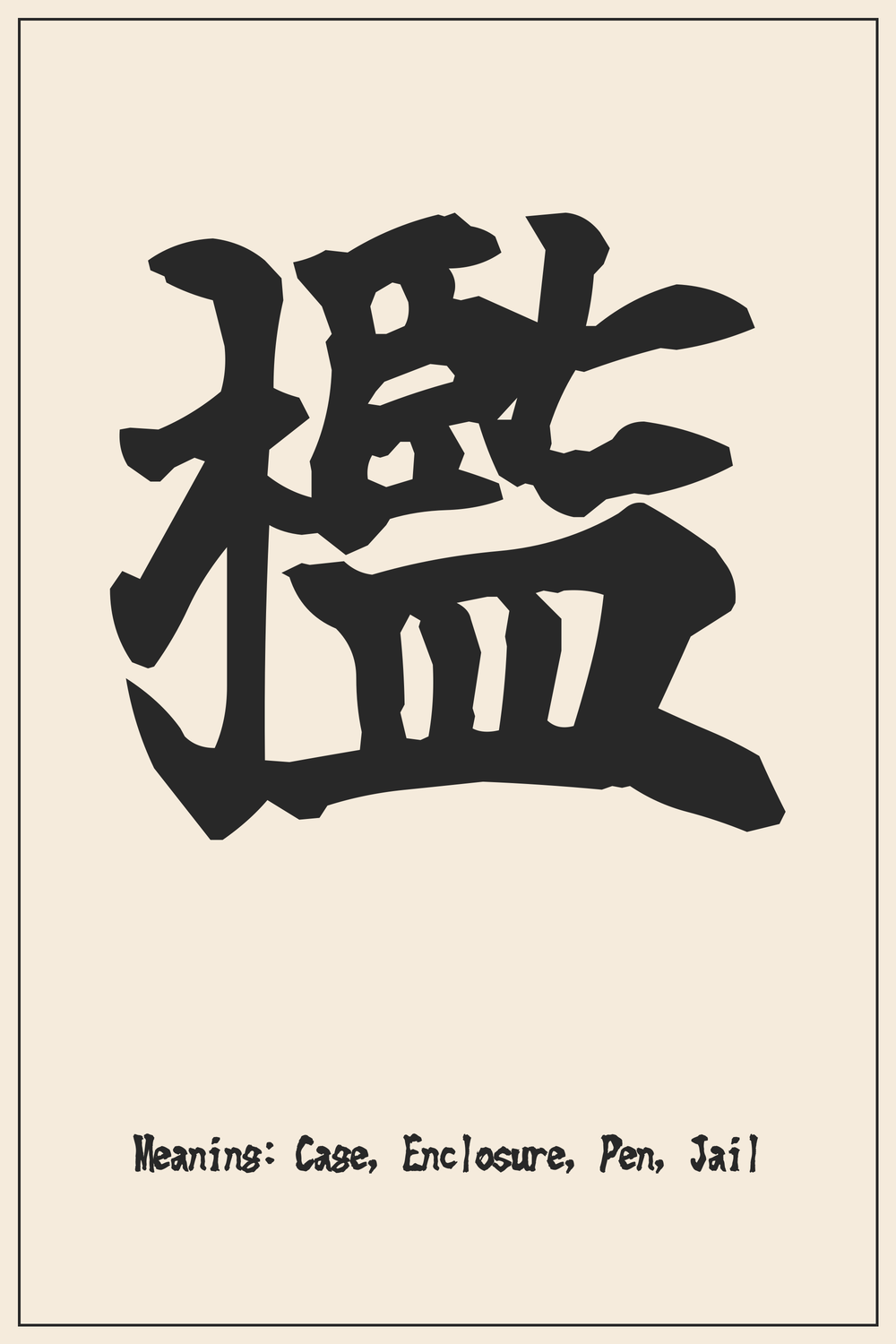
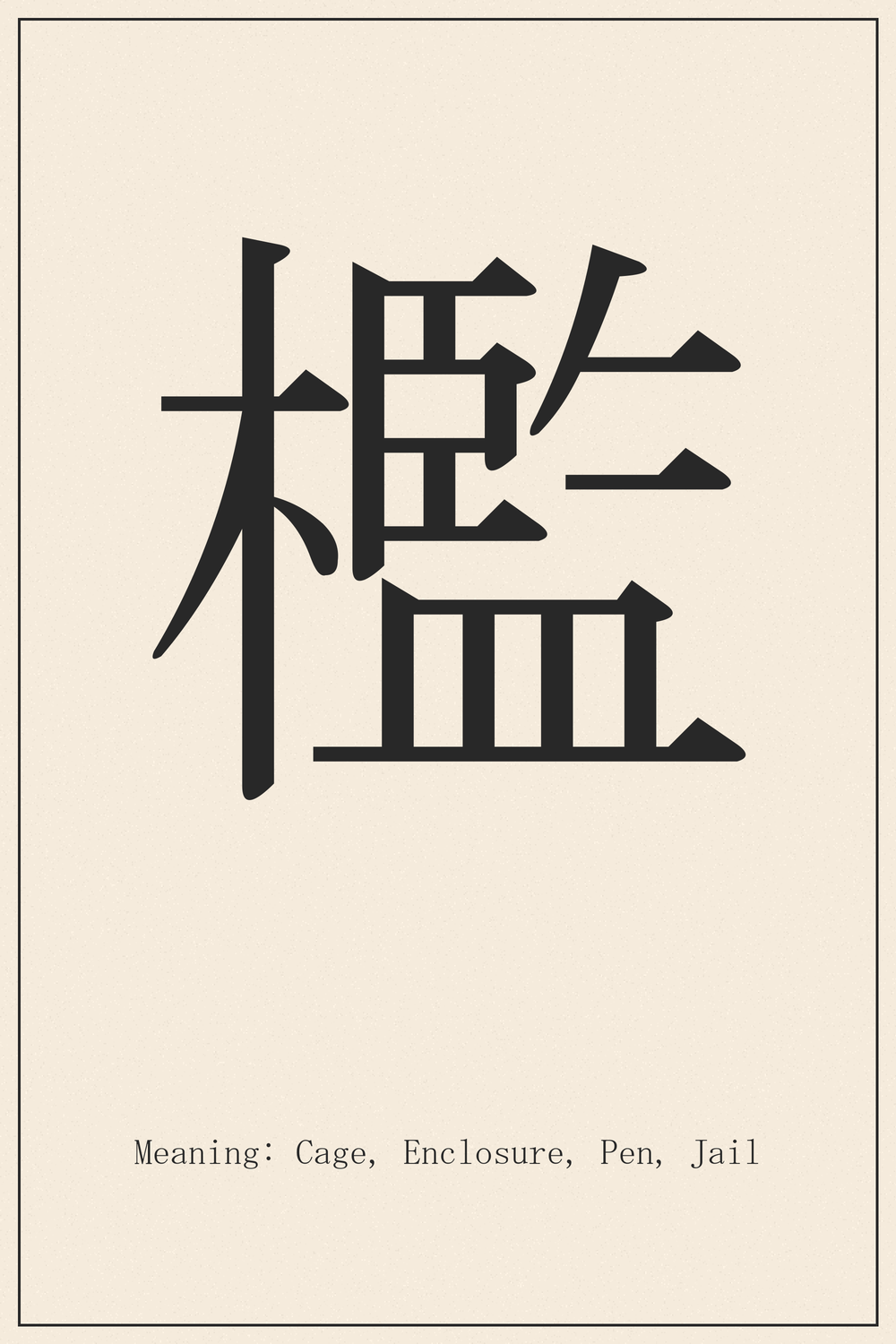
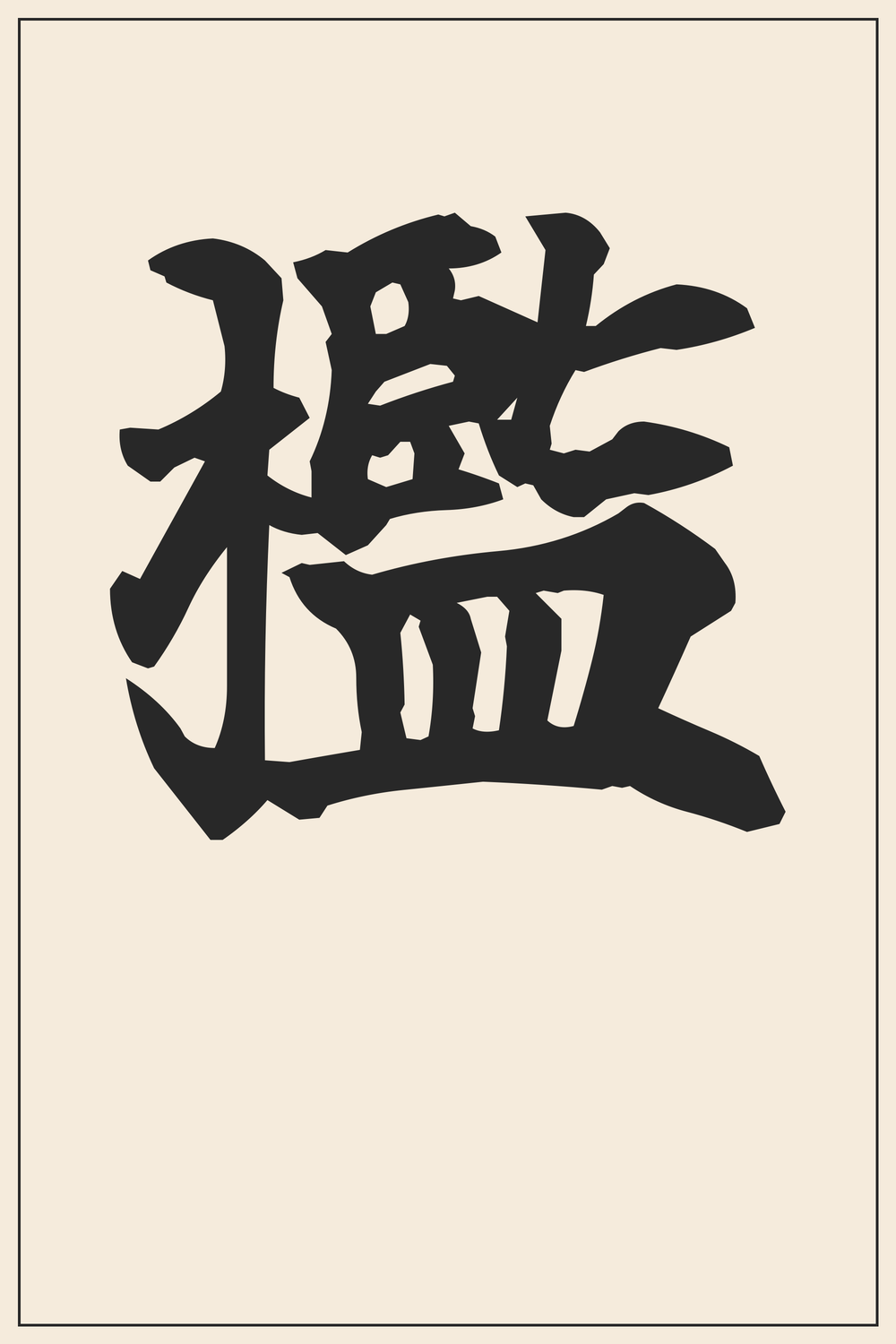
The Kanji 檻, meaning “cage” or “enclosure,” profoundly symbolizes limitation and freedom’s absence. It invites contemplation on boundaries, both physical and metaphorical, that shape our existence.
The atmosphere of a Kanji character changes dramatically depending on the font style. A character that looks elegant in a brush style might look bold and modern in a different font.
Recommendation:
Since a tattoo is permanent, we strongly recommend comparing various font styles beyond what is shown here. Use our designs as a trusted reference for the correct structure, but feel free to explore different artistic variations to find the perfect match for your vision.
The Deep Meaning Behind 檻
The character 檻 combines the radical 木 (ki), meaning “tree” or “wood,” with 監 (kan), which signifies “to oversee,” “to observe,” or “prison.” This combination aptly illustrates a wooden structure used for surveillance and containment, thus forming the meaning of a cage or enclosure.
In Japanese culture, 檻 evokes images not only of physical cages for animals or prisoners but also serves as a potent metaphor for societal constraints, personal limitations, or even self-imposed barriers. It speaks to the human condition of being bound or confined, highlighting the tension between freedom and restriction.
Kanji Breakdown
The Kanji 檻 (ori) is a fascinating compound that visually communicates its core meaning through its constituent parts.
Meaning: Tree, Wood. This radical clearly indicates the material from which a cage or enclosure is typically constructed, anchoring the kanji in a tangible, physical reality.
Meaning: Oversee, Supervise, Prison. This component provides the crucial conceptual element of confinement and control. It denotes the act of watching over or enclosing, directly leading to the idea of a prison or a space where one is held captive.
Conclusion
The Kanji 檻 (ori) is a profound symbol of boundaries and confinement, encapsulating meanings from a literal animal cage to metaphorical prisons of the mind or circumstance. It serves as a powerful reminder of both the limitations we face and the inherent human desire for liberation.
For those contemplating 檻 as a tattoo, it offers a deeply personal statement about overcoming restrictions, acknowledging one’s struggles, or valuing the essence of freedom. Its intricate design demands an artist who can skillfully capture its detail, ensuring a meaningful and visually striking representation of its potent message.
Comments