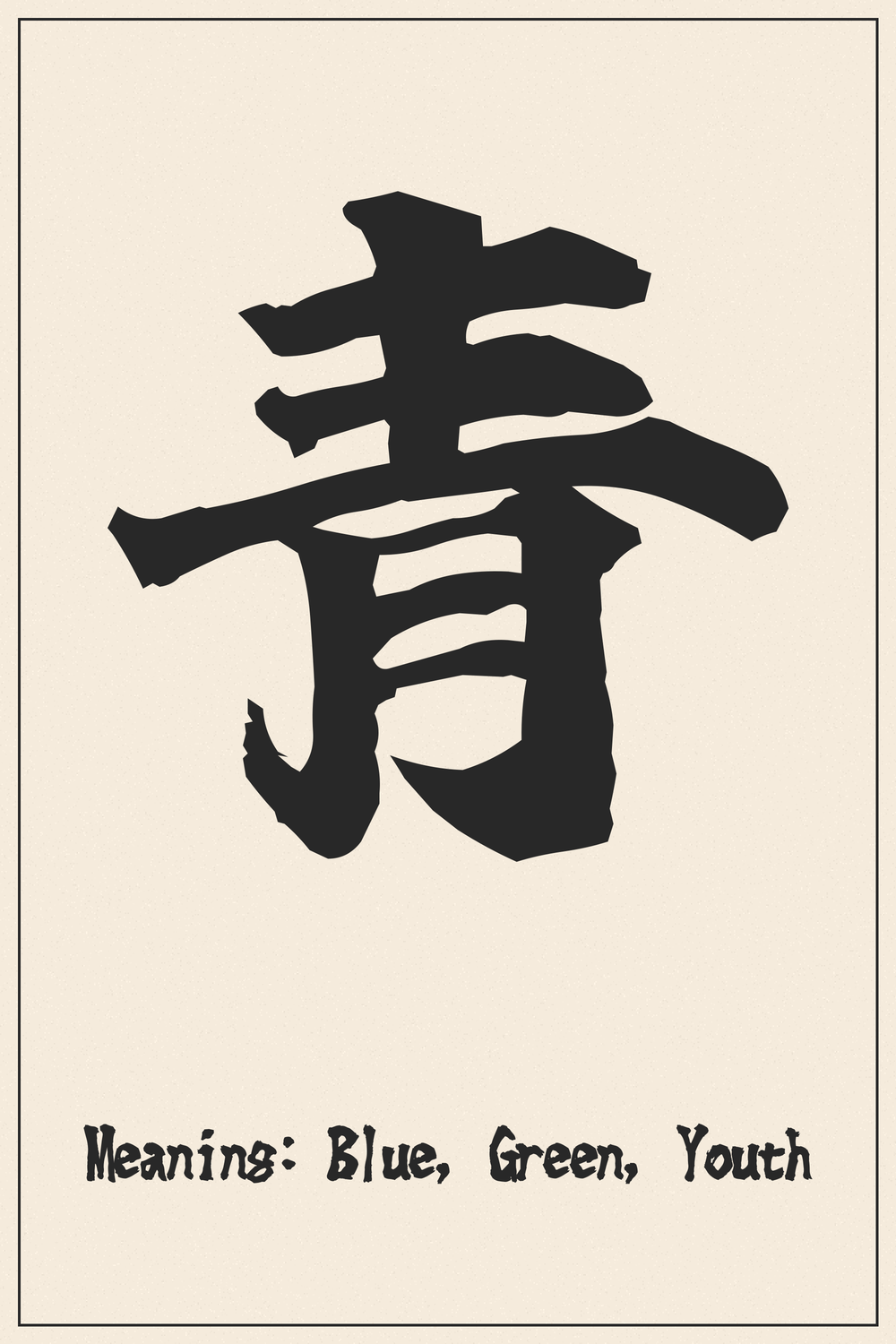
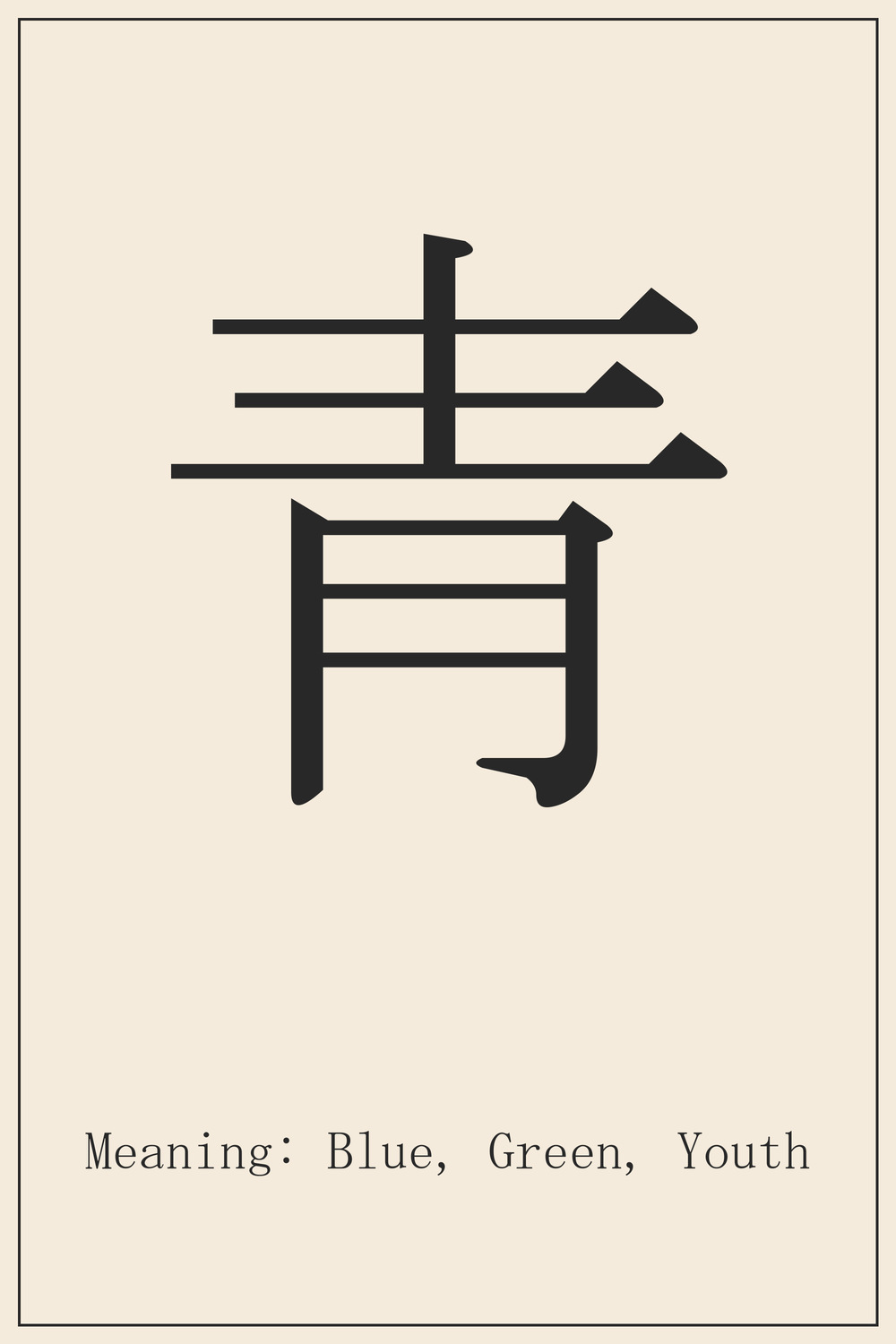
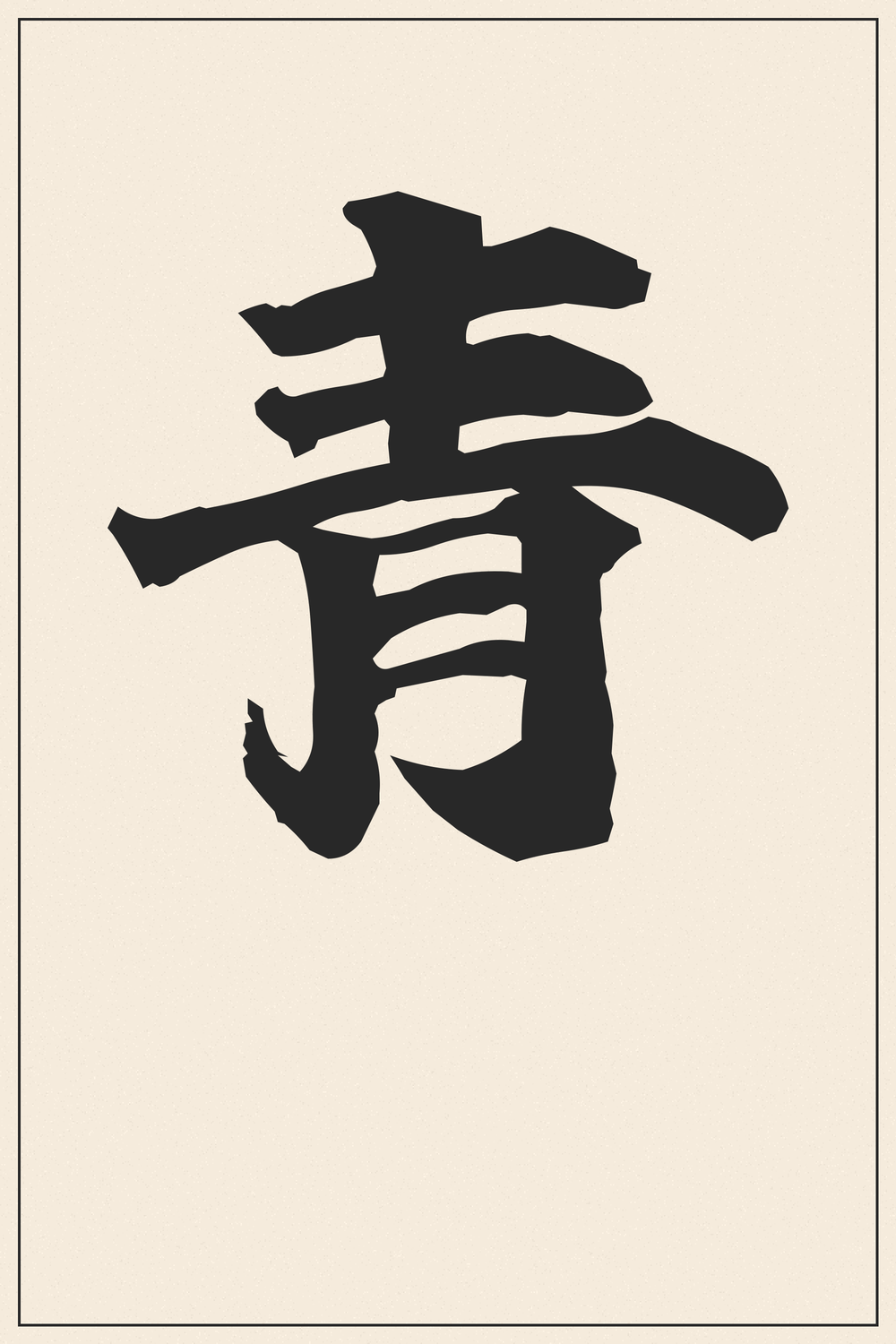
The Kanji 青 (Ao) embodies more than just a color; it’s a vibrant symbol of nature’s hues, youth, and freshness. It connects deeply with the vitality found in the natural world.
The atmosphere of a Kanji character changes dramatically depending on the font style. A character that looks elegant in a brush style might look bold and modern in a different font.
Recommendation:
Since a tattoo is permanent, we strongly recommend comparing various font styles beyond what is shown here. Use our designs as a trusted reference for the correct structure, but feel free to explore different artistic variations to find the perfect match for your vision.
The Deep Meaning Behind 青
The character 青 (ao) traces its origins to ancient pictographs, believed to represent a plant or sprout emerging from the earth. This connection to burgeoning life explains its primary association with the colors blue and green, and by extension, concepts of youth, freshness, and vitality.
In Japanese culture, 青 holds significant weight beyond mere chromatic definition. It is often used to describe things that are verdant or unripe, like “aoba” (green leaves) or “aomono” (green vegetables). It also signifies inexperience or youth, such as “aonen” (youthful age) or “aogashira” (a novice or young person).
Kanji Breakdown
The Kanji 青 is a single ideogram, and while its etymology is complex, it visually evokes the essence of its meanings.
The Color of Life: Historically, 青 has encompassed both blue and green, reflecting the diverse hues of nature—from the vast blue sky and ocean to lush green foliage. This dual representation underscores its profound connection to the natural world and the cycle of growth and renewal.
Conclusion
The Kanji 青 is a powerful symbol of natural beauty, youth, and vibrant energy. Its visual simplicity belies a rich tapestry of meanings, linking the observer to the boundless expanse of the sky, the depth of the ocean, and the freshness of new life.
Choosing 青 for a tattoo signifies an appreciation for nature’s subtle power, a celebration of youth, or a reminder of continuous growth. Its elegant form makes it a striking and meaningful choice for a personal emblem.
Comments