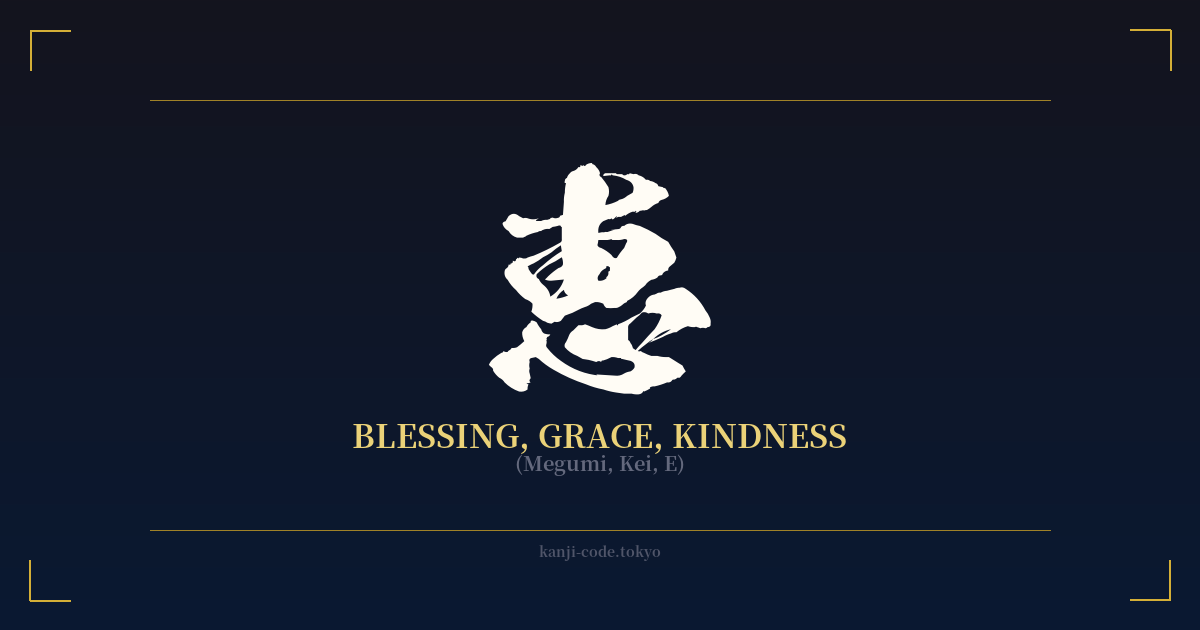
✍️ 恵 (Megumi, Kei, E) — Cultural Context
The kanji 恵, most famously read as 'Megumi,' is one of the most beautifully resonant characters in the Japanese language. It encapsulates a world of positive concepts, primarily translating to blessing, grace, favor, and kindness. It speaks to a gift received, not necessarily a material one, but a favor from the heavens, from nature, or from another person that fills the heart with gratitude.
Delving into its structure offers a clue to its profound meaning. The character is composed of a component at the top that originally depicted a bundle or offering, placed over the radical for 'heart' or 'mind' (心). This combination paints a vivid picture: a favor or gift that is given or received with sincerity, touching the heart directly. It’s not just about getting something; it’s about the feeling of being blessed and the kindness inherent in the act.
In Japanese culture, the concept of 'megumi' is deeply ingrained. You'll hear it in phrases like 'shizen no megumi' (自然の恵み), meaning 'the blessings of nature,' referring to the bounty of the earth, from a good harvest to the beauty of a sunset. It reflects a sense of appreciation for things beyond human control, a core value in a culture shaped by the powerful and sometimes unpredictable forces of nature.
The character also appears in important compound words. For instance, 'onkei' (恩恵) means grace or benefit, often used in a formal context to describe a favor received from a superior or a divine entity. 'Chie' (知恵), meaning wisdom, combines 恵 with the character for 'know' (知), suggesting that true wisdom is a kind of blessed knowledge, a gift of insight.
Perhaps its most common modern usage is as a name. Megumi is a very popular name for girls in Japan, chosen by parents wishing for their daughter to live a life full of blessings, to be a kind person, and to be graced with happiness. The gentle and positive aura of the character makes it an enduring favorite. This widespread use as a name gives the kanji a very personal and human-centered feel, distinguishing it from more abstract or cosmic characters. It is a kanji of heartfelt gratitude and gentle benevolence.
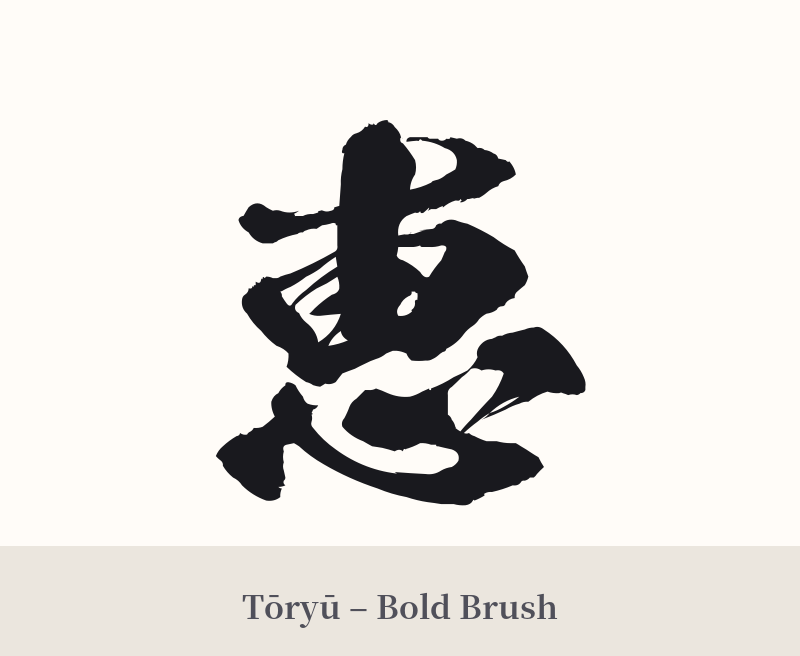
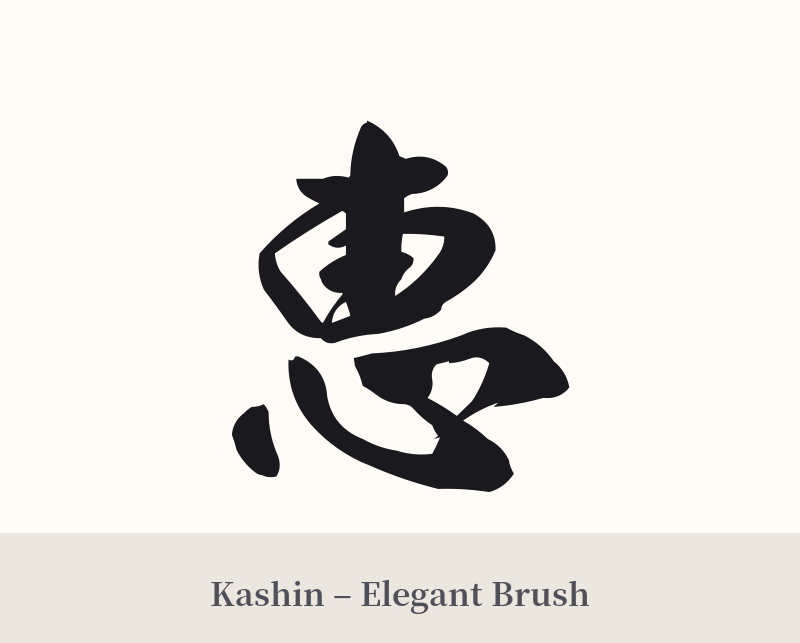
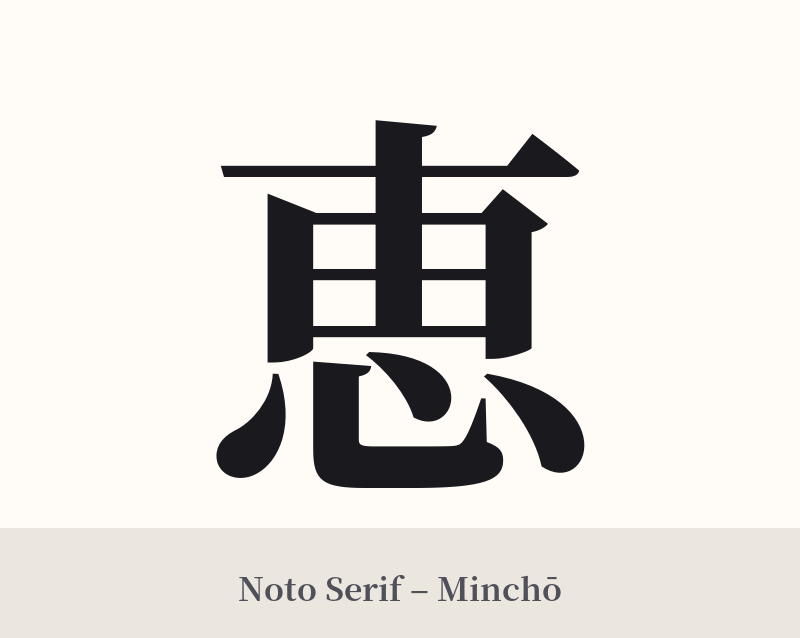
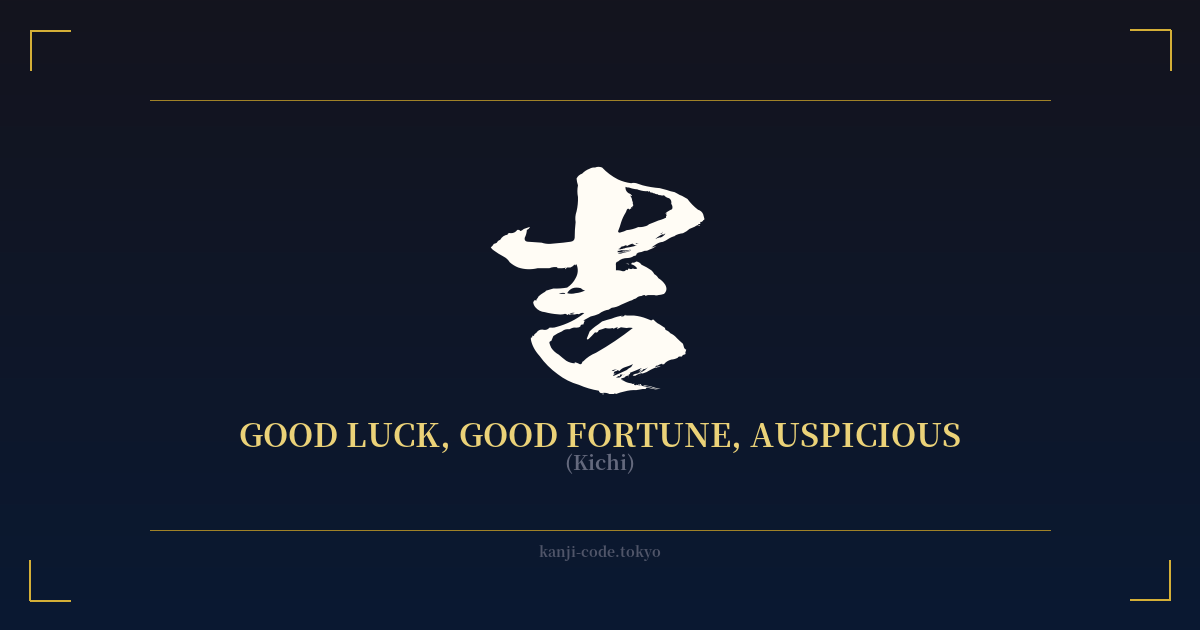
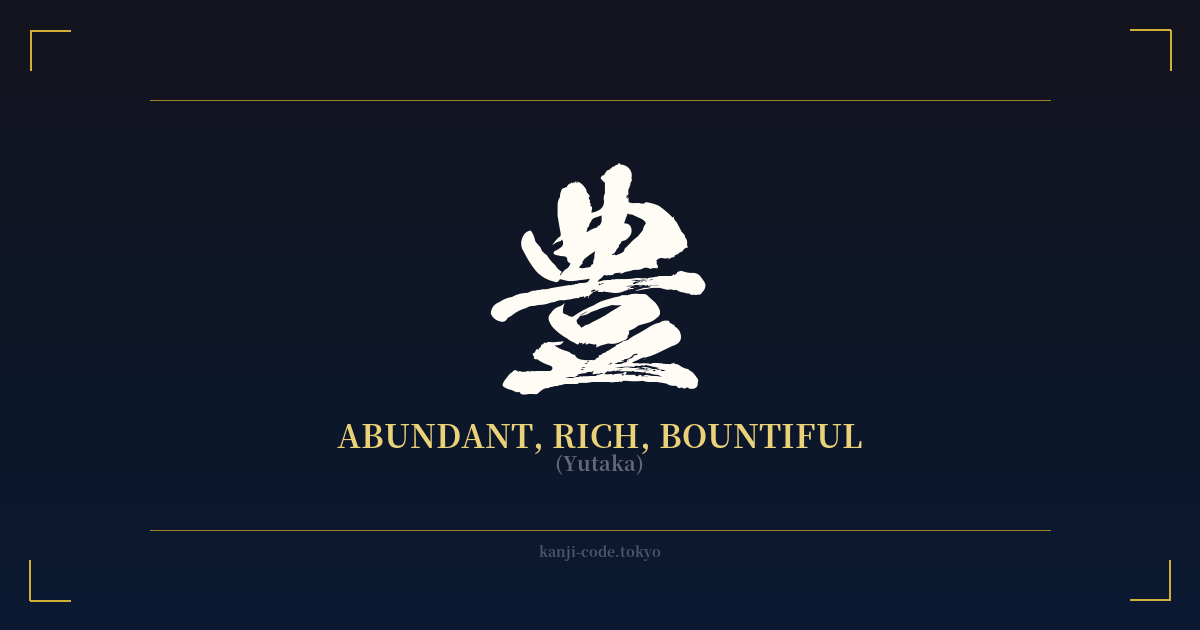
🖌️ Font Styles for 恵
The same kanji can look dramatically different depending on the calligraphy style. Choose a font that matches the mood you want for your tattoo or design.
🎨 Tattoo Suitability
📐 Tattoo Design Guide
The kanji 恵 is versatile due to its balanced structure and positive meaning. It works well for a design that is both personal and elegant.
– Placement: Consider areas that are either easily visible or intimate, depending on your intention. The inner wrist, collarbone, or behind the ear are excellent for a small, delicate statement. For a larger piece, the forearm, shoulder blade, or calf allows for more detail and stylistic flair.
– Font Style: The style you choose can dramatically alter the feel. A clean, crisp Kaisho (block script) emphasizes sincerity and clarity. For a softer, more fluid look, a Gyosho (semi-cursive) or Sosho (cursive) script can beautifully echo the concepts of 'grace' and 'blessing' flowing into one's life.
– Visual Tips: While 恵 stands beautifully on its own, it can be paired with complementary imagery. Consider weaving it into a design with a lotus flower to symbolize purity and enlightenment rising from hardship. It also pairs well with elements of nature, such as a gentle stream of water or a few falling cherry blossom petals, to connect it to the idea of 'blessings of nature' (自然の恵み).
Comments