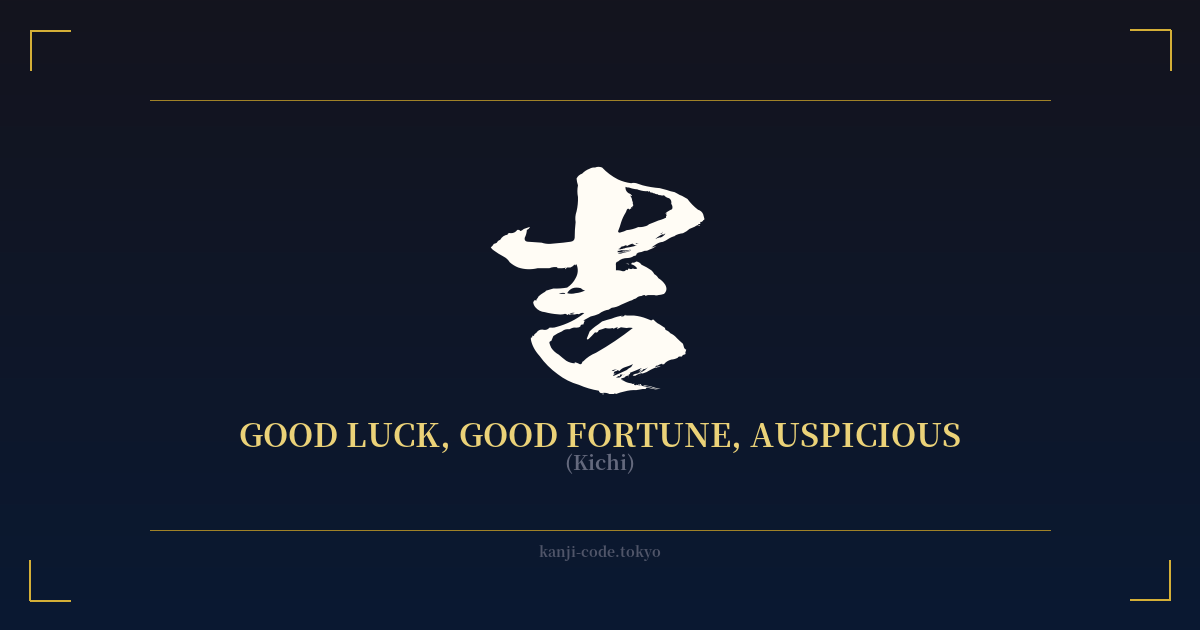
✍️ 吉 (Kichi) — Cultural Context
The kanji 吉 (kichi) is one of the most fundamental and cherished characters in the Japanese language, embodying the universal human desire for good fortune, luck, and auspicious outcomes. Its presence is woven deeply into the fabric of Japanese culture, from sacred rituals to the rhythms of daily life.
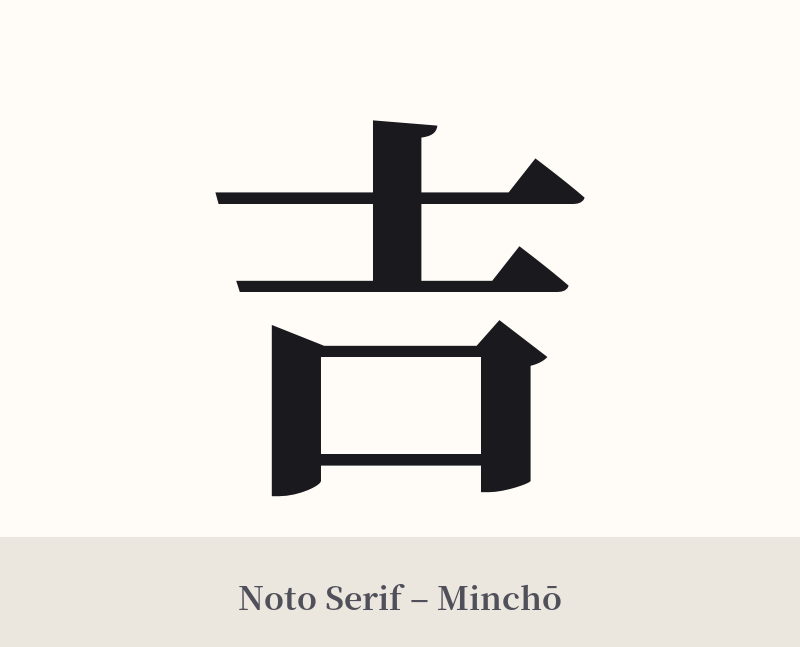
Historically, the character's structure offers clues to its meaning. It is composed of 士 (shi) on top and 口 (kuchi) on the bottom. One popular interpretation suggests 士 represents a scholar or noble person and 口 a mouth, symbolizing 'good words' or a favorable proclamation. Another etymological theory proposes that the top component was originally a pictogram of an axe or weapon, and the bottom a box. In this context, 吉 represented a weapon safely stored away, a symbol of peace and security, which naturally leads to prosperity and good fortune.
Perhaps the most common encounter with 吉 for both Japanese people and visitors is through 'omikuji' (おみくじ), the paper fortunes available at Shinto shrines and Buddhist temples. After making a small offering, you draw a slip of paper that reveals your fortune. 吉 (kichi) is the standard 'Good Luck' outcome, a welcome sign of positive things to come. It sits within a hierarchy of luck, famously topped by 大吉 (dai-kichi, 'Great Luck') and followed by smaller degrees of fortune. Receiving a 吉 slip is a moment of quiet reassurance, a blessing from the temple or shrine's deity.
This association with favorable outcomes makes 吉 a key element in choosing 'lucky days' (吉日, kichijitsu) for important life events. Using a traditional lunar calendar, people might select a kichijitsu for a wedding, starting a new business, or moving into a new home, believing that acting on such a day will invite success and happiness. The character is also a popular component in names, such as Yoshiko (幸子) or Kichirō (吉郎), bestowed upon children with the hope that they will lead a fortunate and prosperous life.
In essence, 吉 is more than just a word for 'luck.' It is a cultural symbol of optimism, hope, and the belief in a favorable destiny. It represents the quiet joy of a good omen, the security of a peaceful day, and the foundational hope for a bright future.
🖌️ Font Styles for 吉
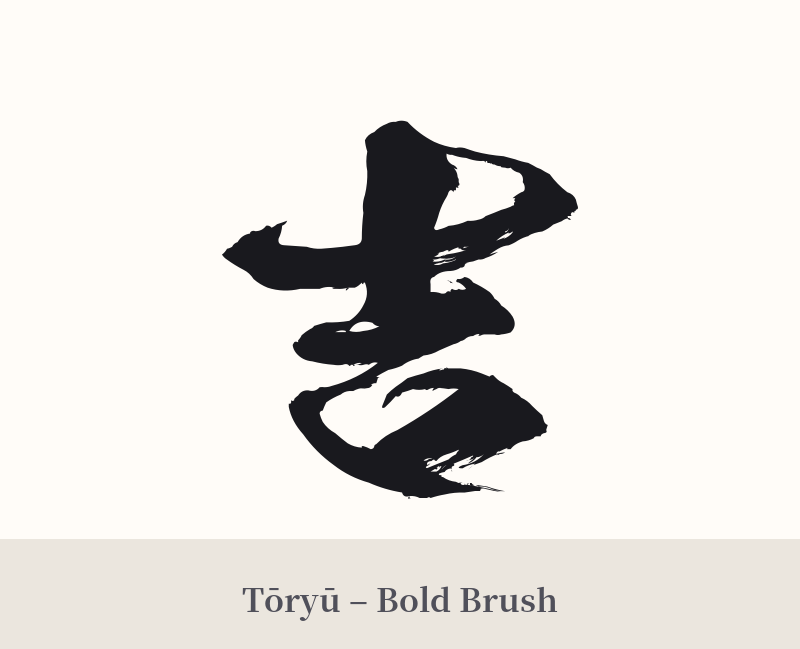
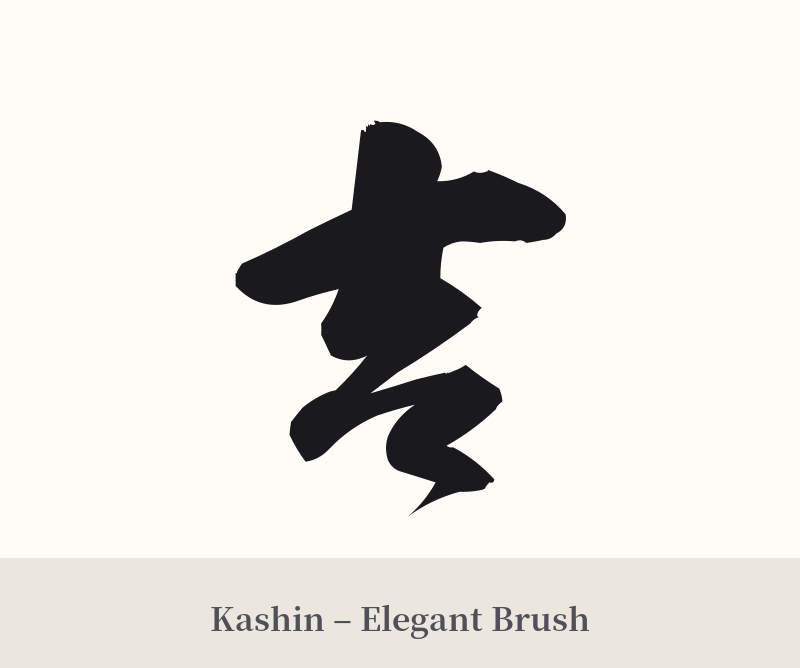
The same kanji can look dramatically different depending on the calligraphy style. Choose a font that matches the mood you want for your tattoo or design.
🎨 Tattoo Suitability
📐 Tattoo Design Guide
The simple elegance of 吉 (Kichi) makes it a versatile choice for a tattoo, fitting a variety of styles and placements.
– Placement: Its compact and balanced shape works beautifully in small, personal spots like the inner wrist, behind the ear, or on the ankle. For a more prominent piece, it can be placed on the forearm or calf, where its clean lines can be appreciated. It also serves well as a central element in a larger composition on the back or chest.
– Font Style: The chosen font can dramatically alter the feel. A traditional 'Kaisho' (block script) style emphasizes its balance and clarity, perfect for a minimalist aesthetic. For a more dynamic and artistic feel, consider a 'Gyōsho' (semi-cursive) or 'Sōsho' (cursive) calligraphy style, which adds a sense of movement and personality with flowing brushstrokes.
– Visual Tips: To enhance its meaning, you could integrate 吉 into a larger design. Imagine it inscribed on a charm held by a Maneki Neko (beckoning cat), floating among koi fish swimming upstream, or framed by cherry blossoms to symbolize the beauty of fleeting good fortune. An artist could also render it with a texture like old wood or stone to give it a more ancient, powerful feel.
Comments