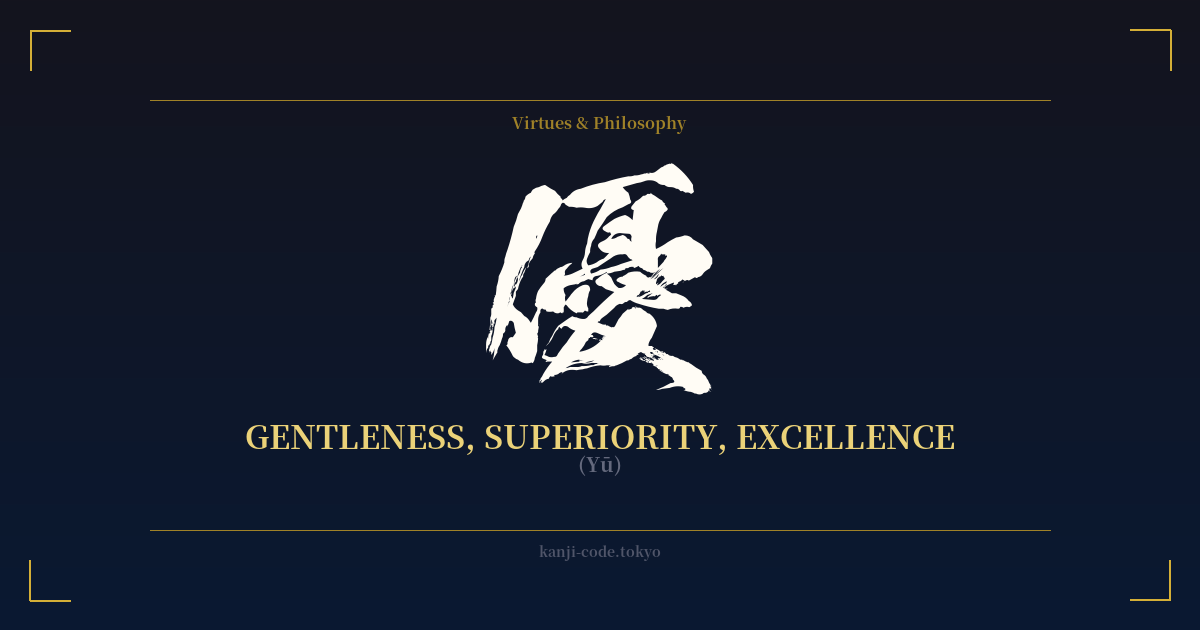
✍️ 優 (Yū) — Cultural Context
The kanji 優 (Yū) is a character of beautiful and profound duality, embodying concepts that might seem contradictory in Western thought but are harmoniously linked in Japanese culture. Its primary meanings are 'gentle' and 'superior,' creating a sophisticated ideal of excellence tempered with kindness.
The character’s origin offers a glimpse into its depth. It is composed of the person radical (亻) on the left and a complex element (憂) on the right. This right-side component originally depicted a person with a heavy heart, perhaps wearing a ritual mask, suggesting a performer or shaman. This connection to performance and skill evolved into the meaning of 'superior' or 'excellent,' as in a skilled actor or artist. This is why 優 is the character used in the word for actor, 俳優 (haiyū).
However, the most compelling aspect of 優 is its fusion of strength and softness. In Japanese, the word for gentle or kind is 優しい (yasashii), which uses this very kanji. At the same time, it forms words like 優勝 (yūshō), meaning championship or overall victory, and 優秀 (yūshū), meaning excellence and superiority. How can one character represent both gentle kindness and competitive victory?
This is not a contradiction but a reflection of a mature philosophical outlook. True superiority, in this context, is not aggressive or domineering. It is an excellence so profound that it is calm, confident, and capable of gentleness. It's the strength of a master who has nothing to prove, and can therefore afford to be kind. This contrasts with a brute-force concept of winning, instead promoting an ideal where true masters are graceful and benevolent.
This idea is deeply woven into Japanese aesthetics and ethics. The master calligrapher, the seasoned martial artist, or the expert tea master all strive for a state of refined skill that appears effortless and graceful, or 優雅 (yūga). Their superiority is demonstrated not through overt displays of power, but through subtle, controlled, and gentle execution.
Because of these positive and aspirational qualities, 優 is an extremely popular character in Japanese names for both boys and girls, such as Yū, Yūka, Yūsuke, or Masaru (an alternative reading). Parents choose this kanji hoping their child will grow to be both accomplished and kind-hearted—a person of true, gentle excellence.
🖌️ Font Styles for 優
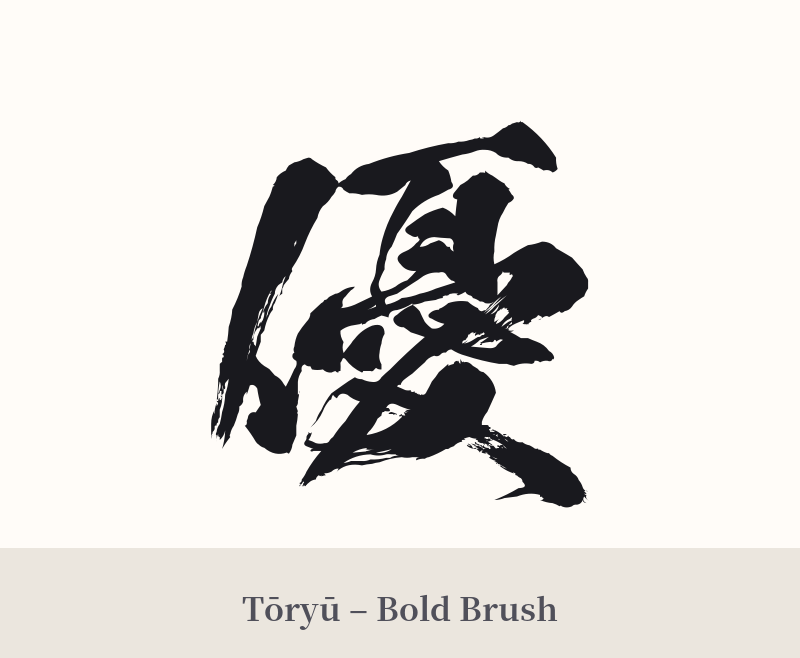
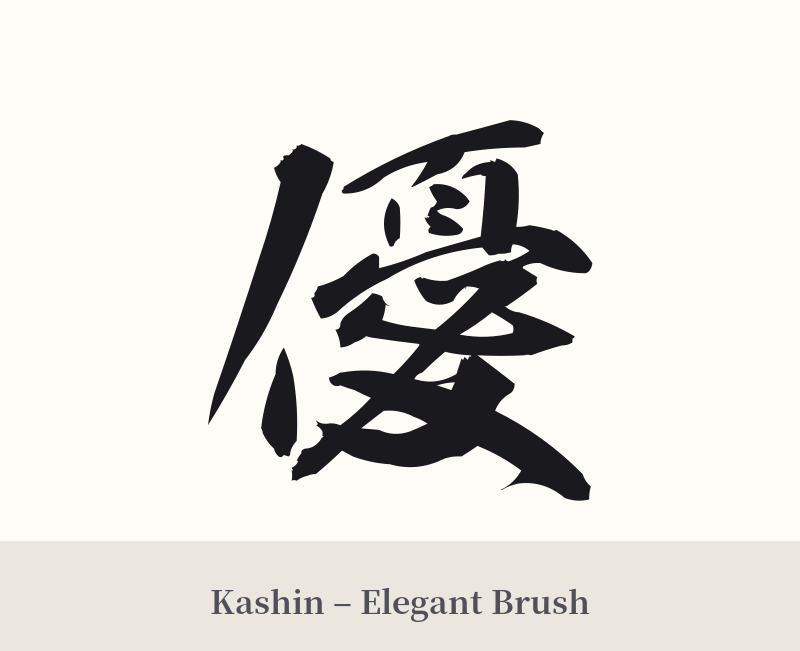
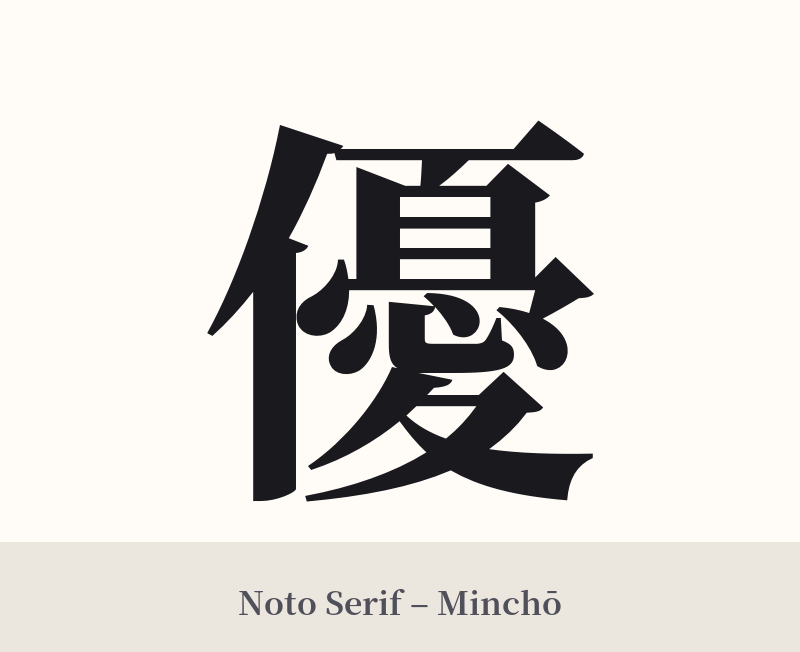
The same kanji can look dramatically different depending on the calligraphy style. Choose a font that matches the mood you want for your tattoo or design.
🎨 Tattoo Suitability
📐 Tattoo Design Guide
The kanji 優 is a visually balanced and intricate character, making it an excellent choice for a tattoo. Its vertical structure lends itself well to certain placements and styles.
– Placement: The inner forearm, calf, or along the spine are ideal for a vertical design. For a smaller, more subtle tattoo, the back of the neck or behind the ear can work well.
– Font Style: The choice of script can dramatically alter the feel of the tattoo. A bold, angular Kaisho (block script) will emphasize the 'superiority' and 'victory' aspects. In contrast, a flowing, semi-cursive Gyosho or fully cursive Sosho style will highlight the 'gentleness' and 'elegance' (優雅) inherent in the character.
– Visual Tips: To play on the dual meanings, you could pair 優 with other elements. Combining it with a soft, flowing element like water, a lotus flower, or cherry blossoms can enhance the 'gentle' aspect. Conversely, placing it near a stronger image like a dragon or a tiger can create a powerful juxtaposition of might and grace.
Comments