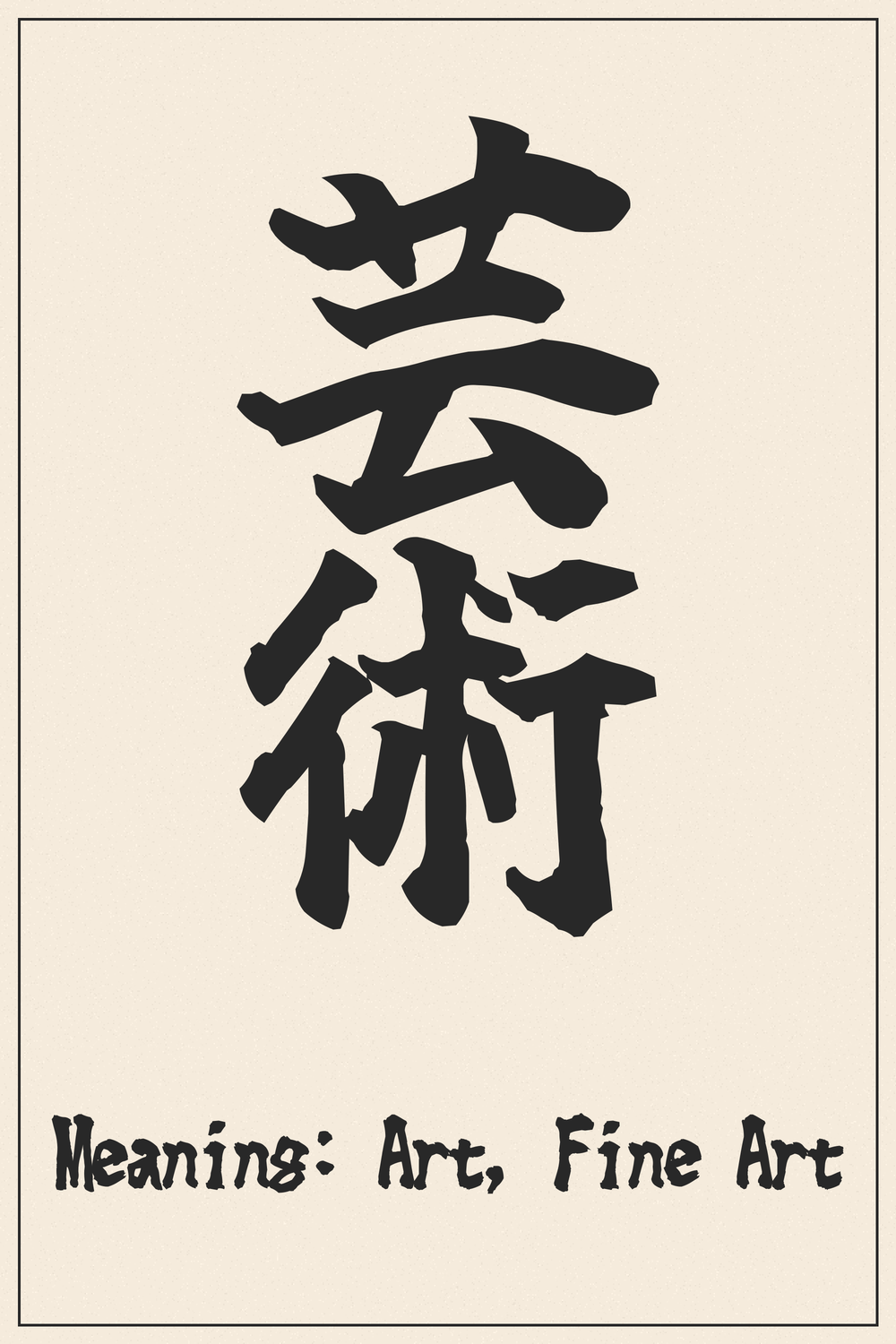
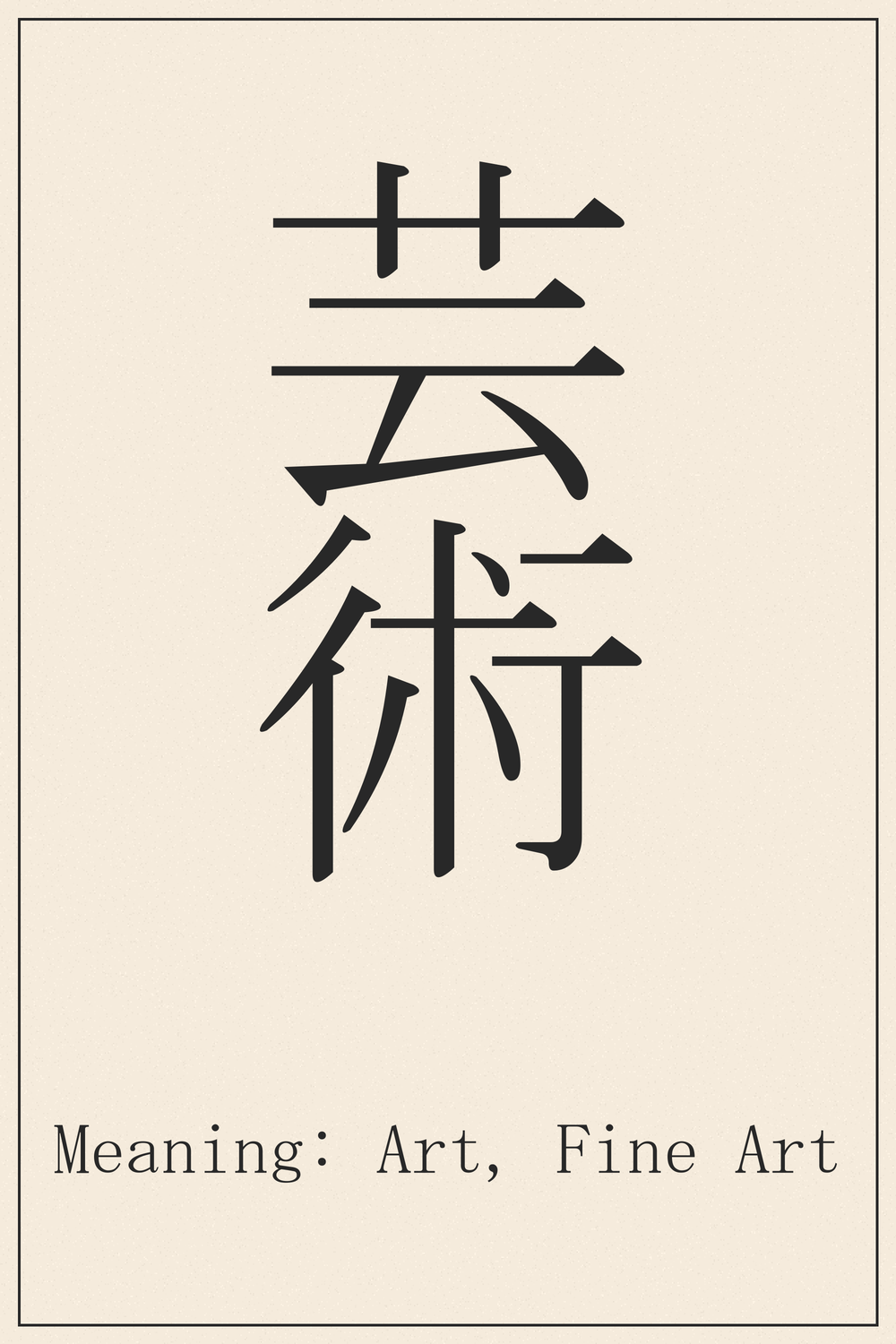
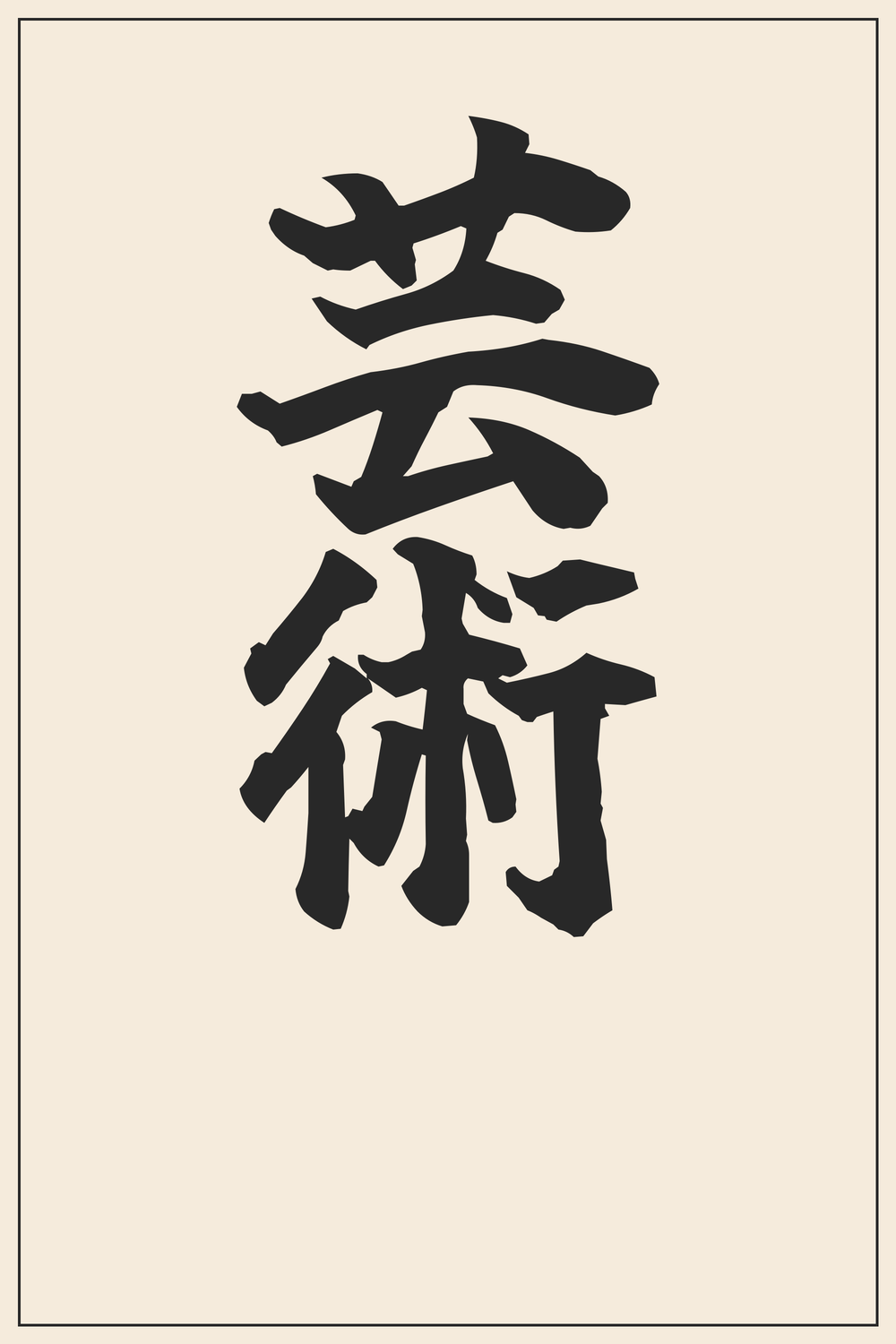
Art transcends language and culture, serving as a universal expression of the human spirit. The Japanese Kanji 芸術 (Geijutsu) beautifully embodies this profound essence, representing not just ‘art’ but also the skill and technique required to create it.
The atmosphere of a Kanji character changes dramatically depending on the font style. A character that looks elegant in a brush style might look bold and modern in a different font.
Recommendation:
Since a tattoo is permanent, we strongly recommend comparing various font styles beyond what is shown here. Use our designs as a trusted reference for the correct structure, but feel free to explore different artistic variations to find the perfect match for your vision.
The Deep Meaning Behind 芸術
The term 芸術 (Geijutsu) is a compound word formed from two kanji, each carrying significant depth. 芸 (Gei) originally referred to ‘planting’ or ‘cultivating,’ specifically the rue plant, but its meaning evolved over time to denote ‘skill,’ ‘performance,’ and ‘accomplishment.’ This evolution highlights the idea of something being ‘cultivated’ or ‘nurtured’ to achieve a refined ability.
術 (Jutsu), on the other hand, means ‘technique,’ ‘skill,’ or ‘method.’ It implies a structured path or specialized knowledge required to perform a task effectively. Together, 芸術 encapsulates the idea of a cultivated path of skill and method leading to creative expression, beauty, and profound achievement.
In Japanese culture, 芸術 encompasses a wide array of disciplines far beyond what is typically considered ‘fine art’ in the Western sense. It includes traditional performing arts like Noh and Kabuki, martial arts (bujutsu), tea ceremony (chado), flower arrangement (ikebana), and calligraphy (shodo). Each of these forms emphasizes discipline, aesthetic sensibility, and the relentless pursuit of perfection, reflecting a holistic view of art as a way of life and a path to self-mastery.
Kanji Breakdown
To fully appreciate 芸術, let’s examine its individual components:
Meaning: Art, Skill, Performance. The character 芸 (gei) originally referred to the rue plant and its cultivation, evolving to signify any cultivated skill, accomplishment, or performing art.
Meaning: Technique, Skill, Method. The character 術 (jutsu) combines 行 (go, road) suggesting a path or way, with 朮 (a phonetic component referring to millet). It denotes a specialized method, art, or skill.
Conclusion
芸術 (Geijutsu) stands as a powerful emblem of human creativity, dedication, and the relentless pursuit of mastery. It represents not just the output of art but the disciplined process and profound spirit behind its creation, making it a truly inspiring concept.
For a tattoo, 芸術 is a meaningful choice for artists, creators, or anyone dedicated to mastering a craft. Due to its complex stroke count, especially in 術, careful consideration of size is crucial. Opting for a larger design will ensure the intricate details remain clear and beautiful for years to come, allowing this profound kanji to eloquently express your connection to art and skill.
Comments